

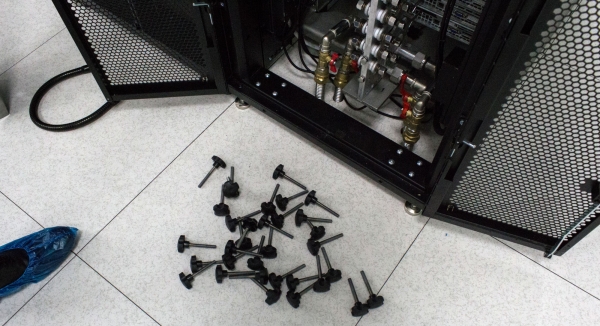
Continued about the revolution in the evolution of unusual cooling systems for server equipment. Photo details of the second version of the cooling system installed on a real server rack in a real DataPro data center. Also — an invitation to touch the third version of our cooling system with your own hands. September 12, 2019 in Moscow.
Server KTT. Version 2
The main complaint against the first version of the cooling system was its mechanics. For some reason, in the comments to the previous article with this photo:
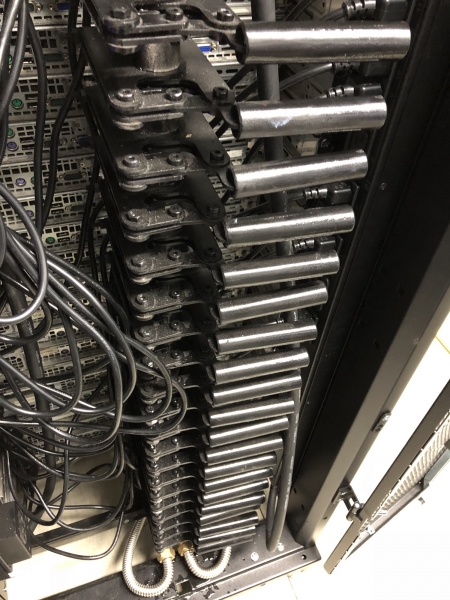
… no one particularly noticed that access to the entire right side of the server's rear panel becomes practically impossible. Only one observant reader suggested alternating the left-right placement of our fasteners.
The need to use such a monstrous fastener was caused by the desire to avoid thermal paste at the point where the heat exchanger exits the server to the vertical liquid bus. Thermal paste in such a removable connection is very undesirable. To avoid using it, significant pressing force is required.
In the second version, we implemented a different fastening system. The bus has become significantly more compact. And has acquired a less 'made in USSR' appearance.
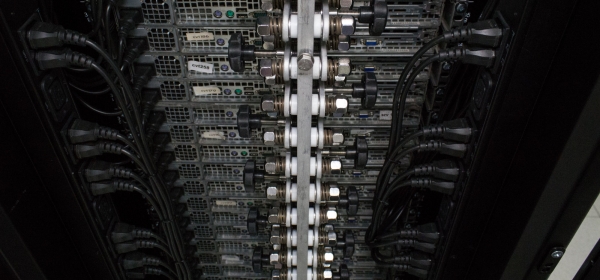
There are even shiny elements in the design. Stylish, trendy, youthful.
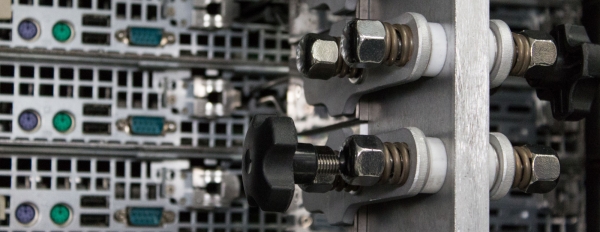
Besides the huge mechanics, the first version did not address the questions regarding the protection of servers from (theoretically) possible situations of the vertical liquid bus leaking. The response to such concerns in the second version of our system was a protective casing.
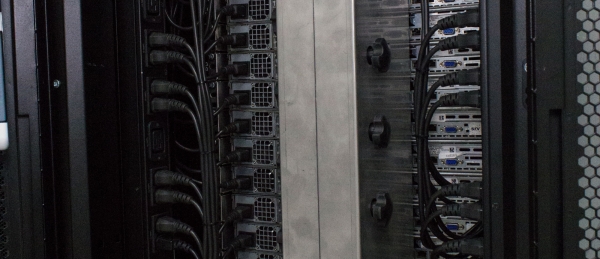
A step back in compactness. A step forward in safety. Now, no one can theoretically be doused with ethylene glycol, which fills the external heat exchange circuit.
The system is connected neatly. Without large flexible connections, as before. Such a design won’t go anywhere, even if it’s on wheels. The pipes are brought straight under the server rack, in the raised floor of the data center.
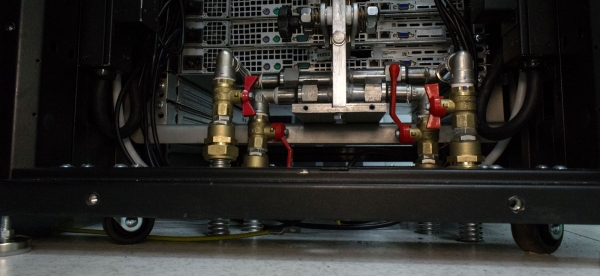
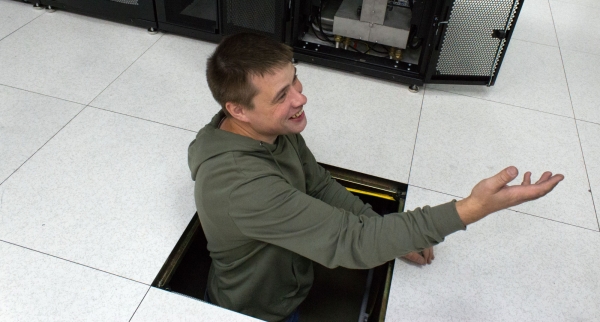
It turned out that there is almost one and a half meters of space in height and depth. There’s room for entertainment.
The KTT construction inside the server has not undergone any significant changes. In the previous post, we were sparse on photos of the internals. We'll try to improve on that now.
Here is how a server pulled out of the rack looks with our cooling system. The standard radiators have been replaced with our system. Some fans have been removed.
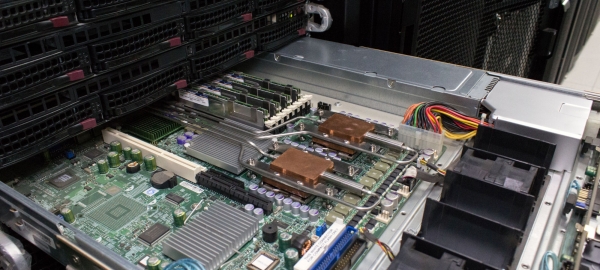
Copper radiators are attached to the processors. The cylinders inside the radiators are evaporators of the loop heat pipes.
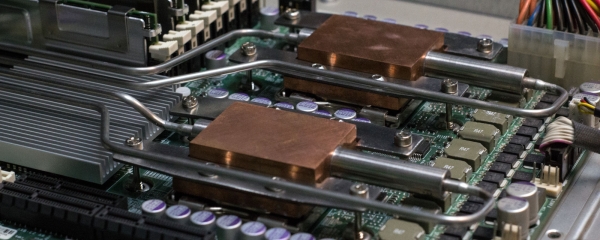
Thin tubes run from the evaporators to the back of the server.
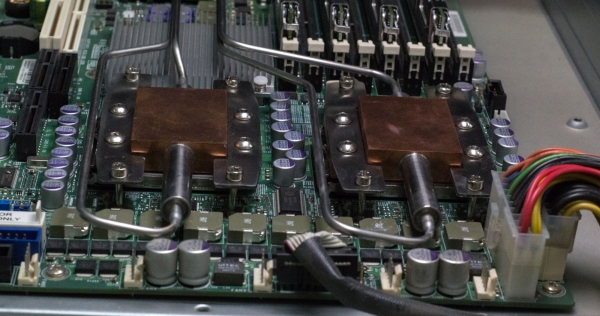
They pass through the rear wall and form condensers.
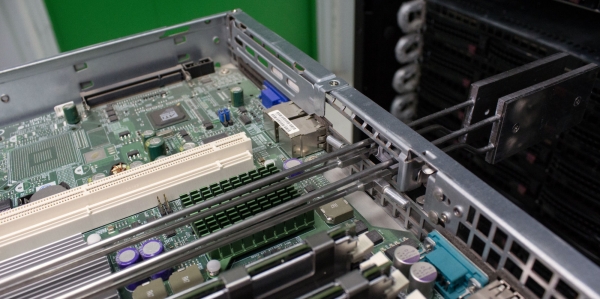
These are pressed against the vertical liquid cooling bus when the server is pushed back into the rack.
Thus, the heat from the server's processors is carried away through the loop heat pipes to the external liquid heat exchanger, and from there, it exits the data center building to the outdoor cooling systems.
KTT is not just for data centers.
In addition to cooling solutions for large data centers, we also deal with cooling solutions for 'office' server systems—micro data centers.
Many companies face problems such as 'our servers are too noisy' or 'it's too hot walking past the server room.' Often, such issues seem unsolvable using traditional technologies.
More details about one such solution—a 'one-in-all' micro data center—will be shared tomorrow in the next article. Anyone interested can get hands-on experience with this product as early as this week, on September 12, 2019. in Moscow.
For those interested in the topic of cooling (including server) computer equipment, I remind you about our social media channels. and .
Source: habr.com
