

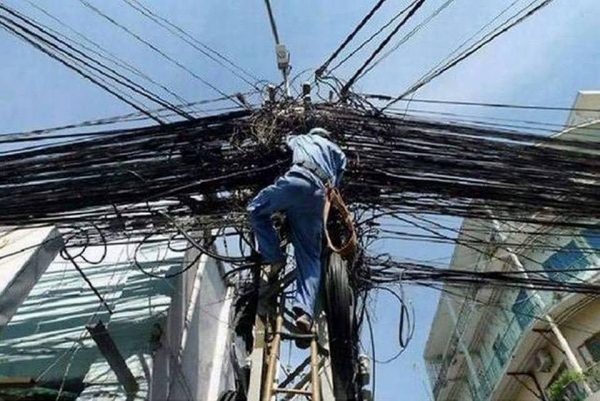
Is summer a busy season for outsourcing?
The summer period is traditionally considered a 'dead season' for business activity. Some people are on vacation, while others are not eager to purchase goods due to a lack of motivation, and service providers often prefer to take a break during this time.
Therefore, summer is regarded as an inactive period for outsourcers or IT specialists working freelance, such as 'visiting system administrators.'
However, looking at it from another perspective, many people travel to vacation spots—some need to set up connections in new locations, while others want stable access from anywhere in Russia (or at least from the nearest suburb). Consultations, connection and setup services, organizing remote access, for example, to a home computer, and using cloud services—these can all be in demand.
One shouldn't immediately label all three summer months as unprofitable; it's better, at least initially, to take a look around and see who might need what in such a situation. For example, LTE connectivity.
A lifesaver
Residents of large cities are quite spoiled regarding quality connections. They have many options for internet access, both wired, including dedicated lines based on fiber optics, and free Wi-Fi available almost everywhere, along with reliable cellular service from major operators.
Unfortunately, the farther one is from regional centers, the fewer opportunities there are to obtain quality connections. Below, we will discuss areas where LTE connectivity would be quite beneficial.
When the provider is a retrograde
Local service providers are not always 'on the cutting edge of technology.' Often, the provider's equipment, infrastructure, and service quality are far from impressive.
Let's start with infrastructure. Bringing fiber-optic GPON to every apartment in a village or to every house in a rural area is still a dream.
Smaller providers are poorer than larger ones, and provincial ones are poorer than urban ones; they have fewer resources to create a developed infrastructure. At the same time, purchasing power in small towns is lower than in large cities (with rare exceptions). Therefore, investing money "in wires" often does not promise a return on investment.
In some cases, users have to settle for connections based on ADSL, with the corresponding speed and capabilities. But here too, we’re talking about populated areas with established infrastructure. Newly built summer cottage communities and remote facilities, such as warehouses and production sites, often have no connection to the outside world except for "wireless".
When it comes to equipment, the options remain quite modest. To acquire new communication technology, additional funds need to be found. This is not always possible, especially since the amounts required (depending on the degree of obsolescence of the current equipment) can be quite substantial.
Another important point is the level of service. "Staff shortages" are not such a rare phenomenon. There are always not enough good specialists, and large cities or "jobs abroad" offer the opportunity for higher wages than local providers.
It's worth mentioning the monopoly situation in the market. If there is only one Internet provider for the entire area, it can dictate not only prices but also the level of service. And then discussions like: "Where else can they (clients) go?" become the main motto in consumer servicing.
It cannot be said that all these problems arose solely because of someone’s greed, unwillingness to act, or other mortal sins. Not at all. The economic, technical, or other situations simply do not allow for quick solutions to all issues.
Therefore, an alternative in the form of wireless access via LTE is a good opportunity to improve service quality by switching providers.
"Rolling Stone"
There are quite a few people whose circumstances, activities, and even simply lifestyle are associated with frequent relocations.
If you're traveling by car, the option of wired connectivity is better left behind. However, high-quality internet access is often necessary during trips. For instance, architects, builders, realtors, technicians repairing various equipment, and bloggers, as well as anyone who occasionally needs to connect to online resources on the go, will find this essential.
You can use mobile connectivity for each device (and pay for all of it), but it's much simpler and more economical to have an LTE router in the car and connect mobile devices via Wi-Fi.
Note. For those who frequently travel by car, portable devices are recommended, such as the portable LTE Cat.6 Wi-Fi router AC1200 (model WAH7706). Despite their small size, these compact routers can provide reliable connectivity for multiple devices.
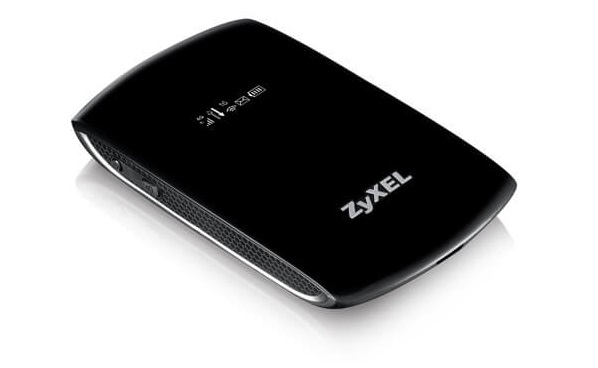
Figure 1. Portable LTE router AC1200 (model WAH7706).
Has the internet not been delivered yet?
However, even in large cities, there are places where internet access is difficult or completely absent. A great example is construction sites. It's not possible to lay wired internet, but connectivity is needed immediately, for instance, for video monitoring.
Sometimes, at unfinished sites, there is a temporary sales office for apartments that requires reliable access to remote online resources.
A similar situation arises in industrial areas. Due to long distances and a small number of consumers, laying cables is simply not cost-effective. LTE with its wide coverage area proves beneficial.
And, of course, LTE is in demand in summer cottages. The seasonal nature of service consumption, where many people are at their dachas in the summer and no one is there in the winter, makes these locations unattractive for "wired providers." Therefore, an LTE router has long been considered as essential as flip-flops or a garden watering can.
A cable that cannot be cut
Access via physical cables provides stable, reliable connectivity (at the appropriate technological level) but has one limitation — everything works as long as the cable is not damaged.
Let's take, for example, a video surveillance system. If the footage from the cameras is recorded remotely via the Internet, it is crucial to have an independent connection. In this regard, wired access is not the best solution.
Consider a store, hair salon, or another small business located in an apartment on the first floor of a residential building. If the cable appears anywhere in an accessible spot, such as passing through an electrical panel, it can be cut, causing the video surveillance system to stop transmitting. Even if there is a copy on internal resources, like a hard disk of the recorder, everything—both the cameras and the recorder—can be disabled or taken away, preserving complete anonymity.
In the case of wireless communication, access to the network can only be interrupted after gaining entry into the premises (not considering special 'jammers'). If you ensure independent power supply, even for a short period of operation, you can usually record the moment of intrusion, which can then be presented to the police, insurance company, security organization, and so on.
Another issue is the failure of switches and other user equipment, often due to unqualified builders and so-called 'handyman' problems, which can create various headaches for neighbors.
For such cases, wireless communication via LTE can prove invaluable.
What is the strength of LTE?
The abbreviation LTE stands for Long Term Evolution. Essentially, it is not even a standard but a direction of development aimed at answering the question: 'What will happen when the capabilities of 3G are no longer sufficient?'. It was initially thought that LTE would operate within the standards for 3G, but later developments took on a broader scope.
Initially, equipment that was meant for 3G networks could be partially used for LTE-based communication. This helped save costs in implementing the new standard, lowered the 'barrier to entry' for subscribers, and significantly expanded coverage areas.
LTE has a fairly wide list of frequency channels, allowing for the broadest possible applications.
Marketers refer to LTE as the fourth generation of mobile communications — '4G'. However, it's worth noting a bit of confusion in terminology.
According to The LTE-A technology has received the official designation IMT-Advanced. It is also noted that IMT-Advanced is considered a '4G' technology. However, the ITU does not deny that the term '4G' lacks a clear definition and can, in principle, apply to the names of other technologies such as LTE and WiMAX.
To avoid confusion, connections based on LTE-A technology have started to be called 'True 4G', while earlier versions are referred to as 'marketing 4G'. Although these names can also be considered quite conditional.
Today, most equipment labeled 'LTE' can operate with various protocols. This positively impacts both the expansion of access geography (coverage areas) and the wallets of users, who do not need to purchase a new device each time.
Using a mobile phone as a router — what are the drawbacks?
When reading about the availability of LTE technology, one might wonder: 'Why buy a specialized device? Why not just use a mobile phone?' After all, it is now possible to 'share the Internet via Wi-Fi' from almost any mobile device.
Of course, you can use a mobile phone as a modem, but this solution, to put it mildly, lags significantly behind a router. With a specialized router, you can choose an outdoor model, placing it in a location with a strong signal, such as under a roof. Another option is to connect a specialized antenna. (Support for external antennas in specific models will be discussed below.)
For direct access from a mobile phone, tablet, or even laptop, such options are unlikely to be feasible.
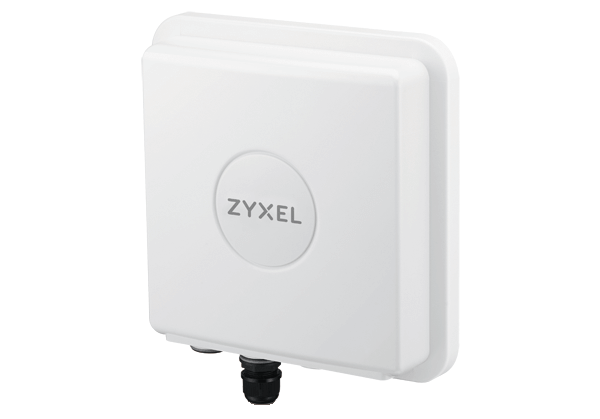
Figure 2. The outdoor LTE router LTE7460-M608 is well-suited for summer houses and other remote locations.
When connecting several users to such a "mobile phone distribution," it becomes very inconvenient to work. The Wi-Fi transmitter power of a mobile phone is weaker than that of a router with a built-in access point. Therefore, you have to sit as close to the signal source as possible. Moreover, the battery of the mobile device drains very quickly.
In addition to hardware nuances, there are other factors to consider. Universal offerings from mobile operators, intended for average usage and voice mobile communication, usually have traffic limitations and are not particularly advantageous for providing shared internet access. It is much simpler and cheaper to use contracts designed solely for internet usage. Combined with a specialized device, this yields good speed at a favorable price.
Some practical questions
It's advisable to first understand what tasks require internet access.
If you're planning an "escape from civilization," and the internet is needed only to download the next novel onto your e-book, that's one way of using it.
If you need to stay connected at all times, continue working, and maintain an active online life, that's a completely different way of spending time and a completely different load on the network.
The client equipment plays an important role. Let's say we have an old laptop from our IT equipment, taken in case of rainy weather. In this case, both older and more modern routers will work. The main thing is that Wi-Fi supports the frequency range of 2.4GHz.
If we’re talking about clients in the form of personal computers, they may not even have Wi-Fi interfaces. Here, you need to choose models with LAN ports for connection via twisted pair.
In the aforementioned cases, the LTE N300 router with 4 LAN ports (model LTE3301-M209) can be recommended. This is a good, time-tested solution. Although Wi-Fi is only supported at the 802.11 b/g/n level (2.4GHz), the availability of ports for wired connections allows it to function as a full switch for a home office. This is important when there are network printers, personal computers, and NAS for backups—essentially all the components for a small business.
The LTE3301-M209 router comes with external antennas for receiving signals from the base station. Additionally, the presence of 2 SMA-F connectors allows for connecting powerful external LTE antennas, ensuring reliable communication even in areas where cellular signal weakens.
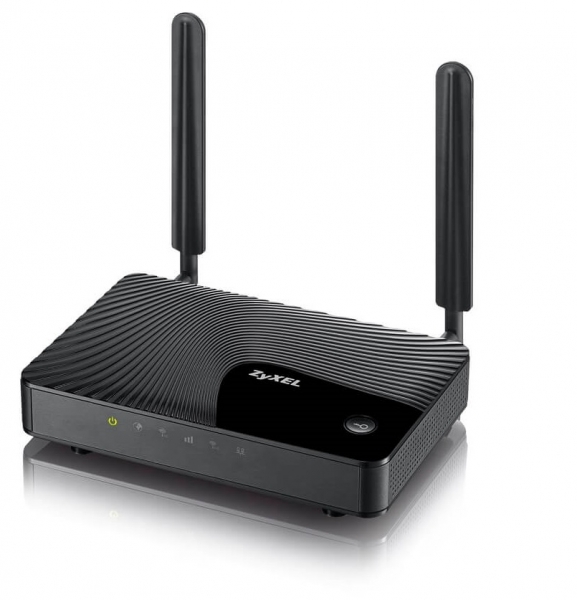
Figure 3. LTE Cat.4 Wi-Fi router N300 with 4 LAN ports (LTE3301-M209).
When a plethora of the latest electronics—mobile gadgets, high-end laptops—moves to the summer house or office, it’s best to choose the most modern models that support the latest technologies for Wi-Fi, LTE, and other useful features.
If outdoor placement is possible, consider the LTE7460-M608 model. (See Figure 2).
First, it will allow you to place the LTE router in a zone with better reception, such as under the roof, outside the building, and so on.
Secondly, this placement ensures stable Wi-Fi connectivity not only inside the building but also in open areas of the property. The LTE7460-M608 model uses built-in antennas with a gain of 8 dBi for connectivity. Another important feature is that Power over Ethernet (PoE) enables placement up to 100 meters from the house, positioned on a roof or mast. This is especially relevant when tall trees nearby can obstruct the cellular signal from the base station. The LTE7460-M608 comes with a PoE injector that provides PoE+ power up to 30 Watts.
However, sometimes using an outdoor device is not possible due to various circumstances. In this case, the gigabit LTE Cat.6 Wi-Fi router AC1200 with an FXS port (model LTE3316-M604) will be a lifesaver. This device has four GbE RJ-45 LAN ports. An important point is that the first port LAN1 can be reconfigured as WAN. This results in a versatile device that can be used as a regular router in an urban apartment for connection to the provider via twisted pair in the colder months, and in the summer— as an LTE router. Aside from the financial benefit of purchasing one device instead of two, using the LTE3316-M604 eliminates the need to reconfigure parameters for the local network, access settings, and so on. The maximum required is to switch the router to use a different external channel.
The LTE3316-M604 router also allows for the connection of external powerful LTE antennas, equipped with 2 SMA-F connectors. For instance, the LTA3100 antenna model with a gain of 6dBi is recommended.
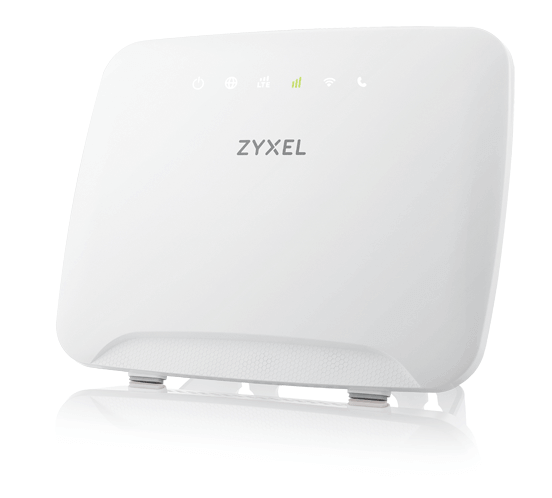
Figure 4. Universal Router AC1200 with FXS port (model LTE3316-M604) for indoor use.
Conclusion
As seen from the examples provided, there are no 'dead seasons' when it comes to ensuring internet access. However, changes in access methods and load characteristics occur, which affect the choice of technology.
LTE is a versatile option that allows for stable communication over a fairly wide coverage area.
Choosing the right equipment allows for more flexible adaptation of existing capabilities to the needs of each consumer.
file — continuous reading of events from one or more local files;
Source: habr.com
