

On June 11, 2019, the developers of the Matrix.org Foundation announced the release of Matrix 1.0 — a protocol for implementing a federated network based on a linear event history (events) within a Directed Acyclic Graph (DAG). The most common way to utilize the protocol is by implementing messaging servers (such as the Synapse server, Riot client) and 'interconnecting' other protocols with each other through bridges (for example, implementation on libpurple with support for XMPP, Telegram, Discord, and IRC).
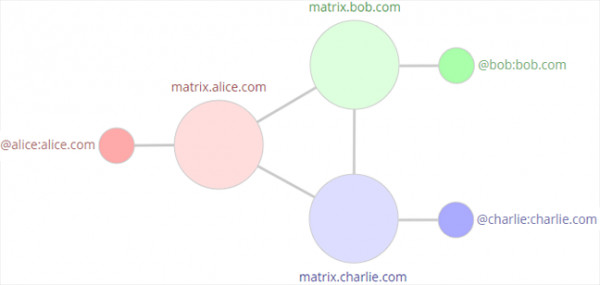
The main innovation (and prerequisite for using) the Synapse 1.0 server — which implements the Matrix 1.0 protocol — is the use of a TLS certificate (a free Let’s Encrypt certificate also works) for the server domain, which ensures secure data transmission between servers participating in the federated network. Therefore, if you are using a self-signed certificate for your home server, you must create a valid certificate; otherwise, your server will stop communicating with other servers in the network.
Plans for the release of the Matrix 1.0 protocol were announced in Brussels in February 2019 at the largest Open Source conference FOSDEM 2019 as part of efforts to implement technologies from the Matrix.org Foundation to provide a communication infrastructure for the French government.
Interestingly, two months ago, the matrix.org server was subjected to a hacking attack, resulting in the need to recreate the server's database (with the loss of the stored history of encrypted chats) and to reissue the Riot application for Android due to a leak of keys and passwords. The hackers left recommendations for improving business processes and server security (related to vulnerabilities in Jenkins — a platform for automating development and software testing). 'Home' Matrix servers were not affected, except for the temporary unavailability of 'stickers' for user messages and other secondary services.
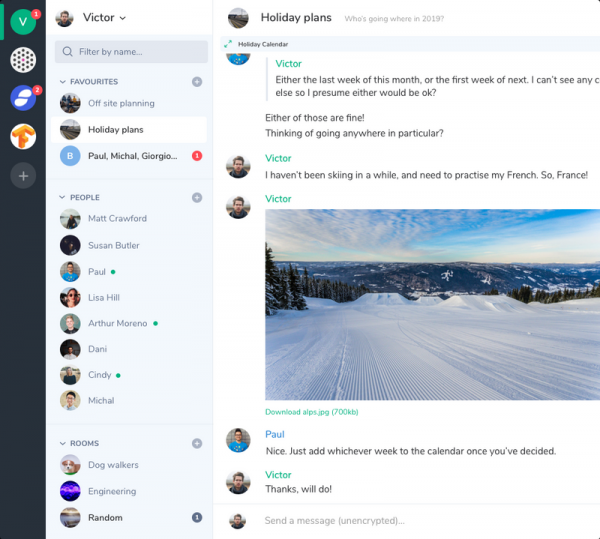
The most popular client, Riot.im (current version 1.2.1) — available in both desktop and most mobile platforms — has become comparable in convenience and reliability to similar clients for Slack and Telegram.
As I already Synapse servers are quite undemanding in terms of hardware — for a 'home' server, you can use ARM microcomputers like the ODROID-XU4 for $49, and with the introduction of ARM Graviton processors in Amazon Cloud virtual machines at the end of last year, it's affordable to set up a backup for your 'home mini-datacenter' in the Amazon cloud.
News and additional information —
Source: habr.com
