

I am collecting all the most important texts of all time and cultures that influence worldview and shape our understanding of the world (). And here I thought long and hard and put forward a bold hypothesis that this text is more revolutionary and important for our understanding of the world's structure than the Copernican Revolution and the works of Kant. In the Russian internet, this text (full version) was in terrible condition, I tidied it up a bit and, with the translator's permission, I publish it for discussion.
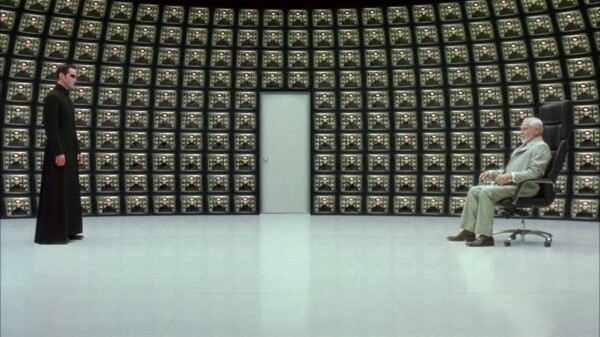
“Are you living in a computer simulation?”
by Nick Bostrom [Published in Philosophical Quarterly (2003) Vol. 53, No. 211, pp. 243-255. (First version: 2001)]
This article argues that at least one of the following three propositions is true:
- (1) it is highly likely that humanity will go extinct before reaching a "posthuman" phase;
- (2) each posthuman civilization has extremely low probability of running a significant number of simulations of its evolutionary history (or variations thereof) and
- (3) we almost certainly live in a computer simulation..
It follows that the probability of being in a phase of posthuman civilization capable of running simulations of its predecessors is zero, unless we accept as true the case that we are already living in a simulation. Other implications of this result are also discussed.
1. Introduction
Many works of science fiction, as well as forecasts from serious futurists and technology researchers, predict that colossal computing power will be available in the future. Let’s suppose these predictions are true. For example, future generations with their super-powerful computers will be able to run detailed simulations of their predecessors or people similar to their predecessors. Given that their computers will be so powerful, they will be able to run many such simulations. Let’s assume that these simulated beings possess consciousness (and they will have it if the simulation is highly accurate and if a particular widely accepted philosophical concept of consciousness is true). This implies that the majority of minds similar to ours do not belong to the original race, but rather to individuals simulated by the advanced descendants of the original race. Based on this, it can be argued that it is reasonable to expect that we are among the simulated, rather than the original, natural biological minds. Therefore, if we do not believe that we are currently living in a computer simulation, we should not believe that our descendants will run many simulations of their ancestors. This is the main idea. In the remaining part of the work, we will explore it in more detail.
Aside from the interest this thesis may hold for those engaged in futuristic discussions, there is also a purely theoretical interest. This proof serves as a stimulus for formulating a methodological and metaphysical problematics, and also offers some natural analogies to traditional religious concepts, which may seem surprising or thought-provoking.
The structure of this article is as follows: at the beginning, we will formulate a certain assumption that we need to import from the philosophy of consciousness in order for this proof to work. Then we will consider some empirical reasons for believing that launching a vast number of simulations of human minds will be accessible to a future civilization that develops many of the technologies about which it has been clarified that they do not contradict known physical laws and engineering constraints.
This part is not philosophically necessary, but it encourages attention to the main idea of the article. Following this, there will be a presentation of the proof in essence, using some simple applications of probability theory, and a section justifying the weak equivalence principle that this proof utilizes. In the end, we will discuss some interpretations of the alternative mentioned at the beginning, which will serve as the conclusion of the proof regarding the simulation problem.
2. Assumption of Independence from the Medium
A common assumption in the philosophy of consciousness is the independence from the medium. The idea is that mental states can arise in any medium from a broad class of physical substrates. Provided that the correct set of computational structures and processes is embodied in the system, conscious experiences can occur within it. The essential property is not being embodied in carbon-based biological neural networks; silicon-based processors inside computers can perform exactly the same trick. Arguments supporting this thesis have been put forth in the existing literature, and although it is not entirely uncontroversial, we will take it as a given here.
The proof we offer here, however, does not depend on any very strong version of functionalism or computalism. For example, we should not accept that the thesis of medium independence is necessarily true (in both an analytical and a metaphysical sense) – rather, we should accept only that, in reality, a computer running the appropriate program could have consciousness. Furthermore, we should not assume that in order to create consciousness in a computer, we would have to program it in such a way that it behaves in all cases like a human, passes the Turing test, etc. We only need a weaker supposition that to create subjective experiences, it suffices for the computational processes in the human brain to be structurally replicated in the relevant high-precision details, such as at the level of individual synapses. This refined version of medium independence is quite widely accepted.
Neurotransmitters, nerve growth factors, and other chemicals that are smaller than synapses clearly play a role in human cognition and learning. The thesis of medium independence is not that the effect of these chemicals is small or negligible, but that they influence subjective experience only through direct or indirect effects on computational activity. For instance, if there are no subjective differences without also differences in synaptic discharges, then the required level of simulation detail lies at the synaptic level (or higher).
3. Technological limits of computations
At the current level of technological development, we do not have sufficiently efficient powerful hardware or appropriate software to create conscious minds on computers. However, serious arguments have been made that if technological progress continues unabated, these limitations will eventually be overcome. Some authors claim that this phase will arrive in just a few decades. However, for the purposes of our discussion, no assumptions about the timeline are necessary. The simulation argument works just as well for those who believe that it will take hundreds of thousands of years to reach the 'post-human' phase of development, when humanity will possess much of the technological capabilities that can currently be demonstrated to be consistent with physical laws and material and energy constraints.
This mature phase of technological development will enable the transformation of planets and other astronomical resources into computers of immense power. Currently, it is difficult to be certain about any ultimate limits of computational power that will be available to post-human civilizations. Since we still do not have a "theory of everything," we cannot dismiss the possibility that new physical phenomena, prohibited by current physical theories, could be harnessed to overcome limitations that our current understanding suggests impose theoretical boundaries on information processing within a given piece of matter. With a far greater degree of reliability, we can establish lower bounds for post-human computations, assuming the implementation of only those mechanisms that are already understood. For example, Eric Drexler outlined the device of a system the size of a sugar cube (excluding cooling and power systems) that could perform 10^21 operations per second. Another author provided a rough estimate of 10^42 operations per second for a computer the size of a planet. (If we learn to create quantum computers, or learn to build computers from nuclear matter or plasma, we could get even closer to the theoretical limits. Seth Lloyd calculated the upper limit for a computer weighing 1 kg at 5*10^50 logical operations per second, performed on 10^31 bits. However, for our purposes, it is sufficient to use more conservative estimates that imply only the principles currently known.)
The amount of computing power needed to emulate the human brain can be roughly estimated in the same way. One estimate, based on how computationally expensive it would be to replicate the function of a piece of neural tissue that we have already understood and whose functionality has been reproduced in silicon (specifically, the contrast enhancement system in the retina), gives an estimate of around 10^14 operations per second. An alternative estimate, based on the number of synapses in the brain and their firing frequency, yields a figure in the range of 10^16-10^17 operations per second. Consequently, even more computing power might be required if we wanted to simulate in detail the internal workings of synapses and dendritic branches. However, it is quite likely that the human central nervous system has a certain degree of redundancy at the micro level to compensate for the unreliability and noise of its neural components. Therefore, one might expect a significant increase in efficiency when using more reliable and flexible non-biological processors.
Memory is no more a significant limitation than processing power. Moreover, since the maximum flow of human sensory data is on the order of 10^8 bits per second, simulating all sensory events would incur an insignificant cost compared to simulating cortical activity. Thus, we can use the processing power required to simulate the central nervous system as an estimate of the total computational cost of simulating the human mind.
If the environment is included in the simulation, it will require additional computing power, the amount of which depends on the size and detail of the simulation. Simulating the entire universe with quantum-level precision is obviously impossible unless some new physics is discovered. However, to achieve a realistic simulation of human experience, much less is required—only enough to ensure that the simulated people interact in an ordinary human manner with the simulated environment without noticing any differences. The microscopic structure of the Earth's inner regions can be easily omitted. Distant astronomical objects can be subjected to a very high level of compression: exact similarity is only necessary over a narrow range of properties that we can observe from our planet or from a spacecraft within the Solar System. On the Earth's surface, macroscopic objects in uninhabited areas should be continuously simulated, but microscopic phenomena can be filled in. ad hoc, meaning as needed. What you see through an electron microscope should look inconspicuous, but you generally have no way to verify its consistency with unobserved parts of the micro-world. Exceptions arise when we intentionally design systems to hide unobservable microscopic phenomena that operate under known principles to yield results that we can independently verify. A classic example of this is a computer. Simulation, therefore, must include continuous emulations of computers down to the level of individual logic elements. This poses no challenges, as our current computing power is negligible by post-human standards.
Moreover, the post-human creator of the simulation will have enough computational power to track in detail the state of thoughts in all human brains at all times. Thus, when he detects that a person is about to make an observation about the microworld, he can populate the simulation with a sufficient level of detail as needed. If any error occurs, the director of the simulation can easily edit the states of any brain that has learned about the anomaly before it disrupts the simulation. Alternatively, the director can rewind the simulation a few seconds back and restart it in such a way as to avoid the problem.
From this, it follows that the most costly aspect of creating a simulation indistinguishable from physical reality for human consciousness within it will be the creation of simulations of organic brains down to the neuronal or sub-neuronal level. Although it is impossible to give a very accurate estimate of the cost of a realistic simulation of human history, we can use an estimate of 10^33-10^36 operations as a rough indication.
As we gain more experience in creating virtual realities, we will reach a better understanding of the computational requirements needed for such worlds to appear realistic to their visitors. However, even if our estimate is off by several orders of magnitude, it does not significantly affect our proof. We noted that a rough estimate of the computational power of a planet-sized computer is 10^42 operations per second, and this only considers already known nanotechnology designs, which are likely far from optimal. Such a computer could simulate the entire mental history of humanity (let's call this the ancestor simulation) using only one millionth of its resources in one second. A post-human civilization could ultimately build an astronomical number of such computers. We can conclude that a post-human civilization could initiate a colossal number of ancestor simulations, even if it dedicates only a small fraction of its resources to this endeavor. We can arrive at this conclusion even allowing for significant errors in all our estimates.
- Post-human civilizations will have sufficient computational resources to run a vast number of ancestor simulations, even using a very small fraction of their resources for these purposes.
4. The Core of the Simulation Argument
The main idea of this article can be expressed as follows: if there is a substantial chance that our civilization will eventually reach a post-human stage and initiate numerous ancestor simulations, how can we prove that we are not living in one such simulation?
We will develop this idea into a rigorous proof. Let's introduce the following notations:
 – the fraction of all human-level civilizations that reach the post-human stage;
N – the average number of ancestor simulations run by a post-human civilization;
H – the average number of people who lived in a civilization before it reached the post-human stage.
Then the actual fraction of all observers with human experiences who are living in a simulation is:
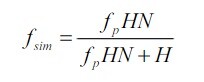
Let’s denote the proportion of post-human civilizations that are interested in running ancestor simulations (or that contain at least some individuals who are interested in this and have significant resources to run a substantial number of simulations), and let’s define the average number of ancestor simulations run by such interested civilizations as follows:
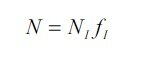
And consequently:
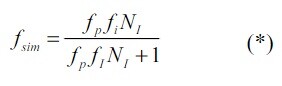
Due to the immense computational power of post-human civilizations which is extremely large, as we saw in the previous section. Looking at formula (*), we can see that at least one of the following three assumptions must be true:
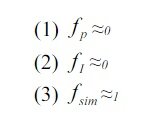
5. The Weak Equivalence Principle
We can take it a step further and conclude that if point (3) is true, one can be almost certain that you are in a simulation. Generally speaking, if we know that the fraction x of all observers with human-like experiences lives in a simulation, and we have no additional information that indicates whether our own particular experience is more or less likely to be instantiated in machine rather than in vivo compared to other types of human experience, then our confidence that we are in a simulation should equal x:
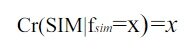
This step is justified by the very weak equivalence principle. Let’s break it down into two cases. In the first case, which is simpler, all examined minds are similar to yours in the sense that they exactly qualitatively match your mind: they have the same information and the same experiences as you do. In the second case, the minds are only broadly similar to each other, being of the sort typical for human beings, yet qualitatively distinct from one another and each possessing a different set of experiences. I argue that even in the case where minds are qualitatively different, the simulation argument still holds, provided you have no information answering which of the different minds are simulated and which are instantiated biologically.
A detailed justification of a stricter principle, which includes both of our private examples as trivial special cases, has been provided in the literature. The lack of space does not allow for the entire justification to be presented here, but we can provide one of the intuitive justifications. Let’s imagine that x% of the population has a certain genetic sequence S within a specific part of their DNA, commonly referred to as 'junk DNA.' Furthermore, let’s assume that there are no manifestations of S (aside from those that may appear in genetic testing) and no correlations between possessing S and any external manifestations. It is quite clear that before your DNA is sequenced, it is rational to attribute confidence in the x% hypothesis that you have the fragment S. This is entirely independent of the fact that individuals with S have minds and experiences qualitatively different from those of individuals without S. (They differ merely because everyone has diverse experiences, not because there is a direct correlation between S and the type of experience a person undergoes.)
The same reasoning applies if S is not a property of possessing a certain genetic sequence, but instead a fact of being in a simulation, assuming we have no information that allows us to predict any differences between the experiences of simulated minds and those of original biological minds.
It should be emphasized that the soft principle of indifference only highlights equivalence between hypotheses regarding which observer you are when you have no information about which observer you are. In general, it does not assign equivalence between hypotheses when you lack specific information about which of the hypotheses is true. Unlike Laplace's and other stronger principles of indifference, it is thus not subject to Bertrand's paradox and other similar difficulties that complicate the unrestricted application of principles of indifference.
Readers familiar with the Doomsday Argument (DA) (J. Leslie, “Is the End of the World Nigh?” Philosophical Quarterly 40, 158: 65-72 (1990)) may be concerned that the principle of indifference applied here relies on the same assumptions that undermine DA, and that the counter-intuitiveness of some of its conclusions casts doubt on the validity of simulation arguments. This is not the case. DA is based on a much stricter and more contentious premise that one should reason as if they are a random sample from the entire set of people who have ever lived and will ever live (in the past, present, and future), despite knowing that we are living at the beginning of the 21st century and not at some point in the distant future. The soft principle of uncertainty only applies to those cases where we lack additional information about which group of people we belong to.
If making bets serves as a basis for rational belief, then if everyone bets on whether or not they are in a simulation, using the soft principle of indifference and betting that they are in a simulation based on the knowledge that most people are, then almost everyone will win their bets. If they bet that they are not in a simulation, then almost everyone will lose. It seems more beneficial to follow the principle of soft indifference. Furthermore, one can envisage a sequence of possible scenarios where an increasing majority of people live in simulations: 98%, 99%, 99.9%, 99.9999%, and so on. As we approach the upper limit, where everyone lives in a simulation (from which it can be deduced that everyone is in a simulation), it seems reasonable to require that the credibility someone assigns to the proposition that they are in a simulation smoothly and continuously approaches the limiting threshold of complete certainty.
6. Interpretation
The possibility mentioned in point (1) is quite clear. If (1) is true, humanity is very unlikely to reach post-human levels; no species at our level of development becomes post-human, and it is hard to find any justification for the idea that our species has any advantages or special protection against future catastrophes. Given (1), we must attribute a high probability to the hypothesis of Doom (DOOM), that is, the idea that humanity will go extinct before it reaches post-human levels:
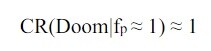
One can imagine a hypothetical situation where we have data that overrides our knowledge of fp. For example, if we find that a giant asteroid is about to collide with us, we might assume that we are extraordinarily unlucky. In this case, we could assign a higher probability to the Doomsday hypothesis than our expectation of the share of civilizations at the human level that cannot reach post-humanity. However, in our case, it seems we have no reason to think that we are special in this regard, for better or worse.
Assumption (1) does not itself imply that we are likely to go extinct. It states that we are unlikely to reach the post-human phase. This possibility may mean, for example, that we remain at our current level or slightly above it for a long time before going extinct. Another possible reason for the truth of (1) is that technological civilization is likely to collapse. In this case, primitive human societies would persist on Earth.
There are many ways humanity could go extinct before reaching the post-human phase of development. The most natural explanation for (1) is that we will go extinct due to the development of some powerful but dangerous technology. One candidate is molecular nanotechnology, the mature stage of which would allow for the creation of self-replicating nanobots that can feed on dirt and organic matter — something like mechanical bacteria. Such nanobots, if designed with malicious intent, could result in the extinction of all life on the planet.
The second alternative to the reasoning about ancestor simulations is that the proportion of post-human civilizations interested in running ancestor simulations is negligibly small. For (2) to be true, there must be a strict convergence among the developmental paths of advanced civilizations. If the number of ancestor simulations being created by interested civilizations is exceptionally large, then the rarity of such civilizations must correspondingly be extreme. Practically none of the post-human civilizations decide to use their resources to create a substantial number of ancestor simulations. Moreover, in almost all post-human civilizations, there are no individuals who possess the relevant resources and interest to initiate ancestor simulations; or they have enforced laws preventing individuals from acting according to their desires.
What force could lead to such convergence? One might argue that advanced civilizations all evolve along a trajectory that leads to the recognition of an ethical prohibition against running ancestor simulations due to the suffering experienced by the inhabitants of the simulation. However, from our current perspective, it does not seem obvious that creating a human race is immoral. On the contrary, we tend to perceive the existence of our race as having significant ethical value. Furthermore, the convergence of ethical views regarding the immorality of running ancestor simulations is insufficient; it must combine with the convergence of civilizational social structures, which leads to activities considered immoral being effectively prohibited.
Another possibility of convergence is that almost all individual post-humans in nearly all post-human civilizations develop in a direction where they lose the desire to initiate ancestor simulations. This will require significant changes in the motivations driving their post-human predecessors, as there are surely many people who would want to run ancestor simulations if they had the opportunity. However, many of our human desires may seem foolish to anyone who becomes post-human. Perhaps the scientific significance of ancestor simulations for post-human civilizations is negligible (which does not seem too incredible given their immense intellectual superiority), and perhaps post-humans view recreational activity as a very inefficient way of obtaining pleasure – which could be derived much more cheaply through direct stimulation of the brain's pleasure centers. One conclusion that follows from (2) is that post-human societies will be drastically different from human societies: they will not have relatively wealthy independent agents who possess a full range of desires similar to humans and are free to act upon them.
The possibility described in output (3) is the most intriguing from a conceptual standpoint. If we live in a simulation, the cosmos we observe is merely a small fragment of the totality of physical existence. The physics of the universe where the computer exists may or may not resemble the physics of the world we observe. While our observable world is somewhat 'real', it does not exist at some fundamental level of reality. For simulated civilizations, it may be possible to become post-human. They may, in turn, run ancestor simulations on powerful computers they have built in a simulated universe. Such computers would be 'virtual machines' — a widely used concept in computer science. (Web applications written in JavaScript, for example, run on a virtual machine — a simulated computer — on your laptop.)
Virtual machines can be nested: it is possible to simulate a virtual machine that simulates another machine, and so on, for an arbitrarily large number of steps. If we can create our own ancestor simulations, it would be strong evidence against points (1) and (2), and as a result, we would have to conclude that we are living in a simulation. Moreover, we would have to suspect that post-humans who launched our simulation are themselves also simulated beings, and their creators might also be simulated entities.
Reality can thus contain multiple levels. Even if the hierarchy must end at some level— the metaphysical status of this claim is quite unclear—there may be enough room for many layers of reality, and this number could increase over time. (One consideration against such a multi-level hypothesis is that the computational cost for base-level simulators would be very high. Simulating even a single post-human civilization could be prohibitively expensive. If so, we should expect that our simulation would be turned off when we approach the post-human stage.)
While all elements of this system are naturalistic, even physical, some loose analogies can be drawn with religious concepts of the world. In a sense, the post-humans who initiated the simulation are like gods in relation to the people within it: post-humans create the world we see; they possess intelligence superior to ours; they are omnipotent in the sense that they can interfere with our world's operations in ways that violate physical laws; and they are omniscient in the sense that they can monitor everything that occurs. However, all demigods, except for those living at the fundamental level of reality, are subject to the actions of more powerful gods dwelling at higher levels of reality.
Further exploration of these themes could lead to a naturalistic theogony, which would study the structure of this hierarchy and the limitations placed on inhabitants by the possibility that their actions at their level could influence the perception of them by inhabitants at deeper levels of reality. For example, if no one can be certain that they are at the base level, then everyone must consider the likelihood that their actions will be rewarded or punished, possibly based on some moral criteria set by the simulation's hosts. Life after death would be a real possibility. Due to this fundamental uncertainty, even a civilization at the base level would have an incentive to behave ethically. The fact that they have a reason to act morally would, of course, serve as a compelling argument for others to act morally as well, creating a virtuous cycle. Thus, something akin to a universal ethical imperative could emerge, which it would be in everyone's personal interest to uphold, and which arises from "nowhere."
In addition to ancestral simulations, one might envision the possibility of more selective simulations that include only a small group of people or a single individual. Other people would then be "zombies" or "shadow people" – individuals simulated only at a level sufficient for the fully simulated individuals not to notice anything suspicious.
It is unclear how much cheaper it would be to simulate shadow people than real individuals. It is not even evident that it is possible for some entity to behave indistinguishably from a real person while lacking conscious experiences. Even if such selective simulations exist, you should not be certain that you are in one until you are certain that these simulations are far more numerous than full simulations. The world would need to have about 100 billion more I-simulations (simulations of the life of just one consciousness) than there are full ancestral simulations for most simulated individuals to be in I-simulations.
There is also the possibility that simulators skip certain parts of the mental life of the simulated beings and give them false memories of the type of experiences they might have during the missed periods. If so, one can imagine the following (stretched) solution to the problem of evil: that in reality there is no suffering in the world and that all memories of suffering are an illusion. Of course, this hypothesis can only be taken seriously in moments when one is not suffering oneself.
Assuming we live in a simulation, what are the implications for us as humans? Contrary to what has been said before, the implications for people are not particularly radical. Our best guide to how our post-human creators have chosen to arrange our world is the standard empirical investigation of the universe we observe. Changes to most of our belief system will likely be small and soft – proportional to our lack of confidence in our ability to understand the mindset of post-humans.
A correct understanding of the truth of thesis (3) should not make us 'crazy' or cause us to abandon our business and stop making plans and predictions for tomorrow. The main empirical significance of (3) at this moment apparently lies in its role in the tripartite inference outlined above.
We should hope that (3) is true, as it reduces the likelihood of (1), however, if computational constraints make it likely that simulators will shut down the simulation before it reaches a post-human level, then our best hope is the truth of (2).
If we learn more about post-human motivations and resource constraints, perhaps as a result of our development towards post-humanity, then the hypothesis that we are simulated will receive a much richer set of empirical applications.
7. Conclusion
A technologically mature post-human civilization would possess enormous computational power. Based on this, the simulation argument shows that at least one of the following theses is true:
- (1) The fraction of human-level civilizations that reach post-human levels is very close to zero.
- (2) The fraction of post-human civilizations that are interested in launching ancestor simulations is very close to zero.
- (3) The fraction of all individuals with our type of experiences who live in a simulation is close to one.
If (1) is true, then we are almost certainly going to die before we reach a post-human level.
If (2) is true, then there must be a strictly coordinated convergence of the development paths of all advanced civilizations, so that none of them have relatively wealthy individuals who would want to run ancestor simulations and are free to do so.
If (3) is true, then we are almost certainly living in a simulation. The dark forest of our ignorance makes it reasonable to distribute our confidence almost evenly among points (1), (2), and (3).
Unless we are already living in a simulation, our descendants will almost certainly never run ancestor simulations.
Acknowledgments
I am grateful to many people for their comments, especially Amara Angelica, Robert Bradbury, Milan Cirkovic, Robin Hanson, Hal Finney, Robert A. Freitas Jr., John Leslie, Mitch Porter, Keith DeRose, Mike Treder, Mark Walker, Eliezer Yudkowsky, and anonymous referees.
Translation: Alexey Turchin
Translator's notes:
1) The conclusions (1) and (2) are non-local. They state that either all civilizations perish, or all do not wish to create simulations. This statement applies not only to the entire observable universe, not only to all the infinity of the universe beyond the observable horizon but to the entirety of 10**500 different universes with various properties that are possible according to string theory. In contrast, the thesis that we live in a simulation is local. Universal statements are much less likely to be true than particular statements. (Compare: 'All people are blond' and 'Ivanov is blond' or 'All planets have an atmosphere' and 'Venus has an atmosphere'.) To refute a general statement, it is enough to find one exception. Thus, the assertion that we live in a simulation is much more probable than the first two alternatives.
2) The development of computers is not necessarily required – it suffices, for example, to have dreams. These could be experienced by genetically modified and specially tuned brains.
3) The reasoning about simulation works in everyday life. The majority of the images that enter our brains are simulations – movies, television, the internet, photographs, advertisements – and last but not least – dreams.
4) The more unusual the object we see, the greater the chances that it is in a simulation. For example, if I see a terrible accident, I am most likely seeing it in a dream, on television, or in a movie.
5) Simulations can be of two types: simulations of entire civilizations and simulations of personal stories or even a single episode from one person's life.
6) It is important to distinguish simulation from imitation – a simulation of a person or civilization that never existed in reality is possible.
7) Supercivilizations must be interested in creating simulations to study different versions of their past and thus different alternatives for their development. They might also want to study the average frequency of other supercivilizations in space and their expected properties.
8) The simulation problem encounters the issue of philosophical zombies (that is, beings devoid of qualia, like shadows on a television screen). Simulated beings should not be philosophical zombies. If most simulations contain philosophical zombies, then the reasoning does not hold (since I am not a philosophical zombie).
9) If there are multiple levels of simulation, the same second-level simulation may be used in several different first-level simulations by those who live in a zero-level simulation. This is for the sake of conserving computational resources. It is similar to how many different people watch the same movie. For instance, let’s say I created three simulations. And each of them created 1000 sub-simulations. Then I would have to stimulate 3003 simulations on my supercomputer. But if the simulations essentially created the same sub-simulations, I would only need to model 1000 simulations, presenting the results of each three times. In total, I would run 1003 simulations. In other words, one simulation can have several hosts.
10) Whether you are living in a simulation can be determined by how much your life differs from the average, leaning towards unique, interesting, or important. It is assumed that creating simulations of interesting people living in a time of significant change is more appealing to the creators of the simulation, regardless of their goals – whether entertainment or research. 70% of the people who have ever lived on Earth were illiterate peasants. However, we must consider the effect of observational selection: illiterate peasants could not question whether they are in a simulation or not, thus the fact that you are not an illiterate peasant does not necessarily prove you are in a simulation. Likely, the most interesting period for simulation creators would be around the Singularity, as during that time there may be irreversible bifurcations in the paths of civilization that could be influenced by minor factors, including the traits of an individual. For instance, I, Alexey Turchin, believe that my life is so interesting that it is more likely simulated than real.
11) The fact that we are in a simulation increases our risks – a) the simulation may be turned off b) the creators of the simulation may conduct experiments on it, creating deliberately unlikely situations – such as asteroid impacts, etc.
12) It is important to note Bostrom's words that at least one of the three is true. This means that it is possible for some of the points to be true simultaneously. For instance, the fact that we may perish does not exclude the possibility that we live in a simulation, nor does the fact that most civilizations do not create simulations.
13) Simulated people and the world around them may not resemble any real people or the real world at all; what matters is that they think they are in the real world. They are incapable of noticing differences because they have never seen any real world. Or their ability to discern differences is dulled, as may happen in dreams.
14) There is a temptation to find signs of simulation in our world manifesting as miracles. But miracles can occur even without a simulation.
15) There is a model of the universe that addresses the proposed dilemma (but is not without its contradictions). Specifically, it is a Castaneda-Buddhist model, where the observer creates the entire world.
16) The idea of simulation implies simplification. If the simulation is accurate to the atomic level, it will be the same reality. In this sense, one can imagine a scenario where a certain civilization has learned to create parallel worlds with specified properties. In these worlds, it can conduct natural experiments, creating different civilizations. In other words, this is somewhat like the hypothesis of a cosmic zoo. These created worlds will not be simulations, as they will be entirely real, but they will be under the control of those who created them and can turn them on and off. There will also be quantitatively more of them, so a similar statistical reasoning applies as in the discussion of simulation.
Chapter from the article "UFOs as a factor of global risk":
UFOs are glitches in the Matrix
According to N. Bostrom (Nick Bostrom. Proof of Simulation. ), the probability that we live in a fully simulated world is quite high. This means that our world could be entirely modeled on a computer by some supercivilization. This allows the authors of the simulation to create any images within it, with goals that are incomprehensible to us. Furthermore, if the level of control in the simulation is low, errors will accumulate, similar to a malfunctioning computer, leading to glitches that can be noticed. The Men in Black become agents Smith, erasing traces of glitches. Or some residents of the simulation may gain access to certain undocumented capabilities. This explanation allows for any possible set of wonders, but it does not clarify anything specific—why we observe such manifestations and not, say, upside-down flying pink elephants. The main risk is that the simulation could be used to test extreme operating conditions of the system, that is, in catastrophic modes, as well as that the simulation could simply be shut down if it becomes too complex or completes its function.
The main question here is the degree of control in the Matrix. If the Matrix is under very strict control, the likelihood of unplanned glitches is low. However, if the Matrix is simply running and left to its own devices, glitches will accumulate just like they accumulate in an operating system over time and with the addition of new programs.
The first option is implemented if the creators of the Matrix are concerned with every detail of the events occurring within it. In this case, they will strictly monitor all glitches and meticulously remove them. If they are only interested in the final outcome of the Matrix's operation or a specific aspect of it, their control will be less stringent. For example, when a person starts a chess program and leaves for the day, they are only concerned with the program's results, not the details. Meanwhile, during its operation, the chess program can simulate many virtual games, or in other words, virtual worlds. In this case, the authors are interested in the statistical outcome of numerous simulations, and the details of a single simulation concern them only to the extent that glitches do not affect the final result. In any complex information system, a certain number of glitches accumulate, and as the system's complexity grows, the complexity of eliminating these glitches grows exponentially. Therefore, it is easier to tolerate the presence of certain glitches than to eliminate them entirely.
Furthermore, it is clear that the number of loosely controlled systems far exceeds that of strictly controlled ones, since loosely controlled systems are launched in large quantities when they can be produced VERY cheaply. For example, the number of virtual chess games is much greater than that of actual grandmaster games, and the number of home operating systems far exceeds that of government supercomputers.
Thus, glitches in the Matrix are acceptable as long as they do not affect the overall functioning of the system. Similarly, in reality, if the font in my browser starts displaying in a different color, I won't reboot the entire computer or uninstall the operating system. Yet, the same can be seen in the study of UFOs and other anomalous phenomena! There exists a certain threshold beyond which neither the phenomena themselves nor their public resonance can jump. As soon as some phenomena approach this threshold, they either disappear, or black-suited individuals appear, or it turns out to be a hoax, or someone dies.
It is worth noting that there are two types of simulations – complete simulations of the entire world and self-simulations. In the latter, the life experience of only one person (or a small group of people) is simulated. In self-simulations, one is more likely to find oneself in an interesting role, while in complete simulations, 70 percent of characters are peasants. For the sake of observational selection, self-simulations should be much more frequent – although this reasoning requires further consideration. However, in self-simulations, the theme of UFOs must already be embedded, just like the entire backstory of the world. And it can be intentionally embedded – to explore how I will deal with this theme.
Furthermore, in any information system, viruses inevitably arise sooner or later – that is, parasitic information units aimed at self-replication. Such units can form in the Matrix (and in the collective unconscious), and there should be a built-in antivirus program working against them. However, from the experience of using computers and biological systems, we know that it is easier to tolerate harmless viruses than to eradicate them all. Moreover, completely destroying viruses often requires dismantling the system.
Thus, it can be assumed that UFOs are viruses exploiting glitches in the Matrix. This explains the absurdity of their behavior, as their intelligence is limited, and their parasitism on humans occurs because each person is allocated a certain amount of computing resources in the Matrix that can be utilized. One could speculate that some individuals have taken advantage of the glitches in the Matrix to achieve their goals, including immortality, but the same has been done by entities from other computing environments, such as simulations of radically different worlds, which then infiltrated our world.
Another question is, what is the depth of the simulation we are likely in. A world can be simulated down to the atomic level, but that would require colossal computational resources. On the other extreme, there’s a first-person shooter, where the three-dimensional representation of the terrain is rendered as needed, based on an overall map and some general principles, when the main character approaches a new location. Predefined templates might be used for some areas, while precise rendering of others is ignored (as seen in the film "The Thirteenth Floor"). Obviously, the more accurate and detailed the simulation, the fewer glitches it will have. Conversely, simulations that are done "in haste" will have significantly more glitches but will consume immeasurably less computational resources. In other words, for the same costs, one could either create one highly accurate simulation or a million approximate ones. Furthermore, we assume that the same principle applies to simulations as it does to other things: that is, the cheaper an item is, the more often it appears (meaning there are more marbles than diamonds, more meteorites than asteroids, etc.). Thus, we are more likely situated within a cheap, simplified simulation rather than a complex, highly accurate one. One might argue that unlimited computational resources will be available in the future, allowing any actor to create sufficiently detailed simulations. However, this brings into play the effect of nesting simulations. Specifically, an advanced simulation could create its own simulations, let’s call them second-level simulations. For instance, an advanced mid-21st-century world simulation (created, let’s say, in the real 23rd century) could generate billions of simulations of early 21st-century worlds. It will use mid-21st-century computers that are more limited in computational resources compared to 23rd-century computers. (Additionally, the real 23rd century would save on the accuracy of sub-simulations since they are unimportant to it.) Therefore, all the billions of early 21st-century simulations it creates will be quite resource-efficient. Because of this, the number of primitive simulations, as well as simulations that are earlier relative to the simulated time, will be a billion times greater than the number of more detailed and later simulations. Consequently, any arbitrary observer has a billion times greater chance of finding themselves in an earlier (at least until the emergence of supercomputers capable of creating their own simulations) and cheaper, glitchier simulation. According to the self-sampling assumption principle, each person should consider themselves as a random representative of a multitude of similar beings if they wish to obtain the most accurate probabilistic estimates. Thus, we have much greater chances a) of being in the cheapest simulation b) of being before the time when supercomputers capable of creating simulations emerge (which is indeed the case) c) of being in a self-simulation d) of being at the bottom of a chain of nested simulations, that is, an N-level simulation, where N is maximized e) of being in a simulation with a significant level of glitches.
Another possibility is that UFOs are deliberately launched into the Matrix to fool those living in it and observe how they will react. Since I believe that most simulations are meant to simulate a world under certain special, extreme conditions.
However, this hypothesis does not explain the multitude of specific manifestations of UFOs.
The risk here is that if our simulation is overloaded with glitches, the masters of the simulation may decide to restart it.
Finally, one can propose the idea of the 'self-creation of the Matrix' — that we live in a computational environment, but this environment came into existence in some way at the dawn of the universe without the intervention of any creator beings. To make this hypothesis more convincing, we should first remember that according to one description of physical reality, elementary particles themselves are cellular automata — something like stable combinations in the 'Game of Life.' (game)
More works by Alexey Turchin:
About Ontol
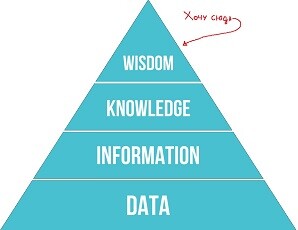 Ontol is a map that allows for the selection of the most efficient route for shaping one's worldview.
Ontol is based on the superposition of subjective assessments, reflecting on texts read (ideally — millions/billions of people). Each person involved in the project decides for themselves what the top 10/100 most important things they have read/watched on significant aspects of life (thinking, health, family, money, trust, etc.) over the past 10 years or their entire life are. What can be shared in one click (texts and videos, not books, conversations, and events).
The ideal end result of Ontol is access to significant texts and videos, which will impact the reader's life, 10x-100x faster (than existing analogs like Wikipedia, Quora, chats, channels, blogs, search engines) — "Oh, how I wish I had read this text earlier! My life would likely have gone differently." Free for all residents of the planet and just one click away.
- Channel on Telegram:
- Prototype of the web service:
- On Habr:
- Ontol about startups from Y Combinator:
Source: habr.com
