

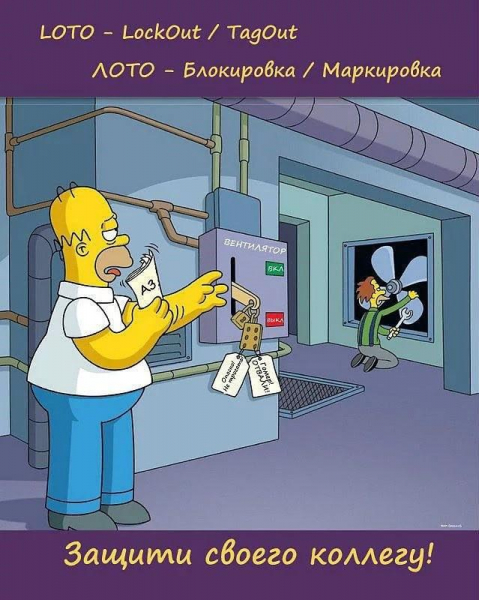
Safety first – not just an abstract appeal, but a very specific action plan for enterprises with industrial safety risks. Data centers fall into this category and must therefore have well-developed labor protection rules. Today, I will explain how the LOTO system operates at the Linxdatacenter site in Saint Petersburg, enhancing the safety of data center operations.
An analysis of industrial accidents, injuries, incidents, and occupational diseases shows that the main cause is non-compliance with safety requirements, ignorance of the nature of technogenic threats, and methods of protection against them. According to RosTrud, 30 to 40% of industrial injuries with serious health consequences in Russia are caused by human factors.
Moreover, 15-20% of all incidents are related to the incomplete disconnection of equipment from power sources during repairs and maintenance. Workers are most often injured due to the release of residual energy, as well as erroneous powering on or violation of the equipment shutdown procedure.
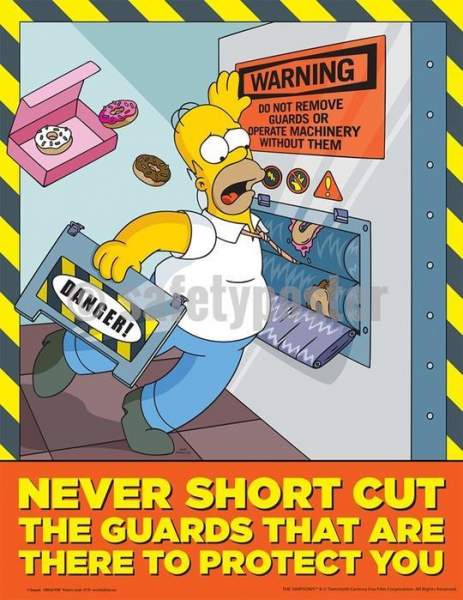
There is only one solution: adhere to safety regulations. This includes choosing the safest technological processes, organizational and technical measures, and rules for personal behavior.
What does this have to do with data centers?
Even considering the fundamental differences between a data center and a factory or nuclear power plant, the potential danger during the operation of the engineering systems in a data center certainly exists. After all, a data center involves several megawatts of electrical power, diesel generators, cooling systems, and ventilation. There can be no excess caution when it comes to industrial safety here.
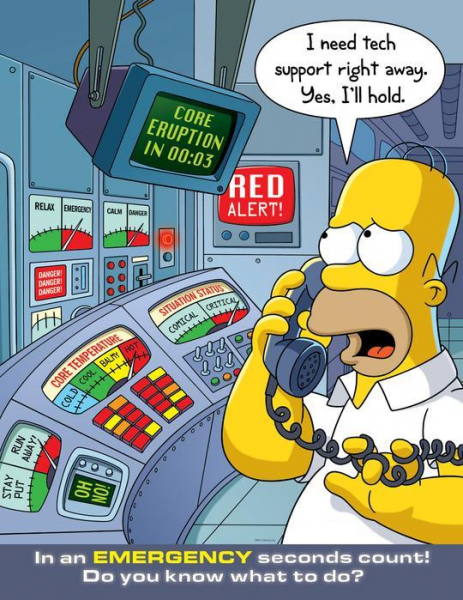
In the process of preparing for the certification of operational efficiency of Linxdatacenter according to the standard , we decided to bring this aspect in line with the working processes in the data center.
The task was as follows: to develop and implement a unified procedure for reliably locking off sections of the data center's engineering networks and to create a clear system for labeling types of work and performers. We studied the available solutions and chose the ready-made LOTO system as the most adequate and simple. Let's break down how this system works.
Lock and label!
The system name "Lockout/Tagout" literally translates from English as "Locking/Hanging warning tags." In Russian, the terms "protective locking system" and "locking systems" have taken hold. The commonly accepted English abbreviation "LOTO" is also used. Its main purpose is to protect individuals from interacting with energy sources in industrial settings where electrical, gravitational (gravity), hydraulic, pneumatic, thermal, and other forms of energy can pose a danger if released uncontrollably.
- Lockout. The first part of LOTO consists of Lockout procedures, which involve installing special locks and barriers on an engineering network section that is potentially hazardous due to the possibility of energy release. However, simply locking off the section is not enough; it is essential to inform people about the potential danger and what specific work and for how long led to the exclusion of this network section from normal operation.
- TagOut. For this, there is the second part of LOTO – TagOut. The potentially hazardous section of the network where work is being done and which has been disconnected or locked off is marked with a special warning tag. The tag informs other employees of the reason for the disconnection, from when it started, for how long, and who is responsible. All information is verified by the signature of the responsible person.
Let's look at an example.
In the data center in St. Petersburg, we use the following elements of the LOTO system:
- Electrical circuit breakers for reliable fixation of the energy source in a specific position:

- Mechanical hazard locks:

- Warning tags "Do not turn on," "Do not open" with information about the type of work, start and end times, responsible person, etc.:

- Padlocks for protective locking:
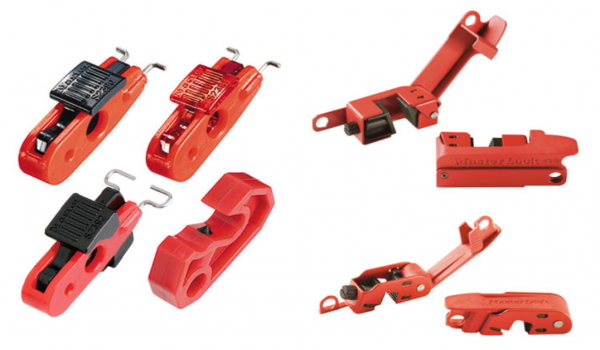
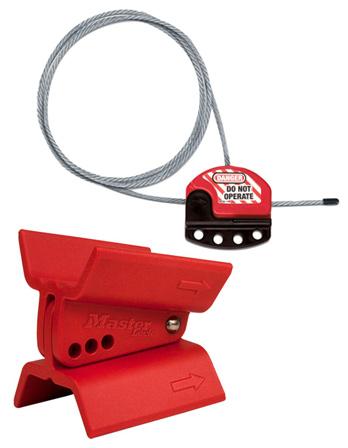

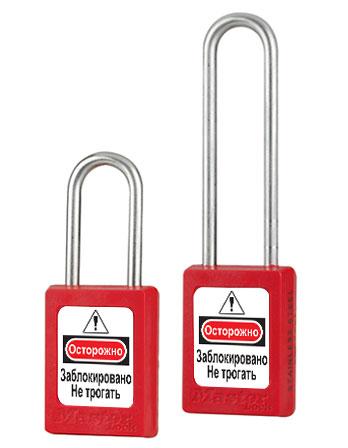
In addition to the blockers themselves, procedures for their use have been developed:
- The blockers are divided by equipment type:
- mechanical systems use blockers with the letter indicator 'M',
- for electrical systems – 'E'.
This is done for ease of reference in the instructions and locating them on the stand.
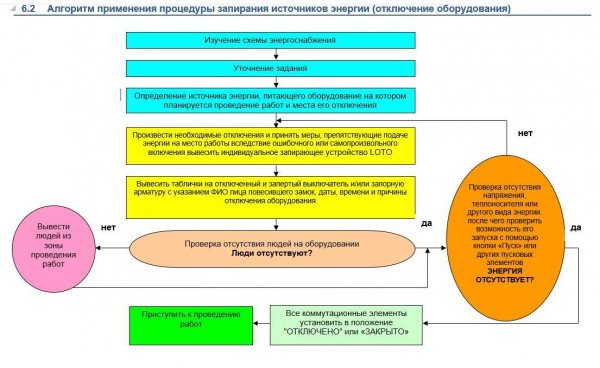
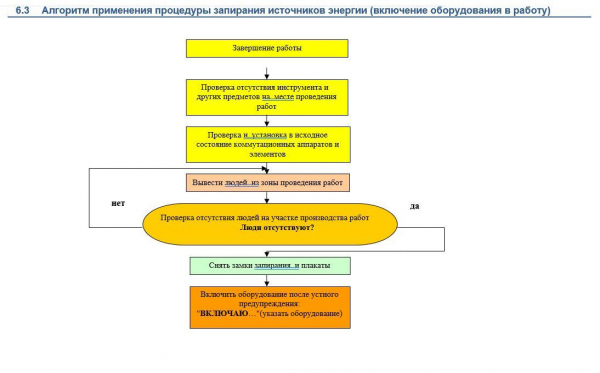
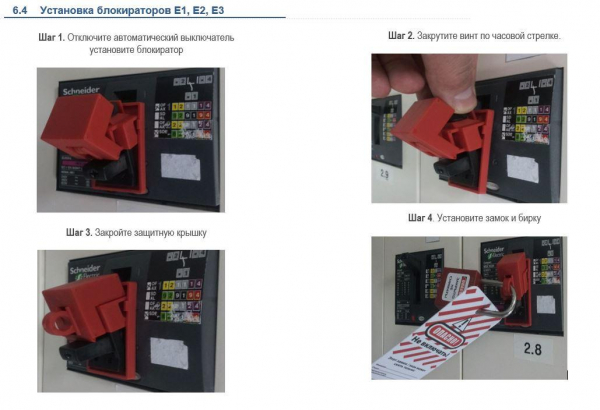
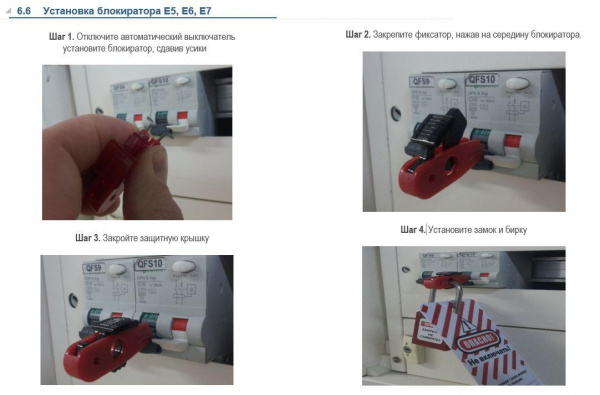
- Algorithms for installing blockers have been developed for carrying out work and removing them in case of emergencies:

Equipment shutdown algorithm.
Equipment startup algorithm. - In the instructions for performing repair and maintenance work the types of blockers are specified, which must be used:

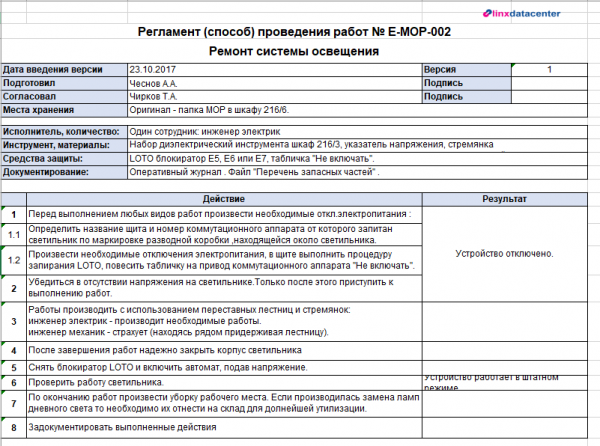
As we can see, everything is very clear. A set of blockers is prescribed for each specific task, and at least one of them is always available on the stand. The stand itself is designed to be as visual as possible. Combined with detailed LOTO instructions, it leaves no room for error.
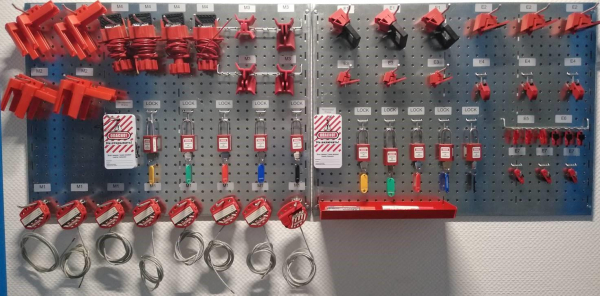
Thus, in the data center, a stand for storing LOTO locking devices has been organized.
What has changed with LOTO
Formally speaking, the use of LOTO allows:
- to reduce the number of accidents,
- to reduce compensation costs for health damage,
- to reduce downtime and increase productivity.
In total, this allows for a decrease in indirect costs for the operation of the data center's engineering systems.
If we talk in more informal categories, then after the implementation of the system, the operational service managers in the data center have gained more confidence in the safe nature of all ongoing work. Of course, everything also worked in the usual way with homemade 'Do Not Turn On!' signs, 'Caution!' warnings, and verbal announcements.
With LOTO, there is much greater confidence in the safety of each engineering network section in the data center. Moreover, managing operational and maintenance tasks has been significantly simplified: it is enough to specify the section, node, blocker model, and the timeframe for shutdown.
The transparency of the rounds performed by the duty staff has also increased: if the circuit breaker that should always be on is in the 'off' position and there is no LOTO tag – it's clear, emergency shutdown, action is required. If the tag is present – it's also clear, scheduled shutdown, no need to touch anything, continue the round.
Situations involving "forgotten" tags and announcements are excluded: in all cases, it is always possible to say who, when, and for what reason placed the block and lock, who can remove it, etc. There are no secrets about "what is this disabled circuit breaker on this panel that has been there for two weeks?"
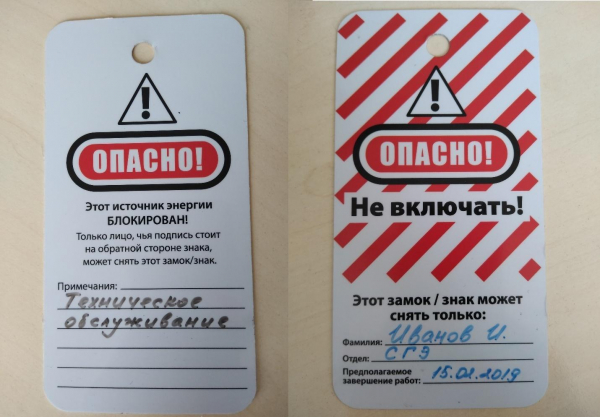
We look at the tag and immediately know what is happening and whom to ask.
In conclusion
- LOTO in the Linxdatacenter data center in St. Petersburg became one of the factors for the facility's successful certification by Uptime Institute M&O. Auditors admitted that they rarely see the implementation of such a system in a data center.
- Undeniably positive impact on the quality of the data center's operations as a whole: making mistakes in the operations departments has become nearly impossible.
- Safety guarantees for the company and its employees for the future: according to OSHA statistics, in the United States alone, compliance with LOTO regulations prevents 50,000 serious injuries and 120 fatalities each year.
- Small investments – significant effects. The main costs are for writing regulations, rules, situation classification, and training employees. The total time for implementation is 4 months, carried out by the company’s staff.
Highly recommended!
If you have any questions, feel free to ask in the comments.
Source: habr.com
