


The Raspberry Pi mini-computer was created for learning and experimentation. However, since 2012, the 'berry' has become much more powerful and functional. The board is used not only for education but also for creating desktop PCs, media centers, smart TVs, players, retro consoles, private clouds, and other purposes.
Now there are new cases appearing, not from third-party developers, but from the creators of the mini-PC themselves — the Raspberry Pi Foundation — and their hosting partner, Mythic Beasts. This provider manages the website and blog of the 'berry'.
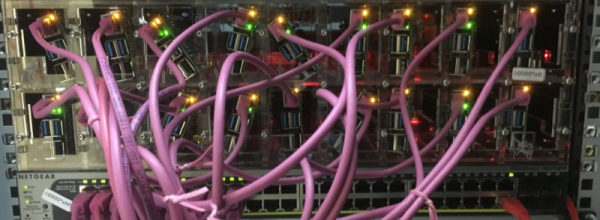
A cluster of 18 Raspberry Pi 4. Source:
Last summer, developers from the Raspberry Pi Foundation decided to create their own server for their website and successfully executed the plan. To do this, they assembled a cluster of 18 fourth-generation 'berries' with a quad-core 1.5 GHz processor and 4 GB of RAM.
14 boards were used as dynamic LAMP servers (Linux, Apache, MySQL, PHP). Two boards served as static Apache servers, and another two acted as memory storage based on memcache. The newly created server was configured to work with the company's website and moved to the Mythic Beasts data center.
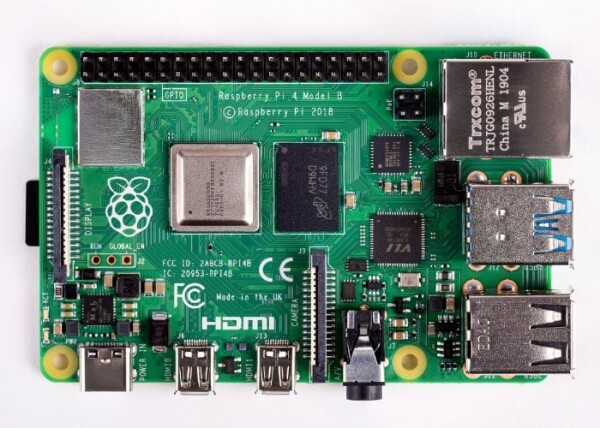
Raspberry Pi 4. Source:
The company gradually redirected traffic from 'normal' hosting to the new Raspberry Pi hosting. Everything went well; the equipment held up. The only inconvenience was a Cloudflare outage, lasted two hours. There were no further outages. The hosting ran without significant issues for a month, after which the company's website was returned to a regular virtual environment. The main goal was to prove that the server works and can handle high loads (over ten million unique visitors a day).
Opening raspberry pi hosting to everyone
In June 2020, the Raspberry Pi Foundation's partner, hosting provider Mythic Beasts, . Namely, Raspberry Pi 4-based hosting for everyone interested. And this is not just an experiment, but a commercial offering, and if the hosting provider is to be believed, it is quite profitable. The company stated that a server based on Raspberry Pi 4 is not only more powerful but also much cheaper than AWS's a1.large and m6g.medium instances.
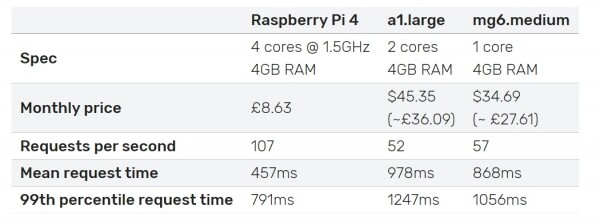
The offer has one significant drawback – instead of HDD or SSD, it uses SD format memory cards. This is not the most reliable storage medium, and when a card fails, it takes time to replace and set it up.
The Raspberry Pi Foundation aims to address this issue by including spare mini-PCs in the cluster. If one of the 'Raspberry Pi' cards fails, a backup device with a working card activates. Another option is to purchase high-reliability 'high endurance SD cards.' The cost of such a drive is about $25 for 128 GB.
What do you think of this option? Share your thoughts in the comments.
Only registered users can participate in the survey. , please.
Do you need such a service from Selectel?
22,5%Yes32
45,8%No65
31,7%And why are you asking?45
A total of 142 users voted. 28 users abstained.
Source: habr.com
