

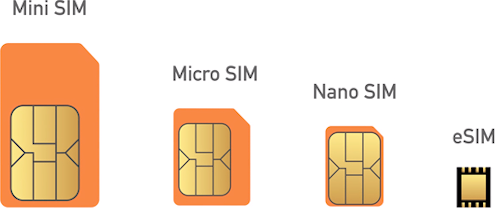
Let's talk about eSIM (full name embedded SIM — that is, embedded SIM) — embedded in devices (unlike the usual removable ‘SIM cards’) SIM cards. We will discuss how they are better than regular SIM cards and why major mobile operators oppose the adoption of this new technology.
This article is supported by EDISON.We , and can also take on the preparation of detailed .
We love mobile communication! 😉
While a regular SIM card can be removed from the phone and replaced with another, an eSIM is an embedded chip that cannot be physically extracted. On the other hand, eSIM is not strictly tied to a specific operator and can always be reprogrammed for another provider.
Advantages of eSIM over regular SIM cards
- Fewer problems when a smartphone is lost.
If you lose your smartphone or it gets stolen, you can quickly and effectively block the device while swiftly activating your lost mobile number with eSIM on another phone. - More space for other components.
eSIM takes up much less space than the slots for regular SIM cards. This allows for the integration of eSIM into devices where there isn’t enough space for standard SIM cards — for example, in 'smartwatches'. - One SIM card for the whole world.
Now there’s no need to buy a 'SIM card' from a local operator when you arrive in another country. eSIM can simply be switched to another operator.
However, there is China, which does not recognize eSIM technology. In this country, you'll have to use the old-fashioned way, and soon, the Middle Kingdom will launch its isolated Chinese eSIM. - One number for multiple devices.
You can simultaneously connect your tablet, second tablet, 'smart' watch, 'smart' car, and any other 'high-tech' devices (if you have them) to the same number. As long as the device supports the technology.
FAQ for eSIM
- What is embedded UICC (eUICC)?
The original name of the technology. It stands for embedded universal integrated circuit (eUICC from English. embedded Universal Integrated Circuit Card ) The term eSIM is a synonym, which appeared a bit later. - Can any gadget be connected to eSIM?
No, only new generation devices that support the technology. If a tablet is older than three years, it definitely does not have eSIM. - Can I transfer an eSIM card from one device to another?
Physically — no, the card is permanently embedded in the gadget. Virtually — yes, you can set up the same phone number on different gadgets (that support eSIM). - Are eSIM and regular SIM compatible on one device?
Of course! All tablets that support eSIM also have at least one slot for traditional SIM cards. In fact, these are devices that support two SIM cards simultaneously (while eSIM takes up much less space). - I'll take two! I can use more than one eSIM on one device, right?
The latest iPhones allow the use of multiple eSIMs, but so far only one at a time, not simultaneously. - Why are major mobile operators not rushing to mass transition to eSIM?
The main reason is that widespread adoption of eSIM will lead to a radical restructuring of the market. Currently, the mobile market in each country is divided among a few local players, making it very difficult for new entrants. The eSIM technology will result in the emergence of many new virtual operators, leading to a market redistribution in favor of new providers at the expense of the old. Such prospects are unacceptable to the established monopolists.
Some events in the history of eSIM development

November 2010 — GSMA (the trade organization representing the interests of mobile operators worldwide and setting industry standards) discusses the possibilities of a programmable SIM card.


May 2012 — The European Commission selected the Embedded UICC format for its in-car emergency call service in case of an accident, known as eCall.

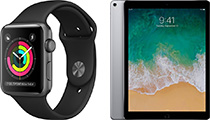
September 2017 — Apple implemented eSIM support in its devices Apple Watch Series 3 and iPad Pro second generation.


October 2017 — Release of Microsoft Surface Pro fifth generation, which also supports eSIM.

October 2017 — Google introduced Pixel 2, which added eSIM support for use with Google Fi service.

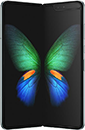
February 2019 — Presented Samsung Galaxy Fold (released in September). The LTE model supports eSIM.


December 2019 — International virtual operator MTX Connect becomes a global partner of Apple for eSIM.

Interview with Ilya Balashov
 Ilya Balashov — Co-founder of the virtual mobile operator MTX Connect
Is eSIM an evolution or a revolution?
An evolution that has been very delayed and that no one on the market expected or expects.
The classic plastic SIM card has embodied the connection between the operator and the subscriber for decades. And operators are more than satisfied with this situation.
Will removable SIM cards become a relic in the medium term? Will they be replaced by eSIM?
No, they will not! The ecosystem is controlled by the operators, and they are less interested than any other participants (such as device vendors, end users/subscribers, regulators, etc.) in ensuring that eSIM becomes widespread.
Currently, only one phone manufacturer produces and sells devices with eSIM as the main product for the mass consumer through all its sales channels — and that is Apple!
All other devices (Microsoft with Surface Tablet, Google with Pixel, Samsung with Fold) are niche products that either are not sold through operators at all or have very small sales volumes.
Apple is the only company in the market that not only has its own vision of the product but also sufficient market power to tell operators: 'If you don't like phones with eSIM — you don't have to sell them!'
For plastic SIM cards to stop occupying more than 90% of the market, support from other phone manufacturers is not enough.
All vendors (except Apple) are heavily dependent on operators in their sales channels, who tell all vendors — 'We will not sell phones with eSIM for the mass market.'
Despite the fact that Russia (and almost the entire CIS) is a market for independent distribution — operators still have a significant influence in these regions.
How much faster is 'eSIMization' happening in the world compared to Russia? Are we falling behind significantly?
No mobile operator in the world is interested in promoting eSIM, no matter what they publicly say about it.
Moreover, eSIM platform providers say that operators' plans for the number of eSIM activations differ by tens of times from actual usage!
According to various estimates, less than 5% of iPhones with eSIM support have downloaded at least one eSIM at least once during their lifetime.
Russia is lagging behind in the sense that even state authorities have not yet been able to determine how to relate to this phenomenon (eSIM)! This means that no further steps can be taken by anyone.
In the Middle East, India, and Asia, fairly strict regulations for eSIM for operators were introduced, but they were clear from day one, allowing operators to decide whether they want to follow them or not.
In China, for example, tests are underway for their own eSIM ecosystem, which, although similar to the one existing worldwide, will nonetheless be completely isolated from it. We believe that in 2020-21, Chinese smartphones supporting the Chinese version of eSIM will begin to enter Russia via AliExpress, leading to disappointment among consumers regarding this technology due to complete incompatibility.
What new challenges are expected in the near future?
It is possible that additional market segmentation will soon arise between companies that rely on long-term relationships with their subscribers and various eSIM vendors, which essentially compete with point-of-sale sim card vendors in airports.
In the case of SIM, the subscriber returns to the mobile operator time and again. Operators are not interested in just selling eSIM to a client once and then forgetting about them.
And there could be a situation similar to the current market for selling one-time SIM cards for tourists (on Ebay, TaoBao, AliExpress) — where a package touted as 10GB actually sells 4GB (and sometimes even 1GB) at full speed, and then, as they do, without warning, throttles down to 128 kbps. Trust in the idea among ordinary people will wane!
What comes after eSIM?
Since we are at the very beginning of the eSIM ecosystem's development path, I believe that in the next 5-7 years, eSIM will evolve both technically and organizationally.
Talking about what will happen next is pure speculation or fantasies on a given topic.
Links
EDISON has productive experience collaborating with MTX Connect.We have prepared the technical specifications and created .
The API for the MTX Connect server side has been developed, significantly expanding user functionality.
Only registered users can participate in the survey. , please.
Have you used/use eSIM?
8,3%Yes37
48,6%No217
43,2%I haven't used it yet, but I plan to193
447 users voted. 53 users abstained.
Source: habr.com
