

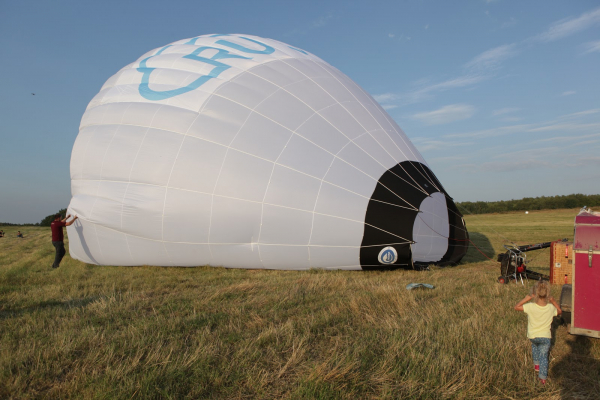
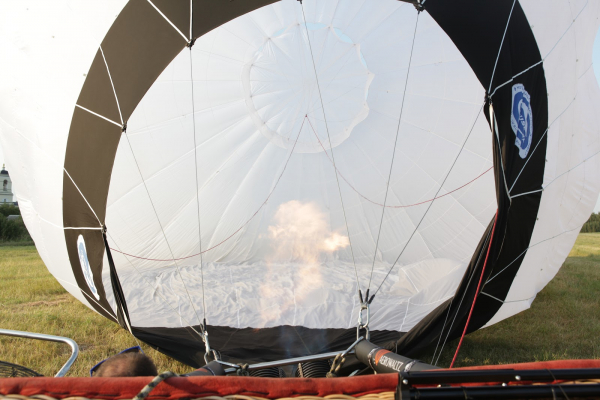
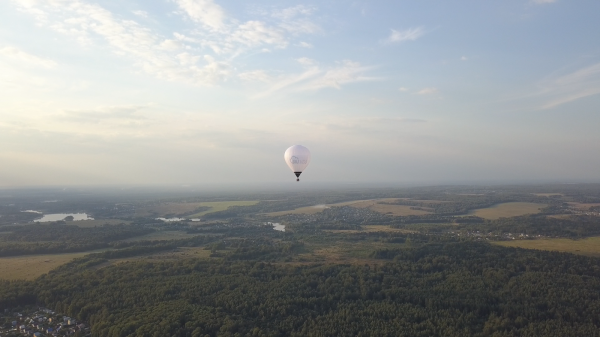
Friends, it's time to summarize our cloud server project competition. For those who are unaware, we created a fun geek project: we built a small server on a Raspberry Pi 3, attached a GPS tracker and sensors, loaded it all onto a balloon, and entrusted it to the forces of nature. Only the gods of the winds and patrons of ballooning know where the balloon will land, so we invited everyone to place markers on the map — those whose markers are closest to the actual landing site will receive 'tasty' prizes.
So, our server has already flown into the clouds, and it's time to conclude our competition.
Links to previous publications about the competition
- (prize for first place in our competition — participation in a sailing regatta, which will take place from November 3 to 10 in the Saronic Gulf (Greece) together with the RUVDS team and Habr.
- How we built theof the project — for fans of geek porn, with details and code breakdown.
- with a full description.
- , where you could track the balloon's movement and telemetry in real-time.
- from the launch site of the balloon.
And the experience, son of difficult mistakes
As you may remember, we planned to transmit data from the server via a GSM modem. This was the primary channel for information transmission. We thought we had anticipated any surprises with cellular coverage by inserting two SIM cards from operators with the best coverage in the Dmitrov area into the modem. Additionally, the modem had a good omnidirectional antenna. But, as they say, man proposes, and the operators dispose. When the balloon ascended above 500 meters (the height of the Ostankino Tower), the cellular connection was lost completely.
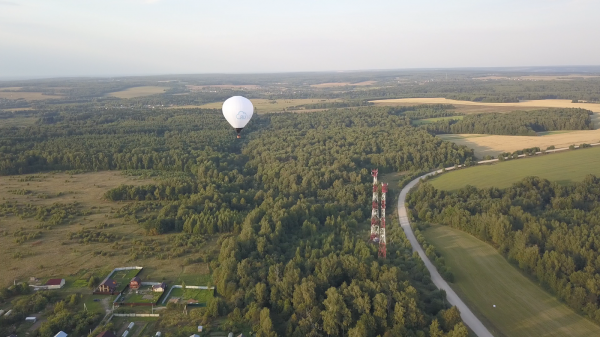
In hindsight, this seems obvious, but that's what hindsight is for. Of course, cellular antennas are designed for ground coverage, not for the air. Their directional patterns 'aim' along the terrain and do not 'shine' into the clouds. So cellular connectivity at half a kilometer and above is merely a random reflection from some antenna's lobe. Thus, for half of the communication route with the balloon, there was no cellular channel. However, while descending, when we dropped below 500 meters, the cellular connection resumed.
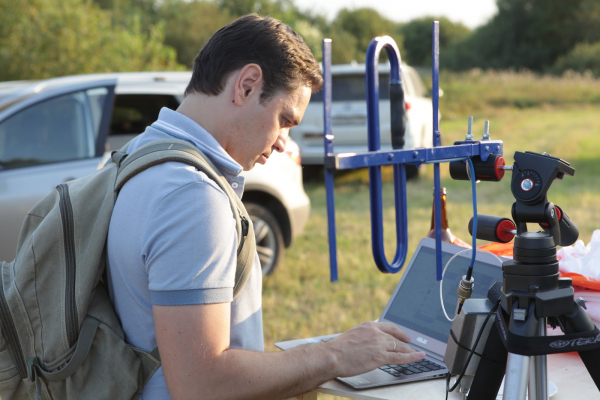
How did we receive telemetry from the balloon? Thanks to the backup data transmission channel. We installed a set on the balloon, operating at a frequency of 433 MHz.
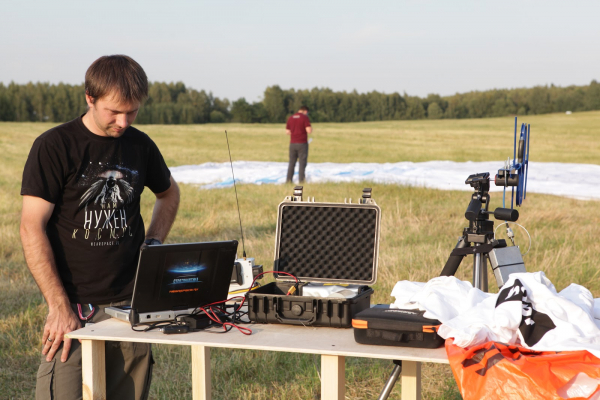
Its bandwidth is not very high, but it was sufficient for our tasks. As for locating the balloon via GPS, there were no issues; the tracker worked seamlessly.
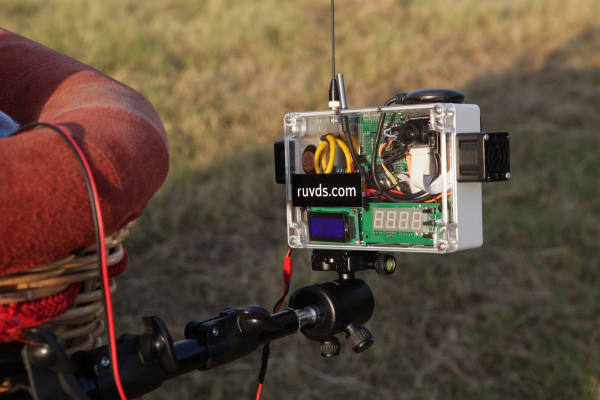
Additionally, during the flight, we discovered that the USB cable connecting the telemetry module to the Raspberry Pi 3 was defective. It worked on the ground but failed in the air. Perhaps it was afraid of heights. We identified the cable's fault only after landing. Fortunately, we managed to establish direct data transmission from the telemetry module via LoRa.
And some good news
Luck smiled on Habr users @ (first place), @ (second place), and @ (third place)! The luckiest one in November will receive a lot of impressions (hopefully pleasant) from, and soon we will present good smartphones to the second and third place holders. And of course, all three get a complimentary rental of a virtual server from RUVDS.
You can watch how the launch went in this short video:

Source: habr.com
