

Southbridge, with its Slyorm, is the only company in Russia that has (Kubernetes Training Provider).
Slyorm has turned one year old. During this time, 800 people have participated in our intensive Kubernetes courses. It's the perfect time to write memoirs.
From September 9-11, in St. Petersburg, at the Selectel conference hall, the next event will take place, the fifth in the series. There will be an introduction to Kubernetes: each participant will create a cluster in the Selectel cloud and deploy an application there.
Below is the story of Slyorm, from its inception to today.
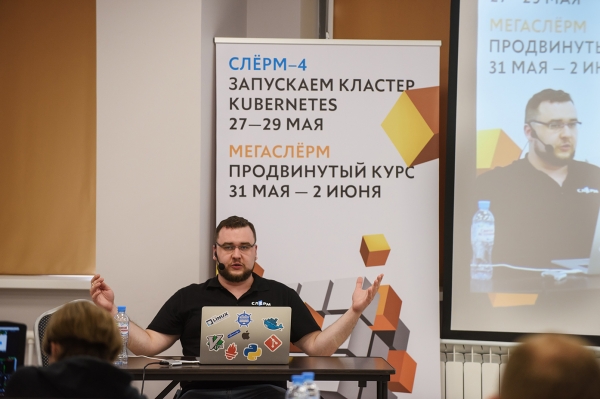
Pavel Selivanov at the Slyorm-4 opening
And Kubernetes has arrived
In 2014, the first version of Kubernetes was released. By 2018, there was a hype in Russia: the number of Kubernetes queries on Yandex grew from 1,000 per month to 5,000, and this word was increasingly mentioned in discussions. Businesses had not yet fully embraced Kubernetes, but were already taking a keen interest.
In 2018, we noticed that Kubernetes was gaining traction, yet only a couple of people in the company had a solid grasp of it. Two people is much better than none, but far less than we needed. There were simply no decent courses available on the market. We had nowhere to send people. So we made the obvious decision: to create internal courses where experts could teach the rest.
Igorolem Skoy
CEO of Southbridge
But it’s not enough to just teach people. At Southbridge, everyone works remotely; you can't gather them in one office easily; they would have to be brought in from Chelyabinsk, Khabarovsk, and Kaliningrad. Kubernetes is a complex topic that cannot be mastered in just a couple of hours, and not everyone can afford to put their work on hold for a week.
Transmitting knowledge is not easy either; you can't just sit in front of a webcam and pour everything you know into the minds of your colleagues. You need to structure the material, plan the lecture, prepare a presentation, and come up with a practical assignment.
To make training happen, you need to prepare a program, book a hotel, pull everyone out of their routine, sit them in a conference hall, and rapidly impart knowledge.
And if we are booking a hotel and conference hall for ourselves, why not sell a few spots? We could recover some costs for the tickets.
Thus, the idea of Slyorm was born.
"Slyorm-1": it always hurts the first time
The concept of the first Slyrm continuously changed. We will hold it in the "Programmers' Village near Kirov." No, we're moving to a hotel near Moscow. We're creating a program for a week. No, for 3 days. We're expecting 30 participants. No, 50. We're practicing on laptops. No, in a cloud cluster.
I already had experience training people to work with Kubernetes, so the first program consisted of what I usually told my admin colleagues. It was originally planned for a week. Then it turned out that no one wanted to drop everything for a week for our training, and together we shortened the program to 3 days: removed all the fluff, maximally replaced theory with practical assignments, and at the same time restructured the program to be useful not only for admins but also for developers whose applications run on k8s.
Pavel Selivanov
Slyrm speaker
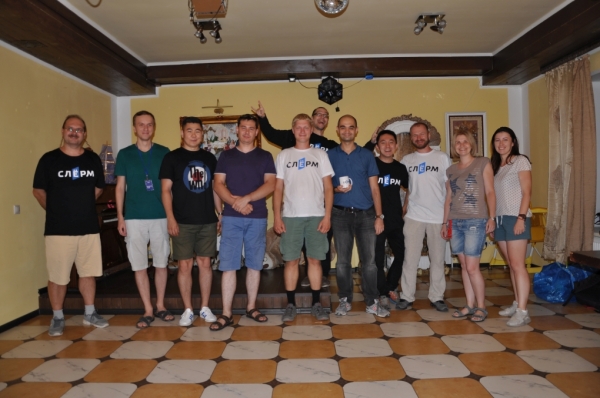
Southbridge employees met in person for the first time
Twenty people from Southbridge came to study at Slyrm. We practically sold another 30 tickets for 25,000 ₽ (which is very cheap considering accommodation) with almost no advertising, and about 30 more registered for the waiting list. It became clear that the demand for such courses is enormous.
On August 2, 2018, participants converge at the hotel, and a wave of organizational problems hits us hard.
In the conference hall where Slyrm is supposed to take place, renovations are incomplete. There are no tables: either the delivery from IKEA was delayed, or the hotel never intended to purchase them, and they were stringing us along. A third of the rooms are uninhabitable. The hotel administration looks like it had just finished milking corporate clients yesterday, and the girls at the reception are exhausted like those same corporate clients.
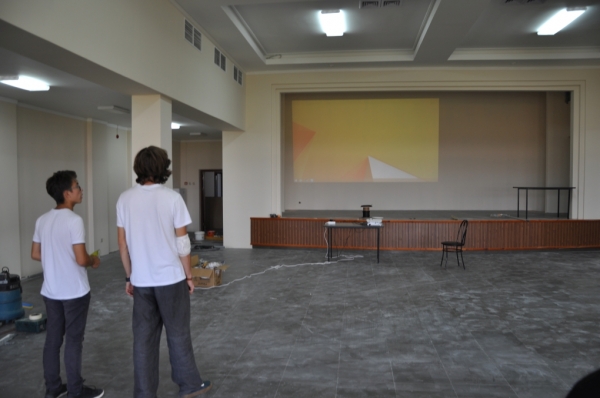
In this hall, Slyrm will begin in 20 hours
After the first Slyrm, I developed a Vietnam Syndrome. I personally check the halls we rent, count the tables, sit on local chairs, try the food, and ask to show me the rooms.
Anton Skobin
Commercial Director of Southbridge
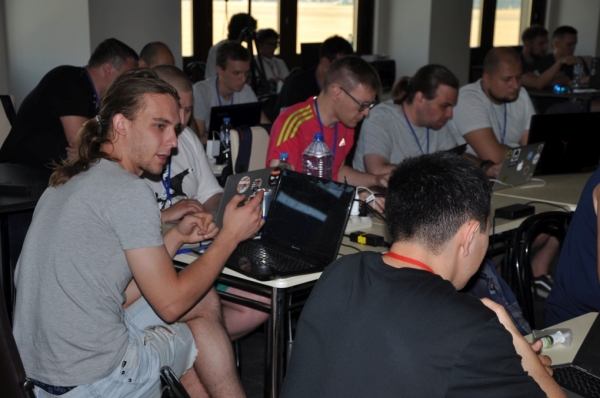
We're practically sitting on each other's laps
Nevertheless, by the first day, all pressing issues were resolved: tables were gathered from all over the hotel, "robbed" the reception and cafeteria, the most affected guests were accommodated at the "Korston" in nearby Serpukhov, with their taxi fare covered, and we arranged for water and food delivery.
On the second day, when the situation calmed down, we decided it was necessary to apologize to our guests. We went to "Metro" and bought 100 liters of Guinness. If we couldn't provide comfort in the hall and in the rooms, at least we could brighten up people's evening.
Igorolem Skoy
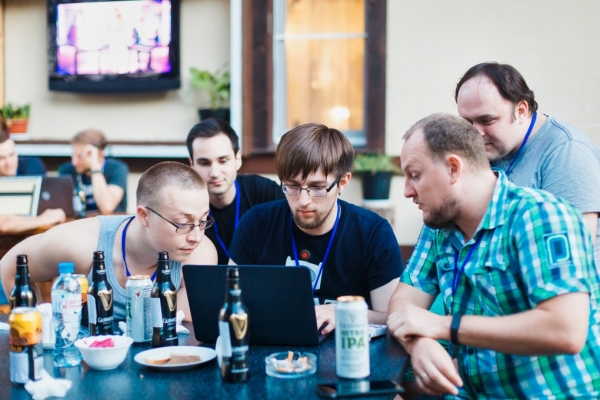
What do admins do after a hard day's work?
Despite all the problems, people enjoyed what they came for: the content part. Therefore, on the third day of Slyurm, we decided to repeat it in the autumn. Along the way, we surveyed participants about topics of interest and gathered ideas for an advanced program. We named it "MegaSlyurm."
Slyurm-2: learning from mistakes
Slyurm needs a decent hotel. We're choosing the five-star "Tsargrad."
The number of interested participants is greater than the venue can accommodate, and not everyone can afford a business trip. We're organizing remote sessions: online broadcasts, communication in a Telegram channel, and a support group to assist remote students.
The number of students is significantly increasing. We're systematizing and automating processes: creating clusters, distributing access, and gathering audience questions.
We're no longer making organizational decisions in a rush, but rather creating the event's technology.
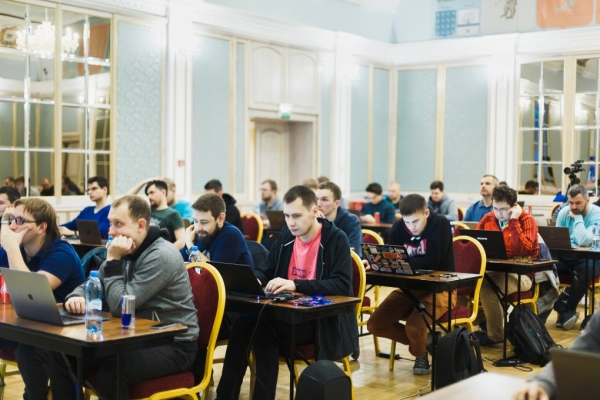
The venue is now decent, and there are enough tables for everyone.
Now, conceptual problems are emerging.
People are reluctant to travel to a countryside hotel. We thought it would be great to break away from the hustle, go somewhere that work and domestic matters wouldn't reach, and immerse ourselves in Kubernetes. It turned out to be extra pressure. Moreover, the hotel significantly impacts the event budget.
Finance departments are reluctant to pay for employees' training in the hall when there’s a cheaper online option. We originally envisioned online as a palliative for those living in remote corners of Russia and abroad and had no intention of turning Slyurm into a three-day webinar.
It was also encouraging that 40 people came to MegaSlyurm, even though we initially expected 15-20. Many of them were participants from the first Slyurm.
The first sale is marketing. The second sale is product quality. Since the second Slyurm, we've been evaluating our work based on the people who sign up for all our programs and the companies that repeatedly send their employees to us. We have officially provided them with a club discount.
Anton Skobin
Slyurm-3: hello, Peter!
We are hosting Slurm in St. Petersburg. We are setting the same price for both in-person and remote participation.
And we miscalculate the size of the venue.
We choose a small, tidy hall for 50 people. Applications are trickling in slowly, and suddenly December arrives. Companies rush to spend their 2018 budgets and within a week, all spots are taken.
Throughout January, people are writing: "We are from St. Petersburg, just found out, we want to attend, please find us a spot." So we add 20 more places. Our calculations suggested everyone would fit, but when we start setting up the tables, it turns out to be very cramped.
By the third Slurm, the requirements for the size, layout, and equipment of the hall crystallize.
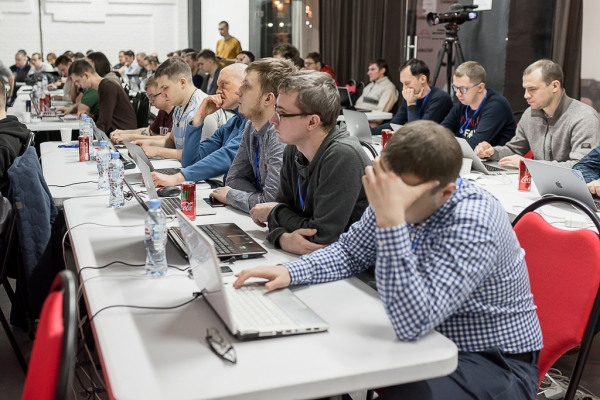
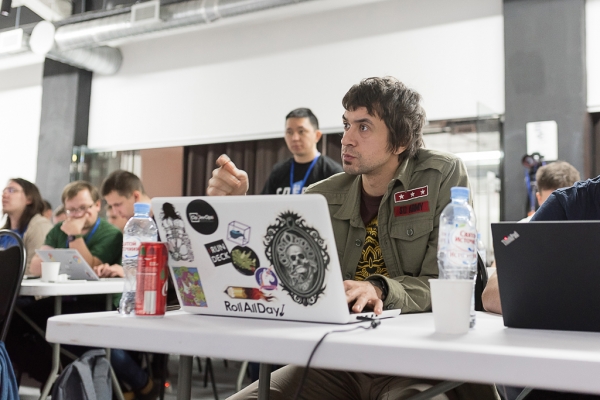
As usual, a new layer of problems emerges: our speakers are great as technicians, but not as educators. It's not enough to have a good program; you need to convey it to the audience.
After the third Slurm, the project gains methodological support.
My sister works in education: she organizes and conducts workshops, seminars, and intensive courses. She also trains school teachers and speakers. I called her for help.
Anton Skobin
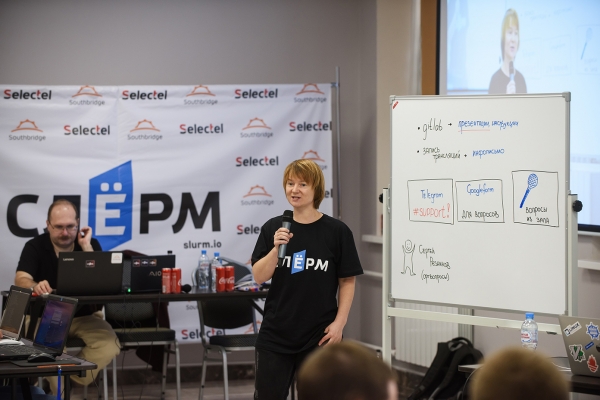
I worked with the speakers, explaining what the learning process looks like, what an interactive lecture is, and how to keep students engaged. For instance, if you talk nonstop for a long time, be sure that half the audience will miss something. We worked on the presentations and interactivity. We organized public speaking classes for the participants.
At the same time, we decided to invite external speakers to avoid getting stuck in the experiences and practices of Southbridge.
Olga Skobina
methodologist of Slurm
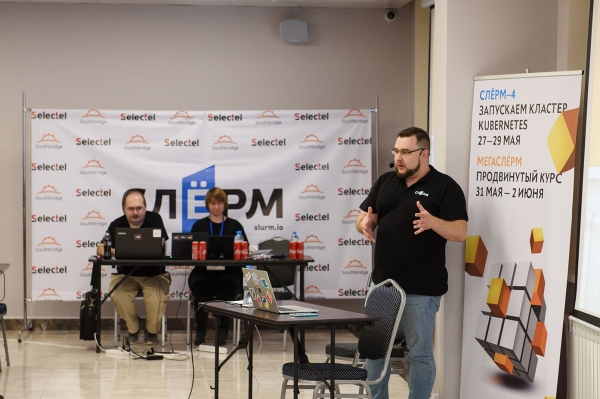
When I prepare, my primary goal is to understand how I came to this knowledge. Why do I need it, and what challenges did I face? Then I try to systematize all of this, referring to documentation, clarifying certain points that I previously overlooked. I definitely think through practical tasks, so that people don't just listen, but also engage in hands-on activities. Then the most complex concepts need to be visualized in slides. And I conduct a rehearsal with live participants. We usually ask a colleague to listen to the material, go through practical exercises, and provide feedback on how clear, complicated, and useful everything is.
Pavel Selivanov
Slurm-4: the caterpillar transformed into a butterfly
The fourth Slyrm was groundbreaking: 120 participants in the hall, a host, a methodologist, a support group of 20 people, everything polished and rehearsed.
Slyrm-4 in Moscow was memorable. Somehow, it turned out that during this event, I started thinking not about how I would conduct the session, whether I would cover everything in the script or forget anything, but about how well the audience understood me. How effectively I could convey my thoughts and explain how the technology works. This is quite an interesting shift that occurred within me. I began to view the preparation process differently, as well as our courses themselves.
Pavel Selivanov
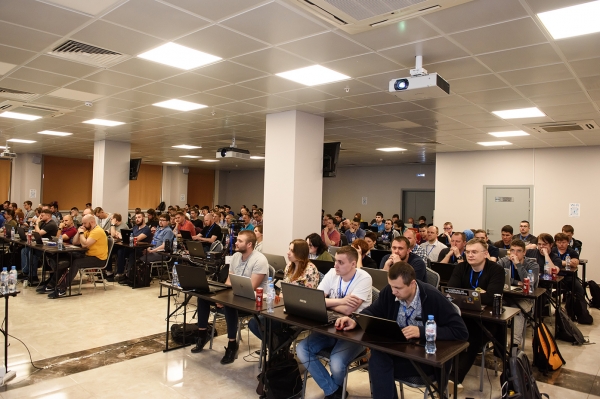
How far we have come from the first Slyrm…
It wasn’t without a bit of embarrassment. With the words 'We are admins, networkers, we will spread our awesome Wi-Fi,' we set up access points, then someone accidentally kicked the network cable going to the MikroTik, which connected via Wi-Fi to the neighboring point, creating a loop. As a result, for the first half of the day, 'our trendy Wi-Fi' was barely working.
The story of my life: once you start to show off, a major screw-up happens. We shouldn’t have changed a working solution just because we had cooler equipment
However, I was pleased to see that people, while sitting in the basic course, were buying tickets for the advanced course. If a person, listening to our speakers, is ready to pay 45 thousand right here and now to listen to them for another 3 days, that means something.Anton Skobin
The secret of success
A year ago, we were stealing tables from the cafeteria to accommodate 50 participants.
Now we have been certified by the Cloud Native Computing Foundation.
The next Slyrm will take place in September in St. Petersburg, and Selectel has invited us to their conference hall.
An online version of the courses has been recorded and is on sale.
We are looking abroad: we are in negotiations with Kazakhstan and Germany.
It’s time to reveal the secret of success.
And there isn’t one.
One could say: you just need to do your job well. But I have done many things well in my life, and what’s the point? One might say: it’s the team that matters. But there have been competent teams in my life that couldn't rise from the bottom. In every success story, I see a combination of fortunate circumstances. And in ours — first and foremost.
Anton Skobin
The hot topic came to light just in time. Specialists willing to explain it found themselves ready. They agreed to become the hosts. There was funding for the organization. Every time we faced staffing issues, the right person appeared on the horizon. Everything aligned most favorably.
And most importantly — a wonderful audience. People we recognize by face and name, whom we greet when we meet unexpectedly. If there were a bit more criticism and a bit less gratitude, we wouldn't have dared to continue after the first Slyurm.
And yet…
There are no coincidences.
Uh-vey
If you've read this far, register for with a 15% discount using the promo code habrapost.
Source: habr.com
