

From May 27 to 29, we are hosting the fourth Slurm: intensive course on Kubernetes.
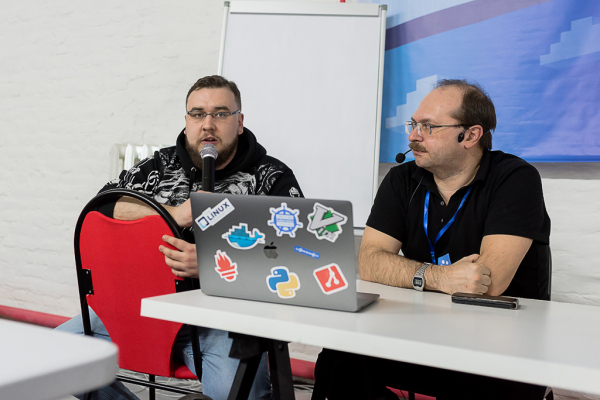
Bonus: Online courses on Docker, Ansible, Ceph
We have excluded topics from Slurm that are important for working with Kubernetes but are not directly related to k8s. How, why, and what came of it — below.
All participants of Slurm-4 will gain access to these courses.
Full money-back guarantee on the first day
At the St. Petersburg Slurm, two participants left How I regretted not being able to go back in time and part ways with them without any mutual claims.
If you realize that you absolutely dislike Slurm, on the first day let any of the organizers know. We will disable access and refund the full participation fee.
CTO consultations
If anyone knows (he gathered a club of CTOs), we invited him to Slurm (to learn, not to speak). He promised to consult everyone interested. This is unlikely to be interesting for administrators and developers, but very much so for IT managers.
What is Slurm
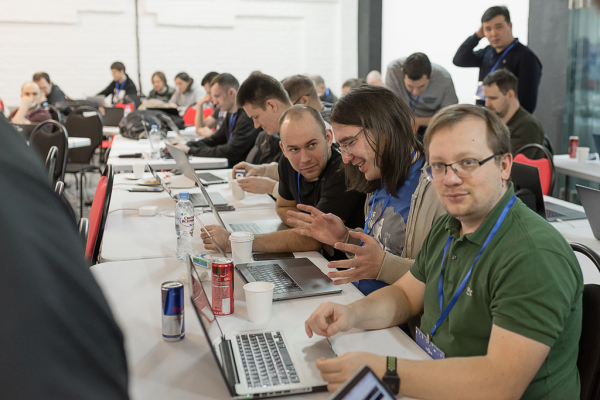
Slurm-4: Basic course (May 27-29)
Designed for those seeing Kubernetes for the first time or looking to systematize their knowledge.
Each participant will create their own cluster in the Selectel cloud and deploy an application there.
Price: 25,000
Program
Topic #1: Introduction to Kubernetes, Core Components
• Introduction to k8s technology. Description, applications, concepts
• Pod, ReplicaSet, Deployment, Service, Ingress, PV, PVC, ConfigMap, Secret
• Practice
Topic #2: Cluster Structure, Core Components, Fault Tolerance, k8s Network
• Cluster structure, main components, fault tolerance
• k8s Networking
Topic #3: Kubespray, Tuning and Configuring Kubernetes Clusters
• Kubespray, configuring and tuning a Kubernetes cluster
• Practice
Topic #4: Ceph, cluster configuration, and production-specific features
• Ceph, cluster configuration, and production-specific features
• Practice: setting up Ceph
Topic #5: Advanced Kubernetes abstractions
• DaemonSet, StatefulSet, RBAC, Job, CronJob, Pod Scheduling, InitContainer
Topic #6: Introduction to Helm
• Introduction to Helm
• Practice
Topic #7: Publishing services and applications
• Overview of service publishing methods: NodePort vs LoadBalancer vs Ingress
• Ingress controller (Nginx): balancing incoming traffic
• Cert-manager: automatically obtaining SSL/TLS certificates
• Practice
Topic #8: Logging and monitoring
• Cluster monitoring, Prometheus
• Cluster logging, Fluentd/Elastic/Kibana
• Practice
Topic #9: CI/CD, building deployments in a cluster from scratch
Topic #10: Practical work, dockerizing applications and launching in a cluster
MegaSlurm: advanced course (June 31 — June 2)
Intended for Kubernetes engineers and architects, as well as graduates of the basic course.
We configure the cluster to simultaneously update the cluster components and deploy them to the cluster.
Price: 60 thousand (45 thousand for Slyurm-4 participants)
Program
Topic #1: The process of creating a fault-tolerant cluster from the inside
• Working with Kubespray
• Installing additional components
• Testing and troubleshooting the cluster
• Practice
Topic #2: Authorization in the cluster using an external provider
• LDAP (Nginx + Python)
• OIDC (Dex + Gangway)
• Practice
Topic #3: Network policy
• Introduction to CNI
• Network Security Policy
• Practice
Topic #4: Secure and highly available applications in the cluster
• PodSecurityPolicy
• PodDisruptionBudget
Topic #5: Kubernetes. Looking under the hood
• Controller structure
• Operators and CRD
• Practice
Topic #6: Stateful applications in the cluster
• Running a DB cluster based on PostgreSQL
• Running a RabbitMQ cluster
• Practice
Topic #7: Secrets management
• Managing secrets in Kubernetes
• Vault
Topic #8: Horizontal Pod Autoscaler
• Theory
• Practice
Topic #9: Backup and disaster recovery
• Backup and recovery of the cluster using Heptio Velero (formerly Ark) and etcd
• Practice
Topic #10: Deploying applications
• Lint
• Templating and deployment tools
• Deployment strategies
Topic #11: Practical work
• Building CI/CD for application deployment
• Updating the cluster
Docker, Ansible, and Ceph
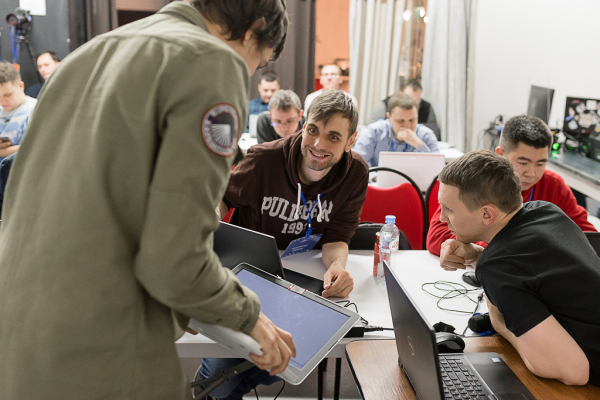
A journey into history
The first Slyurm was an experiment. The speakers were finishing their presentations literally on stage, while the audience consisted of administrators skilled enough to be invited as speakers.
The real foundational course emerged at the second Slyurm: 80% of the participants saw Kubernetes for the first time, and a third had never worked with Docker.
It was evident how difficult it was for people to listen to a lecture on Docker in the morning and then work with it in a combat environment in the evening.
Many difficulties were caused by Ceph. Moreover, there were 20 people in the audience who absolutely needed an explanation of Ceph, and another 60 who had no use for it at all.
By the third Slyurm, we separated Docker and Ansible into individual webinars, freeing up more time for Kubernetes. The solution turned out to be practical in essence but under-delivered in implementation: the lecture was uninteresting for experienced attendees, while the discussion was challenging for the newcomers.
By the fourth Slyurm, we created online courses for Docker, Ansible, and Ceph. The idea is simple: those who need it will thoughtfully complete the course, while those who do not need it can comfortably ignore it. Based on feedback from the testing group, the Docker course takes 6-8 hours. Ansible and Ceph have not yet been timed.
Disclaimer:
- the course is experimental. Some solutions will likely turn out to be unsuccessful.
- the platform (Stepik.org) is still rough around the edges, and we haven't worked with it before. There will likely be some hiccups and bottlenecks.
- the course has only been tested on Southbridge employees. We'll probably need to make adjustments on the fly.
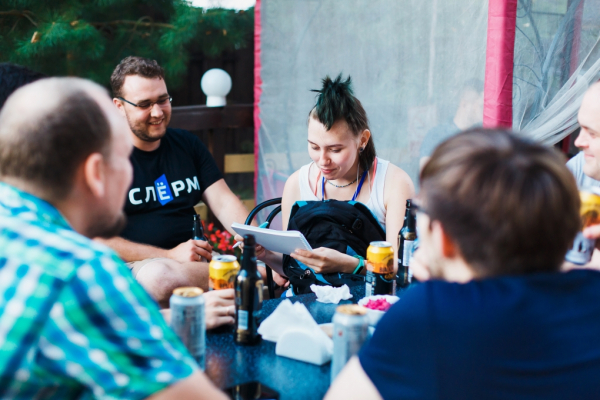
just the other day in the chat of the first Slyrm, we recalled how awesome and fun it was, despite all the organizational nightmares. The first ones get the most vivid impressions. Let's see what happens with the first students of the online courses. 🙂
Source: habr.com
