

Facial recognition in access control systems meets the growing demand for contactless identification solutions. Today, this biometric identification method is a global trend: analysts estimate an average annual market growth of 20% for facial recognition systems. According to forecasts, this figure is expected to reach 4 billion USD by 2023.
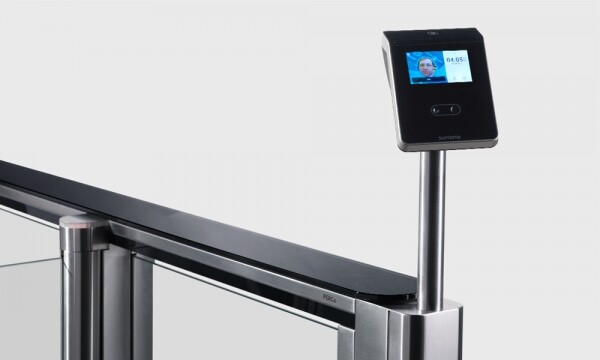
Integration of terminals with the access control system
Facial recognition as a method of identification can be applied in access control systems for access management, time tracking, and integration with CRM and ERP systems. Leading manufacturers of facial recognition terminals in the Russian market include Hikvision, Suprema, Dahua, and ZKteco.
Integration of facial recognition terminals with the access control system can be accomplished in three ways, differing in connection interface and SDK functionality. The first method allows new employee or visitor data to be added directly in the access control system's interface, without adding it in the terminals – thanks to the terminal's SDK. In the second method, new users are added both in the access control system's interface and directly in the terminals, which is less convenient and more labor-intensive. In both cases, the connection is made via the Ethernet interface. The third method involves connecting via the Wiegand interface, but in this case, the terminals and the access control system will have separate databases.
The review will focus on solutions connected via the Ethernet interface. The ability to add users in the system interface is determined by the terminal's SDK. The broader the access control system's capabilities, the more functionality can be realized using the terminals. For example, integration of the PERCo-Web access control system with Suprema terminals allows for data to be added directly in the system's software interface. Other features include entering and storing photographs of employees and visitors for identification, as well as configuring and managing devices in real time.
All events of passage through terminals are stored in the system. The system allows assigning reaction algorithms to events received from terminals. When an employee passes through with facial recognition, an alert event can be generated and sent to the system operator's Viber or email. The system supports working with Face Station 2 and FaceLite terminals from Suprema, ProfaceX, FaceDepot 7A, FaceDepot 7B, and SpeedFace V5L from ZKteco. If an employee or visitor passes with an elevated temperature, an event is generated in the access control system, based on which access may be automatically blocked.
The defining factors in choosing terminals for use in an access control system are the security of identification, speed, accuracy, and user-friendliness. The reliability of identification primarily depends on the presence of anti-emulation protection and the possibility of two-factor authentication. Speed refers to the high speed of facial recognition, ensuring uninterrupted operation even in conditions of a high flow of people. Accuracy is influenced by the efficiency of the applied algorithm, the number of facial templates and users in the terminal's memory, as well as the camera's performance in various lighting conditions. User-friendliness is provided by the language interface, size, and weight of the device. Integration simplicity, as mentioned above, depends on the communication interface and the terminal's SDK. The presence of mounting brackets for recognition terminals at turnstiles also facilitates integration.
Let's consider the technical specifications of the following models from these manufacturers from the perspective of working in an access control system:
Face Station 2 and FaceLite from Suprema
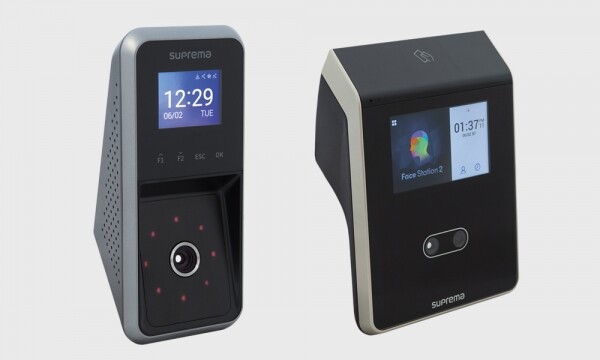
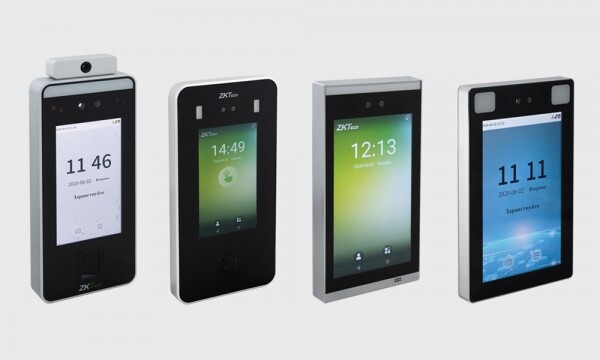
ProfaceX, FaceDepot 7A, FaceDepot 7B, SpeedFace V5L from ZKteco
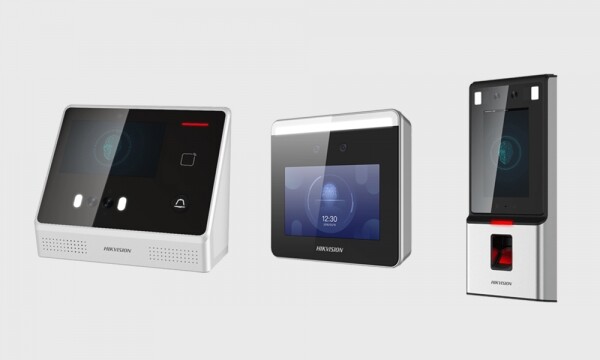
DS-K1T606MF, DS-K1T8105E, and DS-K1T331W from Hikvision
ASI7223X-A, ASI7214X from Dahua
Protection against emulation
Face recognition can be based on 2D or 3D technologies. The former is more budget-friendly, which is reflected in the cost of the terminals. Its disadvantages include high lighting requirements, lower statistical reliability compared to 3D, and the inability to account for facial expressions. The accuracy of identification for terminals based on 2D can be increased by infrared cameras.
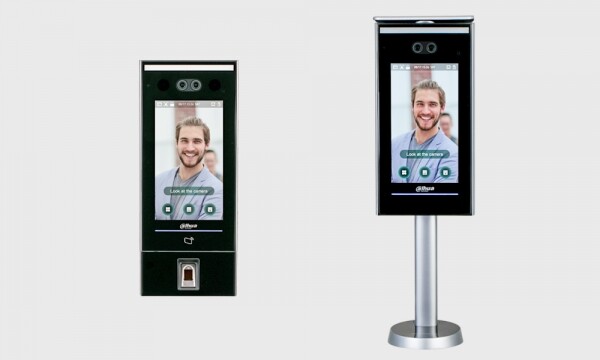
3D technology terminals are more expensive but provide high accuracy and reliability in identification, demonstrating the capability to operate in low light conditions. Suprema and ZKteco terminals use live face detection based on infrared illumination to prevent spoofing with photographs. Hikvision terminals employ deep machine learning algorithms for authenticity detection of biometric facial data. Dahua face recognition terminals utilize artificial intelligence and deep learning technologies with support for vitality detection.
Identification Speed
The speed of face recognition terminals is particularly important for spaces with high visitor traffic: large corporate offices, industrial facilities, and crowded areas. High identification speed prevents queues and ensures maximum throughput. Hikvision DS-K1T331W, Dahua ASI7223X-A, and ASI7214X recognize faces in just 0.2 seconds. The DS-K1T606MF model identifies in 0.5 seconds, while the DS-K1T8105E does so in less than 1 second. The Face Station and FaceDepot 7A terminals identify in under 1 second.
Two-Factor Authentication
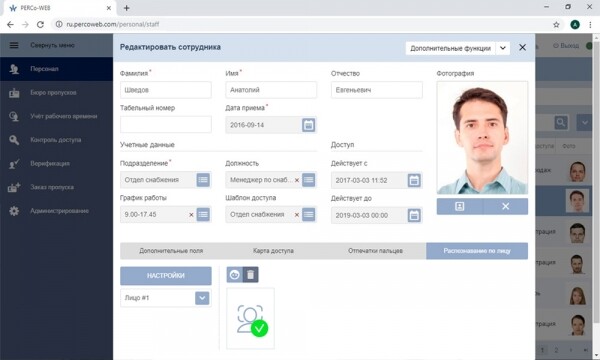
A convenient solution for access control systems are face recognition terminals that also support other identification methods: such as card access, fingerprint, palm, or smartphone. These solutions enhance access control through two-factor authentication. FaceLite and FaceStation 2 terminals feature built-in contactless card readers, while in other models we're discussing, the reader can be added externally. ZKteco terminals also support palm and code identification. Hikvision DS-K1T606MF allows for fingerprint and Mifare card identification, while the DS-K1T8105E has a built-in EM-Marine card reader, and the DS-K1T331W terminal can connect to a contactless card reader. The ASI7214X terminal also supports interaction with contactless cards and fingerprints.
Temperature Measurement
One of the drivers for the growth of facial recognition solutions in access control systems has been the Covid-19 pandemic, which has led to the widespread adoption of face recognition terminals with body temperature monitoring capabilities. This functionality is implemented in the SpeedFace V5L models, which also detect whether a mask is being worn. Temperature measurement is conducted contactlessly, reducing the risk of infection transmission and allowing for minimization.
the need for antiseptic processing of the device after each measurement.
A convenient solution is to set the parameters for temperature control and mask detection in the access control system interface, if the terminal's SDK allows data to be entered directly into the system.
Number of facial templates
Template capacity is the maximum number of data sets that can be stored in the system. The higher this figure, the greater the accuracy of identification. The Face Station 2 and FaceLite terminals have a large recognition capacity, processing up to 900,000 templates. The ProFace X terminals store 30,000 templates, while the FaceDepot 7A and FaceDepot 7B store 10,000 templates each, and the SpeedFace V5L stores 6,000.
The ASI7223X-A and ASI7214X terminals can accommodate 100,000 templates each.
Number of users and events
The number of users stored in the facial recognition terminal determines the maximum possible identifiers for access to the location. The larger the facility, the higher this figure should be. The memory of the Face Station 2 and FaceLite controllers is designed for 30,000 users, as is the memory of the ProFace X. The FaceDepot 7A, FaceDepot 7B, and SpeedFace V5L handle data for 10,000 individuals. The memory of the DS-K1T8105E terminal is designed for 1,600 users, the DS-K1T331 for 3,000, and the DS-K1T606MF for 3,200 users. The ASI7223X-A and ASI7214X terminals process data for 100,000 users. All events of passage through this terminal are stored in the memory of the facial recognition terminals. The highest number of events in memory allows for report generation over the longest selected period.
The largest event log capacity of the Face Station 2 and FaceLite terminals is 5 million. For ProfaceX, it's 1 million. The ASI7223X-A and ASI7214X terminals can store up to 300,000 events. The SpeedFace V5L has a log capacity of 200,000 events, while the DS-K1T331W can hold 150,000. The FaceDepot 7A, FaceDepot 7B, and DS-K1T606MF terminals each have a capacity of 100,000 events. The DS-K1T8105E terminal has the smallest memory capacity at only 50,000 events.
Language Interface
Not all face recognition terminals available in the Russian market have a Russian language interface, so its availability can be an important selection factor.
The Russian language interface is available on the ProFace X and SpeedFace V5L terminals. The Face Station 2 provides a Russian language firmware upon request. The Face Station 2 has an English interface. The DS-K1T331W supports English, Spanish, and Arabic languages; the Russian interface is currently not available.
Dimensions
The largest and heaviest terminals in our review are from Dahua.
ASI7223X-A measures 428x129x98 mm and weighs 3 kg.
ASI7214X measures 250.6x129x30.5 mm and weighs 2 kg.
Next is the FaceDepot-7A, weighing 1.5 kg with dimensions of 301x152x46 mm.
The lightest and most compact terminal in our review is the Suprema FaceLite, with dimensions of 80x161x72 mm and a weight of 0.4 kg.
Dimensions of Hikvision terminals:
DS-K1T606MF — 281x113x45
DS-K1T8105E — 190x157x98
DS-K1T331W — 120x110x23
Dimensions of Zkteco terminals:
FaceDepot-7B — 210x110x14 and weighs 0.8 kg
ProfaceX — 227x143x26 and weighs 1 kg
SpeedFace V5L — 203x92x22 and weighs 0.9 kg.
The dimensions of the Suprema Face Station 2 are 141x164x125 and weighs 0.7 kg.
Camera Specifications
The Proface X terminal is equipped with a 2MP WDR Low Light camera for facial recognition in conditions of strong external lighting (50,000 lux). The Face Station 2 and FaceLite terminals have a CMOS 720×480 camera with infrared illumination of 25,000 lux, enabling them to operate in both low and high lighting conditions. These terminals can be mounted under a canopy outdoors to avoid strong glare. The Hikvision and Dahua terminals are equipped with 2MP cameras with dual lenses and WDR, providing clear images under varying lighting conditions. The FaceDepot 7A, FaceDepot 7B, and SpeedFace V5L terminals are equipped with a camera
2MP.
Integration with turnstiles
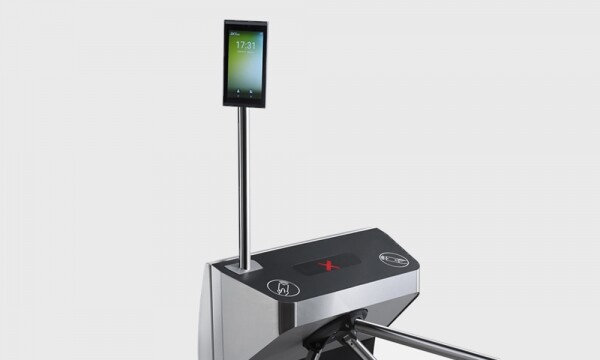
One of the key factors when selecting equipment for facial recognition access is the ease of installation on the turnstile. It is essential to ensure that the manufacturer of the blocking devices offers special brackets for mounting terminals to the turnstile.
Source: habr.com
