

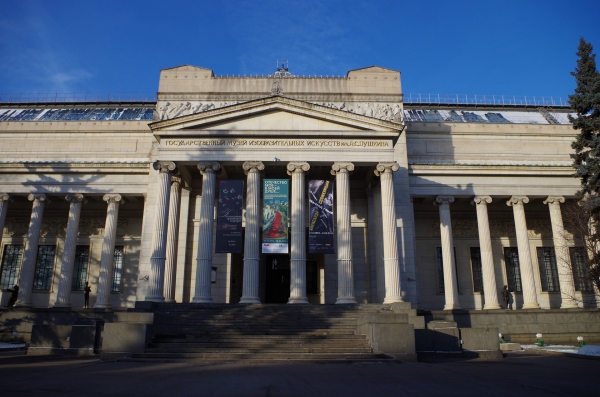
The State Museum of Fine Arts named after A.S. Pushkin was established by the activist Ivan Tsvetaev, who aimed to introduce bright images and ideas into the contemporary environment. Over a little more than a century since its opening, the environment has changed significantly, and now is the time for images to take a digital form. The Pushkin Museum serves as the center of a whole museum quarter in Moscow, one of the country's main venues, a place for preserving masterpieces of the past and ideas for the future. It also boasts the largest in the world , which is currently hosted on the Microsoft Azure cloud platform.
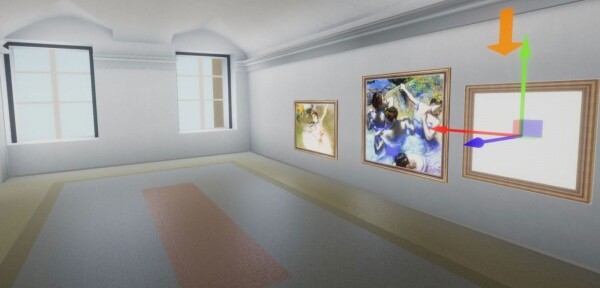
The project was developed with the support of the Ministry of Culture of the Russian Federation for architects, designers, and curators engaged in planning new exhibition spaces at the State Museum of Fine Arts named after A.S. Pushkin: they gained the ability to design exhibitions and monitor the progress of work in the museum's digital twin, including using virtual reality goggles. For this, an entire museum quarter was created in detail in 3D Max, including the internal spaces, and for interactivity, they were placed in 3D Unity.
Now one can see the halls of the main building, the Gallery of Art from Europe and America of the 19th–20th centuries, the Department of Personal Collections, the Educational and Art Museum named after Tsvetaev at RSUH, and the memorial apartment of Sviatoslav Richter. Panoramas with audio guides are available on computers and tablets, while VR goggles are required for a 3D walk.
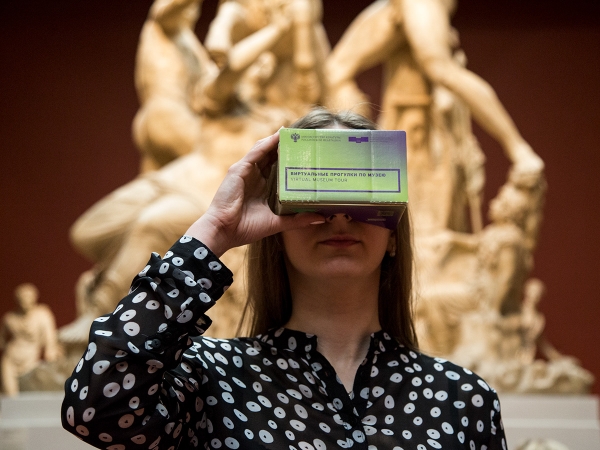
The virtualization of the Pushkin Museum is an excellent example of how modern technologies have expanded the capabilities of both specialists and ordinary museum visitors, including those who cannot personally reach the building on Moscow's Bolshaya Volkhonka street. The implementation of the project has been ongoing for more than 10 years and will continue for a long time, much like good ideas never run out.
Several important dates stand out in the project's history:
- 2009: creation of a virtual walk through the Italian courtyard – the first 3D scanning and digitization of the museum.
- 2016: creation of a system for planning future exhibitions and objectively assessing the designed museum space.
- 2018: the virtual Pushkin Museum project received international awards – and .
- 2019: we now have an updated virtual version of the A.S. Pushkin State Museum of Fine Arts.
- 2025: planned completion of the museum's reconstruction.
Currently, the new museum can only be seen digitally. However, once reconstruction is completed, the physical space will change and the virtual reality will need to be adjusted again. The process of transforming the environment is limitless.
Source: habr.com
