

Modern technological services are changing our internet habits.
I love files. I enjoy renaming them, moving them, sorting them, changing their display in folders, creating backups, uploading them online, restoring them, copying them, and even defragmenting them. As a metaphor for the way we store information, I think they are magnificent. I appreciate a file as a whole. If I need to write an article, it will go into a file. If I need to publish an image, it will be in a file.
Ode to files.doc
All files are skeuomorphic. Skeuomorphism is the trendy term referring to the reflection of a physical object in a digital form. For instance, a Word document resembles a sheet of paper lying on your desk (screen). A .JPEG file looks like a picture, and so on. Each of these files has its own small icon resembling the physical object they represent. A stack of paper, a picture frame, or a Manila folder. Isn't that charming?
What I truly enjoy about files is that there's a unified way to interact with them, regardless of what’s inside. The things I mentioned earlier—copying, sorting, defragmenting—I can do with any file. It might be an image, a game asset, or a list of my favorite dishes. Defragmentation doesn't care; it makes no difference what kind of file it is. I've loved files ever since I began creating them in Windows 95. But now, I increasingly notice that we are starting to move away from them as a fundamental unit of work.
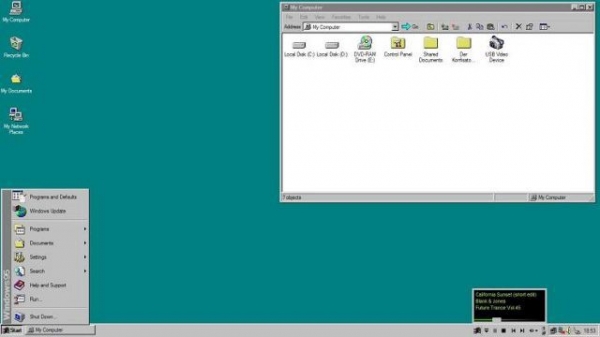
Windows 95. Interesting fact: quickly shaking the mouse speeds up the OS. This isn't related to the article; I just think it's interesting.
Growth of .mp3 file sizes
As a teenager, I indulged in collecting and digitizing vinyl, and I was an avid collector of MP3 files. My collection had a lot of MP3 files with a bitrate of 128 kbps. You were very lucky if you had a burner and could write files to CDs and then share them. The capacity of CDs could be up to 700 MB. That is equivalent to almost 500 floppy disks.
I was reviewing my collection and meticulously tagging the music: IDv1 and IDv2. Over time, people started developing utilities that automatically download track lists from the cloud so you could check and determine the quality of your MP3 files. I sometimes listened to those cursed recordings, although I suspect that the time spent organizing and validating them far exceeded the time spent listening.
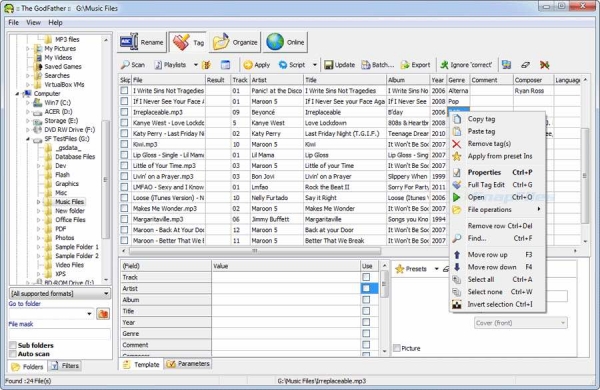
An application called The Godfather. It has a lot of features.
Then, about 10 years ago, everyone actively started using the 'green app' — Spotify. With their app or website, you can stream whatever you want, whenever you want. I think that's really cool and convenient. But what about the quality? Is it better than my 128 Kbps MP3?
Yes, it turned out the quality was better.
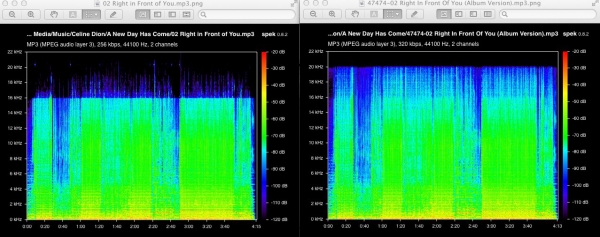
During all these events, the 128 Kbps MP3s, which we were told were 'indistinguishable' from the huge WAV files that started coming out on CDs, turned into trash. Now the bitrate of MP3 files reaches 320 Kbps. On forums, people conducted spectral analyses of files, creating bright green and blue charts to 'prove' that the files really sound good.
It was during this time that the gold-plated SCART Monster cables became a true breakthrough.
The quality of files on streaming services was good enough, they were available on more devices, and you had access to all recorded music, not just MP3s like on your computer. You no longer needed a meticulously curated collection of files on your hard drive. All you needed was a username and password for Spotify.
That's great, I thought, but I still have huge video files. The internet is too slow to transfer my videos.
Захоронение файлов .png
I had a Sony Ericsson phone with the eye-catching name k610i. It was red and I really liked it. I could connect it to my computer and copy files to it. It didn't have a headphone jack, so I had to use an adapter or the special headphones that came with it. In many ways, it was ahead of its time.
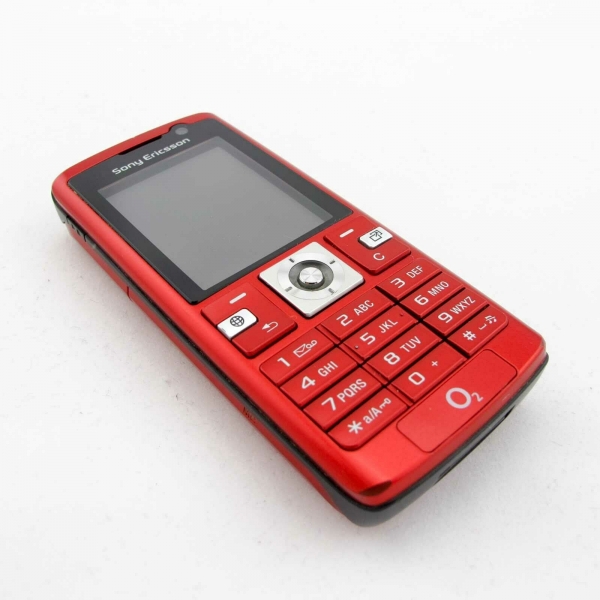
Later, when I earned more money and technology advanced, I bought myself an iPhone. Without a doubt, it was beautiful. The black matte aluminum was so dark that it seemed blacker than darkness, and the medical glass — details that bordered on perfection, seemingly sent from the heavens by the gods.
But Apple has made it significantly harder for us to access files. Images are uploaded in a large stream, sorted by date. Audio is somewhere in iTunes. Notes… is that a list? Applications are scattered all over the desktop. Some files are even in iCloud. You can send photos directly from your iPhone via email, and with a convoluted method through iTunes, you can access certain files in specific apps. But these files are temporary, they are cached and can be deleted without any warning. This is not like the files from my computer, which I meticulously created.
I just want my file browser back.
On a MacBook, iTunes sorts music files for you. They are handled by the system. The interface displays the music, and you can organize it. But if you look under the hood, at the actual files, you can see rabbit holes, chaos, strange names, and odd folders. "Don’t burden yourself with that," says the computer, "I’ll handle it for you." But I care!
I like having the ability to browse my files and access them. But now, the systems I use try to prevent this. "No," they say, "you can only access through unique interfaces." I just need my file browser, but now it’s forbidden. It’s a relic of a bygone era.
I can’t shake off the files, folders, and the control I’m used to.
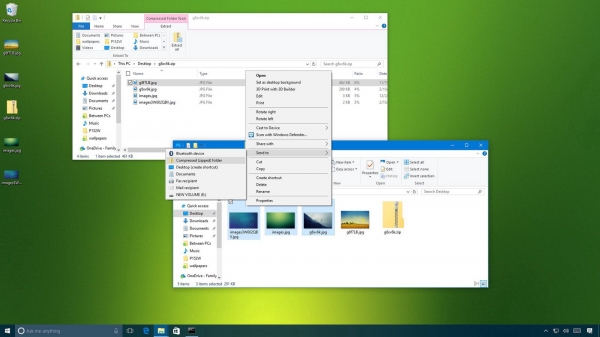
Windows 10. You can still work with your files, although sometimes it feels like they’re looking up at me.
File caching and .tmp dependencies
I started creating my first websites back when 1-pixel transparent GIFs were in style, and the proper way to create a two-column layout was considered to be using tables. Over time, best practices changed, and I happily repeated the mantra that tables should only be used for tabular data, not for layouts, gradually and painfully transforming my trivial layouts into CSS. At least it wasn't a table, I proudly declared, looking at my three-column layout that didn't work properly in Firefox.
Now, when I create websites, I run an NPM install and download 65,000 dependencies that go into the node_modules folder. There are way too many files. But I don't care about them. When I need to, I just delete the folder and run the NPM install again. Right now, they mean nothing to me.
Years ago, websites consisted of files, now they consist of dependencies.
Recently, I stumbled upon a site I wrote about twenty years ago. I double-clicked the file, and it opened and ran easily. Then I tried to launch a website I wrote 18 months ago and found that I couldn't run it without starting a web server, and when I initiated the NPM install, it turned out that several files (maybe one or two) out of 65,000 encountered an error that prevented Node from installing them, and the website didn't start. When I finally got it to work, I needed a database. And then it relied on some third-party APIs, but there was the next problem with CORS since I wasn't whitelisted on localhost.
And my website, made up of files, kept 'chugging along'. I'm not saying that websites were better years ago, no. I'm just saying that before, websites consisted of files, now they consist of dependencies.
Everywhere it says .Ink.
No files were harmed in the writing of this article. I logged into Medium and started typing. Next, my words were sent to the database.
The created unit moved from the file to the database.
In a sense, it doesn't matter much. The data is the same, just stored in a database instead of an HTML document. Even the URL may be the same, it just retrieves content from a different type of storage in the background. However, the implications are much broader. The content entirely depends on the infrastructure, not on the ability to work independently.
It feels like this diminishes the value of individual creative skills. Now, instead of creating our own files, everything is just another entry in a database table somewhere in the cloud. For example, my article, instead of existing in its own file, can be said to 'exist on its own,' is just a tiny cog in a big machine.
Copy .bat
Online services have begun to undermine the fundamental principle of working with digital files that I considered essential. When I copy a file from one place to another, the file I end up with is identical to the file I started with. These are digital representations of data that can be copied with high precision, step by step.
A blank sheet of paper. 58 MB — PNG, 15 MB — JPEG, 4 MB — WebM.
However, when I upload photos to Google Cloud and download them again, the resulting file is different from the original. It has been encrypted, decrypted, compressed, and optimized. In other words, it is corrupted. Spectral analysts will surely be furious. It resembles a photocopy where pages gradually become lighter and dirtier over time. I am just waiting for a fingerprint from Google's AI to appear in the corner of one of my photos.
When I drop a video via AirDrop, there is a lengthy preparation process at the beginning. What is my little supercomputer thinking? I suspect, 'You're re-encoding my video, aren't you?' And only later, when I finally receive the file in a place where I can use it, do I discover that it has been 'pushed and pulled' so many times that all that's left is its shell and the glory of what it once was.
Why is new content so important?
No more .webm files
Like most of us, I have a mess in my online services, where personal life increasingly overlaps with work. Dropbox, Google Drive, Box, OneDrive, Slack, Google Docs, and so on. Of course, there are many others too—WeTransfer, Trello, Gmail… Sometimes I receive links to Google Sheets for work; I open them, and they get saved to my personal Google Drive next to a picture of a cute chick I shared with my mom, and a document listing various computer mice I was planning to buy back in 2011.
By default, Google Docs sorts all files by the order of their last views. I can’t sort or organize them. Everything is set up in such a way that new files are prioritized over what is truly important to us.
Personally, I dislike this shift from timeless content to new. When I visit websites, they promote the latest things I’ve viewed. Why should new be important? It’s unlikely that something created just now would be better than all that has ever been created. What are the chances that every time I come to a place, the pinnacle of human achievement collapses at that moment? Apparently, sorting by quality doesn’t exist. There’s only sorting by novelty.
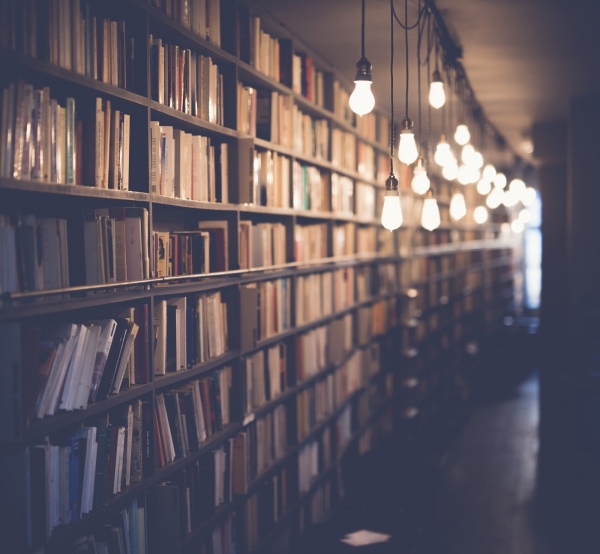
Library books—strangely enough, they are not sorted by the latest editions.
All these services are, at least for me, terribly confusing and inconvenient. A dump where our chances accumulate. Maybe this is how everyone manages their files? Whenever I use someone else’s computer, I’m always amazed at the chaotic number of files scattered everywhere. All files are haphazardly spread around; there’s no sense of order whatsoever. How do they even find anything there?
These services have completely removed from our sight the true meaning of files. This file in Dropbox: is it its latest version? Or is it just a copy of what actually resides on my computer? Or did someone send a new version via email? Or add it in Slack? Strangely, this devalues the content of files. I no longer trust them. If I look at a file in Dropbox, I think to myself: 'Oh, there’s probably a newer version somewhere.'
At work, I see colleagues who create files, send them via email, and don't even bother saving attachments to their hard drives. Their inbox has become their new file management system. "Did you get the spreadsheet?" they ask. Someone browses through incoming messages and forwards them back via email. Is this really how we manage data in the 21st century? It's a strange step backwards.
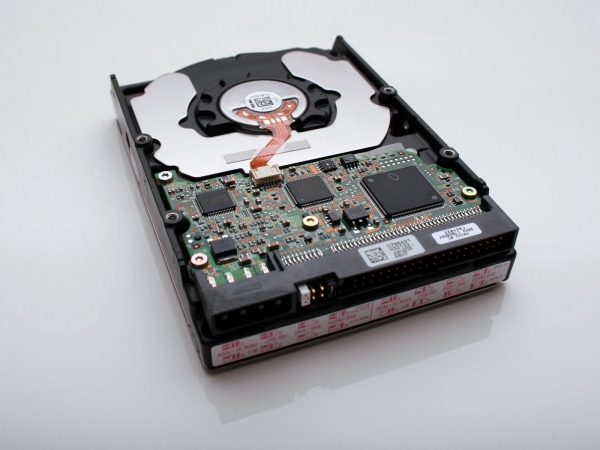
I miss files. I still create a lot of my own files, but it increasingly feels anachronistic, like using a quill instead of a pen. I miss the versatility of files. The fact that files could work anywhere and move easily.
Files have been replaced by software platforms, services, and ecosystems. This doesn't mean I advocate for a revolt against all services. We can't stop progress by clogging internet channels. I'm writing about this to mourn the loss of innocence we had before capitalism fully invaded the internet. When we create something now, our creations are merely part of a vast system. Our contribution is a tiny speck in this elastic cluster of databases. Instead of buying and gathering music, videos, and cultural assets, we are subjected to the influence of a power stream: we pay and fume over $12.99 a month (or $15.99 for HD movies), but it's worth noting that all this will only work as long as we keep paying. Stop paying, and we are left with nothing. No "own" files. The service ceases.
Of course, files are still alive. It's just that we are drifting further away from them. I have my own collection of files. My own little world. Thus, I represent an anachronism that somehow bubbles up at the very bottom of this edited list.
Thank you for staying with us. Do you enjoy our articles? Want to see more interesting content? Support us by placing an order or recommending us to your friends, 30% discount for Habr users on a unique entry-level server designed by us for you: (options available with RAID1 and RAID10, up to 24 cores and up to 40GB DDR4).
Dell R730xd for half the price? Only with us in the Netherlands! Dell R420 — 2x E5-2430 2.2GHz 6C 128GB DDR3 2x960GB SSD 1Gbps 100TB — from $99! Read about how
Source: habr.com
