

Slack, Signal, Hangouts, Wire, iMessage, Telegram, Facebook Messenger… Why do we need so many apps for one task?
Decades ago, science fiction imagined flying cars, kitchens that prepared food automatically, and the ability to call anyone on the planet. But they didn't foresee that we would end up in messenger hell, armed with an endless number of apps designed simply for sending text to friends.
Sending a text has become a mental gymnastics exercise: this friend doesn't use iMessage, but will respond if I send a message via WhatsApp. Another has WhatsApp but doesn't respond there, so I'll have to use Telegram. Others can be reached via Signal, SMS, and Facebook Messenger.
How did we end up in this mess of messengers, when it used to be so simple? Why do we need an entire catalog of messaging apps, useful only for communicating with friends?
SMS: первое приложение для общения
In 2005, I was a teenager in New Zealand, where 'dumb' phones were gaining popularity, and there was only one way to send messages: SMS.
Operators in the country offered a plan for $10 for unlimited messages, but soon limited them to 10,000, realizing that teenagers would send as many messages as they were allowed. We counted our remaining messages, sent thousands of texts a day, and tried not to use them all. When we hit zero, you were cut off from the world, or had to pay $0.20 per message until the next month started. And everyone always hit that limit, racking up bills for sending tiny fragments of text.
Back then, it was simpler. If I had someone’s phone number, I could message them. I didn't have to check multiple apps or switch between services. All messages lived in one place, and everything was fine. If I was at my computer, I could use MSN Messenger or AIM [let's not unfairly forget about ICQ / translator's note], but only occasionally, and it always returned to SMS when I was AFK [away from the keyboard / translator's note].
Then the internet penetrated phones, giving rise to a new breed of messaging apps: always online, on the phone, with photos, links, and other types of materials. I no longer had to pay the operator $0.20 per message when I was online.
Startups and tech giants began the battle for a new world that remained online, resulting in hundreds of messaging apps emerging in the following years. iMessage became popular among iPhone users in the US, particularly because it could roll back to SMS. WhatsApp, then still independent, conquered Europe by focusing on privacy. Meanwhile, China intervened and spread WeChat, where users ultimately could do everything from purchasing music to hailing a taxi.
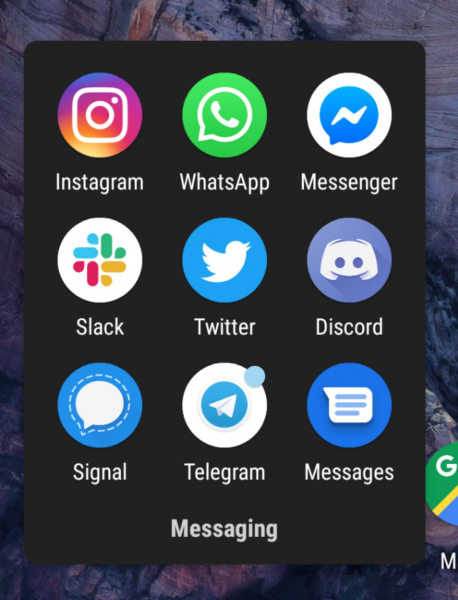
Surprisingly, almost all of these new messengers' names will be familiar to you: Viber, Signal, Telegram, Messenger, Kik, QQ, Snapchat, Skype, and so on. Even more surprising is that you likely have several of these apps on your phone – definitely not just one. There is no longer a single messenger.
In Europe, this frustrates me daily: I use WhatsApp to communicate with friends from the Netherlands, Telegram for those who switched to it, Messenger with family from New Zealand, Signal with tech-savvy people, Discord with gaming friends, iMessage with parents, and direct messages on Twitter with online acquaintances.
Thousands of reasons led us to this situation, yet messengers have become somewhat of a zoo: no one is friendly with each other, and messages can't be transferred between messengers because each uses proprietary technology. Old messaging apps cared about functional compatibility – for example, , so users could message others using the same protocol.
Nothing can prompt Apple to open the iMessage protocol to other apps – or even to Android users – because then it would be too easy for users to leave the iPhone. Messengers have become symbols of closed software, the perfect tool for managing users: it's hard to give them up when all your friends are using them.
The short message service, SMS, despite all its drawbacks, was an open platform. Like email today, SMS worked everywhere, regardless of the device or provider. Perhaps providers killed this service by demanding disproportionately high prices, but I miss SMS because it 'just worked', and it was a single, reliable way to send a message to anyone.
There is still a glimmer of hope.
If Facebook succeeds, this situation may change: in January, The New York Times reported that the company is working on unifying Messenger, Instagram, and WhatsApp into a single backend so users can chat with each other without switching apps. At first glance, this looks appealing, but it's not what I need: Instagram is great because it is separate, just like WhatsApp, and their merger would give Facebook a complete view of my habits.
Such a system would also be a significant target: if all messengers are gathered in one place, an attacker only needs to hack one of them to learn everything about you. Some security-conscious users deliberately switch between various apps, believing their conversations are harder to track if dispersed across multiple channels.
There are also other projects aimed at revitalizing open messaging systems. The protocol (RCS) continues the work of SMS and recently received support from operators and device manufacturers worldwide. RCS brings all the favorite features of iMessage to an open platform – read receipts, images, online statuses – so it can be implemented by any manufacturer and operator.
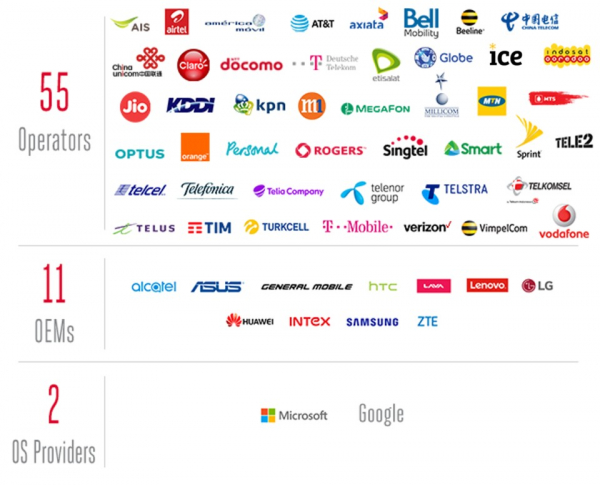
Despite Google actively promoting this standard and integrating it into Android, RCS is slowly gaining traction and facing issues that delay its widespread adoption. For example, Apple has refused to add it to the iPhone. The standard has received support from major players like Google, Microsoft, Samsung, Huawei, HTC, ASUS, and others; however, Apple remains silent – perhaps fearing a loss of appeal for iMessage. RCS also depends on operator support, but they are holding back as it requires significant investment in infrastructure.
But the uncomfortable reality is that this mess is unlikely to be fixed in the near future. Unlike much of the tech sector, where near-monopoly players have taken control — for example, Google in search and Facebook in social media — messaging still has yet to be monopolized. Historically, it's been very difficult to capture a monopoly in messaging due to its high fragmentation and the unpleasantness of switching between services. However, Facebook, controlling so many major messengers, is clearly trying to dominate this space so that users won't leave at all.
So far, there's at least one solution that simplifies life a bit: applications like and consolidate all messengers into a single window for quicker switching between them.
But in the end, the situation on the phone remains the same: we have a whole catalog of messengers, and there's no way to simplify it to just one. The wide selection in this area positively impacts competition, but every time I look at my phone, I still have to mentally calculate which app to choose to send a message to a friend — a calculation I've been making for almost ten years now.
Source: habr.com
