

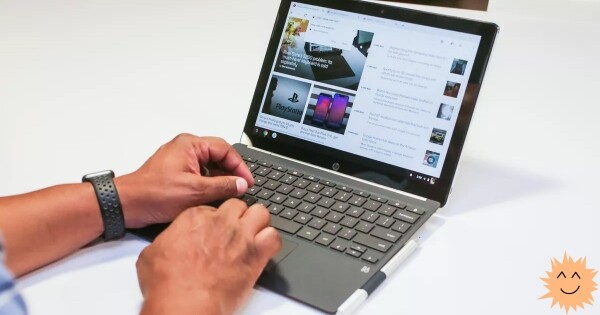
The arrival of the Chromebook was a significant moment for American educational systems, enabling them to purchase affordable laptops for students, teachers, and administrators. Although has always operated on a Linux-based operating system (Chrome OS), until recently most Linux applications were unable to run on them. However, everything changed when Google released — a virtual machine that allows the running of Linux OS (beta) on Chromebook.
Most Chromebooks released after 2019, as well as some older models, can work with Crostini and Linux (beta). You can find out if your Chromebook is on the list of supported devices . Luckily, my Acer Chromebook 15 with 2 GB of RAM and Intel Celeron processor is supported.
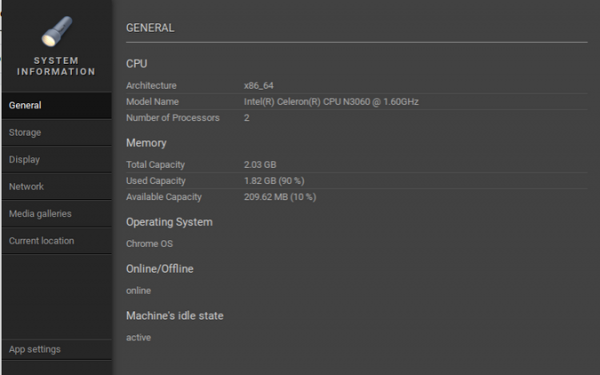
(Don Watkins, )
If you plan to install many Linux applications, I recommend using a Chromebook with 4 GB of RAM and more disk space.
Setting Up Linux (beta)
Once logged into your Chromebook, move the mouse cursor to the bottom right corner of the screen where the clock is located and left-click. A panel will open with options listed at the top (from left to right): sign out, shut down, lock, and open settings. Select the settings icon (Settings).
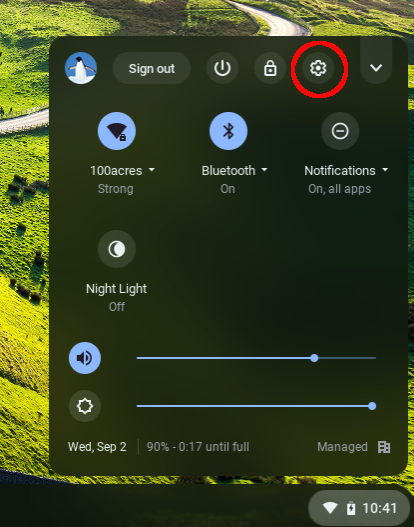
(Don Watkins, )
On the left side of the panel Settings you will see in the list Linux (Beta).
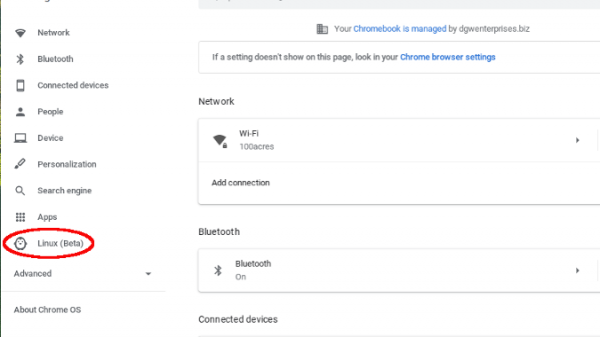
(Don Watkins, )
Click on Linux (Beta), and an option to start it will appear on the main panel. Click the button Turn on.
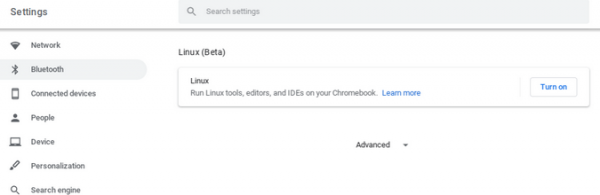
(Don Watkins, )
After that, the process of setting up the Linux environment on the Chromebook will begin.
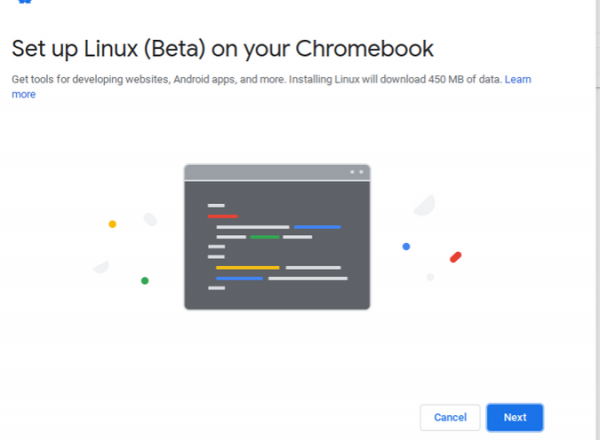
(Don Watkins, )
Then you will be prompted to enter Username and the desired size for the Linux installation.
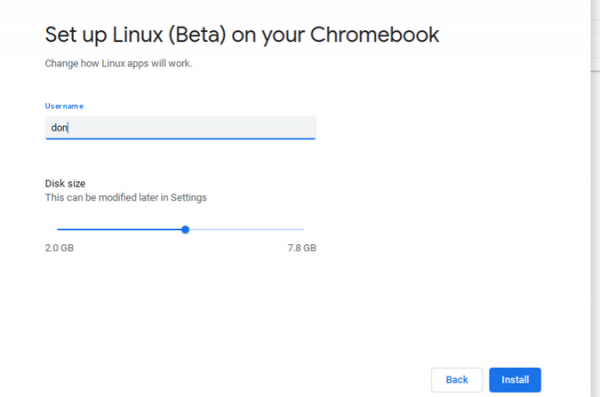
(Don Watkins, )
Installing Linux on a Chromebook will take a few minutes.
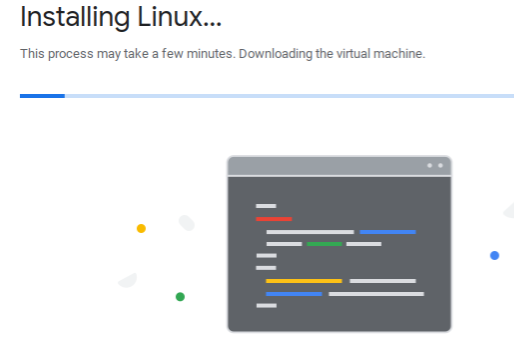
(Don Watkins, )
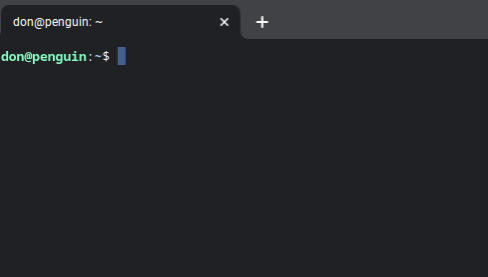
Once the installation is complete, you can start using Linux on your Chromebook. In the menu bar at the bottom of the Chromebook display, there is a shortcut to the terminal — a text interface that can be used to interact with Linux.
(Don Watkins, )
You can use , for example, ls, lscpu and top, to get more information about the environment. Applications are installed with the command sudo apt install.
Installing the First Linux Application
The ability to install and run open-source software on Chromebook provides extensive possibilities.
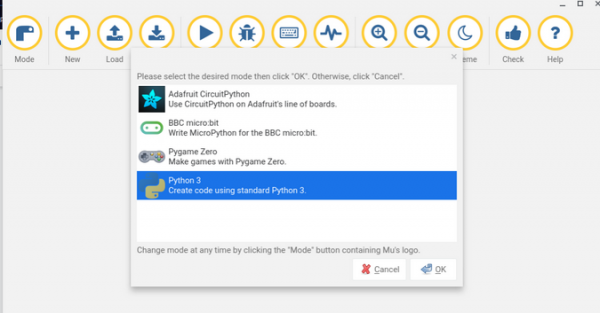
First, I recommend installing the for Python. Let's install it by entering the following in the terminal:
$ sudo apt install mu-editorThe installation will take a little over five minutes, but in the end, you'll have access to a great code editor for Python.
I have successfully used For example, I taught my students to write code for the turtle module of Python and execute it to create graphics. I was disappointed that I couldn't use Mu with the open hardware board Although the Microbit connects via USB and there is USB support in the Linux virtual environment on Chromebook, I couldn't get it to work.
(Don Watkins, )
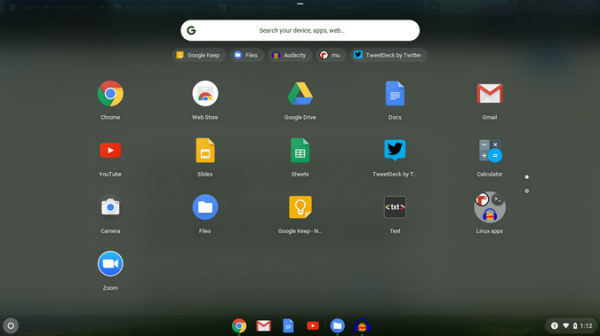
After installing the app, it will appear in the special menu Linux Apps, which is shown in the bottom right corner of the screenshot.
(Don Watkins, )
You can install other applications.
You can install not only programming languages with code editors. In fact, you can install most of your favorite open-source applications.
For example, you can install the LibreOffice package with the following command:
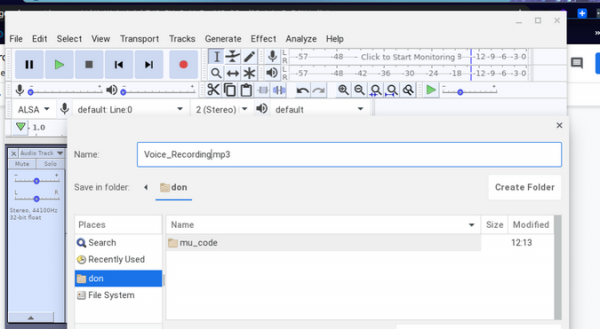
$ sudo apt install libreofficeThe open-source audio editor — is one of my favorite educational applications. The microphone on my Chromebook works with Audacity, allowing me to easily create podcasts or edit free sounds from Installing Audacity on Chromebook is easy — once the Crostini virtual environment is running, open the terminal and enter the following:
$ sudo apt install audacityThen launch Audacity from the command line or find it in the Linux Apps Chromebook menu.
(Don Watkins, )
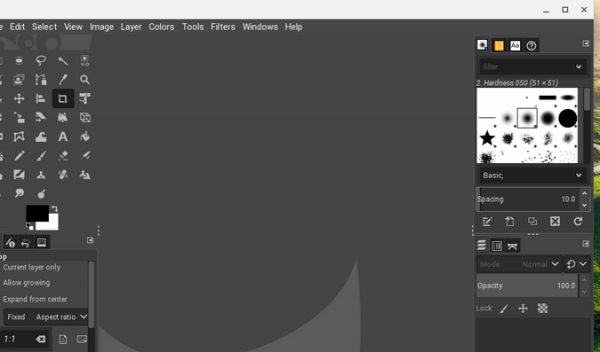
I also easily installed and — a couple of wonderful educational programs. I even managed to install and run the image editor All Linux applications are taken from Debian Linux repositories.
(Don Watkins, )
File Transfer
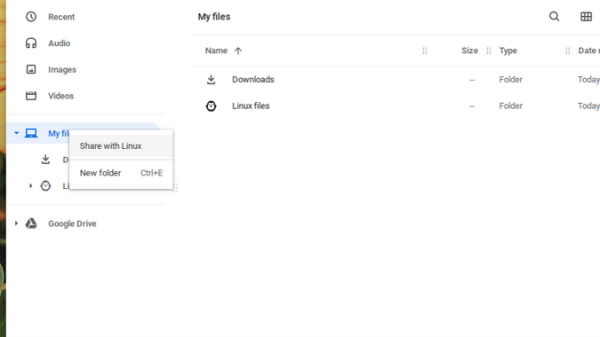
In Linux (beta), there is a utility for backing up and restoring files. You can also transfer files between the Linux (beta) virtual machine and Chromebook by right-clicking on the folder you want to transfer on your Chromebook. You can transfer all files from the Chromebook or create a special folder for shared files. When in the Linux virtual machine, you can access the folder by navigating to Files Documentation for Linux (beta) is very detailed, so study it carefully to learn about the features. Here are some important aspects taken from the documentation: /mnt/chromeos.
(Don Watkins, )
Additional information
Cameras are not supported yet.
- Cameras are not supported yet.
- Android devices are supported via USB.
- Hardware acceleration is not supported yet.
- Microphone access is available.
Do you use Linux applications on your Chromebook? Share your experience in the comments!
Advertising
VDSina offers for any tasks, a vast selection of operating systems for automatic installation, with the option to install any OS from your own with a user-friendly of our own development and pay-per-day.
Source: habr.com
