

The healthcare sector is gradually, yet quite rapidly, adapting cloud computing technologies to its field. This is happening because modern global medicine, adhering to the primary goal of being patient-centered, formulates a key requirement for improving healthcare quality and clinical outcomes (and thus enhancing the quality of life for individuals and prolonging it): quick access to patient information regardless of the patient’s and physician’s locations. Today, only cloud technologies have tangible potential to meet this requirement.
For example, addressing the pressing coronavirus issue is facilitated by the rapid information provision by China regarding infection cases and research outcomes, which has been made possible thanks to modern information technologies, including cloud solutions. Compare: to confirm the epidemic (and thus obtain and analyze data on the health status of individuals, studying the virus over time) , caused by the SARS coronavirus, took China in 2002 WHO Director-General Tedros Adhanom Ghebreyesus at a meeting with Chinese President Xi Jinping. Let’s explore the potential of clouds in medicine and why. Healthcare Data Issues
▍Volumes
The large volumes of data that medicine has always dealt with are now simply becoming enormous. This includes not only medical histories but also a compilation of summarized clinical and research data across various fields of medicine, along with new medical knowledge that is expanding at an exponential rate: the time for its doubling was approximately 50 years ago in 1950; it sped up to 7 years in 1980; 3.5 years in 2010, and in 2020, it is predicted to double within 73 days (according to
The large volumes of data that medicine has always dealt with are now becoming enormous. This includes not only medical histories but also a collection of generalized clinical and research data across various fields of medicine, as well as new medical knowledge that is expanding at an exponential rate: the doubling time was approximately 50 years ago in 1950; it accelerated to 7 years in 1980; 3.5 years in 2010, and in 2020, it is predicted to double within 73 days (according to ).
Here are just a few reasons for the global data growth:
- The advancement of science and, consequently, the increase in volumes and simplification of methods for publishing new scientific materials.
- Patient mobility and new mobile data collection methods (mobile devices for diagnostics and monitoring as new sources of statistical data).
- The increase in life expectancy and, as a result, a growing number of 'aging patients.'
- The increase in young patients attracted by the modern global promotion of healthy lifestyles and preventive medicine (previously, young people only visited doctors when they were genuinely ill).
▍Accessibility
Previously, clinicians relied on several sources of information—from standard search engines, where content might be unreliable, to printed journals and books in medical libraries, which required time to locate and read. As for patients' medical histories and test results in state and private clinics and hospitals, we all know that each medical institution still keeps its own physical patient file, where doctors manually enter information and attach sheets with test results. Paper archives also remain. Moreover, the part of patient information that is entered digitally is stored on local servers within the medical facility. Therefore, access to this information is only possible locally (plus the high costs of implementing, supporting, and maintaining such a 'boxed' system).
How the use of cloud technologies is positively transforming the healthcare sector
Information exchange among medical professionals regarding patients is becoming more prompt. All data about the patient is entered into their , which is stored on a remote cloud server: medical history; exact dates and nature of injuries, manifestations of diseases and vaccinations (rather than confusion from patient statements that accumulate over the years—which is crucial for diagnostics, treatment prognosis, and predicting health risks for descendants); various images (X-rays, CT scans, MRIs, photographs, etc.); test results; electrocardiograms; medication information; video recordings of surgical procedures and any other clinical and administrative data. Authorized medical professionals in various clinics gain access to this personal, secured information. This optimizes the clinician's workflow, enabling more precise and faster diagnoses, allowing for more accurate and, importantly, timely treatment planning.
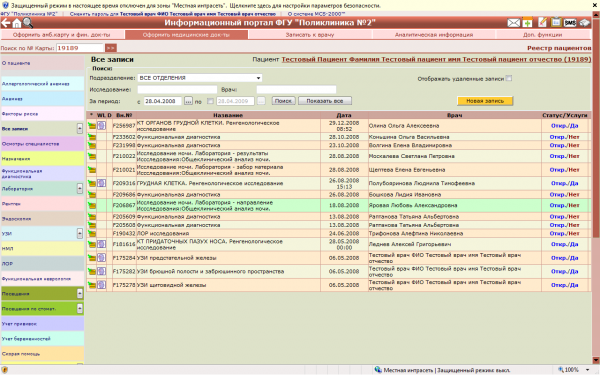
Electronic Medical Record
Instant information exchange between various health organizations becomes possible. This interaction includes research laboratories and pharmaceutical companies with different medical institutions (availability of medications), as well as hospitals and outpatient clinics.
Point-of-care (personalized) preventive medicine emerges. Particularly through the use of artificial intelligence technologies, which cannot be utilized in most medical institutions due to their resource-intensive computational requirements, but in the cloud — .
Automation of the treatment process reduces the time spent on it. Electronic medical records and , electronic queues and remote receipt of test results, electronic social security systems and medical archives, and — all of this allows healthcare workers to escape from paperwork and other routine tasks, enabling them to dedicate maximum working time directly to the patient's issues.
There is a great opportunity to significantly save on infrastructure, possibly even eliminating any investments in it. The models of "Infrastructure as a Service" (IaaS) and "Software as a Service" (SaaS) offered by cloud service providers allow replacing the costly purchase of software and substantial investments in healthcare infrastructure with renting these models and accessing them via the internet. Additionally, organizations only pay for the server resources they actually use, and can increase capacity or storage volumes as needed. Utilizing cloud technologies along with the technical support of cloud service providers enables medical institutions to significantly reduce IT personnel expenses, as there is no need to maintain their own data storage infrastructure.
Security reaches a new level. Redundancy, data recovery, and confidentiality have become possible thanks to various technologies (backup, end-to-end encryption, disaster recovery, etc.), which in a traditional approach require enormous costs (including expenses for correcting errors made by incompetent staff in this IT area) or are even impossible, while in they are included in the service package from the provider (where security issues are handled by professionals who guarantee a certain, quite high level of security).
It has become possible to receive quality medical consultations without leaving home: telemedicine. Remote consultations based on cloud-stored electronic patient data are already appearing. As cloud computing continues to develop in healthcare, teleconsultations are expected to become the future of the medical industry. The telemedicine market has significantly grown in recent years. As of 2015, the global telemedicine market was valued at $18 billion, and it is expected to exceed $41 billion by 2021. Numerous factors have contributed to market growth, including rising costs of traditional medical services, funding for telemedicine, and an increase in the number of digital health users. Telemedicine is especially relevant for people with disabilities, and it significantly reduces the burden on medical centers and clinics. However, the need for a “live” doctor remains: for instance, applications like the British cloud service , which operates on AI (as discussed below), can question patients about their complaints, analyze test results, and provide recommendations (including which specialist to visit, when, and with what questions).
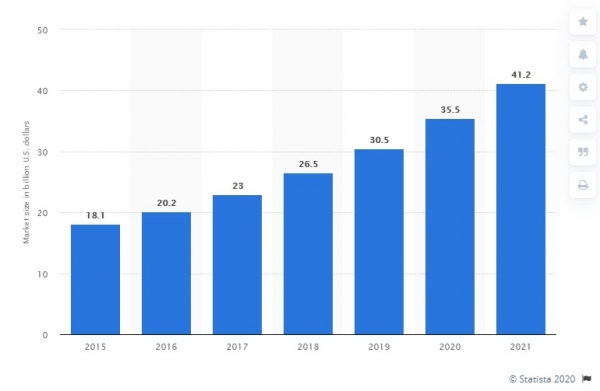
The global telemedicine market volume from 2015 to 2021 (in billion $)
Urgent collaborative medical solutions are becoming a reality. A significant breakthrough in operative surgery has been real-time video conferencing using mobile applications. The ability to convene a panel of strong doctors in an emergency situation during surgery, even when they are located in different parts of the world, is invaluable. It is also hard to imagine an uninterrupted consultation without the resources of cloud technology.
Analytics is becoming more accurate. The ability to combine electronic records and archives with patient data into cloud analytical systems allows for an increase in the quantity and quality of conducted research. This is particularly pressing in various medical and biological fields, especially in genetic research, which has always been challenging due to the inability to gather a complete and accurate picture of a patient's and their relatives' medical history.
New approaches to diagnostics are emerging. Advancing artificial intelligence technologies are capable of diagnosing diseases by collecting and systematizing not only fragmented data from patient medical histories but also by correlating this information with vast amounts of scientific research, drawing conclusions in a very short time. For example, the system analyzed patient data and about 20 million scientific papers from various oncology sources, providing an accurate diagnosis within 10 minutes and suggesting possible treatment options ranked by reliability and backed by clinical data. You can read about the system , and . A similar system is by Google. Read about how AI is assisting clinicians, particularly radiologists, who face the challenge of accurately interpreting X-ray images, which can lead to incorrect diagnoses and consequently delayed or absent treatments. Additionally, AI performs image visualization for pulmonologists. This includes patient monitoring: for example, the American AI system monitors the condition of patients recovering from complex treatments (or those with chronic illnesses), collects information that it then transmits to their treating physician, offers some recommendations, and reminds them to take medications and perform necessary procedures. The use of AI in such high-level diagnostics and disease monitoring has become possible due to the capabilities of cloud computing.

The Internet of Things is developing, and smart medical gadgets are emerging. They are used not only by the users themselves (for personal use) but also by doctors, who receive health information about their patients from mobile devices via cloud technologies.
Capabilities of medical online platforms
▍International experience
One of the first platforms for clinical data in U.S. healthcare enterprises was an enterprise health platform designed to extract and display patient information from various sources, including scanned documents (ECGs, CT scans, etc.), various medical imaging procedures, lab results, surgical reports, as well as patient demographics and contact information. This was developed by Microsoft and named Microsoft Amalga Unified Intelligence System. The platform was originally created as Azyxxi by doctors and researchers in the emergency department of the Washington Hospital Center in 1996. As of February 2013, Microsoft Amalga had become part of a number of health-related products that had been consolidated into a joint venture with called Caradigm. In early 2016, Microsoft sold its stake in Caradigm to GE.
Amalga was used to connect many disparate medical systems, utilizing a wide range of data types to provide an immediate, up-to-date composite portrait of a patient's medical history. All components of Amalga were integrated using software that enabled the creation of standard approaches and tools for interaction with many software and hardware systems installed in hospitals. A doctor using Amalga could retrieve past and present hospital status data, medication and allergy lists, lab results, and an overview of relevant X-rays, CT scans, and other images organized in a customizable format to highlight the most important information for that patient in just a few seconds.
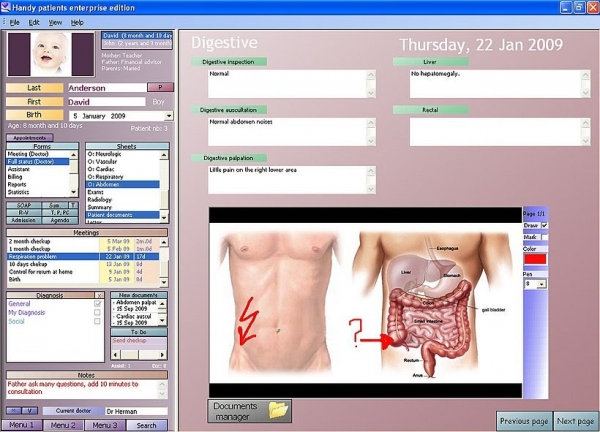
Microsoft Amalga Unified Intelligence System
Today, Caradigm USA LLC focuses on population health analytics: offering management of population health, including data monitoring, coordination, and management of patient care, wellness services, and patient engagement services worldwide. The company uses the clinical data platform , which is the next generation of the Caradigm Intelligence Platform (formerly known as the Microsoft Amalga Health Information System). The clinical data platform complements existing data assets, including clinical archives and electronic medical record systems. The system features a complex environment for the reception and processing of unstructured data and clinical documents, images, and genomic data.
▍Russian Experience
The Russian market is seeing an increasing number of cloud-based medical systems and online services. Some provide platforms that take on all administrative functions of private clinics, others automate laboratory operations, and some ensure electronic information exchange between medical institutions and government agencies or insurance companies. Here are a few examples.
— a clinic automation platform: online appointment scheduling with doctors, automation of the front office and doctor's workspace, electronic records, remote diagnostics, management reporting, cash register and finances, inventory management.
— a system , allowing patients to check the readiness of their tests and receive laboratory results at any time of the day from anywhere in the world with just two clicks.
Electronic Medicine — a company developing software for medical organizations, pharmacies, THOMS, and insurance companies: economic and statistical accounting for polyclinics and hospitals, integration of radiological and laboratory systems with federal services, electronic appointment scheduling, accounting for medicines, laboratory, electronic medical records ().
— a system for the automation of commercial medical institutions of any profile except hospitals: general clinics; dental practices that have specialized interfaces and separate workstations; emergency medical service departments with call logging and recording of various parameters and maintaining schedules.
— a company specializing in the development and installation of integrated information systems for healthcare institutions. They offer a technological platform for accelerated application development in medicine.
— a management program for private clinics based on cloud technologies: online registration, IP telephony, client database, material accounting, financial control, appointment diaries, treatment planning, employee monitoring.
Conclusion
Digital health leverages the latest information and communication technologies to create and support a faster, more efficient, and cost-effective medical practice. This technological transformation in healthcare has become a global trend. The key objectives here are: improving accessibility, comfort, and quality of medical care for people worldwide; timely, accurate diagnosis; in-depth medical analytics; freeing healthcare professionals from routine tasks. Addressing these challenges with high technology is currently only possible through the allocation of substantial computing power and technical support from IT specialists, which has only become accessible to organizations of all sizes and directions in medicine thanks to .
We are glad if this article has been helpful. If you have had a positive experience using digital health, please share it in the comments. Also share any negative experiences, as it is important to discuss what needs to be improved in this field.
Source: habr.com
