

For some, Kim Dotcom, the founder of the notorious file-sharing site 'MegaUpload,' is a criminal and internet pirate; for others, he is an unyielding advocate for personal privacy. On March 12, 2017, the world premiere of a documentary film took place, featuring interviews with politicians, journalists, and musicians who know Kim 'from all angles.' New Zealand director Annie Goldson uses personal archive footage to convey the essence of Dotcom's legal battles with the U.S. government and other entities that declared war on global internet piracy.
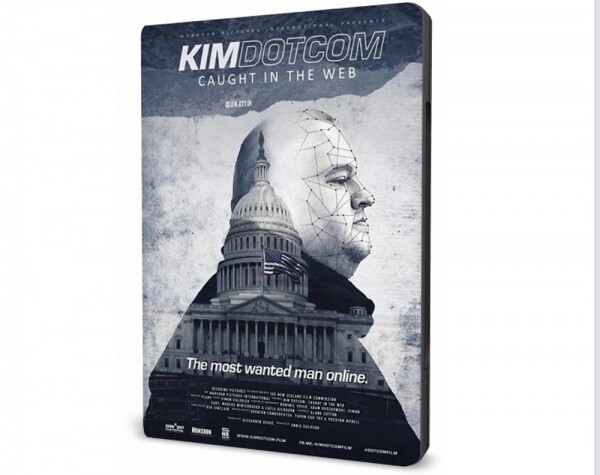
In his youth, Kim Dotcom considered the U.S. to be the bastion of global democracy, a country whose government selflessly fights for the triumph of justice around the world. Having played the roles of hacker, juvenile delinquent, and computer security consultant, by the age of 30, Kim decided to start a business and created the largest file-sharing service 'MegaUpload,' which reached 160 million users. Even up until its closure in 2012, it was ranked 13th among the most visited internet resources. During its 7 years of operation, 'MegaUpload' earned Kim over a hundred million dollars, but as a result of legal disputes, he became bankrupt. The initiators of the prosecution were the U.S., accusing Dotcom of hosting pirated content and violating copyright, which allegedly caused rights holders damages amounting to 500 million dollars.
To this day, Kim has not managed to recover from the blow and improve his financial situation, as he spends all his resources on legal fees and creating new innovative projects, such as the platform 'K.im' — a so-called 'file store' that processes payments based on cryptocurrency.
The article discusses the plot of the film 'Caught in the Net,' as well as excerpts from other journalistic materials that are unavailable to Russian-speaking readers.
Dotcom and politics
On January 19, 2012, Kim uploaded a clip of his song "I Am Ready to Change Your Life" on YouTube with the words: "I will show you that I can change your life, I will change your mindset, I will prove that I am the best to fight."
As the 2014 elections approached, it became clear that the Internet Party alone would not achieve success, so Kim began looking for allies. The MANA party agreed to collaborate with him. They were very active and belonged to the political left. Dotcom reported that he invested an unprecedented sum of 4 million dollars in a deal with this party. Prime Minister John Key immediately stated that Kim was funding a political party to hinder his own extradition. For the MANA party, it was important to showcase a new political partner to its electorate.

Newspapers were filled with headlines: "Why Dotcom's Party is Good for New Zealand," "Let's Protect Our Future with the Internet Party," "Dotcom's New Trick – To Shake Up New Zealand Politicians," "How the Internet-MANA Alliance Breaks the Rules of the Game." Both parties believed in the seriousness of their electoral victory, while people wondered how much of a role the alliance could play in parliament. The media reported on every move they made, yet MANA was unable to capitalize on this popularity. The presentations of the Internet MANA alliance included aspects that seemed personally targeted against John Key.
Kim's speech to voters was broadcast on television: "Are you ready for a revolution? Are you ready to extradite John Key?" as the crowd, alongside Kim, began to chant: "To hell with John Key!" During this electoral campaign, attacks on the Prime Minister reached unprecedented heights, exemplified by an online video stream of a large effigy burning with John Key's portrait in place of the head. This was likely one of the dirtiest electoral campaigns in many years. Kim stated he would share news that could sink the Prime Minister. His supporters dubbed the forthcoming revelation the "moment of truth."
Moment of Truth
Five days before the elections, on September 15, 2014, journalist David Fisher received a letter from Kim, stating that everything Dotcom suspected about a conspiracy against him was true — New Zealand handed him over to the U.S. "on a silver platter." Dotcom had fragments of emails from a government member and a representative from Warner Bros: "John Key told me that they would grant Dotcom residency despite his criminal past. We will give him a 'royal welcome,' and then he will get a one-way ticket to Virginia."
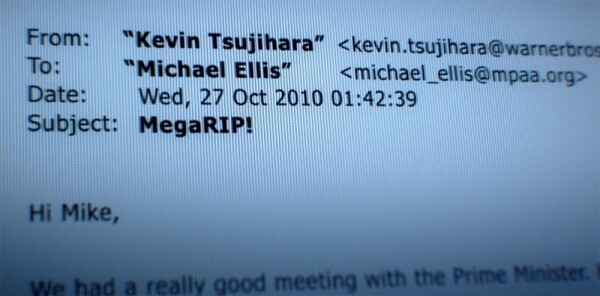
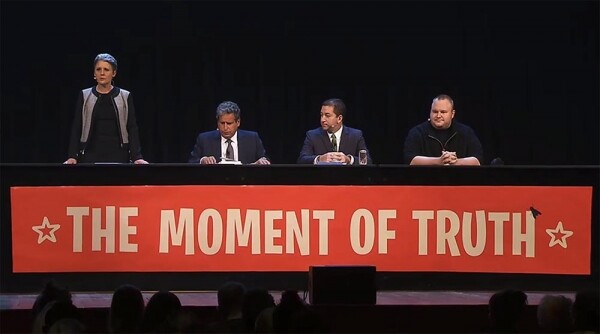
On the day of the 'Moment of Truth,' a mass rally gathered in front of Auckland Town Hall. John Key promised that he would resign if evidence of surveillance emerged, but how would he act after Kim releases emails confirming his connection with Hollywood? The 'Moment of Truth' posed a significant risk for John Key — Dotcom promised to disclose certain facts, and if they proved to be true, the Prime Minister would have to resign.
"Today, the land of the Long White Cloud welcomes the world!" — the speaker of The Moment of Truth conference introduces American lawyer and writer Glenn Greenwald, sitting at the table to the right of Key, and Julian Assange, who participates in the event via video link. Greenwald is well-known for publishing a series of articles in 2013 about global surveillance based on materials from Edward Snowden.
"Welcome, Edward Snowden!" — the smiling face of the former CIA and NSA employee, who leaked a trove of information about the illegal surveillance of U.S. citizens around the world, appears on the screen. Snowden also joins the 'Moment of Truth' via video link. "America is waging a real war for control over the internet. They think there shouldn't be organizations like WikiLeaks, that state spying should remain secret."
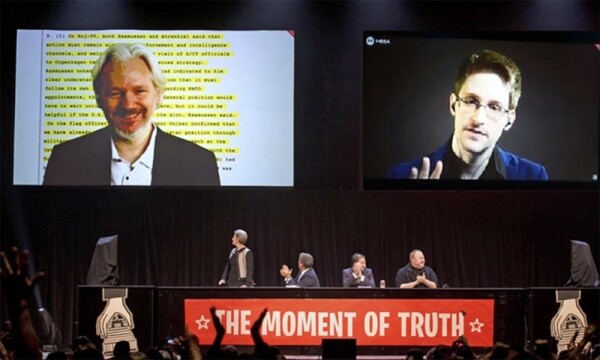
The U.S. believes that when it comes to copyright, the whole world should adopt their practices in this matter. David Fisher recalls: "What we saw there, at the event in the town hall, was called 'resistance.'"
Edward Snowden: "There are millions of spying sensors located around the world; I can see everything – which book you picked on Amazon, who you are communicating with, I can see your friends on Facebook, messages you sent via email or mobile."
Glenn Greenwald: "This is precisely the mass surveillance that Prime Minister Key not only vehemently denied but also promised to resign if it was proven that his government participated in it."
Julian Assange: "Intelligence agencies are by definition created to operate outside the law, so they cannot be trusted."
However, it didn't matter what Assange and Snowden said. It could be said about Dotcom: "But the king is naked!" He presented no evidence, which he had long promised to share, and this became a significant problem for Dotcom and all who supported him until that moment.
At the press conference after the event, Kim is asked: "People expected that Dotcom would come to parliament and prove, as he promised, that John Key is a liar. Why didn't you do that?"
Kim replies: "I proved it, exactly!"
Reporter: "No, what he knew about you before the raid is not evidence of a conspiracy!"
Kim: "No, listen, let me answer! After what you learned today, you have a moral responsibility to convey the information that Glenn Greenwald and Edward Snowden shared with you to the Prime Minister and his cabinet, and hold them accountable!"
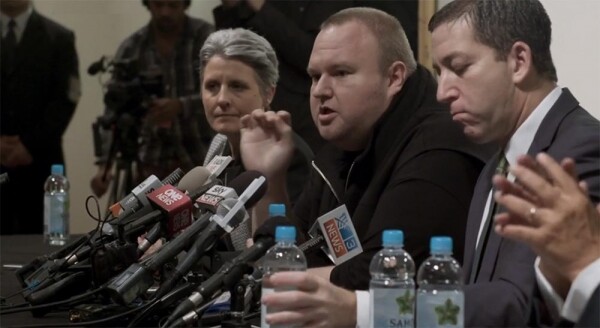
"We learned of a larger lie, and it does not concern my case. It concerns every resident of New Zealand who is subjected to mass surveillance. This is the story you should be focusing on, so get your priorities straight!"
Reporter: "Okay, we'll get it done."
Kim: "Yes, Patrick, get it done, because in the past you have already let New Zealanders down! I don’t understand how you allow the Prime Minister to wiggle out time and again! He lies and deceives, but you still need to do your job; we all need to continue doing ours."
Reporter: "Here I am doing my job, asking you: Kim Dotcom, what went wrong today, why didn’t you present your evidence?"
Kim: "I think that's enough for today. Thank you!"
Later, Kim told the film crew: "I knew that this letter was stolen by hackers; you remember the famous Sony hack. The same people who hacked that company were responsible for hacking Hollywood's correspondence. I was assured that this letter would contain headings that could establish all the details – which email they used, date and time stamps, everything that could confirm the authenticity of the content. But unfortunately, the letters were leaked without that information, so for me, they were useless. I deeply regret that I couldn’t present them at the 'moment of truth.'"
These words from Kim raise doubts about how candid he really is. It’s questionable whether a former hacker would believe in the document's authenticity based solely on screenshots or content descriptions. Kim surely had ways to obtain this compromising material in the form of electronic copies of the original files, perhaps by purchasing it from the hackers. It’s likely that Kim did just that. It’s also likely that Dotcom has a good understanding of politics and simply tried to leave himself a 'loophole' for the future, not wanting to completely destroy the Prime Minister and his cabinet for his own safety. He believed that for his party to win the election, hints and assurances that he indeed possesses such materials would suffice, and people would vote for the 'truth-teller.'
Another defeat
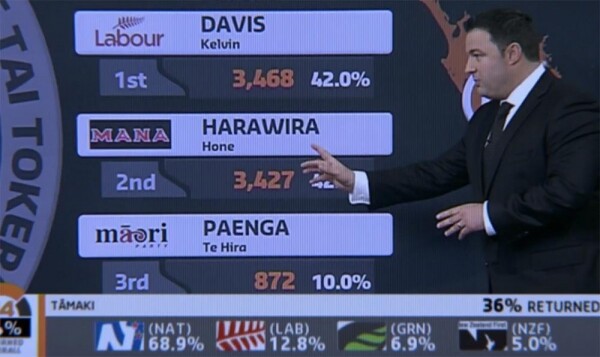
The parliamentary elections in New Zealand were held on September 20, 2014. It was a very serious, at times very dirty political campaign. Initially, people offered Kim and his party significant support because they remembered that he was a victim of the U.S. intelligence agencies, the government, and the New Zealand police. Suddenly, he was seen as a more aggressive player, and now John Key had become the underdog. However, when the votes were counted, it became clear that the Internet-MANA party faced difficulties, likely due to Dotcom’s failure to deliver a 'knockout punch' to the Prime Minister. The alliance did not manage to enter Parliament, and millions of Dotcom's hopes went down the drain.
“Good evening, everyone!” Kim speaks at the party headquarters after the preliminary election results are announced, “today we lost, and it was because of me.” The attendees shout, “No, that’s not true, it’s not like that!”
Dotcom interrupts, “No, I had to say this! I’m sorry! I take full responsibility for our loss today, because the brand 'Kim Dotcom' turned out to be 'toxic' for what we were trying to achieve. I didn't see this before, but in the last couple of weeks it has become obvious to me. I want to say a huge thank you to all of you who have worked with me during these days!” Kim leaves, and many of those present can't hold back their tears. Even Kim, while speaking, seemed on the verge of crying. Apparently, the media was able to deal him a blow, presenting him with an unfavorable image during the election campaign. John Key and his government remain for another three years.
The day after the elections, Dotcom’s lawyers were contacted by the Attorney General of New Zealand, who asked if the accused was ready to leave the country. In this case, the case against Kim would be closed, there would be no extradition, and everything would remain in the past.

Kim tells the film crew, “You can't conduct a raid like this, destroy a person’s family and business, cause him so much pain, and walk away unscathed with some piece of paper saying, 'Yes, I did wrong, but you forgive me, thank you for that!' To hell with them!”
2015: Mega Project and Mega Trial
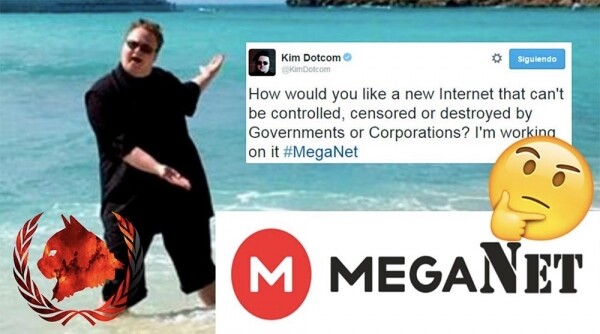
At the end of 2014, Kim Dotcom proposed the idea of laying an underwater fiber optic cable connecting New Zealand to the United States. The project was estimated to cost $400 million, which neither Dotcom nor potential investors had. In February 2015, this idea was replaced by an even more ambitious project to create an anti-censorship network called MegaNet. On Twitter, Kim wrote, “How would you like a new internet that governments and corporations cannot control, censor, or destroy? I’m working on that.”
In mid-June, Dotcom informs TorrnetFreak that the network will be fully decentralized and anonymous. It is known that mobile phone users are to play a key role in the network's structure, although MegaNet will also be accessible from other devices. "MegaNet is a unique protocol for crystallizing and recreating files, utilizing blockchains.
This technology will be able to support entire websites, making them completely immune to hacker attacks and DDoS. Initially, MegaNet will use the existing internet as a crutch, but in about 10 years, it will operate independently, solely on smartphones. Let's hope that at least 500 million users will be able to support the network's operation. This will be a network created by people for people. Uncontrolled by governments and corporations, MegaNet will be a powerful tool capable of safeguarding our private lives and freedom, and it will become my legacy."
Dotcom sets the date for fundraising for his crowdfunding-based project to January 20, 2016, the day of the fourth anniversary of the New Zealand raid. At that time, Kim promises to unveil all the details of the new megaproject.
In September, the media reported that after a three-and-a-half-year delay, hearings regarding the extradition of Kim Dotcom and his team to the U.S. would resume in Auckland in December. The judge must decide whether these individuals will remain in New Zealand or be sent to a place where they face decades-long prison sentences.
Dotcom's lead attorney, Ron Mansfield, believes this case is the largest copyright protection trial the world has ever seen. Kim tells reporters accompanying him to the court hearing that he is confident in his attorneys: "All our documents are just perfect! Any impartial lawyer will understand what this is about."
The judge states that Dotcom's case is of great importance because it touches on issues of extradition in the context of existing New Zealand law. Therefore, it must first be proven that Dotcom's activities were indeed criminal.

Kim's lawyer argues that Dotcom's activities do not constitute a crime based on the existence of a specific copyright law that provides protection to internet service providers. Providing technology to internet users does not impose civil or criminal liability on companies. The lawyers have consistently pointed out the same case circumstances and existing international regulations. The legal cooperation agreement between the United States and New Zealand does not mention copyright, and relying on this fact, the lawyers hoped to win the case.
In response to the lawyer's remarks, the judge calls upon the Crown Prosecutor, Christina Gordon, who states the following: "The dishonesty underlying MegaUpload's operations can be expressed in simple terms. The evidence points to a straightforward fraud scheme. This is not just an innocent internet provider, but a substantial cloud service with illegal content."
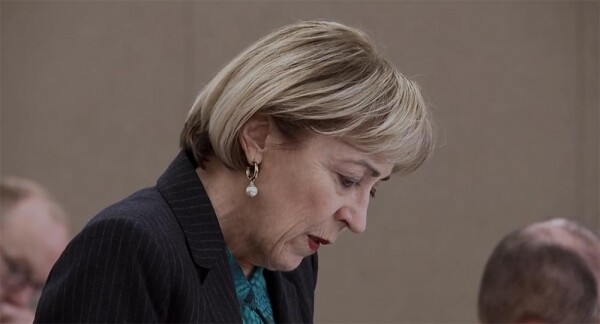
Greg Sandoval says: "Christina Gordon represents American interests, and I am sure she received instructions from the U.S. Department of Justice, and in this mission, she has given her all."
Christina Gordon continues: "We have evidence of how the defendants thought (!) and behaved in private. We have access to their 'candid communications.' According to a private statement from Matthias Ortmann, copyright holders would understand, I quote: 'we are not just empty pipes for transferring content, as we pretend.' Another defendant, Bram van der Kolk, said: 'if the copyright holders knew the scale of our business, they would surely try to stop it. They do not suspect that we earn millions every month. Ortmann told van der Kolk, I quote: 'we did the right thing, we facilitated fraud for a long time and thus increased our growth.'
The entire courtroom fell silent, contemplating the prosecutor's words. Christina Gordon continues: "On August 16, 2010, via Skype, Dotcom told Ortmann in German: 'at some point, the judge will understand how bad we are, and then problems will start.'
Kim's lawyer makes an amendment: "The objective translation of this phrase should be as follows: 'Because at some point, the judge will be persuaded of how bad we are in their opinion, and then chaos will ensue.'"
America clearly understood what 'substantial' evidence should be presented to the court, and Dotcom's lawyers prepared each piece. The prosecution behaved biasly, selecting certain evidence and presenting it to the court at the most opportune moment. Most conversations with his team were conducted in German, and the USA relied on translations without disclosing who performed them.
The lawyers managed to prove the unreliability and incorrectness of most translations of the defendants' conversations, with each correct translation being carried out by a specific professional translator.
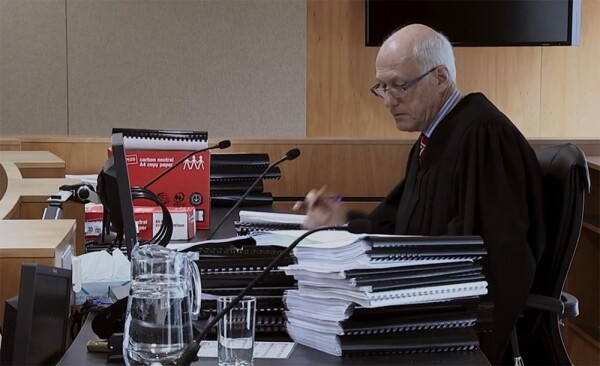
Christina Gordon: "Your Honor, this morning you were supposed to receive a folder..." and another volume of the indictment is laid on the judge's desk. The judge was literally inundated with papers, combined into a hundred separate volumes. Thousands of pages of documents prepared by American lawmakers effectively drowned him in case materials.
Kim Dotcom recalls: "I realized that the judge simply couldn't grasp this case. He had no idea about the internet or copyright. At one point during the proceedings, he asked if MegaUpload was a 'cow storage', confusing 'cloud service' with 'cow service'."
It was a grueling process, and Kim's lawyers prepared for each session for many, many hours. They invested a tremendous amount of time and human resources into what they believed was a reliable defense against extradition. However, most of the defense arguments were either ignored or not considered by the court at all.
The verdict in the Kim Dotcom case was announced on December 25, 2015. The court's decision states: "The overwhelming amount of evidence presented by the petitioner in the case materials and its appendices establishes sufficient grounds indicating signs of crimes by all defendants on each count. Consequently, it is held that all four defendants are subject to extradition."
Epilogue
The defendants in the MegaUpload case have appealed the district court's decision. In 2017, the Supreme Court ruled that the defendants could be extradited for alleged fraud, but under New Zealand law, copyright infringement is not a criminal offense. This raises questions about the legality of the raid and arrests in 2012. The Internet Archive shows that MegaUpload did not offer bonuses for files larger than 100MB, which is too small for most movies and TV shows, and thus did not encourage users to upload such content. The file-sharing service's user agreement stated that users were required to make copyright inquiries to ensure that the content they posted did not infringe on copyrights.
In the film's finale, there is a line suggesting that the time for MegaUpload has irretrievably passed and that pirate sites will lose their popularity. While piracy is in decline, it has taught internet users an important lesson: if something can be put online and downloaded conveniently and cheaply, it is not necessarily a crime.
Greg Sandoval states: "What is the point of trying to jail Dotcom? Find out what he knows; you've already got his money, so make a deal with him, treat him like they treat 'white hat' hackers—try to leverage his experience in this matter. That would be a very smart move, like in 'The Godfather'—keep your friends close and your enemies even closer!"

Sean Gallagher, editor of Ars Technica, says: "While we have a strong reason to prevent piracy to protect artists who live off selling their creative products, the mechanisms used to combat the distribution of illegal content are also mechanisms of censorship and suppression of freedom of thought. It's a very slippery slope and a dangerous thing."
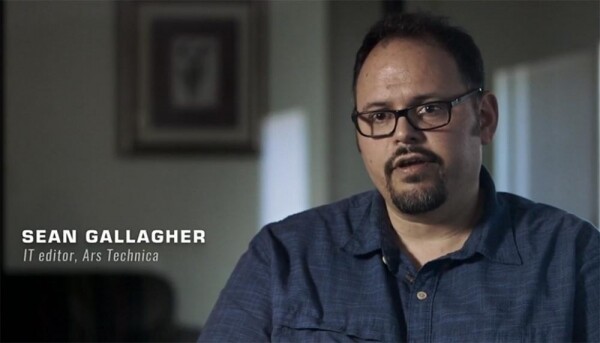
In the film's climax, Kim states: "It's no longer about what's right, it's about winning at any cost! All they care about is crushing me, breaking me. But they've picked the wrong guy; I will win this fight anyway!"

The final credits of the film “Caught in the Net” report that as of now (March 2017), Kim is working on MegaUpload 2.0 and hinted that he might return to politics. If he is extradited, Mona and the children may also be expelled from New Zealand.
Prime Minister John Key suddenly resigned in December 2016. Like officials from the police and the English crown, he refused to give an interview to the filmmakers about Dotcom. The legal proceedings regarding the MegaUpload case continue.
"Our song is good, start it again!"
On January 20, 2017, the New Zealand Court of Appeal upheld the lower court's 2015 ruling that Kim Dotcom and his 'accomplices' should be extradited to the United States to face charges related to the Megaupload website.
High Court Judge Murray Gilbert ruled that while he agreed with one of Dotcom's lawyers' main arguments that the free distribution of copyrighted content on the internet is not a criminal offense in New Zealand, the defendants can still be extradited based on other charges brought by the plaintiff.
"Willful copyright infringement can be classified as an unfair act; it deprives the copyright holder of what they may have a right to. Therefore, the behavior of the defendants in terms of Article II.16 constitutes a criminal conspiracy with the intent to commit fraud," concluded the judge, referencing a specific section of the extradition treaty between New Zealand and the United States that stipulates the formal criminal charges under which it can be applied.
However, it is likely to take years before the case is fully resolved. In a statement released shortly after the ruling was made, Dotcom's attorney Ron Mansfield indicated that the case would be appealed in another New Zealand Court of Appeal. It could potentially be appealed in a higher court – the Supreme Court of New Zealand.
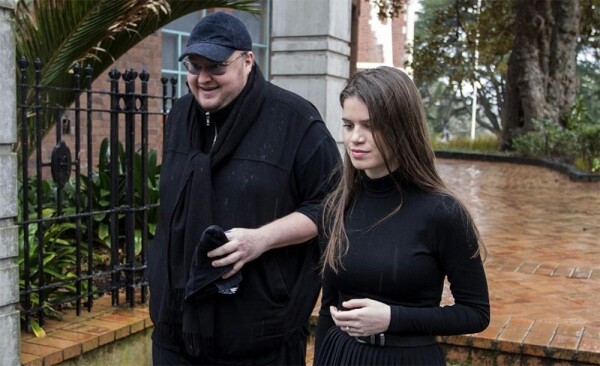
After the announcement of this decision, Dotcom tweeted that the extradition rules are complete nonsense because "even though we won, we still lost. This is a political case. It is politicized justice. I said that under copyright law, I cannot be extradited, and I was right. What will they try now? Sharia court?"
Responding on Twitter to questions from Ars Technica, Dotcom commented on Murray Gilbert's decision: "We won by presenting the main argument that copyright infringement on the Internet is not a crime in New Zealand and therefore cannot be considered grounds for extradition. The judge had to agree with this, and he had no room for maneuver. He then chose to use a fallback option, allowing our extradition to U.S. authorities based on fraud law, despite the fact that copyright is not fraud, as ruled by the U.S. Supreme Court."
I am now more confident than ever that we will win. We have won the biggest legal battle in my case, and the 'pulling' of the fraud charge will not hold up before five appellate judges. If they agree with this, it will mean that there is no copyright law in New Zealand, and all safe harbors for internet providers are illusory."

Dotcom was not extradited to the U.S. even three years after his arrest simply because under the terms of the 1970 extradition treaty between New Zealand and the United States, neither country "is obliged to send its citizens abroad to face criminal charges, but the executive authority of each country may extradite them if, in its discretion, it deems it appropriate."
At the end of 2016, after John Key's resignation, Kim Dotcom filed for New Zealand citizenship, aiming to run for a seat in Parliament. "I am applying for citizenship to participate personally in New Zealand's political life," he wrote on Twitter. "The New Zealand government is corrupt to the core, and I want to enlighten people about this and present an alternative to the corrupt."
At the same time, Kim claimed that regardless of whether he receives citizenship or not, it would not affect his criminal prosecution, "because this is a political case."
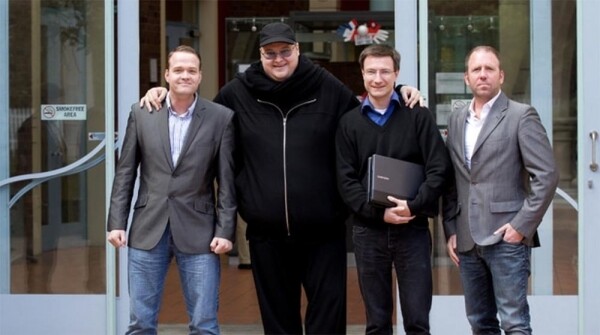
The MegaUpload team after the first trial in 2012 (left to right): Bram van der Kolk, Kim Dotcom, Matthias Ortmann, and Finn Batato.
The case of Kim Dotcom is still ongoing. In January 2020, it marked 8 years since the unfortunate raid that disrupted the careers and lives of many people. The fact that Dotcom is still not in the U.S. is evidence of an important fact: even alone one can fight against the state machinery, provided one has sufficient finances. It's hard to say what would have happened to Kim if he didn't have the means to pay for the best lawyers. Many are outraged that the U.S. does not hesitate to refer to confidential materials in the court proceedings – phone calls, emails, Skype communications obtained unlawfully. It turned out that intelligence agencies had been closely monitoring Dotcom since at least 2009, and this does not seem to bother anyone. Attempts by Dotcom's lawyers to claim that the evidence was obtained illegally by the FBI have been dismissed by courts at all levels due to the fact that "FBI activities do not necessarily have a legal character, especially in other countries."
Moreover, Kim's life has been seriously affected by Andrus Nomm, a former employee of MegaUpload. He struck a plea deal in the U.S. that included testifying against other MegaUpload staff. U.S. authorities love to cite his testimony: "when I told Finn Batato that most of our content was stolen, he replied: ‘I know about that!’"
However, the authorities in New Zealand do not want to appear as total vassals of the U.S., especially since there is a fairly strong opposition in the parliament of this country. Dotcom's case is a kind of indicator of the level of freedom in this country. We can only watch the further developments and continue to expect new technological wonders from Mr. Dotcom, for example, in the field of cryptocurrency.

Dotcom's second wife officially serves on the legal team led by Ron Mansfield and participates in all court proceedings.
Continuation will be available very soon…
Re:
A little advertisement 🙂
Thank you for staying with us. Do you enjoy our articles? Want to see more interesting content? Support us by placing an order or recommending us to your friends, , a unique entry-level server alternative that we have created for you: (options available with RAID1 and RAID10, up to 24 cores and up to 40GB DDR4).
Dell R730xd at half the price in the Equinix Tier IV data center in Amsterdam? Only with us in the Netherlands! Dell R420 — 2x E5-2430 2.2GHz 6C 128GB DDR3 2x960GB SSD 1Gbps 100TB — from $99! Read about how
Source: habr.com
