


Good memory is often an innate trait of some individuals. Therefore, there’s no point in competing with genetic 'mutants' or exhausting yourself with exercises that involve memorizing poems and creating associative stories. Since everything is recorded in the genome, you can’t surpass your own limits.
Indeed, not everyone is capable of constructing memory palaces like Sherlock or visualizing any sequence of information. If you’ve tried the basic techniques listed in the Wikipedia article on mnemonics and haven’t succeeded, that’s okay — memory techniques can become a daunting task for an overloaded brain.
However, it’s not all bad. Scientific research shows[], that certain mnemonic techniques can literally physically change the structure of the brain and enhance memory management skills. Many of the world’s most successful mnemonists, who participate in professional memory competitions, began learning at an older age and managed to significantly boost their brain’s capabilities.
The difficulty of memorization
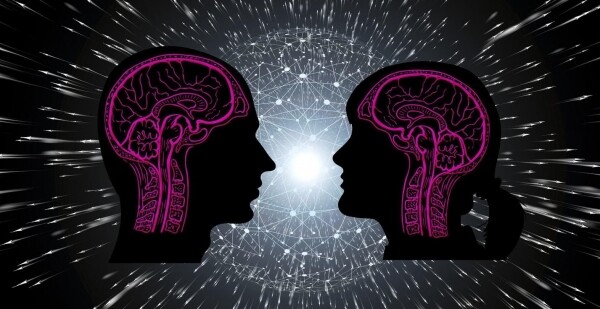
The secret is that the brain changes gradually. In some studies[], the first noticeable results were achieved after six weeks of training, and significant improvements in memory were observed four months after starting the sessions. Memory itself isn’t that important — what matters is how effectively you think at any given moment.
Our brains are not particularly equipped for the modern information age. Our distant ancestors, hunters and gatherers, didn’t need to memorize a curriculum, follow exact instructions, or network by automatically remembering the names of dozens of strangers. They needed to remember where to find food, which plants were edible or poisonous, and how to get home — those vital skills on which their very lives depended. Perhaps that’s why we relatively easily assimilate visual information.
At the same time, prolonged practice and perseverance won’t yield the expected results if the mnemonics being learned are not simple enough. In other words, the technique for improving memory should easily connect important information with an image, sentence, or word. In this regard , in which landmarks on a familiar route become information you need to remember, is not always suitable for beginners.
Formation of mental images

Visualization is the most important aspect of remembering and memory in general[]. The brain is constantly predicting. To do this, it constructs images, visualizing the surrounding space (hence the phenomenon of precognitive dreams). This process does not require effort; there is no need to look at specific objects or meditate specifically— you simply do it.
You want a new car and imagine yourself in it. Or you feel like eating a chocolate cake and you instantly envision its sweet taste. Moreover, for the brain, there is not much difference between actually seeing an object or just imagining it— thoughts about food trigger appetite, and a scary creature jumping out of a closet in a video game evokes a desire to hit and run away.
However, you clearly recognize the difference between a real image and an imagined one— these two processes occur in the brain in parallel (that’s why you don’t break your monitor while playing). To train your memory, you need to think consciously in a similar way.
Just think about what it looks like, what you are trying to remember. If you can think of a cat, you can equally think of a HUGE, THREE-DIMENSIONAL, WHITE and detailed cat with a red ribbon around its neck. You don’t need to specifically imagine a story about a white cat chasing a ball of yarn. Just one large visual object is enough— this mental image creates a new connection in your brain. This method can be used while reading— one visual image per short chapter of a book. Later, remembering what you read will become much easier. Perhaps you will remember this article precisely because of the BIG WHITE CAT.
But how to remember many things in a row? , a multiple memory champion of Sweden, one of 200 people worldwide vying for the title of 'Grandmaster of Memory', offers the following method. Suppose you need to hold ten tasks in your memory at once. Think of ten things you need to remember and vividly visualize them: finish writing a piece of code, pick up a child from preschool, go grocery shopping, etc. For each task, take the first image that comes to mind (a monitor with code, a child, a grocery bag, etc.).
Imagine a bicycle. Mentally enlarge it and envision it as big as an SUV. Then place each visual image of the task (item) in a separate part of the bicycle, connecting them in such a way that the 'front wheel' becomes synonymous with 'grocery bag', the 'frame' with 'monitor with code' (at work, life depends on it!) and so on.
The brain will build a new stable connection based on the image of the fantastic bicycle, making it much easier to remember all ten (or more) tasks.
From ancient rules to new techniques
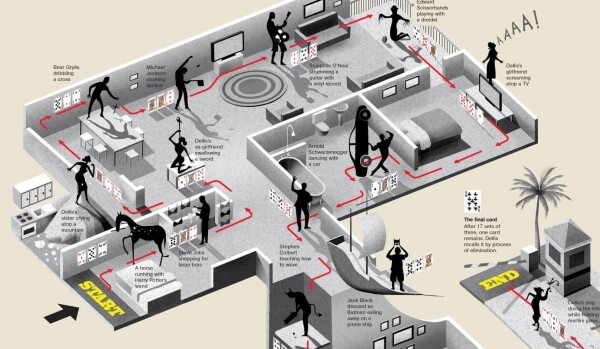
Almost all classic memory training techniques can be found in the Latin rhetoric textbook '', written sometime between 86 and 82 BC. The essence of these techniques is to take information that is difficult to remember and transform it into easily digestible images.
In everyday life, we do not pay attention to mundane things and often act on autopilot. However, if we see or hear something exceptionally unusual, enormous, incredible, or ridiculous, we will remember the occurrence much better.
In 'Rhetorica ad Herennium', the importance of purposeful conscious attention is emphasized, distinguishing between natural memory and artificial memory. Natural memory is the memory embedded in the mind, born simultaneously with thought. Artificial memory is strengthened through training and discipline. An analogy can be drawn: natural memory is the hardware you were born with, while artificial memory is the software you work with.
Since the times of Ancient Rome, we've made little progress in the art of memorization, but if you find the classic methods challenging (which often happens), consider some new techniques. For instance, the well-known is based on visual elements that are easier for our brains to absorb.
Another popular way to successfully encode information in the brain is to use music.
It's much easier to remember a song than a long string of words or letters, such as a bank account password (for this reason, advertisers often use catchy jingles). Online, you can find numerous songs to help with memorization. Here's a song that will help you learn all the elements of Dmitri Mendeleev's periodic table:
Interestingly, from a memory standpoint, handwriting is better absorbed than typing on a computer. Writing by hand , known as the reticular activating system (). It represents a large network of neurons with branching axons and dendrites forming a single complex that activates the cerebral cortex and controls the reflex activity of the spinal cord.
When RAS is activated, the brain pays more attention to what you are currently doing. When you write by hand, your brain forms each letter compared to typing on a keyboard. Additionally, by creating handwritten notes, we tend to paraphrase information, thereby incorporating a more active form of learning. Thus, remembering something becomes easier if it's written down by hand.
Finally, to improve retention, you should actively work on preserving the information you’ve learned. If you don’t refresh your memory, over a few days or weeks, the data will simply fade away. The most effective way to retain memories is to use spaced repetition.
Start with short memorization intervals—between two to four days between sessions. Each time you successfully learn something, increase the interval: nine days, three weeks, two months, six months, etc., gradually moving to intervals of years. If you forget something, return to the short intervals.
Overcoming the plateau of difficulty
Sooner or later, in the process of improving memory, you will achieve such efficiency that you will mainly solve problems on autopilot. Psychologists refer to this state as the 'plateau effect' (plateau means the upper limits of innate abilities).
Overcoming the 'stagnation' stage can be aided by three things: focus on technique, consistency of goals, and immediate feedback on performance. For example, elite figure skaters spend most of their training time executing the rarest jumps in their programs, while beginner skaters practice jumps they have already mastered.
In other words, regular practice is not enough. Once you reach the memory limit, focus on the most challenging and error-prone elements, and continue training at a pace that is faster than usual—until you eliminate all mistakes.
At this stage, you can use several scientific life hacks. According to a publication in the journal 'Neurobiology of Learning and Memory'[] a 45–60 minute nap immediately after practice can improve memory by five times. Aerobic physical exercises (running, cycling, swimming, etc.) performed approximately four hours after learning also significantly enhance memory[].
Conclusion
The capacity of human memory is not limitless. Memorization requires effort and time, so it is better to focus on information that is truly essential for the brain. It's rather strange to try to remember all phone numbers when you can simply write them down in an address book and make the necessary call with a few taps.
Everything insignificant should be quickly offloaded to the 'second brain'—a notebook, cloud storage, or task planner, which are perfect for handling everyday routine information.
Source: habr.com
