

This year marks the fifteenth Google Summer of Code, featuring 206 open-source projects. For 27 of these projects, this year is their first, including Moira. It's our favorite system for incident notification, developed at Kontur.
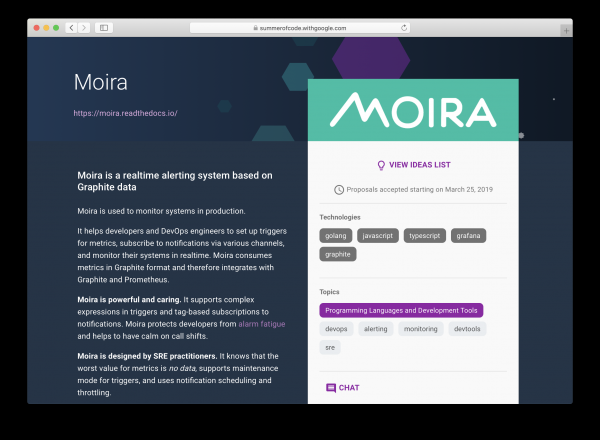
I was slightly involved in getting Moira into GSoC, so now I'll share firsthand how this small step for open source has been a huge leap for Moira.
A few words about
Every year, GSoC engages approximately a thousand students from around the world. Last year, there were 1,072 students from 59 countries working on 212 open-source projects. Google sponsors the students' participation and pays them stipends, while project developers act as mentors, helping students integrate into open source. For many students, this is the best chance to gain industrial development experience and a cool line in their resume.
What projects this year? In addition to projects from large organizations (Apache, Linux, Wikimedia), several major groups stand out:
- operating systems (Debian, Fedora, FreeBSD)
- programming languages (Haskell, Python, Swift)
- libraries (Boost C++, OpenCV, TensorFlow)
- compilers and build systems (GCC, LLVM, webpack)
- tools for working with source code (Git, Jenkins, Neovim)
- DevOps tools (Kapitan, Linkerd, Moira)
- databases (MariaDB, PostgreSQL)
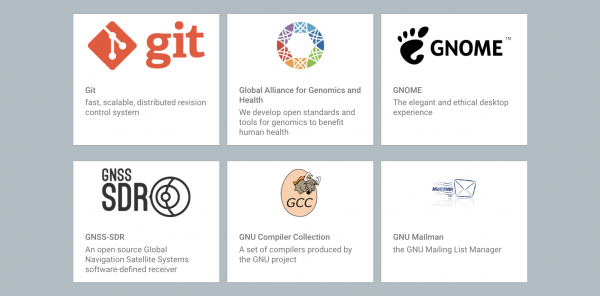
Now I'll explain how Moira made it onto this list.
Preparing and submitting an application
In January, the application process for GSoC began. My team of developers at Kontur and I discussed and realized that we wanted to participate. We had no idea— and still have no idea— how much effort this would require, but we felt a strong desire to grow the Moira developer community, add some major features to Moira, and share our love for gathering metrics and proper alerting.
Everything started off without surprises. First, we filled out the on the GSoC website, detailing Moira and its strengths.
Then we needed to decide which significant features GSoC participants would work on this summer. We created a It was easy, but agreeing on which tasks to include was harder. We needed to choose the tasks that students would work on during the summer back in February. This means we couldn’t suddenly just make them. instead of students. When we discussed with the Moira developers which tasks we would have to "postpone" for GSoC, it was almost tearful for us.
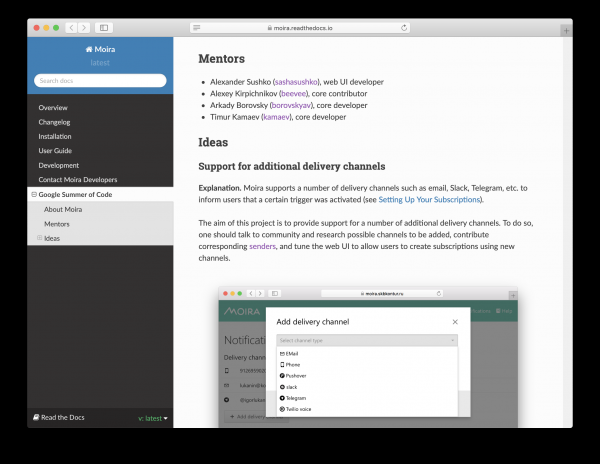
As a result, tasks related to the Moira core (about API, health checks, and channels for delivering alerts) and its web interface (about integration with Grafana, migrating the codebase to TypeScript, and transitioning to native controls) were included. Additionally, we prepared a number of , which future GSoC participants could use to familiarize themselves with the codebase and understand what development in Moira would be like.
We're dealing with the consequences.
Then there were three weeks of waiting, a slight joy from the letter of happiness…
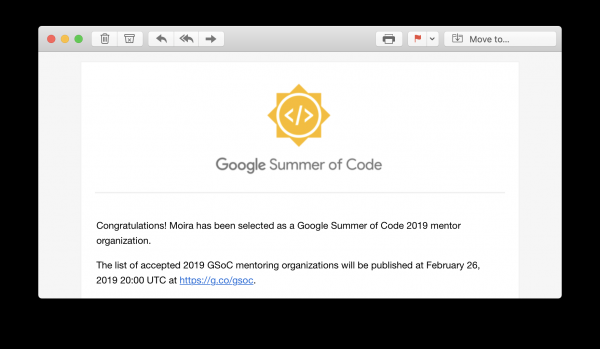
…and an explosion in Many active participants with intriguing names joined, and things started to roll. The language in the chat shifted from a Russian-English mix to pure engineering English, and the Moira developers began introducing themselves to the new participants in their signature style:
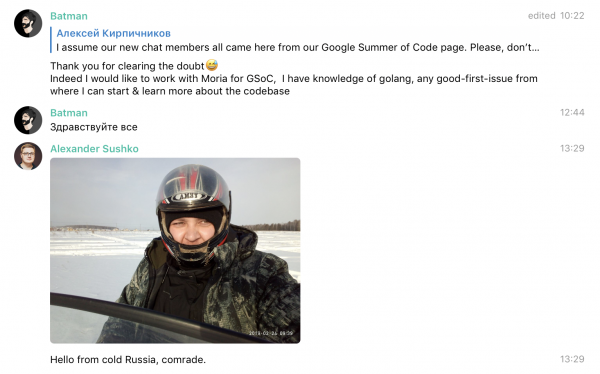
"Good first issues" on GitHub flew off the shelves like hot cakes. We had to engage in something we hadn’t anticipated at all: coming up with a large batch of small introductory tasks specifically for the new community members.

However, we managed and are glad about it.
What happens next
Next Monday, March 25, the website will open the application process for students to participate in specific projects. All interested parties will have two weeks to submit their applications for summer participation in the development of Moira, Haskell, TensorFlow, or any of the other two hundred projects. Join us and let’s make a significant contribution to open source this summer.
Useful links:
- on GitHub, and of Moira
- articles on Habr about Moira from developers at , and
- at the HighLoad Moscow 2018 conference
- others , created and maintained by Kontur
And also, subscribe to the and our . I will share how we participate in GSoC and other interesting things.
Source: habr.com
