

 The number of times the word 'first' appears in the article is overwhelming.
The first program 'Hello, World', the first MUD game, the first shooter, the first deathmatch, the first graphical user interface, the first 'desktop', the first Ethernet, the first three-button mouse, the first ball mouse, the first optical mouse, the first full-page-sized monitor, the first multiplayer game… the first personal computer.
Year 1973
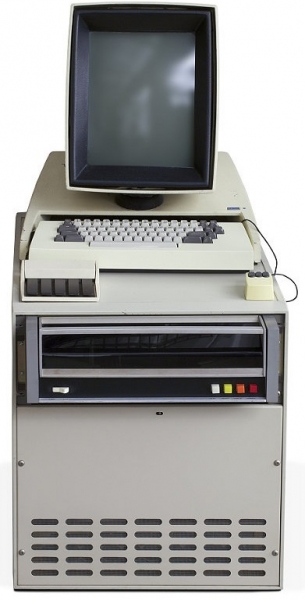
In the city of Palo Alto, at the legendary R&D laboratory of Xerox — PARC (Palo Alto Research Center Incorporated), on March 1st, the release of the machine that would later be called the first personal computer in the world (not a home computer but for individual use) occurred.
Alto was a research prototype rather than a commercial product. It was intended for Alto to be mass-produced, but it never went into production. Nevertheless, several thousand Altos were produced, the majority of which were used within Xerox PARC and various universities.
The cost of one Alto machine is estimated to be between $12,000 and $40,000.
Six years after the release of Alto, Jobs would see it and borrow many new features to introduce to the world.
For the creation of the computer, the team (, , , ) received the , and Chuck Tecker also received the Turing Award in 2009.
In October 2014 for Xerox Alto was opened at the Computer History Museum.
Let's take a look under the hood and meet the developers.
The development of the computer began in 1972 with the document ('Why Alto?'), written by Butler Lampson (who was inspired by Douglas Engelbart's concept of ). The design was the work of Chuck Tecker.
'Every computer problem can be solved with another level of abstraction'
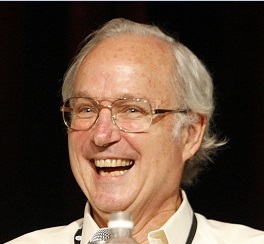 In the 1960s, Lampson participated in the in Berkeley, during which the Berkeley Timesharing System for the SDS 940 computer from Scientific Data Systems was developed.
In the 1970s, Lampson became one of the founders of the , where he contributed to the development of the Alto, as well as technologies for laser printing, Ethernet networks, WYSIWYG text processing, , Bravo high-speed local area network (LAN) developed several significant programming languages, such as, .
In the 1980s, Lampson joined Digital Equipment Corporation. He currently works in Microsoft’s research department, focusing on security and anti-piracy issues. He also teaches at the Massachusetts Institute of Technology.
Laplson's Memorandum "Why Alto?"
XEROX Inter-Office MemorandumTo CSL Date December 19, 1972
From Butler Lampson Location Palo Alto
Subject Why Alto Organization PARC
1. Introduction
This memo discusses the reasons for making a substantial number (10-30) of copies of the personal computer called Alto, which has been designed by Chuck Thacker and others. The original motivation for this machine was provided by Alan Kay, who needs about 15-20 'interim Dynabooks' Systems for his education research. However, Alto has a much broader range of applications than this origin might suggest. I will begin by outlining its characteristics, and then consider some of the many exciting uses to which Alto can be put. It turns out that there is some interaction with almost every CSL research program.
2. Characteristics
An Alto system consists of
48-64K 16-bit words of memory (plus parity and perhaps error correction).
A 10-megabyte Diablo disk which transfers one word every 7 microseconds, rotates in 25 milliseconds, and has a track-to-track seek of 8 milliseconds, and a worst-case seek of 70 milliseconds.
A 901-line TV monitor whose display surface is almost exactly the size of this page. It is oriented vertically and is designed to be driven from a bitmap in the memory. It requires 32K of memory to fill the display area with a square (825×620) raster. These dots are about 1.4 mils square. It is possible to reduce their width to about 1 mil, which gives an 825×860 raster and 44.3K of memory. The square raster can display 8000 5×7 characters with descenders or 2500 beautifully proportionally-spaced characters.
An undecoded keyboard that allows the processor to determine exactly when each key is pressed or released, along with a mouse or other pointing device.
A processor that executes Nova instructions at about 1.5 microseconds per instruction, which can be extended with extra instructions suitable for interpreting Lisp, Bcpl, MPS, or whatever.
A high-bandwidth (10 MHz) communication interface whose details are not yet specified.
Optionally, a fixed-font character generator similar to the one designed and built by Doug Clark. This would save a lot of memory and would permit higher quality characters than can be achieved with a square raster, but adds no fundamentally new capability. It should cost about $500.
Optionally, a Diablo printer, XGP, or other hardcopy device.
A table about 45" wide and 25" deep to house the machine and mount the display and keyboard.
Most importantly, a cost of about $10.5K, which can be reduced to $9.7K by using a 2.5 megabyte disk. The cost is about equally split among disk, memory, and everything else. We have spent about twice as much on Maxc per 1974 CSL member.
The system is capable of performing almost any computation that a PDP-10 can do. For most problems, it can provide better performance to the user than a time-shared 10, even if the latter is lightly loaded (obvious exception: a lot of floating-point computation). Furthermore, we are developing Lisp, Bcpl, and MPS systems that can run on a Nova and therefore, with slight modification, on Alto. Since most of our future software work is expected to be done in one of these languages, most of it should be able to run on Alto.
The next paragraph shows that there should be plenty of computing power. Both Lisp and MPS will have some kind of hardware-assisted mapping, as the virtual memory size will not be a problem; a similar setup for Bcpl seems feasible but has not been investigated.
A 64K Alto has as many Lisp cells as 32K of PDP-l0 memory. BBN claims to run Lisp users with an average 25K working set and a 30 ms page fault interval. Forty-two disk tracks hold 256K Lisp cells, and the average access time to a record on one of those tracks is about 32 ms, compared to 17 ms for the 10’s drum. Therefore, if execution speed on Alto is half of the 10 speed or less, paging will cost no more than on the 10 for Lisp programs. It seems highly plausible that we can achieve a Lisp system on an Alto with a few specialized instructions that could deliver half the performance of a Tenex Lisp running in a 32K swap space. Comparable results can be anticipated for other languages.
3. Applications
All the applications considered here depend on two facts summarizing the contents of the last section:
Alto is more powerful than a VTS terminal connected to Tenex;
Alto is affordable enough that we can purchase one for each member of CSL, if that proves desirable.
a) Distributed computing. We can easily establish an Aloha-like point-to-point packet network between Altos, using coax as the medium (or microwave with a repeater on a hill for home terminals). This setup enables a wide variety of experiments with dozens of machines. We can try experiments which rely on the independence of the participants, as well as those requiring specialized components that must work together to achieve results. In particular, we can configure systems where each user has their own files, and communication occurs solely for sharing information, shedding light on the long-standing debate about the merits of this scheme versus centralized files.
b) Office systems. We can run Peter’s Lisp-based NLS-competitor or the xNLS system. The computational capacity of Alto allows us to focus on the system's capabilities rather than optimizing its performance. Insights gained from this approach should complement those obtained from the multi-user xNLS experiments. Additionally, it may be possible to run these on Alto, allowing us to move away from Nova dependency; this possibility requires further investigation.
c) Personal computing. If our theories regarding the utility of affordable, powerful personal computers hold true, we should be able to convincingly demonstrate them on Alto. If they are incorrect, we will learn why. For instance, we should be able to satisfy heavy Lisp users like Warren and Peter with an Alto. This would also significantly reduce the computing load on Maxc. Moreover, it should be relatively easy to simulate the hardware configurations of other proposed personal computers (e.g., different memory hierarchies) and thus validate those designs. This is crucial as more compact machines will demand a much larger investment in engineering development and more precise optimization of the memory system.
d) Graphics. Alto is an excellent platform for Bob Flegal’s graphics work, making the outcomes of that work accessible to a broad community. However, it cannot perform Dick Shoup’s tasks.
4. Competition
Alto competes with other initiatives we or SSL are pursuing. I believe this is beneficial as it motivates the advocates of both approaches to excel. Specifically;
a) VTS can produce higher quality characters, has intensity control and blinking features, costs half to two-thirds as much if you only need a terminal, and can utilize the video switch. However, it cannot handle graphics and may face queueing issues present in shared-resource systems (the controlling Nova and communications resources are shared). Moreover, it is only as effective as the computer utilizing it.
b) Maxc is capable of computing, and for applications that use existing software, require large working sets, or involve numerous multiplications, it will be superior. It is also known to perform well with Lisp, while Alto's suitability for such large systems remains unproven.
c) Novas that do not have complex interfaces to other hardware (e.g., Toy, XGP) can be replaced by Altos. Those that do, such as the Maxc Nova or probably the VTS Nova, are secure.
d) The implications of Alto for the local network are unclear.
e) Imlacs are wiped out.
[]
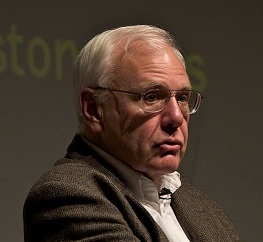 Along with Butler Lamson and other graduates, he founded Berkeley Computer Corporation, where he worked on the development of computer electronics. However, the company did not achieve commercial success, and Thacker joined the research center at Xerox PARC.
During the 1970s and 80s, he became one of the developers of the Ethernet protocol and also contributed significantly to the creation of the first laser printer. In 1983, Thacker founded the research center of Digital Equipment Corporation (DEC Systems Research Center), and in 1997 he participated in the establishment of the Microsoft Research lab in Cambridge. After returning to the USA, Thacker developed hardware for the Microsoft Tablet PC, based on his experience working on Dynabook at Xerox PARC.
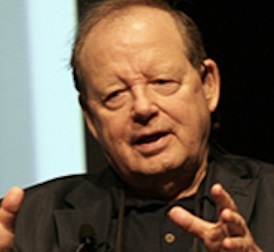 "The Internet is not about technology; it’s about communication. The Internet connects people who have shared interests, ideas and needs, regardless of geography."
He was the director of ARPA’s from 1965 to 1969, founder and head of Xerox PARC’s Computer Science Laboratory from 1970 to 1983, founder and head of Digital Equipment Corporation’s until 1996.
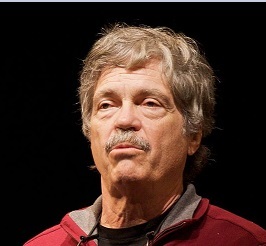
Author of the OOP concept ("I coined the term ‘object-oriented’, and let me tell you, I did not mean C++.") and the laptop.
By the way, Kay made his famous statement "The best way to predict the future is to invent it" in 1971, and (Nobel laureate, creator of holography) — in '63. Inventing the Future (1963): "The future cannot be predicted, but futures can be invented." (The investigation on this matter .)
TED Talk
Xerox Alto
Hardware
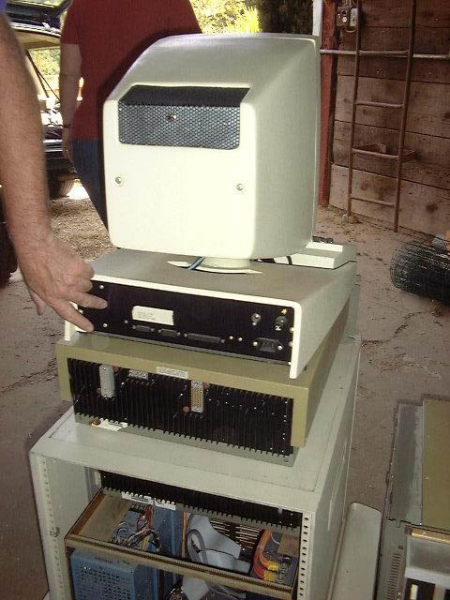
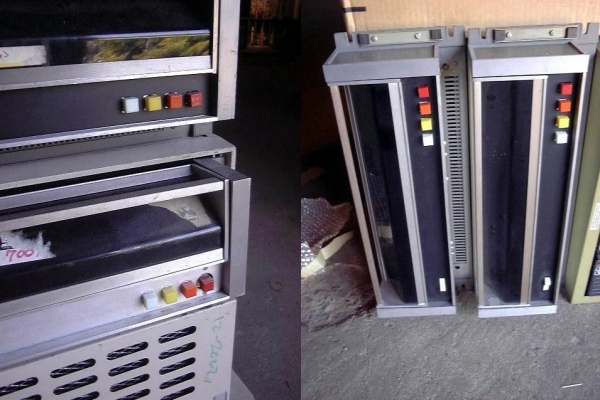
Xerox Alto had 128 KB of RAM (costing $4000), expandable to 512 KB, a hard disk with a removable cartridge of 2.5 MB.
Disk drives
Monitor
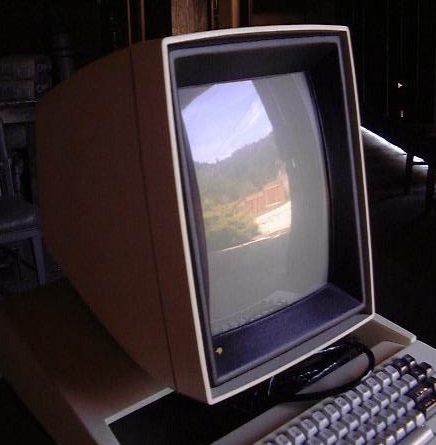
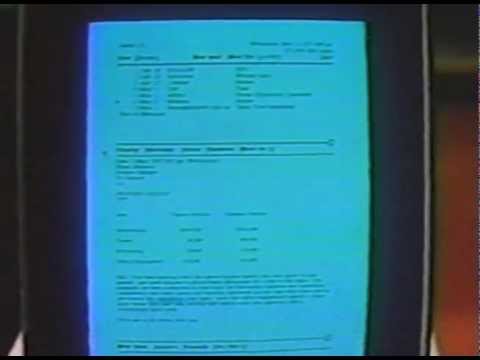
For graphical output, a monochrome monitor with a resolution of 606×808 pixels was used, presented in an unconventional portrait orientation.
Stone
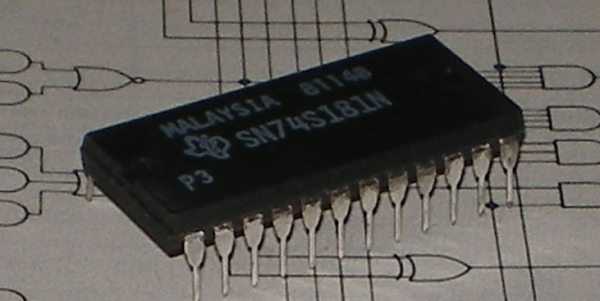
Chip: multi-chip sectional microprocessor arithmetic logic unit (bit-slice arithmetic logic unit) based on with microcode support (up to 16 parallel tasks with fixed priorities). 5.8 MHz CPU
Keyboard
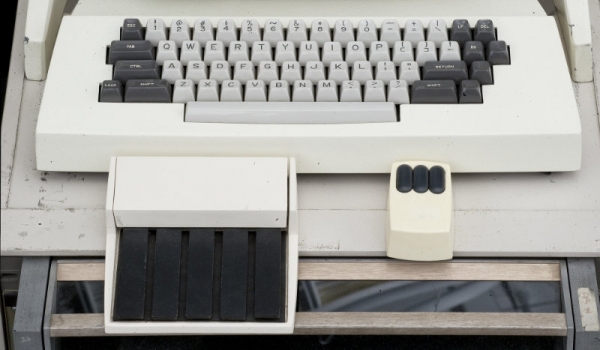
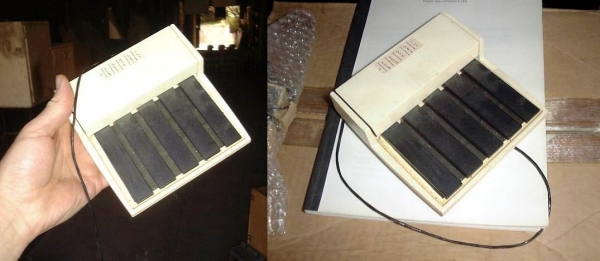
64-key keyboard
Mouse
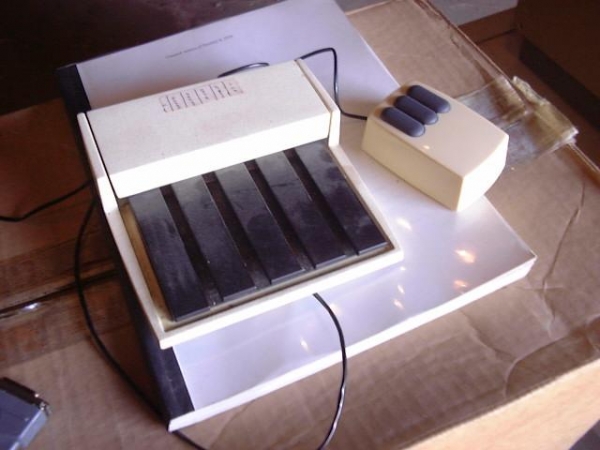
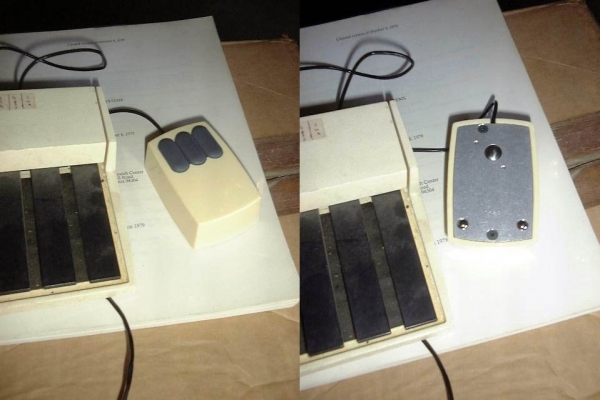
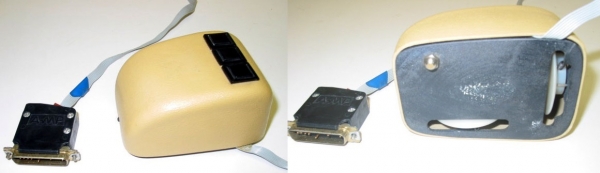
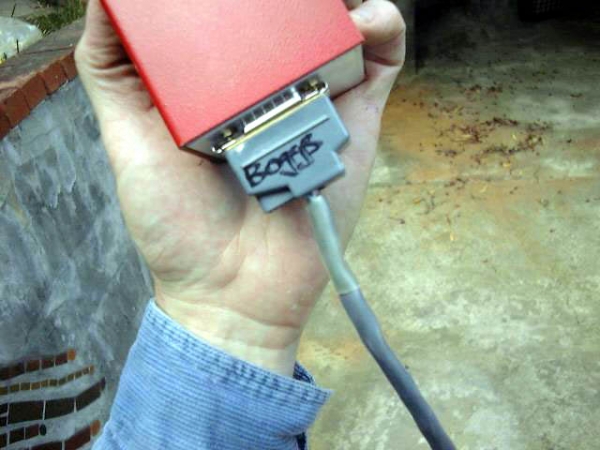
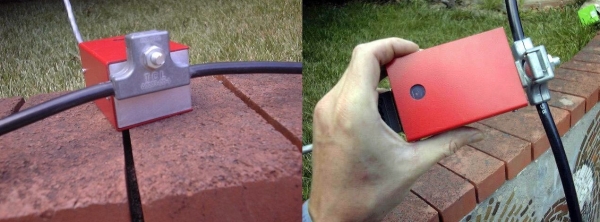
All the mice used with the Alto were three-button mice. The first mouse was mechanical, with two wheels set perpendicularly to each other. Soon, this model was replaced by a ball mouse invented by Bill English. Later, an optical mouse appeared, initially using white light and then infrared radiation. The buttons on the early mice were arranged one above the other, rather than side by side as is common today.
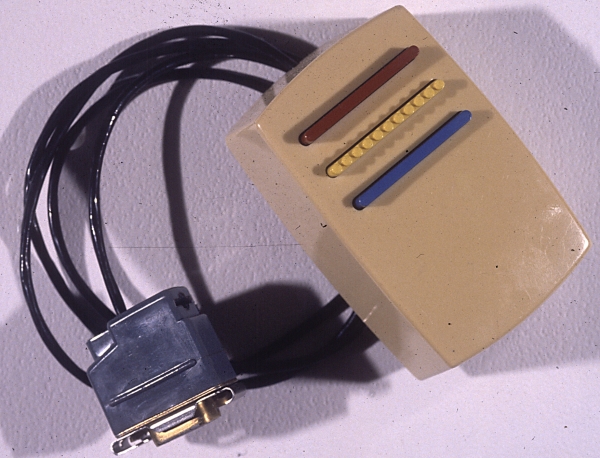
Engelbart's ideas realized in the real world — the mouse and :
[]
[]
Network card
Ethernet
[]
Software
The first programs for the Alto were written in the programming language (by the way, the first program 'Hello world' and the first MUD were written in BCPL), then the language was used , which did not gain widespread adoption outside PARC but influenced some later languages, such as Modula. The Alto keyboard had no underscore key, which was adapted for the left arrow symbol used in the Mesa language as the assignment operator. This feature of the Alto keyboard might have contributed to the emergence of the CamelCase naming style for identifiers. Another feature of the Alto was the ability for users to program the processor's microcode directly.
Despite having a relatively small amount of RAM, programs with graphical menus, icons, and other elements that became commonplace only with the advent of operating systems like Mac OS and Microsoft Windows were developed and used for the Xerox Alto.
- Bravo and Gypsy — the first WYSIWYG word processors
- Laurel and Hardy — network email clients
- Markup and Draw — graphic editors (bitmap editors)
- Neptune — file manager
- FTP and chat utilities
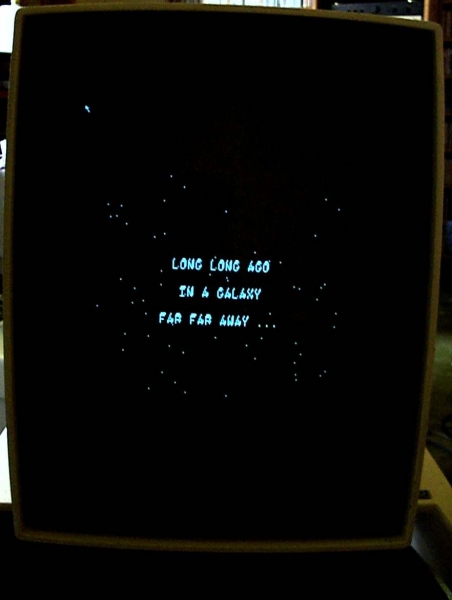
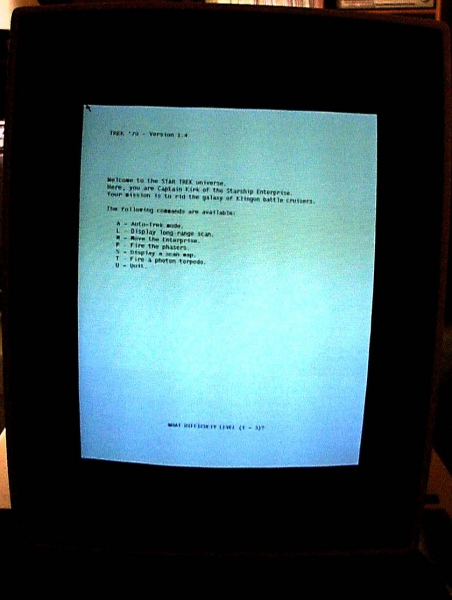
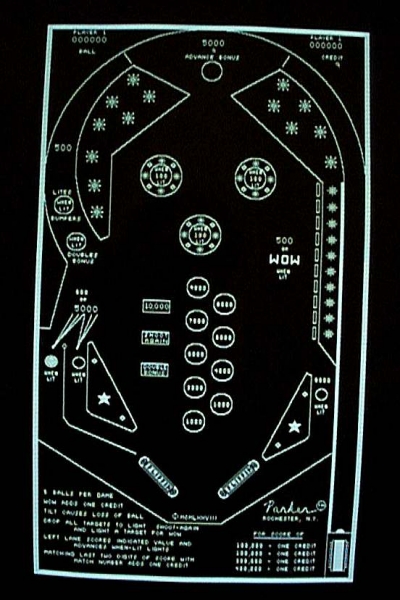
- Games — Chess, Pinball, Othello, and an Alto Trek game by Gene Ball
- Sil — vector graphic editor for integrated circuits and printed circuit boards
- Officetalk experimental forms-processing system
- Programming languages — BCPL, LISP, Smalltalk, Mesa, and Poplar
A few pictures/screenshots of the software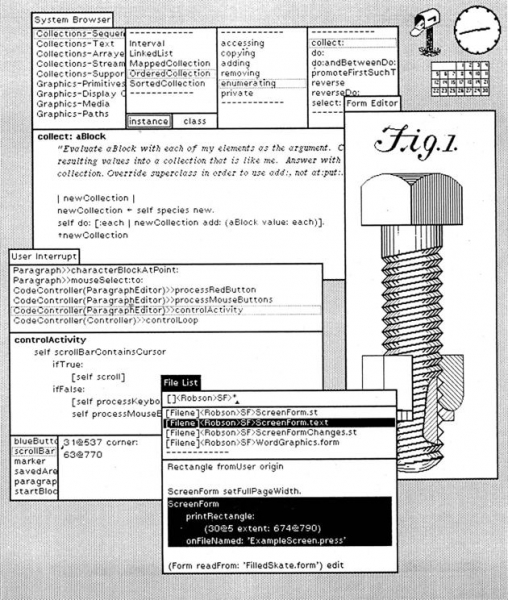
Smalltalk

, the first
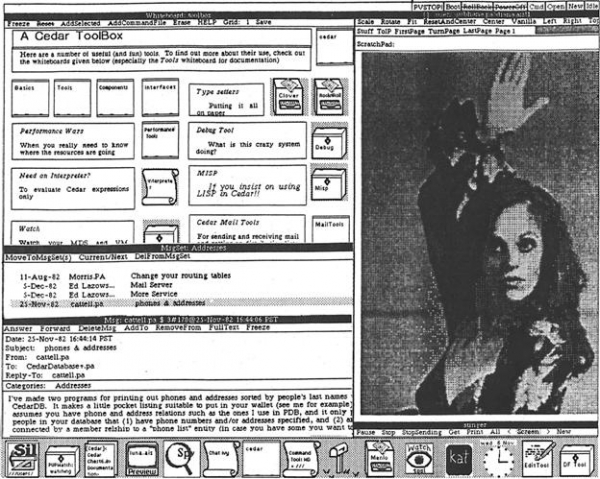
Cedar
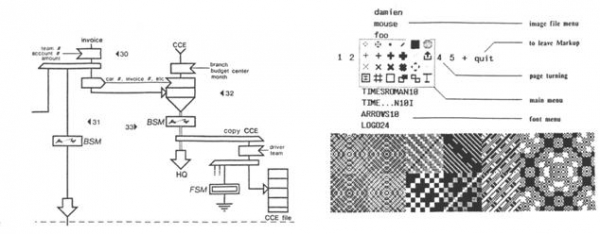
Markup
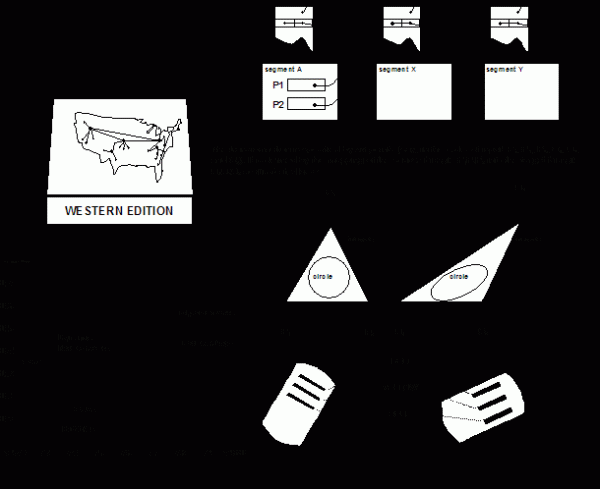
Draw
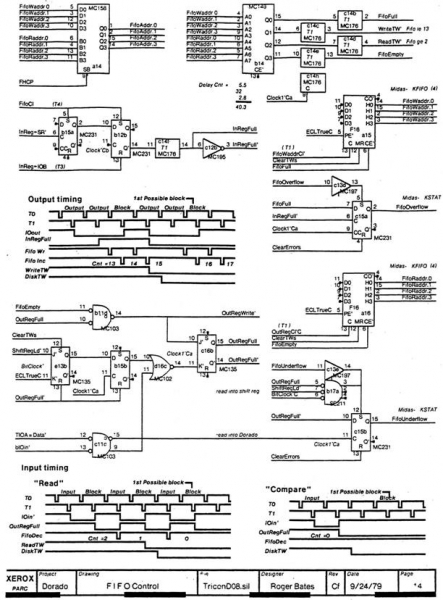
SIL
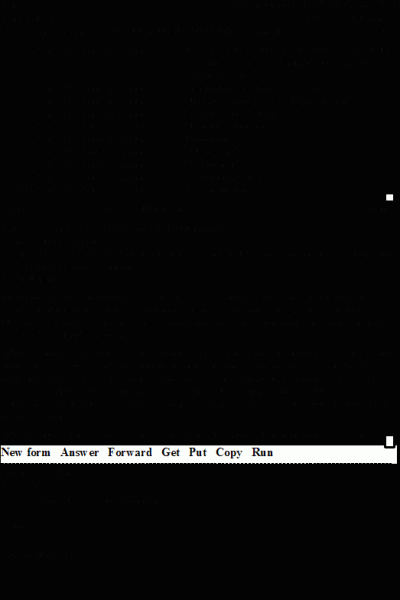
Laurel
[]
more screenshots of the programs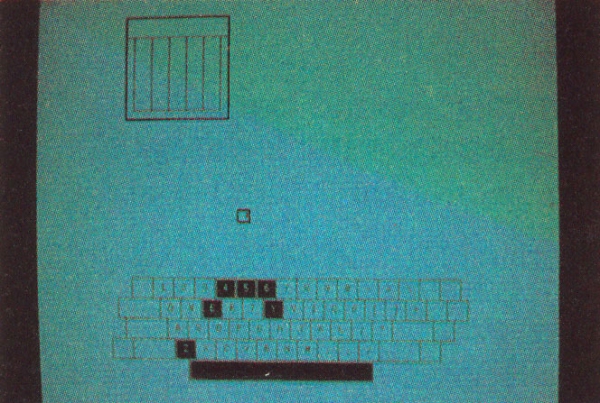
Display from the keyboard-test program:
The Alto keyboard has a separate signal line for each key and can thus tell when any number of keys are being pressed simultaneously. In the display, the black keys are being held down. The small square above the keyboard represents the mouse (see photo 4); one mouse key is also pressed.
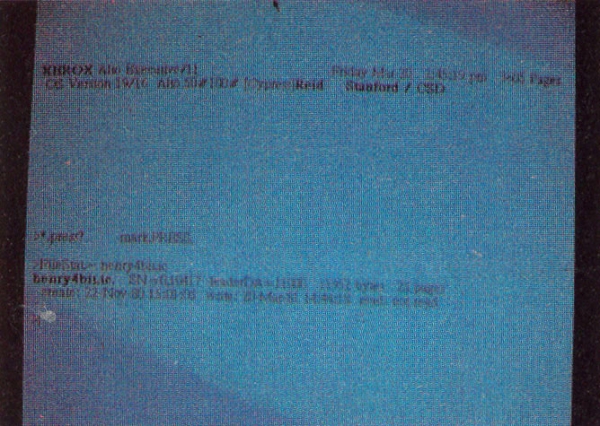
Display of the Alto Executive, with an example of star and question-mark notation.
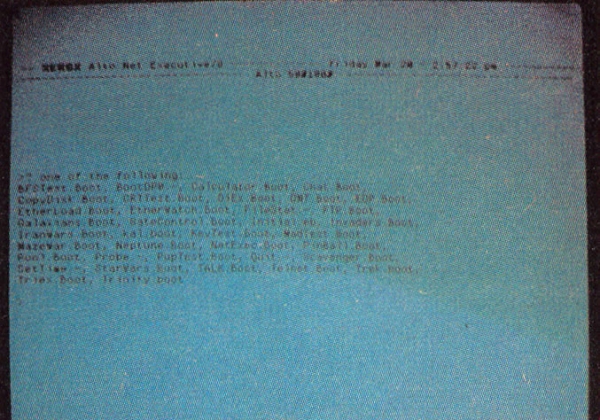
NetExecutive (similar to the Alto Executive, but it allows access to resources on the Ethernet.
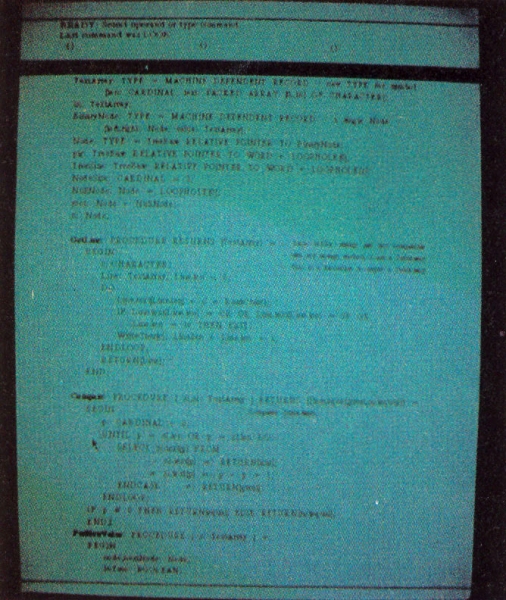
Typical Mesa program being edited by Bravo; note the different typefonts used in the program listing.
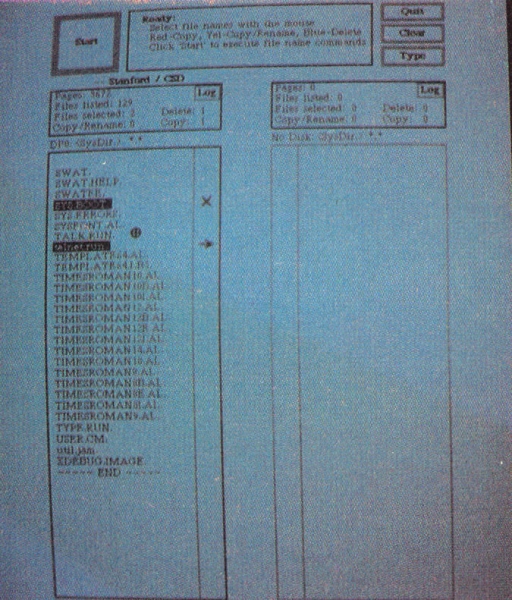
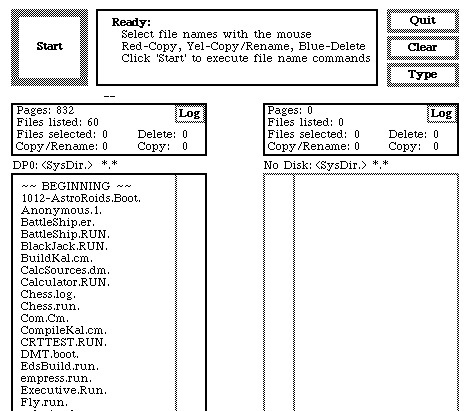
Directory from the Neptune directory editor. The file names in black have been selected for further operations such as printing or erasure. The cursor is displayed as a cross in a circle.
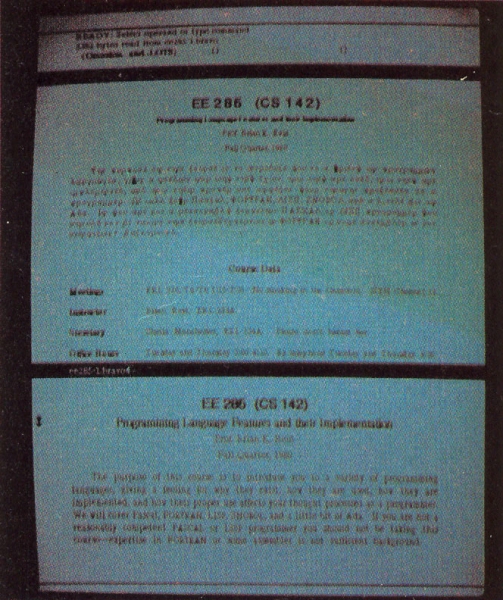
Bravo’s ability to change fonts (there are hundreds of fonts for the Alto, from Gothic to Elvish Runes; the central paragraph in this display has been changed to Greek). The document in the bottom window has to been converted to the form shown in the top window.
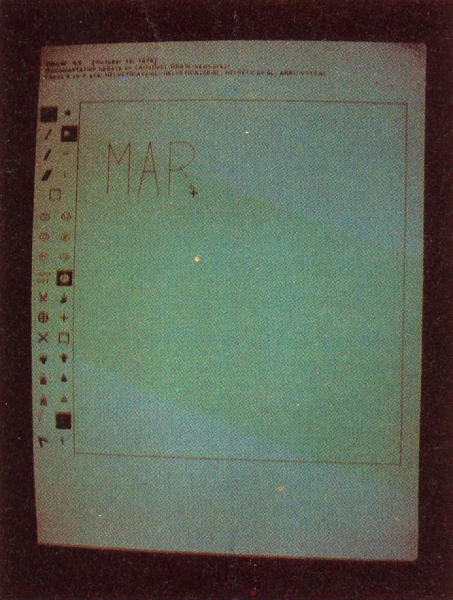
Points are placed with the cursor, and curves and lines are filled in by the program.
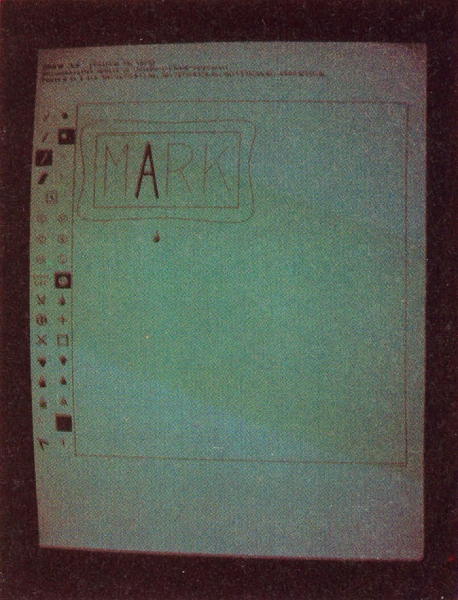
Lines may be «painted» with a variety of “brushstrokes” (the cursor has changed to a small paintbrush).
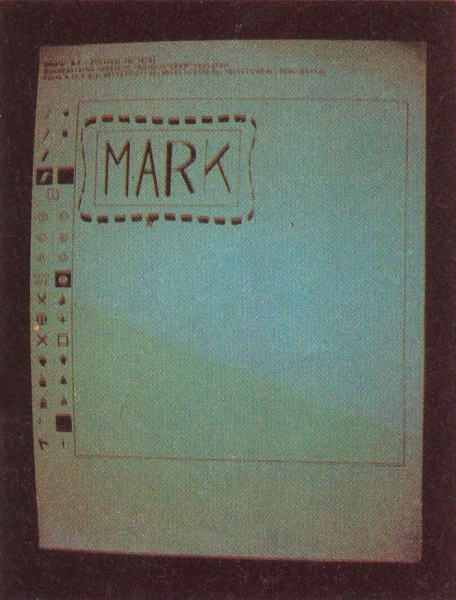
Texture is given to the lines; dotted lines are created with the scissors cursor.
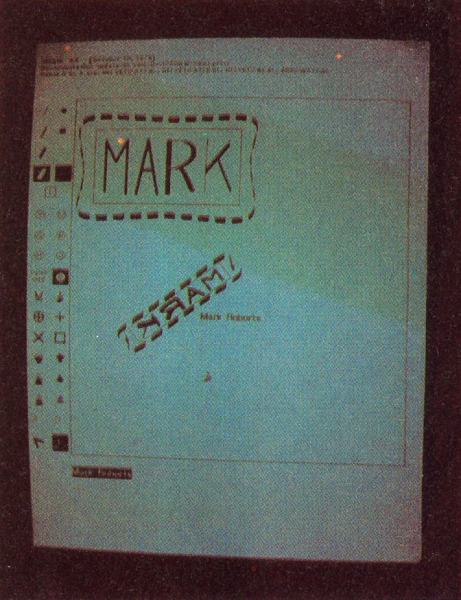
Picture may be mathematically manipulated; a new figure may be created by reversing, tilting, or stretching a copy of the original.
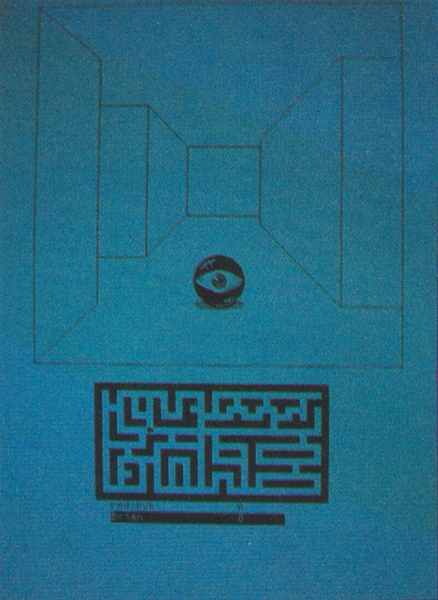
The eye represents the persona of an opponent. Any Alto on the net can join or leave the game at any time.
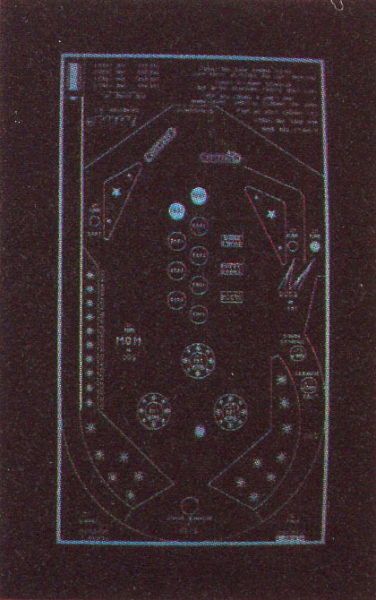
The Pinball game:
Flippers are actuated by the two shift keys; an Alto port can be connected to a speaker to provide bells and buzzer sounds.
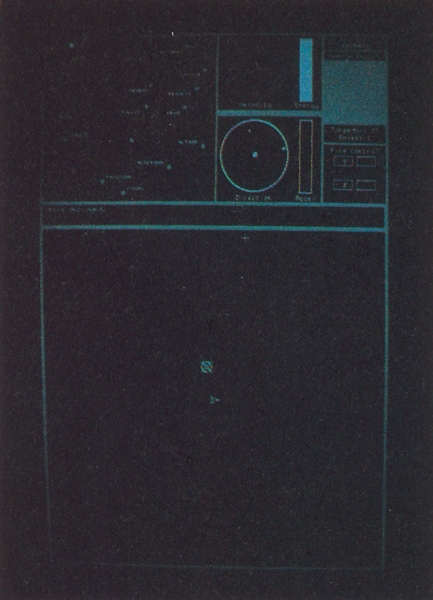
The multiplayer Trek program:
This game is played entirely under mouse control. The lower portion of the screen shows a short-range sensor scan; above is the long-range display, and navigation and weapons controls.
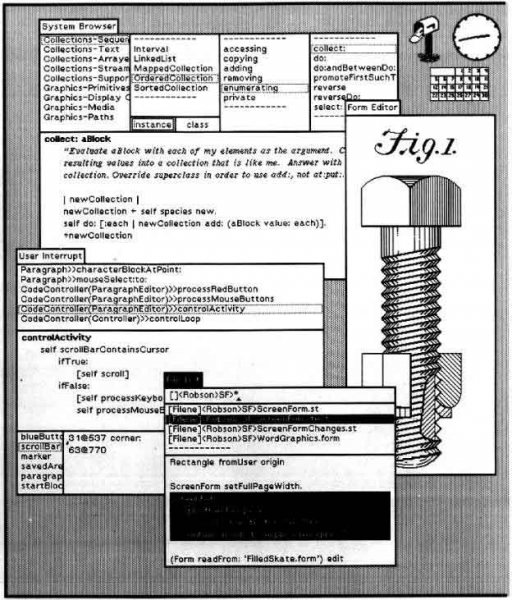
Cedar environment on the Alto
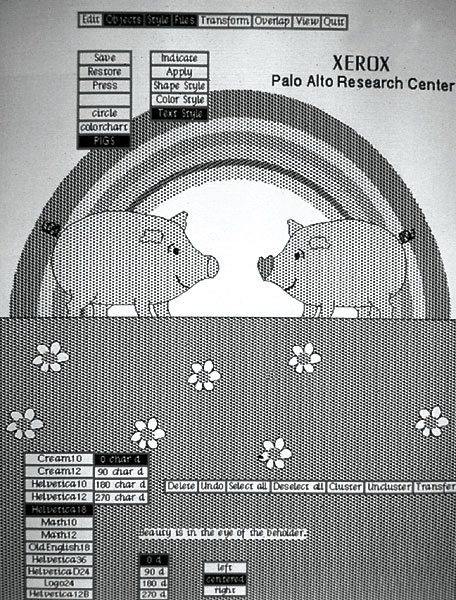
Famous «rainbow» screen on an Alto
Games
— the first multiplayer game
You control a starship of one of three races: , or

in the game
The first deathmatch, first-person view.
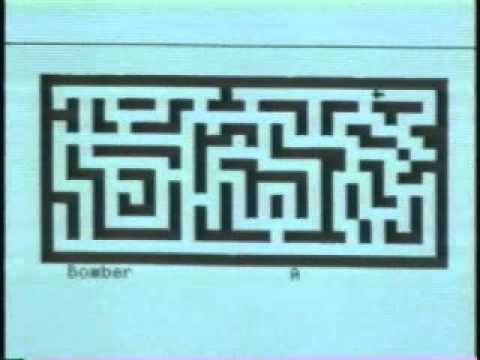
as well as:
- Astro-roids
- Chess
- Galaxians
- Mazewar
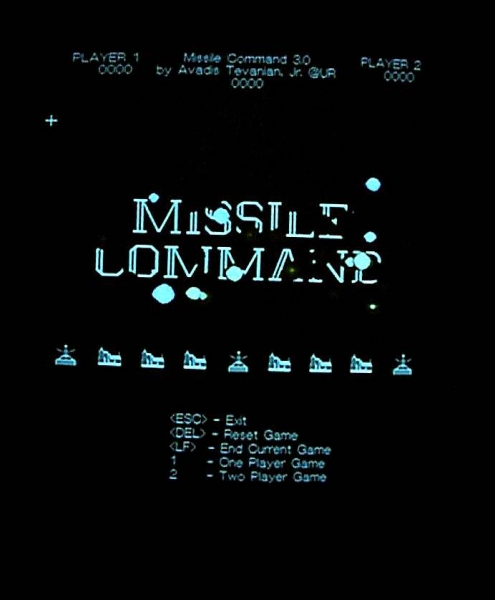
- Missile Command
- Rinky Dink (Clint Parker’s pinball program)
- Space War
Screenshots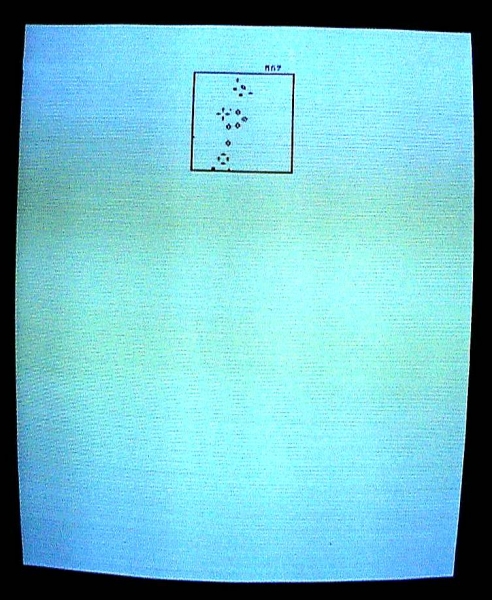
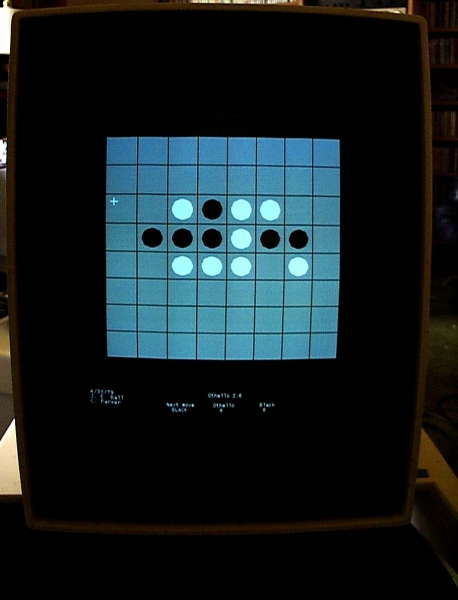
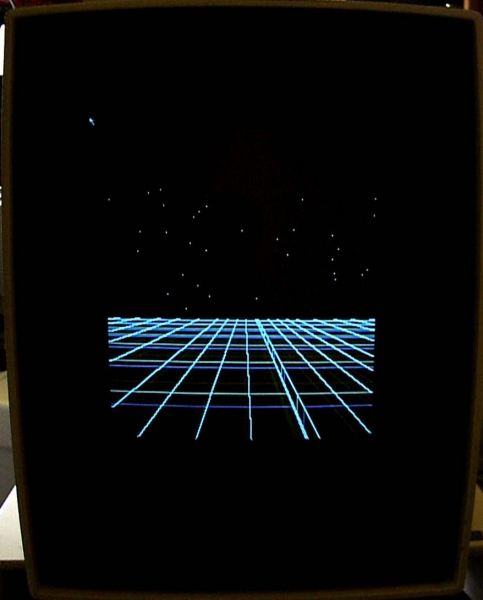
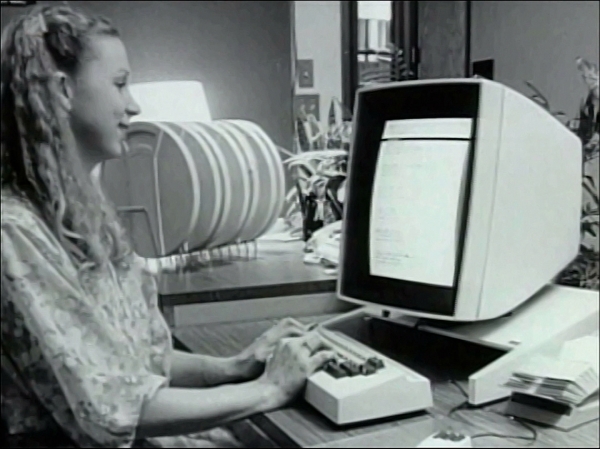
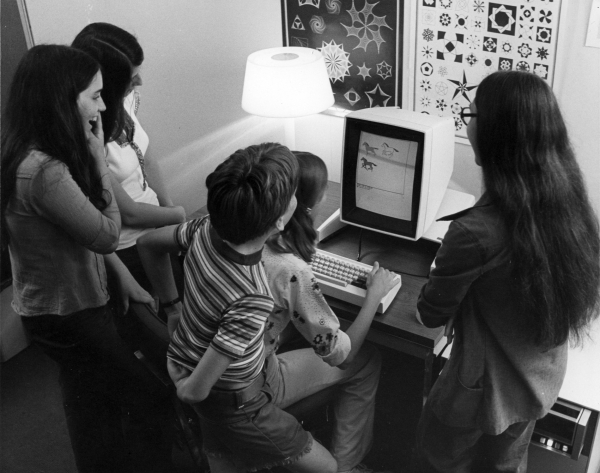
This is what computers are for
UPD
I didn't get a chance to look, but I think it will be useful:
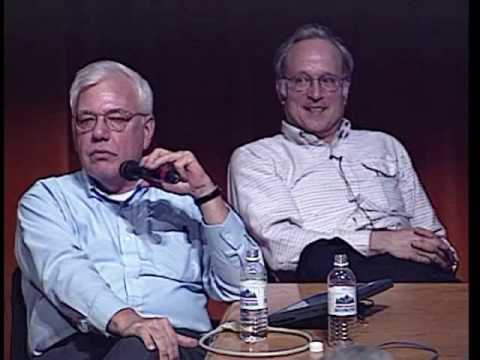
2001: The Xerox Alto: A Personal Retrospective
Conclusion
“Never doubt that a small group of thoughtful, committed citizens can change the world. Indeed, it's the only thing that ever has.” Margaret Mead
I think it's incredibly cool to witness (and even more so to participate in) the creation of new and interesting things. I was fortunate to be around a group of young and daring people who created 'Cifernblat' (the first anti-cafe), though not an IT product, it was still very exciting and awesome. I had a little chat with the developers , they have a lot of interesting stories. I happily watched the series . Who knows links to useful materials, share, and if you participated in the creation of something new — let me know in the comments, I would be grateful.
Together with the company , we are starting a spring marathon of publications.
I will try to delve into the origins of IT technologies, understand how the pioneers thought, what concepts were in their minds, what they dreamed about, and how they envisioned the future world. What was the purpose behind the ideas of 'computer', 'network', 'hypertext', 'intelligence amplifiers', and 'collective problem solving system'; what meaning did they attribute to these concepts, and what tools they wanted to use to achieve results.
I hope that these materials will serve as inspiration for those who wonder how to transition (to create something that has never existed before). I want IT and 'programming' to stop being just 'coding for cash' and to remind that they were conceived as a lever to change methods of conducting war, education, means of collaboration, thinking, and communication, as an attempt to solve global problems and respond to the challenges facing humanity. Something like that.
March 0.
March 1.
March 2
March 3
March 4
March 5
March 7
March 8
Source: habr.com
