

These were time machines: spoked wheels, mechanisms unfamiliar to modern automotive manufacturing, special tires, rare spare parts, intricate malfunctions, and an endlessly diverse, unique design. On June 24, 103 vintage cars were in our city, and by July 7, they had finished in Paris. We decided not just to create a photo report, but to provide a detailed account of the rally, some of the cars, high-speed runs, and the challenging situations that kept 5 people awake and captivated 5000. Below are many photos and no less text. Pour some tea, make yourself comfortable — this is a time of automotive magic and a journey to the past. Don’t forget to buckle up.
To Paris — it’s over there
June 24, 1:00 PM. The main square of the city — Minin and Pozharsky Square — is partially closed, with sprinklers cooling the scorching asphalt. Closer to two, a ceremonial finish arch appears in the square, and we, along with volunteers, are nervously finalizing the last details, dividing people into positions. One word occupies our minds — 'safety', quickly followed by another — 'repair'. Soon the participants of the vintage rally will drive down the long Rodionova Street, descend to the very edge of the Volga, and ascend towards the Kremlin and the Chkalov monument. We wait.
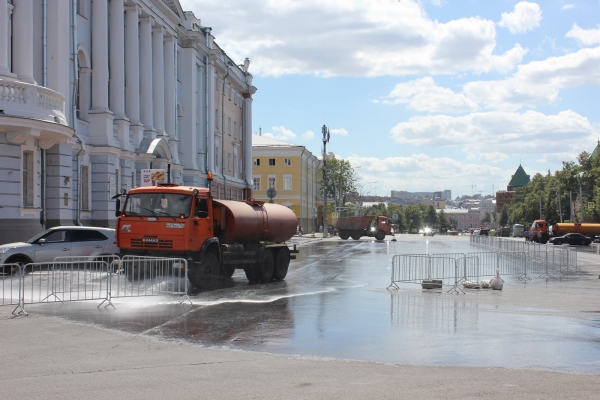
Kamaz trucks blocked the passage, to the right behind the greenery is the Dmitriyevskaya Tower, the main tower of the Nizhny Novgorod Kremlin
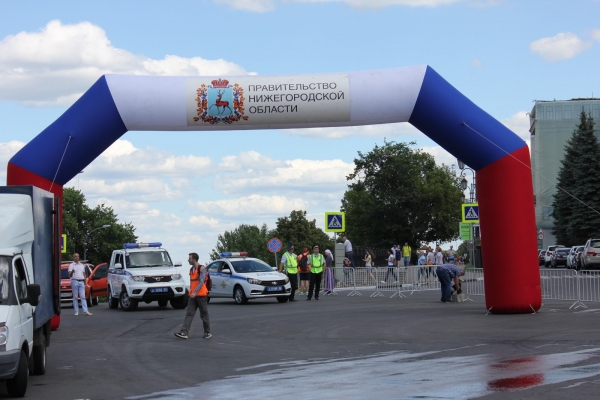
The arch and our big helpers from the traffic police, who several times went around the square in a tough moment and helped us with their loudspeaker 🙂
About the rally
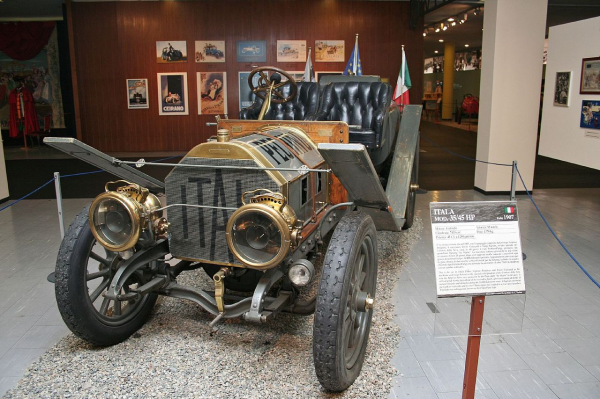
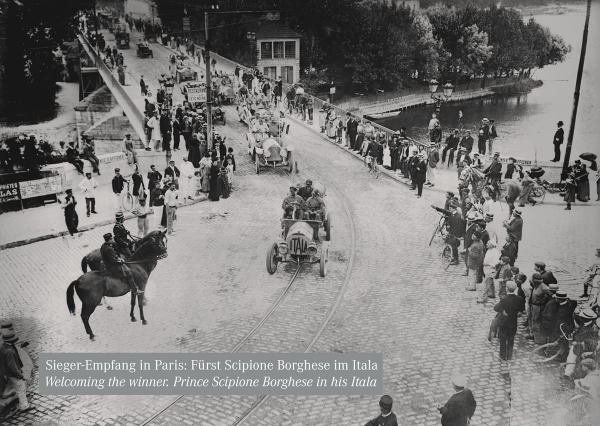
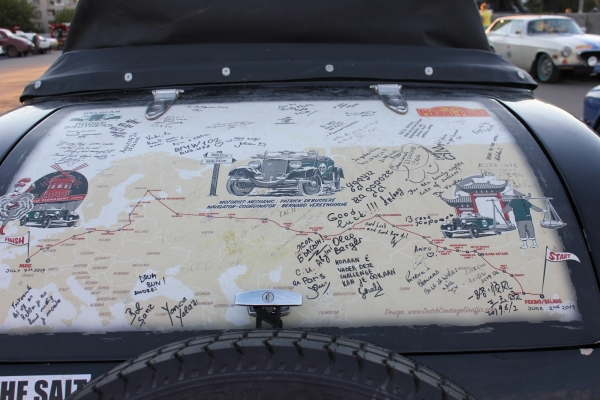
Why 'Beijing — Paris'? In the winter of 1907, the French newspaper Le Matin published a challenge: 'It must be proven that as long as a person has a car, he can do anything and reach anywhere. Will anyone dare to drive from Beijing to Paris by car this summer?' On June 10, 1907, a race started from the French embassy in Beijing, passing through places where cars had never been seen and where people were even unaware of them. The winner of the race among 5 crews, Cipriano Borgese, was quite a daring fellow — he was so confident in his Itala 35/45 HP that he drove from Moscow to St. Petersburg, had dinner there, and returned to Moscow to continue the rally and come out victorious. Luckily, we didn’t have any like that.
Itala Borgese
Finish in Paris, 1907
Just about now, we're finally closing off part of the square. A boy of about 12 rushes forward: "Let me in, I love retro cars! I'm going crazy over these vehicles!" I get distracted and, annoyingly and habitually, tell him about the boundary line and the viewing areas. He says: "I have to see this! I won't be able to sleep!" I respond with something along the lines of him probably not knowing the names. The boy eagerly lists the most exotic ones. Meanwhile, my Zello crackles with the announcement of the "first car." I turn toward the Georgievsky procession, first seeing a mirage of wet asphalt, and then there it is—the first crew at Minin and Pozharsky Square—the 1931 Chrysler CM 6.
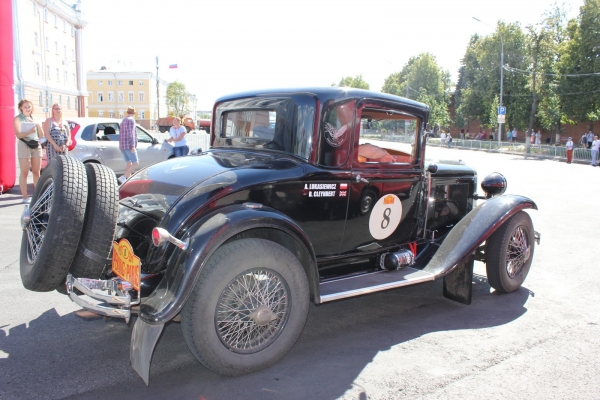
Chrysler CM 6
Thus began the main automotive event of Nizhny Novgorod's summer. On June 24 and 25, 2019, Nizhny Novgorod welcomed participants of the international rally "Peking to Paris." 105 crews set out from Beijing, attempting to reach our city under their own power, but not everyone made it—some couldn't even start, and one arrived in the evening, proudly resting on a tow truck (which doesn't negate its coolness). In total, 103 retro cars made it.
By this time, under the tricolor arch adorned with carefully taped banners, the judges' car was positioned. Here we should pause to remember (or learn—there are clearly not many fans) what a rally is. First and foremost, a rally is not quite a race, and the principle "whoever arrives first wins" does not apply.
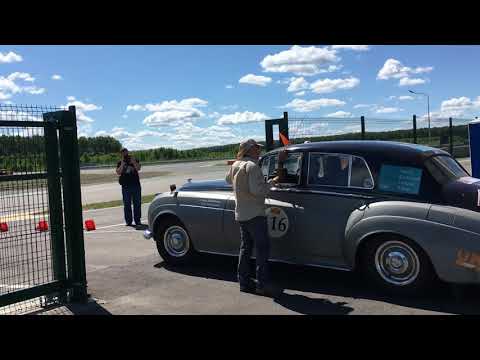
Rallying, as a type of motorsport, has several distinctions: most of the distance takes place on public roads from city to city, with results recorded at checkpoints. Additionally, cars make timed runs on special sections of the route (for example, at the Nizhny Novgorod Ring) — that's where they can accelerate to maximum speed and showcase their capabilities. However, our support vehicle (a modern one) got to observe one of the crews, a 1974 Leyland P76, in the urban environment of Gagarin Avenue during the day — at times it was speeding well above 60 km/h, playfully maneuvering past other traffic participants who were photographing it from their windows. We somehow didn't dare to tail it to the end — the crew is headed to Paris, then it's off to Australia and will likely not receive any happy letters with photos and offers to pay, while we still have life to live in Nizhny.
The most frequently asked questions about rallying
Will there be KAMAZ trucks? A top question, driven by the immense popularity of the KAMAZ Master team. There were KAMAZ trucks, but a bit different — workhorses.
Will the trike make it? Everyone was eagerly awaiting the unique three-wheeled vehicle. And it made it: both to Nizhny Novgorod and to Paris.
So, the judges record these interim results at each stage. When we saw the judges' car (like most of the support vehicles, a Toyota Hilux), we even said aloud what we all thought in unison: "How can we be doing this at such an age?" This is active old age, not your Scandinavian walking on the way to work.
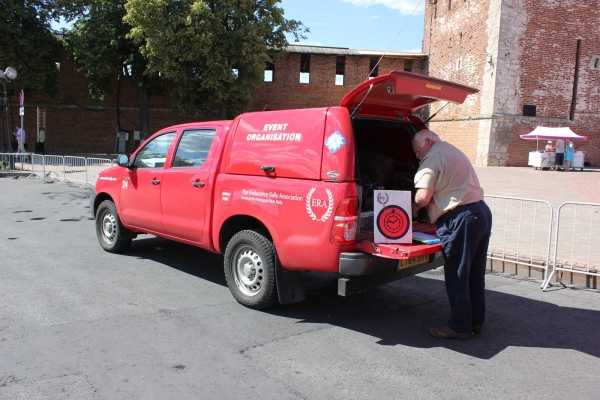
Hilux, a member of the judging team and the sign denoting the time control point that was set up under the arch on the asphalt.
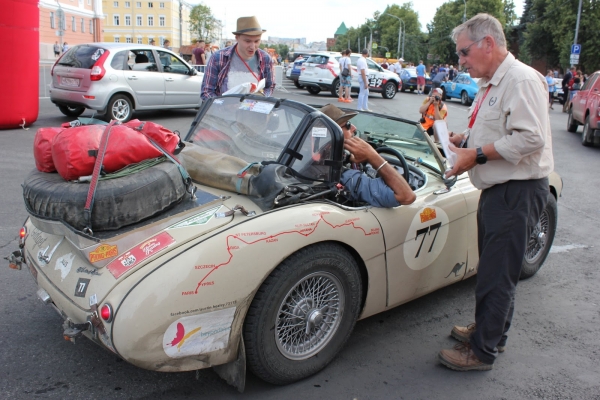
The judge records the time at the 1954 Austin Healey 100/4.
About the rally
The rally lasts for 36 days, with participants passing through 13 countries, the initial list of participants consisting of 105 crews, and the route length being nearly 15,000 km.
The retro rally "Beijing — Paris" takes place every 3 years. It first occurred in 1907, but there was a break, and the 2019 rally was the seventh in history and the fourth in Nizhny Novgorod's history (1907, 2007, 2016, 2019). Generally, any rally changes its route and rarely passes through the same city, especially mid-route, but we were lucky 🙂
The participation fee is about $65,000 (to be precise, £53,500), not including fuel and travel expenses. The cars are delivered to the starting point by ship, and one, which was late, flew in by plane.
Both we and the already gathered residents of Nizhny Novgorod were waiting for the crew going under number 1. The Contal Mototri Tricycle is a car participating in the 'retro' class, produced in 1907. It's a vehicle from the Brass Era, the dawn of automobile manufacturing. These French cars were made in France from 1907 to 1908 by a company that produced three-wheeled bicycles for delivery and mail. Compared to other contemporary vehicles, it was notably more complex. The same type of tricycle participated in the first Beijing-Paris rally in 1907 but met with failure in the Gobi Desert, and the crew barely saved their lives. They were forced to drink water from the radiator to survive, and the car itself remained lost in the sands of the desert. Now, 112 years later, the tricycle participates in the same rally, aiming to continue and complete a journey of 13,840 km literally through the ages. Behind the wheel is the incredibly beautiful and brave Anton Gonnissen, a true adventurer. It sounds romantic, but in reality, the car is dangerous and uncomfortable, and the navigator allowed some leniencies, including a Harley Davidson saddle.
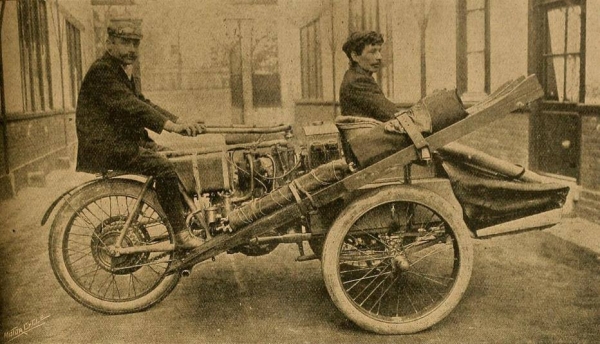
The heroic crew of 1907
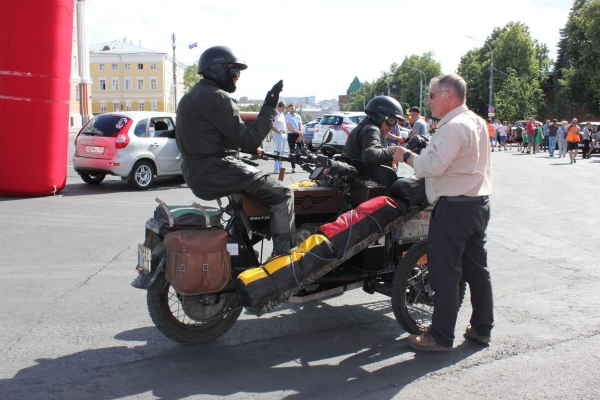
The Contal Mototri Tricycle in Minin Square, Nizhny Novgorod, 2019
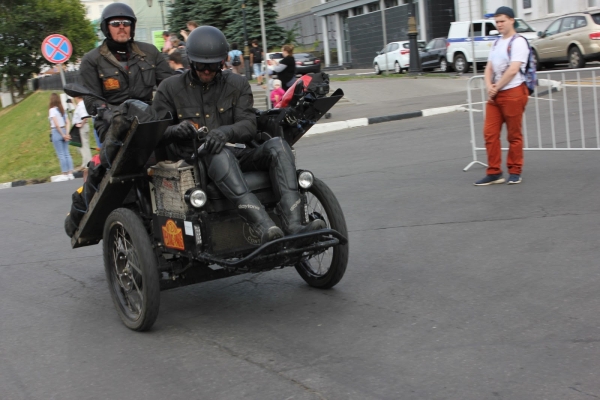
They look eerily extravagant and very stylish
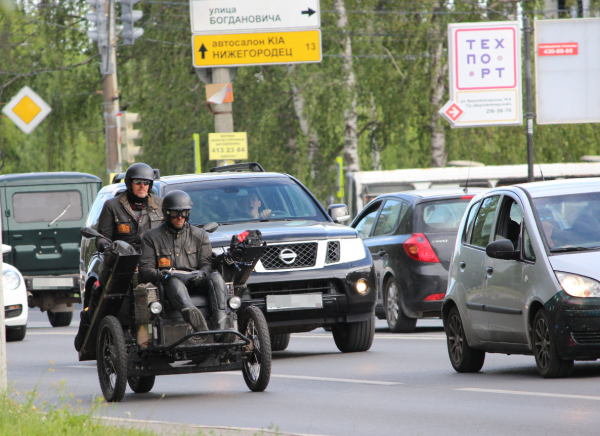
The reaction of the Nissan driver on Rodionova Street is priceless — though everyone felt the same. Photo (thanks to him for the enthusiasm and quotes from 'The Golden Calf')
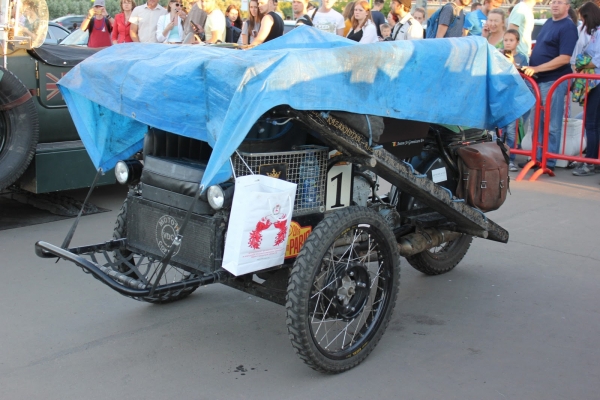
At the technological stop and overnight stay at Lenin Square, the tricycle rested under a canopy, but who was hindered from inspecting the details!
For the tricycle, this is a real test of strength, but I'm writing the article and know — it has already reached Paris, the journey completed.
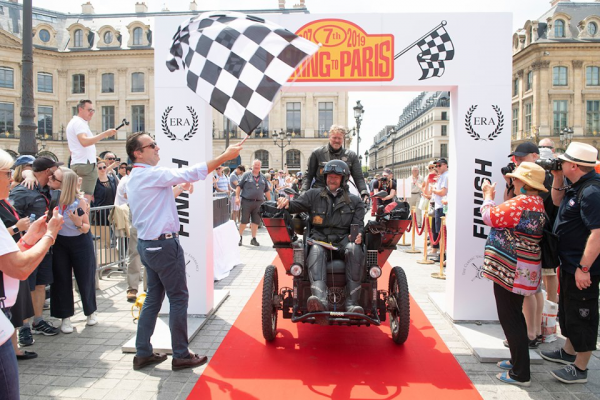
July 7, 2019, Paris. The finish. Photo from Facebook
By the way, there has been much debate in the press and among bloggers about whether this is a replica or not. As we have mentioned, there are allowances in the construction and details that closely match the original, though they haven't lived for 112 years — however, the construction fully corresponds to 1907, and the frames even had dates and numbers marked with 1907. But essentially, the tricycle is a replica, since no original cars have been preserved.
Wait, wait, wait, what classes? Where are the allowances in the construction?
The 'Peking to Paris' rally, in which participants drive cars from two classes — retro cars up to 1941 and vintage cars up to 1977. Among the younger cars, only support vehicles.
Cars may have some structural changes such as sports seats, replaced parts, and modern tires (this fact particularly pleased tire shops, which were to service the spoked wheels), but there can be no fundamental changes like replacing the engine with a more powerful one, tuning the engine, or any other modifications that give a clear technological advantage. Essentially, these are the very cars that traveled the roads of their time.
The second car that everyone was waiting for was car No. 2 — a steam car.
A total of 40 horsepower and 109 years of history — this is the White MM Pullman. Externally, it resembles a royal carriage, but internally it is far from being a pampered aristocrat; it is a fully functional steam (!) car, which, moreover, had a powerful spring suspension, was equipped with a differential and drive shafts, unlike direct-drive on similar steam cars like Stanley.
Unfortunately, Minin and Pozharsky Square never saw this hero. However, it did see Lenin Square — at around ten in the evening, the steam car grandly entered its overnight resting place.
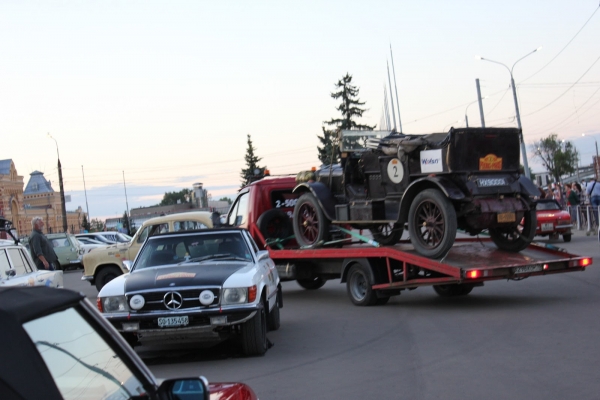
White MM Pullman, 1910
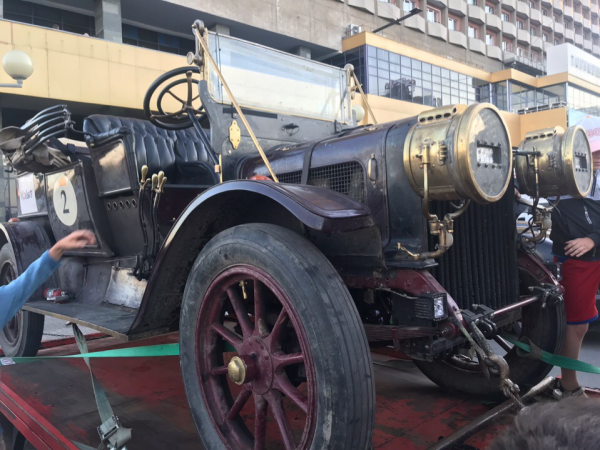
Details. The photo isn't mine, but it's the best from the numerous albums that have been sent to me directly. If anything — the author, please reach out 🙂
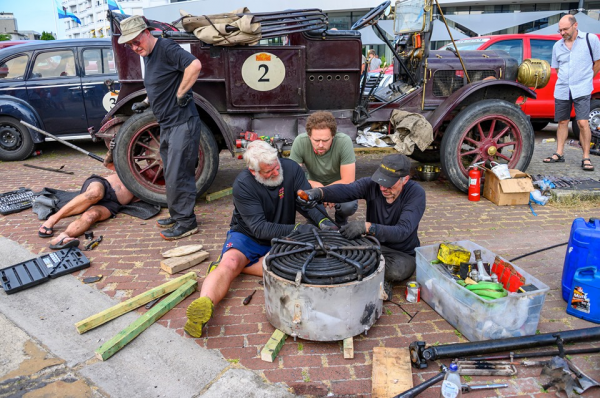
And this is somewhere near Belgium about a day ago — a photo from Facebook.
In general, the history of this car's participation is quite typical for rallying. The fact is that the car was part of a convoy with a support vehicle designated number 2+. This was a Ford F350 carrying water for the steam generator and other supplies: while this vehicle can hit 60 km/h, its range is quite limited — about 5 km before refueling. And there are even fewer water refueling stations than electric ones — around zero.
By the way, what about gasoline?
The rally across Europe passed through several countries, often in the most wild and remote locations: China, Mongolia, Kazakhstan, Russia. The quality of gasoline at some stations left much to be desired and could easily ruin a vintage engine. However, the participants had a supply of additives with them to safeguard the engines from the odd fuel that sometimes registered completely different octane ratings.
Every car deserves special attention, but besides 1 and 2, there were several that warrant special mention.
One such vehicle is crew 96, a 1977 Porsche 911S. You might say, 'What’s so special about that? Cars like this are everywhere in Europe.' Indeed, it's not such an old model, and several of them participated in the rally, but this particular one is stunning.
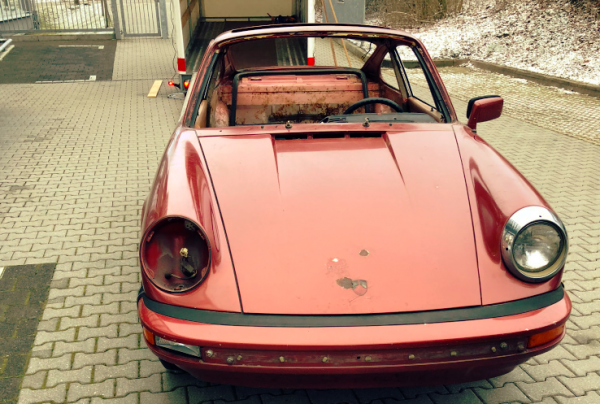
Meet the rally participant Porsche 911S
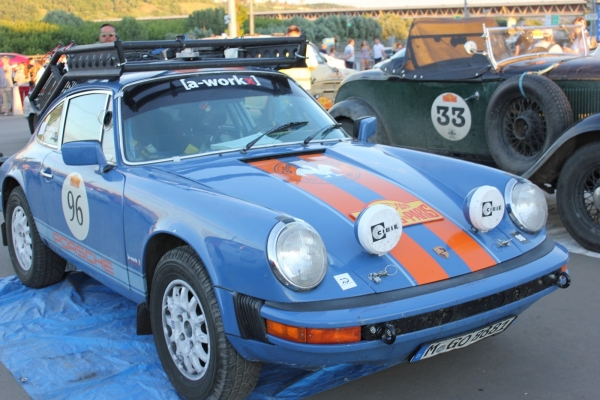
Here it is on June 24 at Lenin Square in Nizhny Novgorod
The car was restored to factory condition and set off for the rally. You can see how it went in the.
Crew 50 was quite a challenge from a technical standpoint and required repairs. But what’s so remarkable about the 1971 Fiat 124 Spider BS1 — it's just an ordinary Fiat from the 70s with a 1.6-liter engine and a 5-speed manual transmission. But the design! Does the name Pininfarina ring a bell? Well, the body design was developed by the Pininfarina studio, which largely influenced the long journey of this style in the automotive industry (including in the USSR). The Fiat 124 Sport Spider is a low-production, sporty version of the Fiat 124, which our native VAZ-2101 was based on. The crew of this car is the authentic Italian Enrico Paggi(I) / Federica Mascetti(I).
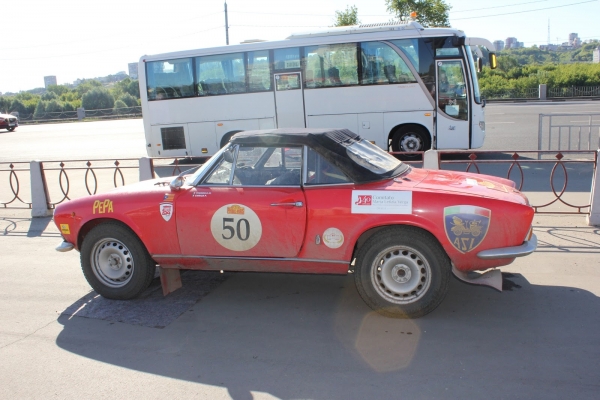
Early morning on June 25 — a 70s sports car prepares for the start
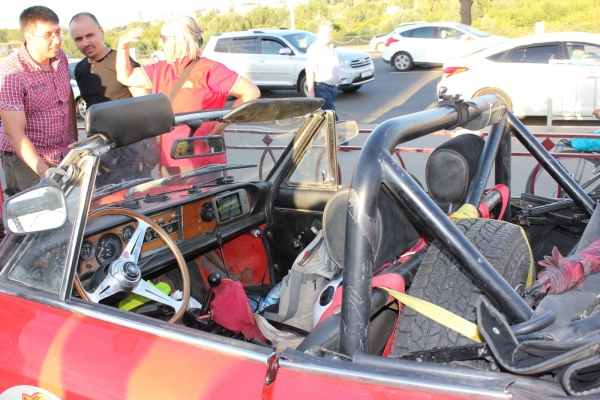
The interior on the evening of June 24
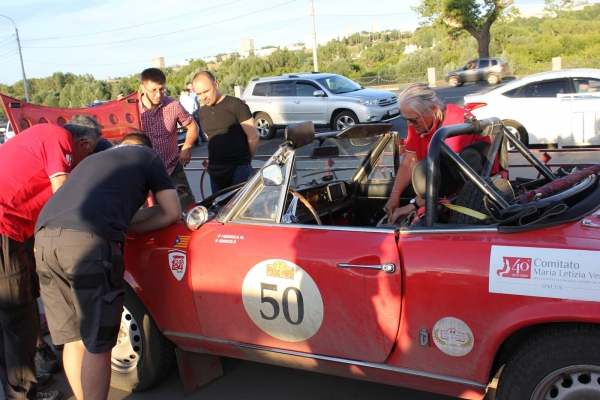
The crew and spectators are puzzled by the repairs
Rally fun
The participant shares about the second day of the rally in China: "After a lavish breakfast in the panoramic restaurant on the 26th floor, we encountered a road with rocky sections, short grass, and sticky sand — it was like a miniature Mongolian steppe, and we even came across a family of frightened marmots, worried for their little lives as cars raced directly towards them." The steam car faced the most issues — it needed a replacement for the burner components and assistance from someone with a fire extinguisher. The trike also had its problems — first, its axle bent, which they repaired at a welding shop, and then the Chinese bureaucracy struck: officials decided that the three-wheeled vehicle was not allowed to use toll roads, forcing the supercar to take a long detour and wasting a lot of time during the rest period.
Otherwise, the Chinese see such cars on their roads every day!
Another breakdown story that caused us (the organizers of the Nizhny Novgorod stage) quite a bit of anxiety and guaranteed our Ilya a sleepless night at the auto service on the Rowing Channel (a spot right by the Volga). When the last part of the support team was moving from Minin to Lenin and was stuck in a taxi in traffic on the bridge, our volunteer noticed that nearby, a Volvo was being loaded onto a tow truck. We quickly figured out it wasn't our service and made the somewhat baffled taxi driver turn around right in traffic and join us on our adventure. The driver of the Volvo 121 was a Swiss man, and… it would have been better if he had tried to speak French, but I froze and didn't offer him that language. I could only understand his speech concerning the word clutch and a few individual words, but as the daughter of the owner of a second UAZ Hunter, I realized that the word “clutch” and the tow truck hinted at a long, long repair ahead. Forget about Paris. With us in the car was the translator Yulia, who managed to communicate with the Swiss in English, while nearby stood three men from Nizhny Novgorod. During questioning, it turned out that the guys had hastily called a tow truck to direct our foreign guest to a local auto service (I dreaded to think about what would happen to his employees upon seeing the vehicle). The head of the support team, Ilyukha, stayed at the service until two in the morning with the orange 60th crew, and after long and humorous experiments with the press, a new bearing was assembled from two old ones and one extra, and attached to the clutch. The car continued its journey.
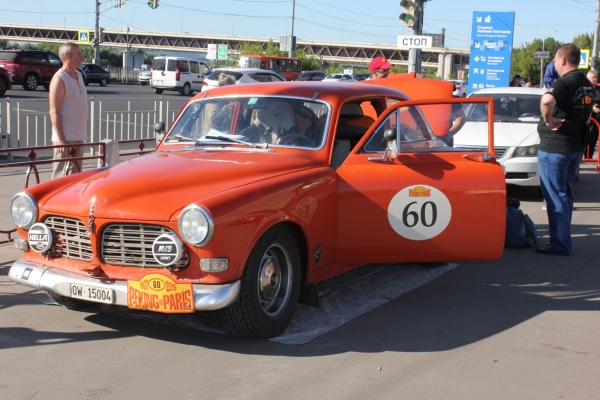
Volvo 121 1969
How did the repair go? Were there many breakdowns?
The cars are old, and it's difficult for them to avoid breakdowns. Additionally, road and weather conditions contribute to this. The off-road conditions in Mongolia, Kazakhstan, and Russia have significantly rattled the vehicles' components and 'helped' with the wear of nuts and other connections. In some areas, participants (a significant portion of whom traveled in open convertibles) were caught in downpours and even June snow, which added to the problems — from crew fatigue to water entering the components.
Some cars fell out of the race, some went for extensive repairs and covered parts of the route on tow trucks. For instance, one of the crews went to Moscow, where a half-shaft was delivered to them by plane. The others were repaired at parking lots: sometimes a day in a city, like in Ufa, sometimes a night — like in Nizhny Novgorod, and sometimes several days like in a tent camp in Mongolia. As you can tell from the last location, where it’s unlikely there are car repair shops, most of the repairs fell on the shoulders of the crews themselves and technical support.
In the cities, the organizers provided all the conditions for repairs. For example, we had agreements with several services, tow trucks, the NGTU garage (Polytechnic), dealer centers, and tire shops — they were ready to take in all the automotive exotic and ensure repairs. Of course, for a fee: participants paid for all repairs themselves, and it wasn't overly expensive by participant standards. For instance, the repair of the aforementioned Volvo cost $200 + $26 for the tow truck. During the repairs, organizers or volunteers from the Polytechnic were with the crews (one of them stayed until 3 a.m.).
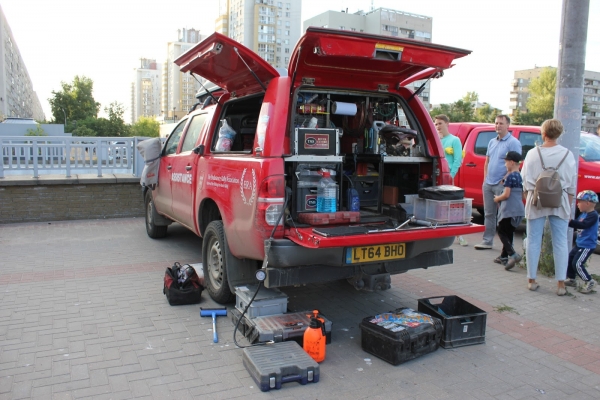
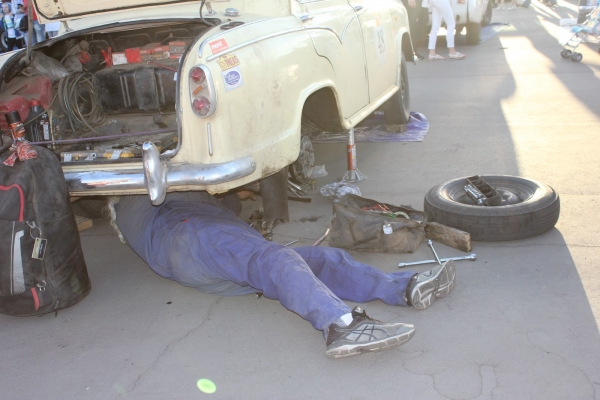
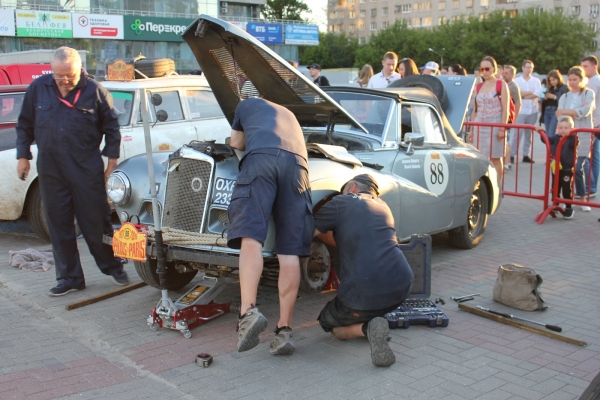
The charming ones and a bit of whining.
Several cars attracted special public attention — from those we didn't write about, we selected four more legends, although it was hard to squeeze into the parking lots. By the way, about the audience. If you organize a stage of a rally in your city, you don't belong to yourself, because, firstly, you have to comply with the requirements and wishes of the organizers and participants, and secondly, for as long as the cars are in the city, there are exactly two tasks: safety and repairs. It involves ensuring the safety of visitors from cars as well as protecting car parts from visitors 🙂.
Organizing a mass meeting for participants was not on our agenda — the desire to also organize a city festival was exclusively our initiative, a group of 4 people. Frankly, we went overboard: announcements in VKontakte groups, press releases, and highly effective advertising on Facebook (with a budget of less than 3000 rubles for 615 responses to the event, 'may everyone live like this') collectively garnered about 500,000 views. 'A 1% conversion rate for events,' say the marketing and PR scriptures. '1% of 500,000 = 5000 people,' I thought with anxiety. In short, we had 15 + 10 volunteers of varying skill levels (from last-year schoolkids to seasoned students of NGTU), the main square of the city, 2 organizers at each checkpoint, and yes, about 5000 people who didn’t mind the barriers and were persuaded not to walk around but to let cars park. However, the participants clearly enjoyed the attention.
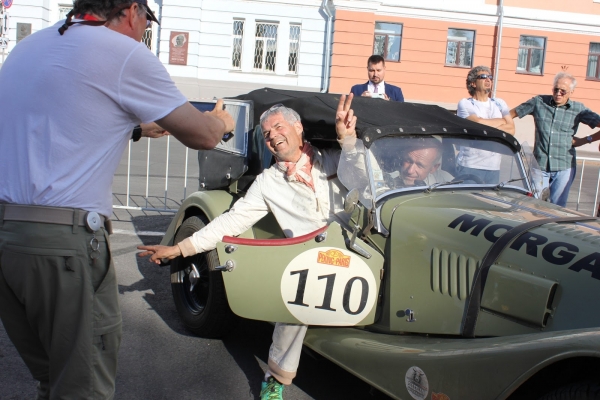
Morgan Plus 8, 1967 model, and a very happy crew — these guys allowed people to sit in the car, hug each other, pull the handles, and seat children. Very positive French!
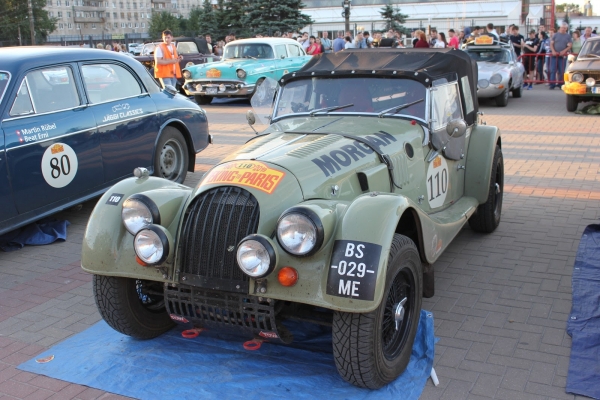
By the way, the car itself, despite its appearance, is far from vintage: these racing supercars were produced from 1968 to 2004 and found their niche in amateur motorsports.
For various reasons, the organizers required the area to be closed for visits an hour earlier and we... thought we would face a ton of negativity on social media. Yes, the night between the first and second days was sleepless — we had to respond, apologize, and explain that a technological parking lot is primarily a time and place for repairs, and only then a living museum on wheels. However, hundreds of thank-you messages and inquiries made us feel that it was all worth it. And yes, we ensured safety at a 5+, not a scratch, bruise, or dent on anyone — just love, hugs, and shared photos.
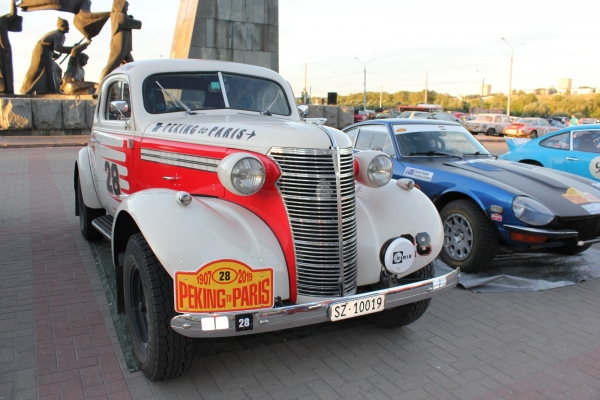
This bright chubby one — the 1938 Chevrolet Fangio Coupe — was especially beloved by the Nizhny Novgorod locals, holding an unquestionable lead in the first 4 days of the rally.
Our favorite review is this one:
“Today at Minin Square, there was an absolutely amazing atmosphere. It was almost the same as a year ago during the World Cup, just in miniature. Participants of the ‘Peking-Paris’ rally made a stop in Nizhny. All the drivers and navigators, despite their fatigue, were very positive and happily answered all questions. Of course, if they were asked in English. And our city became part of an international event for a few hours.” (we read it in a local independent publication , and “Koza” read it in Dmitry Znamenko's blog).
We know how significant the 2018 World Cup was for our city, and such a comparison is worth a lot.
And, of course, two symbols of luxury did not leave anyone indifferent — not as extravagant and interesting as vintage Bentleys, but still exuding the history of true dolce vita.
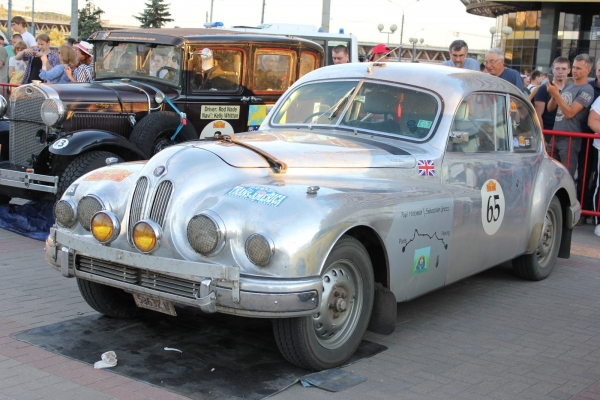
Bristol 403 — pure silver luxury, a luxury+ class car, a club car from Britain’s golden age. Just don't confuse it with BMW; the grilles misled many (by the way, BMW was represented quite modestly at the rally).
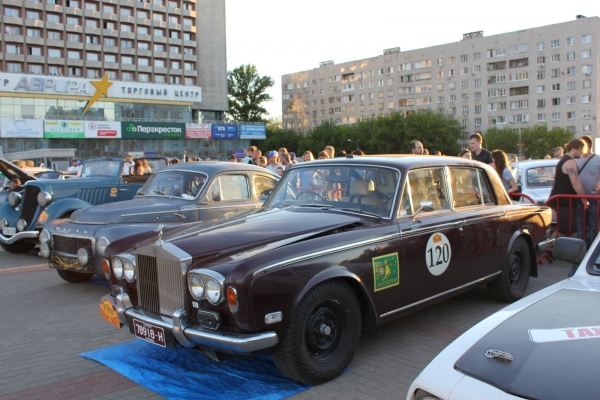
1975 Rolls Royce Silver Shadow. This model was revolutionary for Rolls Royce, featuring disc brakes on all wheels, independent suspension, and a 6.23 L engine. This car was the company's answer to accusations of its models being old-fashioned. The car's hydraulic systems outperformed the best Citroën of the time. Top speed — 185 km/h.
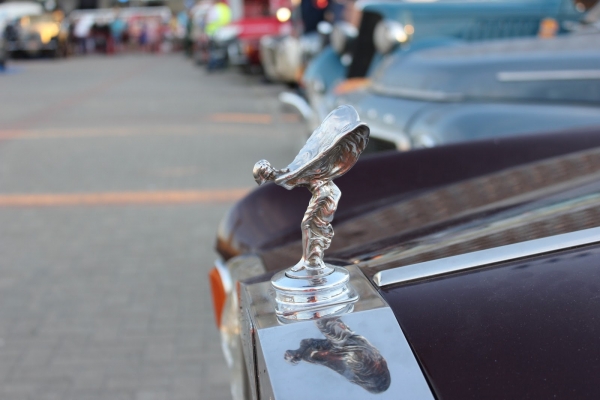
And the famous Spirit of Ecstasy on the hood
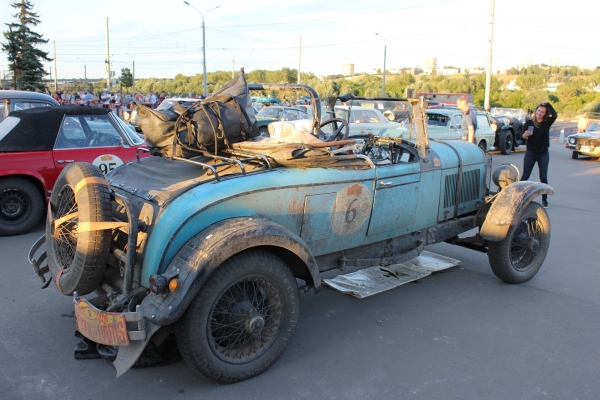
1927 Chrysler 70 Roadster
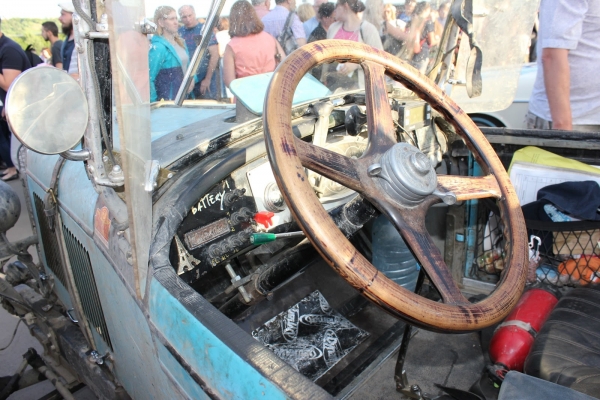
And its interior is a sight to behold. Battery!
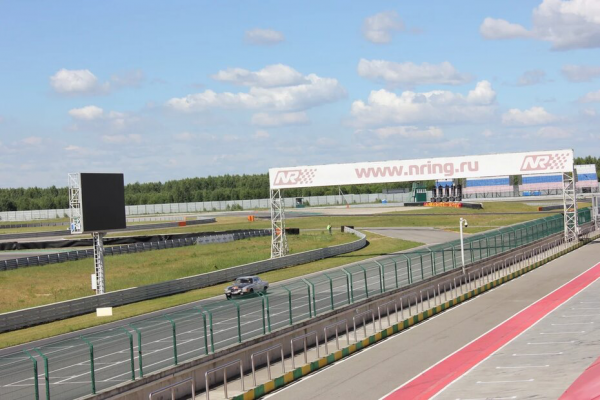
On the second day at 6 a.m., participants headed to the ASK Nizhny Ring racetrack — that's where the speed trials took place and the cars showed what they were capable of. Five, four, three, two, one, GO! — and the relaxed retro showcased its class. At times — extra class; the camera barely managed to catch the shots.
Safe travels!
Winners
105 cars made it to the finish line. On July 7, the rally finished in Paris. Let's take a look at who won in the Vintage and Classic classes.
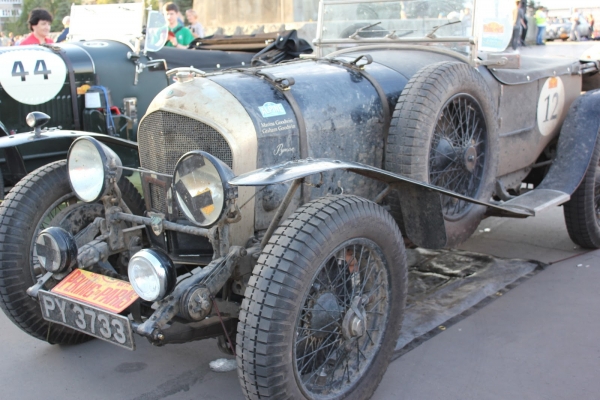
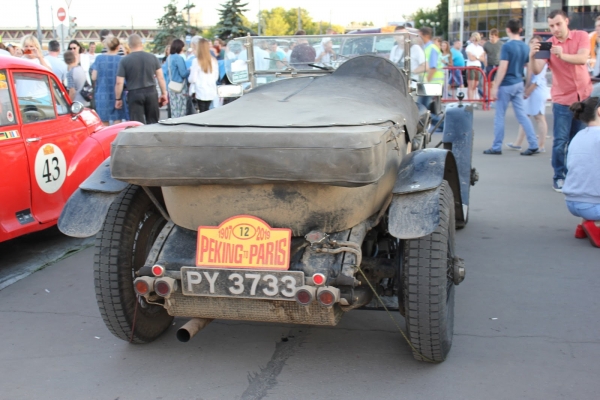
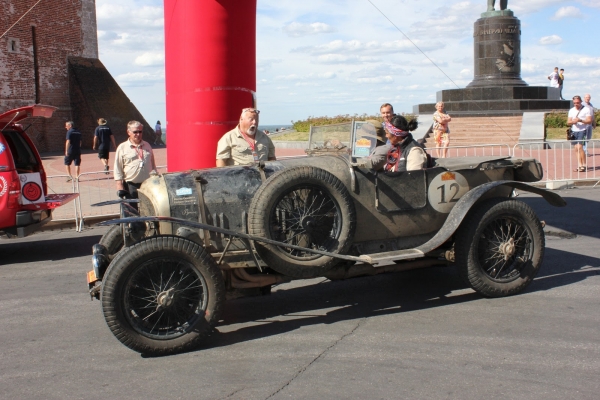
Bentley Super Sports (12) — 1st place Vintage
A rare car, one of the first sports models of its time — this Bentley can reach speeds of up to 100 miles per hour. In addition, the vehicle is characterized by high stability on any road and exceptional off-road capability. Visually, the car appeared very reliable. The authenticity and preservation of this specific instance were particularly impressive.
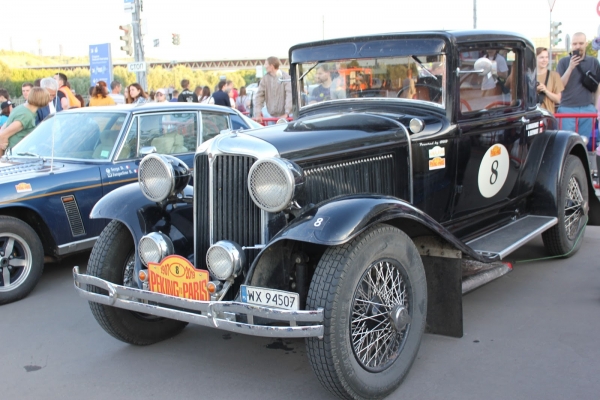
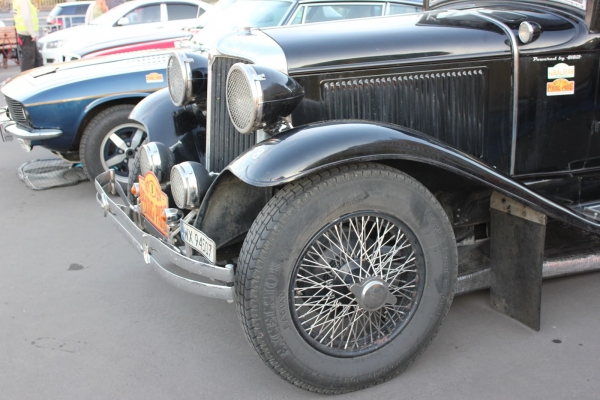
Chrysler CM 6 (8) — 2nd place Vintage
The Chrysler CM 6 model combined a lightweight body, a powerful six-cylinder engine, and a reliable chassis, making it instantly popular among drivers of its time. Besides its interesting performance characteristics, this car also stood out from its predecessors with a quite comfortable interior. In 1931 alone, 65,000 cars were sold, allowing the manufacturer to survive the height of the Great Depression that struck the USA in 1929. There is a version that to obtain the blueprints for future GAZ M11 and GAZ-51 models, it was necessary to engage the forces of intelligence and the NKVD, which they handled quite well.
Bentley 4 1/2 Le Mans (17) — 3rd place Vintage
The Bentley 4 1/2 was originally an elegant and massive British car with a 4.4-liter engine, but 720 cars of the Bentley 4 1/2 Le Mans modification were also produced. As the name suggests, this model was created for the prestigious '24 Hours of Le Mans' race, which was the best advertising one could imagine. The goal was achieved in 1928. The car's impressive qualities didn't stop there: in 1932, a model of this type, but with a supercharger, set a speed record of 222 km/h.
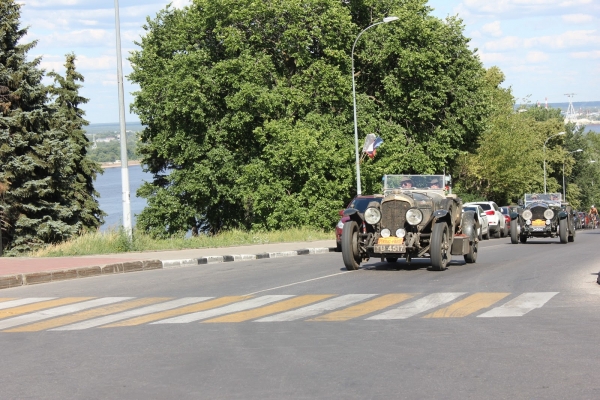
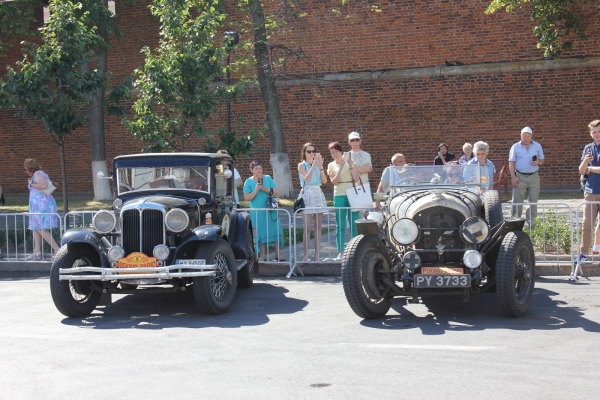
Two weeks before victory — 1st (right) and 2nd (left) places in the Vintage class at the walls of Nizhny Novgorod Kremlin
Leyland P76 (112) — 1st place Classic
This is a large, impressive sedan of Anglo-Australian origin that won the rally in 2013 and has emerged victorious once again. The driver of the car is 87 years old. By the way, this participant had a minor accident in Nizhny Novgorod — broke a turn signal and dented a fender, which was immediately fixed with elegant and versatile duct tape. In general, a little bump under the Metro Bridge leads to victory in the rally. But we urge you to maintain distance and follow traffic rules.
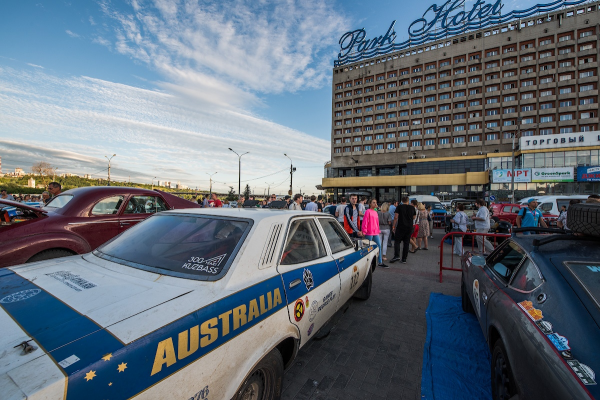
Leyland P76 in Lenin Square. Photo by Vladislav Khramtsov
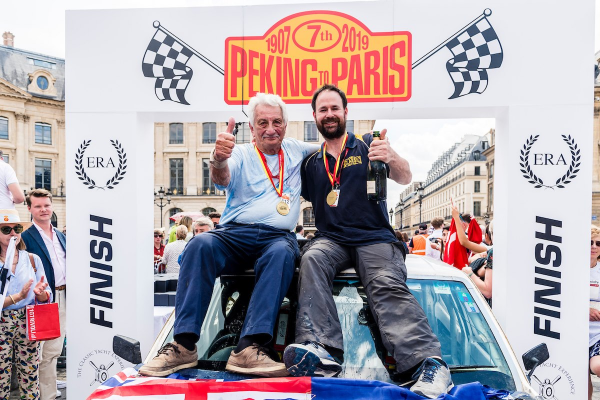
Winners — the crew and their Leyland P76. Photo from Facebook
In 1973, the P76 with a V8 engine was awarded the title of "Car of the Year" by the Australian magazine Wheels. However, due to several economic reasons, only 18,007 Leyland P76 cars were produced, and the coupe version never took off. The history of the Leyland brand goes back to 1888, when a young James Sumner converted his three-wheeled bicycle to steam power. And then . Currently, the brand exists only in Australia and produces Maxus buses. Previously, the company was owned for some time by the GAZ group. Leyland clearly has a special relationship with Nizhny Novgorod 🙂
Porsche 911 (92) — 2nd place Classic
Out of 105 rally cars, 9 were Porsche models, 5 of which were 911s. This legendary car once garnered enormous demand, and for cars with such power and rear-engine layout, the demand was unique. The Porsche 911 has been produced since 1963, and it has always been a sports coupe (or convertible) with a recognizable design. Originally, the 911 was supposed to start and end like any numbered series, but with the 911, something went very well, and the number essentially turned into a proper name. Rally enthusiasts of various classes value this model and have won numerous victories with it.
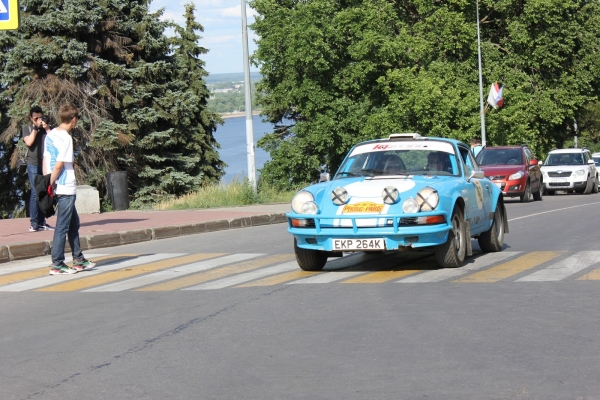
The 2nd place Porsche 911 at the Georgievsky Congress, Nizhny Novgorod
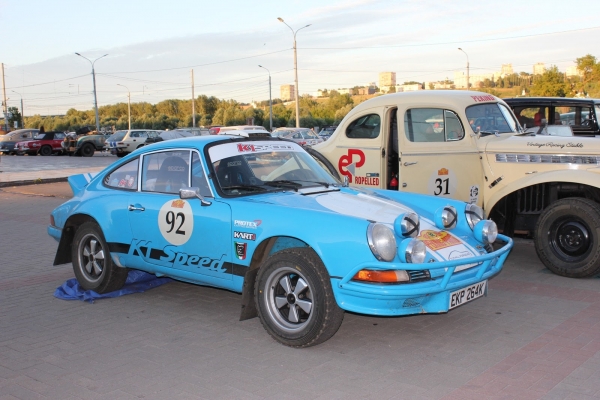
The 2nd place Porsche 911 at the night parking lot
Datsun 240Z (85) — 3rd place Classic
Datsun 240Z, also known as Nissan S30 or Fairlady Z. A sports car from Nissan, a very successful model in both domestic and foreign markets. It is a three-door hatchback with 151 hp on a very modest chassis, capable of reaching a top speed of 204 km/h. During the exhibition at Lenin Square, I overheard one of the locals sighing as he told another that his brand-new Datsun couldn't compare to this one, and he would exchange it without a second thought. I don't think the participants would appreciate the prospect of a trade 🙂
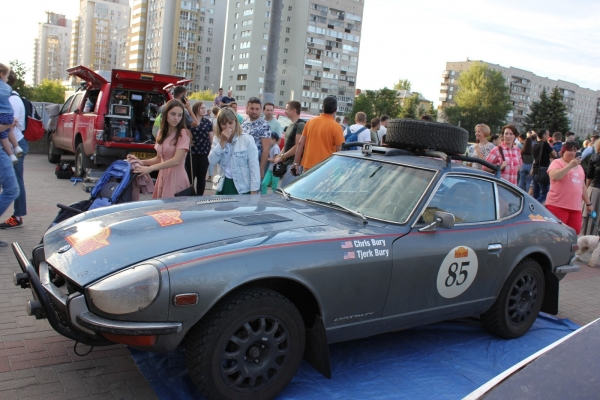
Datsun 240Z
Our team, the only Russian crew among the participants of the rally on the VAZ-2103, finished 23rd out of 72 in their class! Congratulations to them on this achievement! (If you happen not to know what a 'three' is. In 1972, the VAZ plant launched production of the 'three' Zhiguli — VAZ-2103. The car, based on the Fiat-124, was much more comfortable than the 'kopeika', equipped with a 75-horsepower engine and accelerated from zero to a hundred in 19 seconds. The 'three' had several export variations and became a symbol of 'auto luxury' in the USSR, and it is still considered one of the most stylish models from VAZ.)
How is it 87 years?
The 'Peking to Paris' rally is often referred to as a race for millionaires, not only because of the entry fees and the cost of the cars, but also due to the status of the participants. Many of them are very successful, well-known individuals whose names can be found on Wikipedia. For example, number 63 in a Citroen 11B was none other than Mario Illien () from Switzerland, the head of Ilmor, a company that has developed engines for Formula 1 cars for Mercedes, Renault, and Honda over the years.
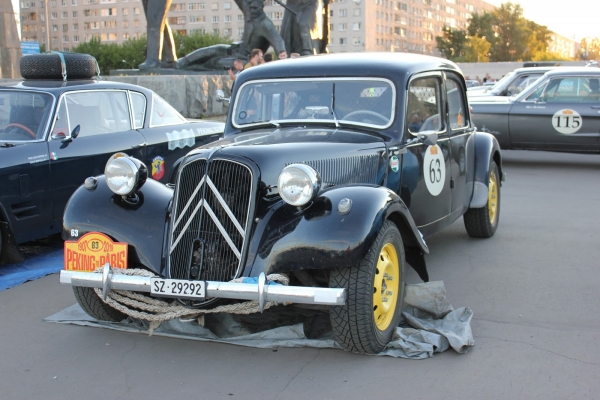
Citroen 11B
Acknowledgments
And of course, everything would have been much more difficult and sad without these people!
Department of Automobile Transport, ,
- Mikhail Georgievich Korchagkin, Deputy Head of the Department for Educational Work
- Alexander Nikolaevich Arkhipov, Head of the Laboratory
- Guys from NТGU
Department of Culture of Nizhny Novgorod
- Roman Yakovlevich Beagon, Director of the Department
- Margarita Alexandrovna Dorodnova, Head of the Department for the Organization of Urban Events and Socio-Cultural Activities
Ministry of Sport of Nizhny Novgorod Region
- Sergey Yurievich Panov, Minister of Sport of Nizhny Novgorod Region
- Alina Genadievna Gorshunova, Deputy Minister of Sport of Nizhny Novgorod Region
- Pyotr Vladimirovich Kulikov, Head of the Department of High Achievements in Sports
- Sergey Nikolaevich Morozov, Chief Specialist of the Department of High Achievements in Sports
* Distance — 1066 m, total route length 14,500 km
P.S.: Ilya, Sergey, Alexey, it was really cool to work with you! Dream team!
P.P.S.: thank you for !
Source: habr.com
