

Haven't you worked with China yet? Well, the Chinese are coming to you. They know there's no escape — you can't run away from the planet.
China is the fastest-growing country in the world, in all sectors: manufacturing, IT, biotechnology. Last year, China recorded the largest gross product in the world, accounting for 18% of global GDP.
China has long and firmly become our country's main economic partner. Russia sells resources to China: oil, gas, timber, metals, and food products. China sells high-tech products to Russia: machines, electronic devices, computer and household appliances, genuine Swiss watches for $50, spinners, and other AliExpress items. Last year, trade with China exceeded $108 billion — increasing by a quarter in just one year.
Russian developers and IT business leaders often experience a mild shock from doing business with Chinese partners — the Chinese can be surprisingly casual in their dealings. But this is not surprising if you understand what China really is and what the Chinese are hiding from the rest of the world.
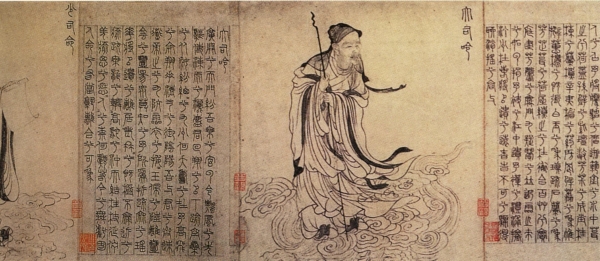
An ancient Chinese engraving. Uncle Liao is taking a walk while inventing the iPhone 12 with a TV receiver, five SIM cards, ten cameras, a thermometer, a taser, and a vacuum cleaner.
At the Techdir Day, Denis Ilyinikh , the technical director of GT-Shop, shared how he personally encountered the classic Chinese business style.
Dmitry Simonov, creator of the tech director channel CTORECORDS, once mentioned in a conversation that Denis Ilyinikh is “a very good tech director because he has developed a habit of winning’. And so, Denis did not back down — he responded to the cunning Chinese trick with unpredictable Russian ingenuity.
I pass the word to Denis.
Story #1. The Chinese and IT
Recently, a client came to me and said: “Denis, listen, the Chinese are doing very well in the rental of power banks. Let's get involved.” I replied, “That certainly sounds interesting. What do you have?»
For this business, it was necessary to create a device capable of accepting contactless payments, issuing power banks, and tracking where they were returned. What challenges arose immediately? It turned out that the client had already purchased a device from China. And the Chinese manager promised him that everything would be great. However, the manager refused to provide API documentation or device documentation. The device had a single-board computer running Android, and we needed to integrate contactless payments with recurring billing.
How does such a business work: A client ends up with a dead phone far from home and without a charger. At the power bank rental terminal, they can rent a portable charging device with a cable. The client registers for the service and links their card. The cost of renting a power bank for an hour is, for example, 50 rubles. If the person does not return it within this time, 100 rubles will be deducted from the card per day. They can even keep the 'bank' — just holding onto it for 30 days means a charge of 3000 rubles, and the device will then belong entirely to the client. The device can be returned at any terminal in the rental network.
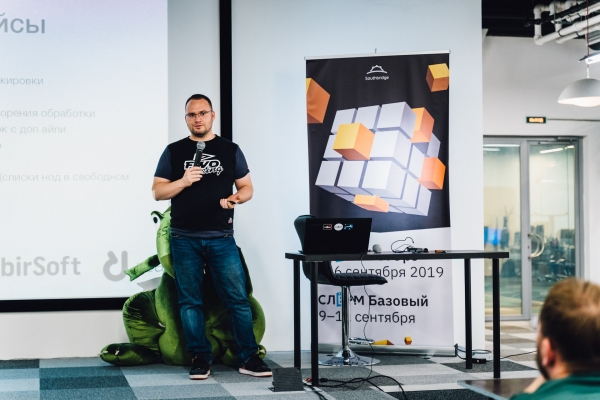
We arrived, took a look, and said: “Oh dear, what are we going to do about this?” A month of communication with the Chinese led us to a disheartening result. The Chinese said: “You will pay us money — we will create an application for you. But you will work through our Chinese cloud. And we will not give you the documentation».
We replied: “Let’s fly over and discuss this.” To which the Chinese unexpectedly responded: “Why do you want to come to us? Are you threatening us?” We were surprised: “What made you think we were threatening you?” The Chinese replied: “Well, you promised to come.” Then they thought some more and said: “Order a batch of 100 devices — then we will give you the documentation».
Naturally, we never received the documentation. We had to engage in debugging. In the end, we figured out what kind of single-board computer it was and how the system was structured inside. We discovered that the cells containing the power banks were just ordinary devices with a com port. It was possible to sniff the com port, obtain the protocol, and work with that protocol.
But it turned out to be much simpler. The Chinese didn't complicate things — perhaps during assembly they loaded the regular version, loaded the debug version, and left the debug console open. Accordingly, we connected through Android Studio, took the debug version, connected to it, and fully assembled all the APIs we needed. After that, we wrote the application, set up the cloud service, and integrated recurring payments.
Now we're heading to China, but to a different manufacturer. We'll show them all this and ask: “Do the same for us, but under a different sauce, under our guidance and control.».
NB: In terms of carelessness, the Chinese are far ahead of us. They astonishingly combine control over everything and everyone, high bureaucratization, and utter negligence. If you want the Chinese to do something on time and technically accurate, you need to constantly stand behind them and supervise. They simply don't understand any other approach.
And before working with the Chinese, arm yourself with a good lawyer and immediately remove any protruding body parts — otherwise, they might bite a finger off up to the neck.
Interlude
To successfully work with China, you need to know China. But what do we know about Zhongguo?
The only country in the world with a continuous history spanning 4000 years? The Great Wall, visible from space? The Chasma Boreale canyon stretching 560 kilometers in the north? The Chinese economic miracle with surviving socialism? Effective anti-corruption measures even up to the highest level of social protection?
No, no, and once again no. Most of this is just scenery, meant for white, brown, and black (underline the necessary) barbarians. And the Chasma Boreale canyon is actually located on Mars.
In 2017, I interviewed retired Colonel of the RF Armed Forces Vladimir Trukhan, who, in his capacity, explored Zhongguo — the places where foreigners are rarely allowed. It was then that I saw China from an unexpected angle.
In 2007, Vladimir participated in the exercises "Peace Mission-2007" in Chebarkul, where formations of the People's Liberation Army of China took part, and in 2009, he went to the military base Heishui in Jilin province near the city of Baicheng, where "Peace Mission-2009" drills were held.
He has some interesting impressions and memories. Vladimir is not a sinologist, but it's precisely that reason why his stories stuck with me — alive, vivid, without academic dryness.
And now Vladimir Trukhan will share himself.
Story #2. China and Our Perception
We somewhat misperceive China — especially in the style that popular writers in our country depict Zhongguo. Our perception of China is as a single country without problems, marching neatly towards capitalism under the leadership of the Communist Party. But it’s not like that at all.
Rural China and urban China are strikingly different. They even differ in smell. I proudly say, even boast to my students, that I walked a whole two hundred meters without a gas mask through a Chinese village. I couldn’t go further, but two hundred meters was enough for me.
The Chinese rural community is completely self-governing, isolated — and nobody is allowed to leave the Chinese village at all.
They have a golden belt on the Pacific coast. We were in mainland China — Jilin is far from being the richest province, and Baicheng is far from being the wealthiest city. 'Peace Mission — 2005,' if I remember correctly, they performed in Shanghai. And they simply apologized in 2009 that they had nothing to show. We replied:It's okay, it's okay, we can endure your semi-deserts. This is precisely what interests us.Not the grand skyscrapers, not the magnificent China, but what happens in the depths of China. It’s akin to taking us to the Samara region.
NB: When you collaborate with the Chinese, you must remember that they are immensely more motivated for success and competitiveness than you are. Chinese society tests from childhood whether you will survive or not. Such conditioned reflexes are ingrained in the mind for life. Imagine your business partner is an orphan from the depths of Russia who was a gangster in the 90s and has then refined himself a bit. But survival is something he knows not from books, but from personal experience. How do you think he will behave in negotiations and in business?
Story #3. The Chinese and the Population
In China, there is fundamentally a lack of population mobility. And there is no unified social support in China. Recently, I listened to our sinologists who clearly state: 'When you compare China's GDP, you should note that they don't have any social burdens.».
A representative from the General Political Department of the PLA told me: "Vladimir, the Chinese government considers it necessary to care for two hundred million of the most progressive citizens. The rest can fend for themselves.'. I asked the question: "And what is your population size?"'. He dodged the question. I said: "Are you treating me like a spy?"'. He was genuinely offended. Then the naval attaché approached and said: "Listen, don’t terrorize them with this question. They don’t even know how many of them there are.'. I was surprised: "What do you mean they don’t know how many there are?"'. He told me: "In the village, up to six people can live with one birth certificate.».
I thought they were hiding it. It’s a normal topic—we’re making a joint assessment of the situation. This includes an assessment of demographic characteristics. They don’t engage with the village community—they’ve simply shut it down. How the Chinese will survive in the villages, how the people live there every day, is not a concern for the Chinese government.
NB: Don’t be surprised at how Chinese migrant workers behave in Russia or Belarus. They truly exhibit the evolutionary instincts of sharks. They are ready to strangle for every ruble, always willing to deceive at a moment's notice. If a Chinese migrant is outside of China, it means that their village has given a significant kickback to an official who facilitated the work migration permit. Therefore, the Chinese person must repay their village. Moreover, they might very well have a wife and numerous children left behind. They will do everything to avoid returning to China and will earn as many rubles, dollars, and yuan as possible in a unit of time.
Story #4. Chinese People and Corruption
They have an entirely different civilization. Touching on the same corruption issue. The person who conducted research on corruption related to certain of our structures in China was actually in contact with me. He clearly told me that the admission fee for a pilot into the academy is 20,000 dollars. The social security system for military personnel in China is a major secret. They do not disclose this. The army there is a state within a state. In every city, it's not just military hospitals; they have their own military gas stations in every city.
Our press constantly publishes articles about how China is successfully fighting corruption. Sometimes someone gets shot, sometimes someone gets hanged. It's not difficult to fight corruption when every person is a corruptor. Just take the first one you see — and there you go, a ready-made corruptor. Again, we refer to China's history from the perspective of the Chinese themselves, who clearly write about how their class of officials is formed. They think long-term. A whole family, or even a clan, can raise one official so that one person can benefit. Then that official has to repay the invested resources.
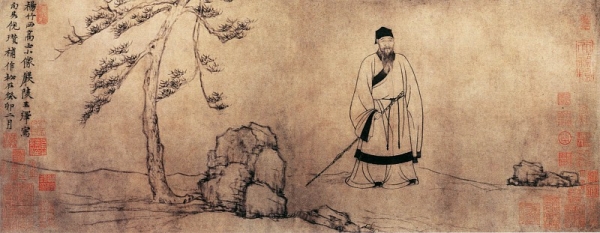
An ancient Chinese painting. A Chinese official is sad in nature about the fact that this month the voluntary donations from his district were 2% less than last month.
Recently, it was reported that before the Communist Party of China congress, two out of three top military leaders in China were arrested for corruption (Note: the interview was in December 2017). Their approach is slightly different. They keep these corruptors on a hook until a certain point when they are beneficial and effective.
That's why I say again, practically every one there is a corruptor; that's the nature of society. It is structured in such a way that an official must receive offerings.
NB: To conduct business with Chinese people, especially with government officials, one must be prepared for Chinese corruption from the start. It’s not enough to simply offer money — this must be done in accordance with all traditions. Without a good bribe to grease the wheels, any deal or project will move slowly and with friction. This is because the Chinese simply do not understand how things can work without bribes, even if the project is 100% beneficial to them. You might approach them, honest in a white coat — and the Chinese will look at you sadly and think, what a strange white barbarian, he could have made an offering and we could have together earned millions, but instead, he was stingy and left everyone with nothing.
Story No. 5. The Chinese and the Barbarians
China is not our ally; it's a travel companion. We have remained gaijin to them. Yes, it’s more of a Japanese term, but I can't remember how the Chinese refer to us. Just as they have seen themselves as the Middle Kingdom, with everyone around them being barbarians, so they still do. They are still upset about the Opium Wars. A representative from Glavpur said quite well under a shot of liquor: “We always remember the Opium Wars and what you did to China. You are slightly less than the Anglo-Saxons, but you are still bastards.They remember that Russia seized part of their territory for helping in the defeated Second Opium War, as well as our participation in suppressing the Boxer Rebellion, which is sometimes considered in the same vein as the Opium Wars.
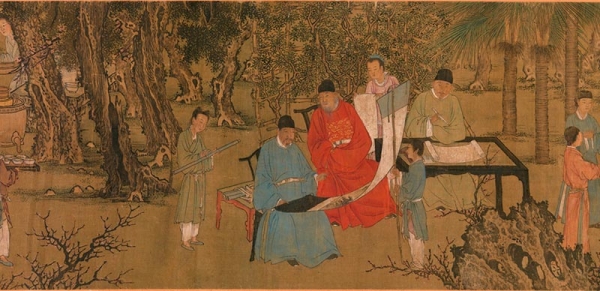
An ancient Chinese painting. The people’s Chinese heroes writing a letter to the chief of the evil American barbarians in the ancient Chinese official style, "Nako si, vyku si."
NB: No matter how significant or profitable the project is, the Chinese will still try to deceive you in one way or another. Smiles, bows, and compliments should not mislead you. To them, we are 'naive, good-natured barbarians.' This is still better than the Americans being 'stupid, evil barbarians' or the British as 'clever, vile barbarians.' But we are still barbarians — therefore, the issue of trust simply does not arise. What is not explicitly stated in the contract with deadlines and penalties does not exist for a Chinese person.
Story No. 6. The Chinese and the Future
China has a different civilizational project. They think in completely different categories—two to three hundred years. They are not focused on the immediate improvement of citizens' welfare. This task is not even on their agenda, in principle.
They do not have a social protection agenda—even in the foreseeable future. They do not even aim to provide jobs because they will release from villages exactly as many people as they need.
We are driving through Baicheng – a huge five-story building. I ask the Chinese translator: "What is it?" He replies: "Orphanage". Then he clarifies: "I misspoke. Kindergarten". I ask again: "Did I understand correctly, this is a kindergarten?" He replies with a pause: "Yes, a kindergarten. Children until school age". I tell him: "My wife is a kindergarten teacher". The look in this officer's eyes lit up with admiration. It turns out that I am a "shan xiao" from GlavPU in their version, while in our case a colonel from the Central Apparatus of the Ministry of Defense is nothing, just a smoke break. But a wife—a kindergarten teacher... He said to me with such reverence: "Really, that's such an honor. The Motherland entrusted you with the upbringing of children.».
They take children's upbringing very seriously—here we need to learn from them, learn, and learn again. They stop focusing on adults.
So, if a teenager shows more or less outstanding results, they pull him out of his usual environment, throw him into another city, another province, and leave him to struggle alone for two years. If he does not lower his results, if he shows his viability and ability to continue succeeding—they will invest in him. If he fails, he is sent back to where he lived—and that's it for good. They do not give a second chance at all. In China, there is a harsh culling. If a person is discharged from the army, he is discharged from life. That is, it's an absolutely ruthless society.
In China, there are no pensions. The approach there is that children should support their parents. If you want, support them; if you don’t, bury them. In Zhongguo, all these issues are very strict. And those who tell us about the Chinese economic miracle should go there and try it.
NB: The Chinese live in a distant future. We have already forgotten how to think like that. This approach was present in the USSR — but ultimately, bourgeois values prevailed. Despite their cunning, resourcefulness, and sharpness, a Chinese person feels an inseparable connection with generations — both past and future. Therefore, in any field of activity — science, art, business — it is important for them that it contributes to the civilizational project of the Middle Empire. This is embedded in them at a deep level. That doesn't stop them from being shrewd when necessary.
Story #7. The Chinese and Production
They have many contradictions. They even have a lot of national contradictions. I have a 5 yuan bill. It says "5 yuan" in four languages. It's like in the Soviet Union where the ruble was printed in fifteen languages.
But only Han people serve in the army. Only Han people can achieve any success. In government service and so on. They have around 50 nationalities and ethnic groups. We simply think that they are being disingenuous when they say that "we need 200 years to somehow engage ourselves". But they really need those two hundred years.
It can be said about Chinese goods that they keep all the good stuff for themselves, while sending us garbage, as much as one likes. But I was in the Central Department Store of Baichen city. Compared to it, the Cherkizovsky market of the 90s is an elite boutique. You can't look at it without crying. I couldn't even find a dress for my daughter there. The seams were crooked, the threads were sticking out. But that's considered normal for them. They did say they managed the 2008 crisis well. "We just started selling all these goods inside China that we used to produce for overseas". And with a dreamy smile, this "da xiao" from the Main Administration in Beijing says: "We didn't know that such quality goods were produced in China." It’s just like in the Soviet Union, we export the best products.
I say again – there’s their life, and one shouldn’t think that everyone is thriving. Even a simple fact – they have no sanitation standards for factories. They set up a shed, bring in the machines — and that's a factory. In our country, try to apply for a permit – you’ll be worn out.
Why is Chinese labor cheap? Because the company submits an application, and they are granted permission to recruit in rural areas. They hire workers from the village and pay them the minimum wage. Just to escape the Chinese village, people will resort to this. They sleep anywhere and eat anything.
NB: If you decide to order a batch of devices from a Chinese factory, it is essential to visit the production site yourself. Make sure that it is indeed a factory and not a shed with machines operated by frightened peasants. It is reasonable to assume that there will be no quality control there at all.
Story No. 8. Chinese and Russia
We really know very little about China. We rarely strive to study China. And the Chinese are very offended by this.
My colleagues from GlavPUra told me: “We know Russian culture. But you don’t know Chinese culture—no.” The lieutenant general, head of the political department of the Shenyang Military District, spoke Russian remarkably well. They have a large number of officers who know Russian. They are genuinely interested in aspects of our culture and our civilization.
But our indifference offends them. They say: “Guys, why do you always look to the West? We have a rich culture.” Moreover, they are willing to show and tell.
We brought some completely unknown pop singers to Chebarkul for the ‘Peace Mission-2007’ exercises. But the Chinese brought the best artists. The Chinese brought to Chebarkul the Shao-Lin who tours the world. They strive for cultural exchange—in this regard, we are somewhat lacking. And that offends them. Humanly.
NB: One cannot take China lightly. Especially if you are dealing with it. With the UK, the USA, and Germany, it is enough to learn the language to do business with them relatively successfully. But for China, even knowing the language will not be enough. It is an entirely different civilizational project. Aliens among us. Except without acidic blood and the charm of James Cameron's xenomorphs. To work with them, you need to understand them. To understand, you need to know China. True China.
Source: habr.com
