

Hello, my name is Alexey. I work in the IT field. I spend a lot of time in social networks and messengers for work. And I’ve developed various addictive behavior patterns. I found myself distracted from work, checking Facebook to see how many 'likes' a resonant post had received. Instead of continuing to work on new texts, I would get stuck in the past. I often unconsciously reached for my smartphone several times an hour — and in some way, it calmed me. It gave me a sense of control over my life.
At some point, I stopped, thought about it — and decided that something was off. I felt the strings pulling at my shoulders, making me do things I didn’t actually need to do.
Since becoming aware, I have had fewer addictions — and I will share how I got rid of them. It’s not a fact that my recipes will suit you or will be met with approval. But expanding the tunnel of reality and learning new things will certainly not be harmful.
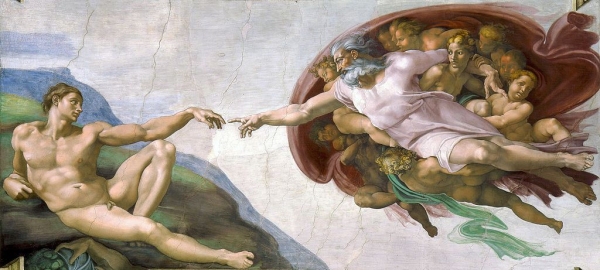
— Hey, can we all fit in one picture? — Don’t worry, I have a wide-angle lens on my smartphone.
The History of Addiction Issues
Earlier, addictions were primarily thought of in terms of dependencies like drug addiction. But now this term is more applicable to psychological dependencies: gambling, shopping addiction, social media addiction, pornography addiction, and overeating.
There are addictions that are accepted by society as normal or conditionally normal — such as spiritual practices, religions, workaholism, and extreme sports.
With the development of media and the IT sector, new types of addictions have emerged — addiction to television, addiction to social networks, and addiction to video games.
Addictions have accompanied our civilization throughout its history. For example, a person passionate about fishing or hunting cannot stay at home on weekends. Is it an addiction? Yes. Does it affect social relationships, destroy families and personalities? No. Then, it's an acceptable addiction.
Some people have an addiction to creating stories and writing books. Asimov, Heinlein, Simak, Bradbury, Zelazny, Stevenson, Gaiman, King, Simmons, Liu Cixin. Until you put the final period, you cannot find peace; the story lives within you, and the characters demand to be released. I know this well from my own experience. This is an addiction – of course, yes. It is socially significant and useful – certainly, yes. Who would we be without London and Hemingway, without Bulgakov and Sholokhov?
Thus, addictions can be of different types — useful, conditionally useful, conditionally acceptable, unconditionally unacceptable, and harmful.
When they become harmful and require treatment — there is one criterion. When a person suddenly begins to lose socialization, experiences anhedonia toward other interests and pleasures, focuses on the addiction, and starts to have changes in mental behavior. The addiction occupies the center of their universe.
Fear of Missing Out. My life on social media needs to look brighter and more beautiful than others'.
FoMO is probably the most cunning of syndromes. You get used to it very smoothly and calmly thanks to VKontakte, Facebook, and Instagram.
Instagram works exclusively on the principle of FoMO — apart from images related to the fear of missing out, there is nothing else. This is why advertisers love it so much; there are immense advertising budgets there. Because the work is done with a fully addictive audience. It's like a 'pusher' entering a party where everyone is a heroin addict.
Yes, you could say that Instagram motivates achievements. You see that your friend has a new car or went to Nepal — and you put in extra effort to achieve the same. But this is a constructive approach. How many people are truly capable of transforming the information received in this way, not feeling envy but seeing only opportunities and calls to action?
The fear of missing out in its classical sense is an obsessive fear of missing an interesting event or good opportunity, provoked in part by watching social media. Research suggests that 56% of people have experienced FoMO at least once in their lives.
People constantly want to stay updated about their friends and colleagues. They fear being left out. They are afraid of feeling like 'losers' — our society constantly pushes this notion. If you are not successful, then why are you even living?
Signs of FOMO:
- A frequent fear of missing out on important things and events.
- An obsessive desire to engage in any form of social communication.
- A constant need to be liked and to receive approval from others.
- A desire to always be available for conversation.
- A compulsion to continually refresh social media feeds.
- A strong sense of discomfort when the smartphone is not within reach.
Professor Ariely: “Scrolling through social media feeds is not the same as talking with friends over lunch and listening to how they spent their past weekends. When you open Facebook and see that your friends are at the bar without you — at that specific moment — you might envision that you could have spent your time very differently.»
A person tries to suppress negative emotions. They attempt to show that their life is full, vibrant, rich, and interesting. They are not a 'loser'; they are successful. A user begins to post photos on Instagram against the backdrop of the sea, expensive cars, yachts. Just go on Instagram and see which photos get the most 'likes'. This is especially prevalent among women — it's important for them to prove that their colleagues, classmates, and schoolmates are 'rags from Khatsapetivka' — while she, the queen of Instagram, has seized her fate by the beard. Well, or whatever she managed to grab from the latest suitor.

The first selfie uploaded to Instagram. The biggest challenge was with the ermine, not to move or bite.
Go to Instagram and look at the top beauty bloggers. On the beach, amidst palm trees, in white outfits, unsoiled by sand, on an expensive rented yacht or car, with professional photographers who will retouch the photos hundreds of times. Even food looks shinier, and champagne sparkles like caught solar wind in a magnetic trap. What remains of objective reality?
They forcefully showcase their lives for all to see, simultaneously revealing how impaired they are by the syndrome of social media validation (SMV). Remove them from this environment, disconnect the internet — and they will experience withdrawal. Because they cannot answer 'Who are they?', 'How do they identify themselves outside of their social media accounts?', 'What role do they play in society?', 'What have they done that benefits not only humanity but even their close friends and family?'.
And their followers become trapped in a vicious cycle of SMV — they dream of being just as successful and glamorous. They might stretch their legs in photos, twist their waists to hide 'love handles', angle their faces to conceal imperfections, wear impossibly uncomfortable high heels, and pose against backgrounds of cars that will never belong to them. They suffer psychologically, and cease to be themselves — multifaceted, unique, incredibly interesting individuals.
The majority of people on social media construct an idealized image of themselves. The pattern reproduces and spreads to unsuspecting audience members, who may also begin to experience SMV.
It's not even the Ouroboros snake biting its own tail. It's a foolish naked primate biting its own backside. And publicly, at that. , that she used this characteristic of SMV to attract and retain users. The SMV syndrome became the foundation of business strategy.
Consequences: SMV has a destructive impact on individuals' mental health. It blurs personal boundaries and makes a person susceptible to fleeting trends, consuming an incredible amount of physical and mental energy. This can realistically lead to depression. Most often, those affected by SMV experience painful loneliness and cognitive dissonance between who they wish to be and who they actually are. The difference between 'being and seeming'. People come to define themselves through social media as 'I post, therefore I exist'.
Phubbing. Did you check how many likes you got while you are standing at your grandmother's funeral?
How many times a day do we pick up our smartphones? Count it. Let's simplify the task. How many times do you pick up your smartphone in 10 minutes? Think about why you did it. Was there an urgent need? Was something threatening your life or the lives of those around you? Did someone call you or not? Did you urgently need information for a task?
Here you are sitting in a café. Look around. How many people are ignoring each other and staring at their electronic gadgets instead?
Phubbing is the habit of constantly getting distracted by your gadget while talking to someone. And not just with your conversation partner. There have been recorded instances of people getting distracted by their smartphones during their own weddings or at the funerals of close relatives. Why? This is a little psycho-physiological trick used by both Facebook and Instagram. Variable reward. You took a selfie, photographed a wedding, made a sad note about the funeral — and now you feel an urge to see how many likes and shares you received. How many people have seen you, how many care about you, and how lonely you are. This is the measure of social success.
The main principles of phubbing are:
- During meals, a person cannot part with their gadget.
- Holding a smartphone in hand even while walking.
- Instantly grabbing the smartphone upon receiving sound notifications, despite conversing with someone.
- During leisure time, a person spends most of their time on the gadget.
- Fear of missing something important in the news feed.
- Pointless scrolling through already seen content online.
- The desire to spend most of their time with a smartphone.
Meredith Davis from Baylor University believes that phubbing can ruin relationships: "In everyday life, people often think that a small distraction to their smartphone doesn’t matter much for relationships. However, research findings show that frequent phone use by one partner leads to a sharp decline in relationship satisfaction. Phubbing can lead to depression, so the potential harm of smartphones to close relationships should be considered.»
Phubbing and SOV are closely related.
Scientist Reyman Ata decided to calculate how much time he spends on his smartphone each day. The result shocked him. He realized he is stealing 4 hours and 50 minutes from his life. By chance, he came across a suggestion from former Google designer Tristan Harris: switch the phone to monochrome mode. On the first day with a monochrome smartphone, Reyman Ata used the device for just one and a half hours (1.5 hours!). It's not for nothing that UI designers create such beautiful icons that you want to 'lick', as Steve Jobs once said. And he had good reason to forbid his children from using products made by his own company. Steve knew how to create addiction among users — he was a genius.
So here’s a little life hack. Experiment. Take a look. Be a bit of a natural philosopher.
On iOS: Settings → General → Accessibility → Display Accommodations → Color Filters. Activate 'Color Filters', and from the dropdown menu select 'Grayscale'.
On Android: Activate developer mode. Open Settings → System → 'About phone' and tap on 'Build number' several times in a row. On my Samsung Note 10+, it turned out to be in a completely different location — probably designed by aliens. After that, go to Settings → System → Developer options, under 'Hardware accelerated rendering', select 'Simulate color space' and choose 'Monochromacy' from the dropdown menu.
I’m sure. You’ll find yourself reaching for your phone much less often. It won’t look like a candy anymore.
Consequences: Fubbing, along with its associated FOMO (Fear Of Missing Out), encourages escapism, replacing real and natural psychological responses with stimuli imposed by social networks and electronic gadgets. This leads to changes in mental health, a rupture in social connections, sometimes resulting in the disintegration of families and, in the worst case, to borderline personality disorders, such as depression.
Snapchat dysmorphophobia. Make a selfie from my face.
Another syndrome has unexpectedly emerged. After all, being defines consciousness.
The old, well-studied body dysmorphic disorder has acquired new colors and dimensions. This is when a person believes they are ugly, shies away from being seen, and avoids social situations.
And so, colleagues from Boston Medical School unexpectedly discovered yet another new deviation. They analyzed the reports of plastic surgeons and found that there is already a considerable number of citizens who come to doctors demanding to have their faces done like in selfies.
Moreover, not just any selfies, but those processed with various 'beautifiers' installed in modern smartphones. Unsurprisingly, it is mostly girls who seek this.

— Doctor, can you make me look like the face Titian painted for me?
And this is where the most candid craziness begins. According to the American Academy of Facial Plastic and Reconstructive Surgery, 55% of patients who consult plastic surgeons explain their need for changes by saying they want their selfies to look simply amazing without the use of 'beautifiers' or Photoshop. Apparently, any ordinary girl can make herself look like a Kardashian with Photoshop.
Thus, a new term has emerged — Snapchat dysmorphia.
Mark Griffiths, one of the most cited authors in the world in the field of technology addiction psychology, a leading expert on the psychological study of gambling, Director of the International Gaming Research Unit, Psychology Division, Nottingham Trent University, UK, stated: “… I argue that most of those who excessively use the Internet are not directly addicted to it; for them, the Internet is a sort of nutrient medium for sustaining other addictions… I believe it is important to differentiate between an addiction to the Internet itself and addictions related to internet use.»
Consequences: Altering your face is quite easy with current technologies. Although there can be fatal mishaps. But inside, you will still be the same. It won’t give you superpowers. And selfies have never brought anyone success. In the end, it’s still the same cognitive dissonance and frustration — the same ‘being’ and ‘seeming.’
Burnout of dopamine receptors. You can burn down not only a house but also your brain.
In the distant year of 1953, James Olds and Peter Milner attempted to understand a mysterious rat. They implanted an electrode in its brain and delivered current through it. They thought they were activating the brain area responsible for fear. Fortunately, their hands were not in the wrong place—they made a discovery. Instead of running away from the corner where it was shocked, the rat kept returning to it.
The guys had merely stumbled upon an unexplored area of the brain, as they inaccurately implanted the electrode. At first, they thought the rat was experiencing bliss. A series of experiments completely confused the scientists, leading them to realize that the rat was feeling desire and anticipation.
At the same time, these 'space invaders' uncovered a marketing curse known as 'neuromarketing.' And countless salespeople rejoiced.
Back then, behaviorism reigned supreme. The subjects reported that when stimulated in this brain area, they experienced—believe it or not—despair. It wasn't a feeling of pleasure. It was longing, despair, and a need to achieve something.
Olds and Milner discovered not the pleasure center, but what neurobiologists now call the reinforcement system. The area they stimulated was part of the most primitive motivational brain structure, designed to spur us into action and consumption.
Our entire world is now filled with devices to trigger dopamine—restaurant menus, porn sites, social networks, lottery tickets, and television commercials. All of this turns us, one way or another, into Olds's and Milner's rat, which dreams of finally reaching happiness.

As soon as our brain detects a reward opportunity, it releases the neurotransmitter dopamine. We see a picture of Kim Kardashian or her sister in form-fitting lingerie — and dopamine kicks in at full throttle. The alpha male reacts to voluptuous shapes and wide hips — and understands that these females are perfect for continuing the lineage. Dopamine instructs the rest of the brain to focus on this reward and do whatever it takes to grasp it in our greedy hands. The surge of dopamine itself doesn't bring happiness — it merely excites. We feel energetic, lively, and engaged. We sense the possibility of pleasure and are ready to work hard to achieve it. We look at an adult site — and we're ready to jump into that festive group activity. We launch World of Tanks and are prepared to win again and again.
Yet, we often face disappointment. Dopamine has been released. There’s no result.
We exist in an entirely different world. A spike of dopamine from the sight, smell, or taste of greasy or sweet food as we pass by fast food places guarantees that we will want to stuff ourselves to the brim. A wonderful instinct from the Stone Age when eating was vital for survival. But in our case, each such spike of dopamine is a pathway to obesity and death.
How does neuromarketing utilize sex? For nearly the entire span of human civilization, naked people have posed openly before their chosen partners, lovers, or mistresses. Nowadays, sex bombards us from every direction — offline advertising, online ads, dating sites, pornographic websites, TV films, and series (think ‘Spartacus’ and ‘Game of Thrones’). Of course, a weak and passive desire to act in such situations would have been simply unreasonable if you wanted to pass on your DNA. Can you imagine how hard the dopamine receptors work? Like in the joke: ‘Ukrainian nuclear scientists have achieved unprecedented success — at Chernobyl, they delivered a year and a half of power in just three picoseconds.’
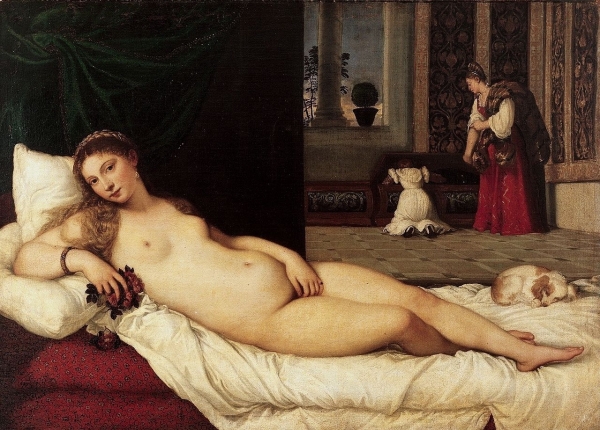
Titian was the first to appreciate how powerfully sex influences the sale of paintings.
The entire modern Internet has become a perfect metaphor for the promise of reward. We seek our Holy Grail. Our pleasure. Our happiness. ‘Our precious’ (c). We click with the mouse... like a rat in a cage, hoping that next time we will be lucky.
Developers of computer and video games consciously use dopamine reinforcement and variable rewards (such as 'loot boxes') to hook players. The promise that the next 'loot box' will contain a BFG9000. One study found that playing video games triggers a dopamine spike comparable to using amphetamines. You can't predict when you will score points or level up, so your dopaminergic neurons keep firing, and you remain glued to your chair. Just a reminder that in 2005 a 28-year-old South Korean boiler repairman, Lee Seng Seop, died from heart failure after playing StarCraft for 50 hours straight.
You scroll through an endless news feed on VKontakte and Facebook, and you don’t turn off YouTube autoplay. Perhaps in a couple of minutes, there will be a perfect joke, a funny picture, or a hilarious video that will bring you joy. Instead, you only experience fatigue and dopamine burnout.
Try not to read the news, check social media, or engage with television, radio, magazines, and websites that feed off your fears for at least 24 hours. Believe me, the world won’t collapse, the fragile axis of the Earth won’t fall, if you spend an entire day just with yourself, your family and loved ones, and your real desires that you have long forgotten.
We have the fewest dopamine receptors in our brain, and they take the longest to recover. Why do addicts, pornography enthusiasts, gamblers, shopping addicts, and top bloggers who have experienced a depressive-anxious episode hold onto anhedonia for so long? Because the process of recovering dopamine receptors is lengthy, slow, and not always successful.
It’s better to take care of them from the start.
I promised you...
At the very beginning, I promised to tell you how I dealt with most addictions. No, I didn’t succeed with all of them — perhaps I’m not enlightened enough. So far, I don’t measure up to a Jedi Master. I’ve been working with blogs for a long time, was a public figure for several years, appeared on TV shows many times (as my acquaintance calls them, ‘bark-bark’ shows), I could say I was a D-list celebrity. And I realized that I was being drawn into the vortex of popularity, ‘likes,’ and ‘shares,’ where the audience leads me rather than me leading the audience. My personal opinion blurs into the collective so as not to lose the audience, avoid negativity, and not feel loneliness in a crowd. So that the metrics on LiveJournal, VKontakte, Facebook, and Instagram keep rising every day. Until the hamster runs out of energy — and gets stuck in the wheel it has spun itself.
Then I deleted all my social media accounts. And cut off all media contacts. Perhaps this is just my recipe. And it might not work for you. We are all unique. Maybe your adaptive mechanisms are much stronger than mine — and you will be happy in social networks and get the best and most useful from them. Anything is possible. But I made this choice.
And I became happy. As happy as one can be in this world.
May the force be with you.
Source: habr.com
