

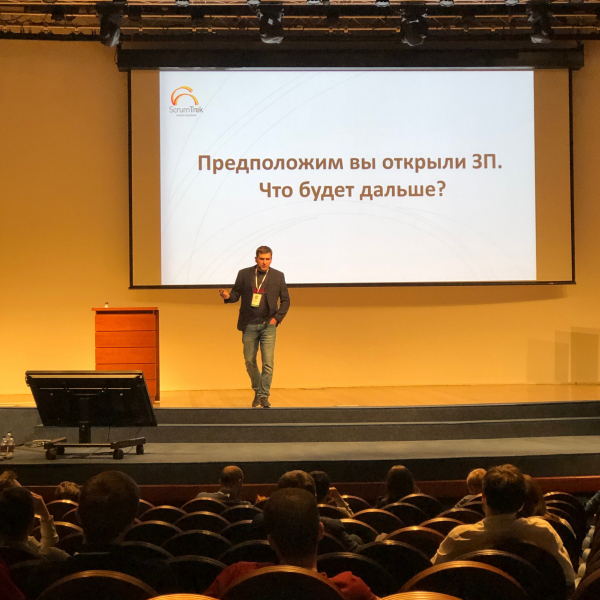
On March 21-22, 2019, my colleagues and I attended the conference AgileDays 2019, and I would like to share a bit about it.
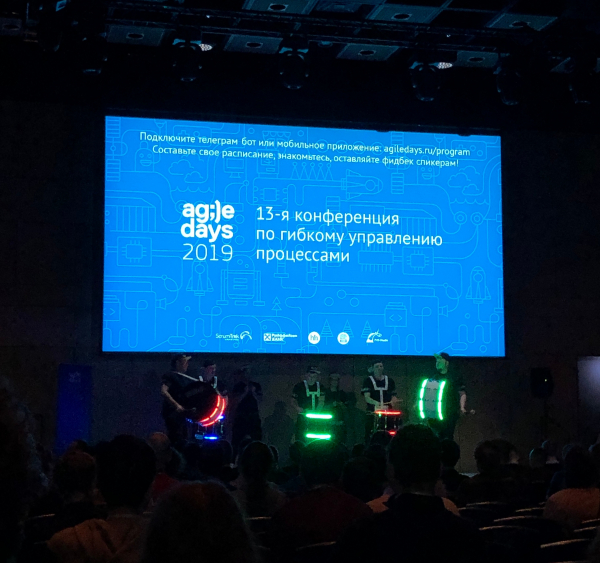
Location: Moscow, International Trade Center
What is AgileDays?
AgileDays is an annual conference on agile process management, now held for the 13th time. If you are unfamiliar with concepts like 'flat organizational structure' and 'team self-organization,' I recommend reading about Agile.
How it all went down
The conference was held over two days: Thursday and Friday (agree, a great way to end the work week already on Wednesday).
The conference program included nearly 100 presentations and workshops on various topics. The speakers were employees and leaders from different companies successfully implementing agile approaches (ABBYY, Qiwi, HeadHunter, Dodo Pizza, ScrumTrek, and others).
Usually, each speaker's presentation lasted 45 minutes, followed by a Q&A session. Unfortunately, it was physically impossible to attend all presentations — they were held simultaneously in different rooms, so each of us had to choose where to go (we didn't plan it, but often our interests coincided).

How to choose where to go?
First and foremost, we focused on the topic of the presentation. Some were more suitable for Scrum Masters, while others catered to product owners. There were also those primarily appealing to company executives. I don't know why, but there was a full house for the presentation on the topic ‘How to Ruin Teamwork: A Guide for Managers’. Apparently, the organizers did not expect such a turnout, as the presentation took place in a relatively small press room (everyone probably wanted to find out quickly how to ruin their teams).
During breaks between presentations, there were coffee breaks where we gathered together to discuss the speakers' presentations.
And what useful insights we gained
I can't say that the conference transformed my thinking and made me reconsider our work approaches. Although, most likely, that would have happened if our colleagues (more precisely, the management) had not also attended a similar event, AgileDays 2018, a year ago. It was from that moment (perhaps even a little earlier) that we embarked on the path of Agile transformation and have been trying to apply certain principles and approaches discussed during the presentations.
This conference helped me categorize everything I had heard before from the team.
Here are the main (though by no means all) work approaches that the speakers reflected upon in their talks:
Product Value
Every task, every feature released into production should carry specific benefits and value. Every team member should understand why they are doing this and for what purpose. There’s no need to work just for the sake of working; it’s better to go play football with colleagues (maybe that will inspire you to come up with something good while kicking the ball).
Unfortunately, in our government sector (which we work in, developing for government clients), it’s not always possible to define the values of specific features. Sometimes tasks come from 'above,' and they need to be completed even if everyone understands that it doesn’t make sense. However, we will strive to find that 'product value' even in such situations.
Self-organization and autonomous teams
A lot of attention was given to the self-organization of employees and teams as a whole. If there’s always a supervisor watching over you, assigning tasks, ‘pushing you’ and trying to control everything, nothing good will come of it. It will be bad for everyone.
It will be harder for you to grow and develop as a good specialist, and at some point, the manager will not be able to control all processes (some information will get distorted like in 'broken telephone,' while other information will simply get lost). And what will happen when that person (the manager) goes on vacation or gets sick? Oh my, the work will come to a standstill without them! (I don’t think anyone wants that).
A manager must be able to trust their employees and avoid trying to be the "single point of entry" for everyone. Employees, in turn, should strive to take initiative and demonstrate their interest in projects. When they do this, it will be much easier for the manager to step back from total control over everyone.
An autonomous team is primarily a self-organized group capable of achieving set goals (projects). The team chooses its own paths to accomplish these goals. It does not need an external manager dictating what to do and how to do it. All questions and problems should be discussed jointly within the team. Yes, the team can (and should) approach the manager, but only if it understands that the issue cannot be resolved internally (for instance, if additional resources are needed to successfully complete the project).
Flat organizational structure
Moving away from the principle of "I’m the boss – you’re the subordinate" greatly enhances the atmosphere within the company. People begin to communicate more freely with each other, eliminating the artificial boundaries of "but he's the boss."
When a company adheres to the principle of a "flat organizational structure," the job title becomes a formality. What matters most is the role a person plays within the team, which can vary: it may be someone who interacts with the client and gathers requirements; it may be a scrum master who monitors team processes and strives to improve and optimize them.
Team motivation
The issue of employee motivation has also been addressed.
Salary is not the only criterion that drives a person to work. There are many other aspects that contribute to productive work. It's important to communicate more with your employees (not just about work), to trust them and seek their opinions, and to constantly provide feedback. It's wonderful when a collective spirit emerges. You can create your own branding, such as custom merchandise, t-shirts, caps (we actually already have this). Organizing team-building events, outings in nature, and other activities can also be beneficial.
When a person feels pleasant and comfortable working in a team, their work seems more interesting, and they don't have the thought, "I can't wait for 6 PM to leave here."
Team Involvement in Hiring New Employees
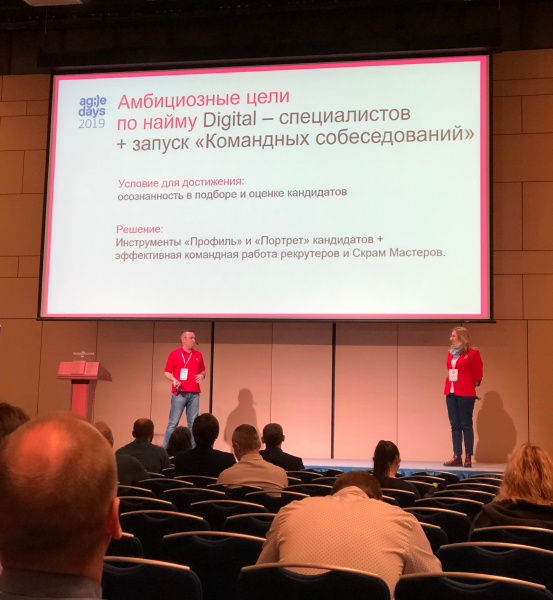
It might seem that hiring new employees should be the responsibility of the HR department (that's what they are for) and the manager (who should be doing something too). So why should the team itself be involved in this process? They already have plenty of work on the project. The answer is actually simple — no one knows better than the team what they want to get from a candidate. It is the team that will work with this person in the future. So why not give them the opportunity to make this important choice for themselves?
Distributed Team
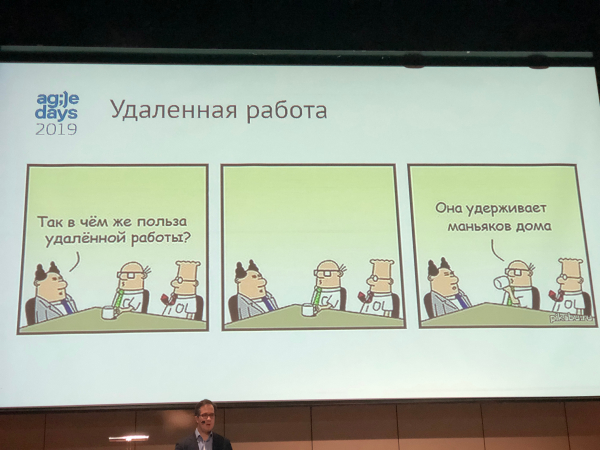
It's already the 21st century, and it's not necessary for each of us to go to the office at 9 AM (especially in the IT industry). You can be productive from home. And if a person is working from home, what's stopping them from working from another city or even another country? Exactly — nothing is stopping them.
The distributed team is great because it gives you more options for finding the right employee based on the necessary criteria (skills, experience, salary level). Agreed, the choice of candidates from all over Russia will be significantly higher than just within one city. It also significantly reduces costs for such employees (office maintenance, equipment).
There is a downside to this kind of work — people don't see each other. It is very difficult to work with someone you don't know personally. Regular video meetings and occasional team-building events (at least once a year) can easily solve this problem.
Transparent Salaries and Other Financial Matters of the Company
It sounds quite unusual, but believe me, it works in some companies. The approach is that every employee of the company has the opportunity to see how much their colleagues earn (! and even how much their management earns).
This is quite a complex process and moving towards open salaries needs to be done very gradually. First and foremost, it's necessary to align salaries among employees to avoid situations where one person earns 5 rubles for the same work that another earns 15. You must be prepared to answer questions from employees like, 'Why does Peter earn more than I do?'
It's worth noting that salary disclosure is just the tip of the iceberg. There are many other financial indicators that will be useful and interesting for employees to know.
And finally (this is how nearly every speaker concluded their speech): You shouldn't think that a particular approach to processes within the company and teams will work 100% for everyone. If that were the case, everyone would already be successful. It's important to understand that we are all human and we are all different. Each of us requires an individual approach. Success lies in finding that 'right' key. If you find Scrum uncomfortable, don’t force yourself and your team. Take Kanban, for example. It might be exactly what you need.
Try, experiment, make mistakes, and try again, and then you'll definitely succeed.
Source: habr.com
