

From any electric kettle connected to the internet, you can hear how AI is winning against esports athletes, providing new opportunities for old technologies, and drawing cats based on your sketch. However, what is less often discussed is that machine intelligence also manages to care for the environment. Cloud4Y aimed to correct this oversight.
Let's talk about the most interesting projects being implemented in Africa.
DeepMind tracks Serengeti herds
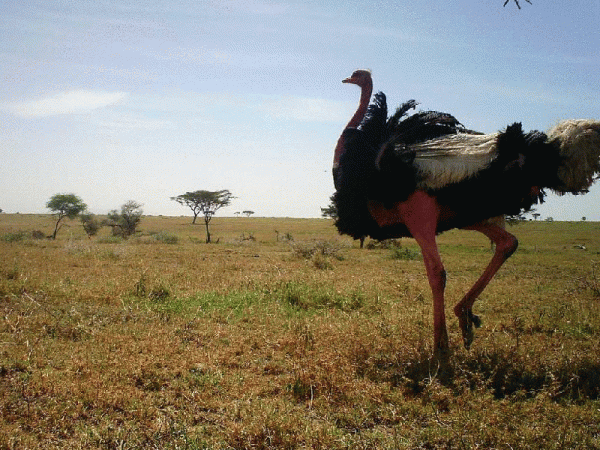
For the past 10 years, biologists, ecologists, and volunteer natural resource defenders within the Serengeti Lion Research program have been gathering and analyzing data from hundreds of field cameras located in Serengeti National Park (Tanzania). This is necessary to study the behavior of certain species whose existence is threatened. To process the information, examining demographics, movements, and other activity markers of the animals, volunteers spent a whole year. AI DeepMind is already doing this work in 9 months.
DeepMind is a British company developing artificial intelligence technologies. It was bought by Alphabet in 2014. Using a dataset for training the artificial intelligence model, the scientific team achieved excellent results: can automatically detect, identify, and count African animals in pictures, completing its work 3 months faster. Why is this important? DeepMind employees explain:
"The Serengeti is one of the last remaining places in the world where an untouched community of large mammals exists... As human intrusion around the park becomes more intense, these species are forced to change their behavior for survival. Increasing agriculture, poaching, and climate anomalies contribute to changes in animal behavior and population dynamics, but these changes have occurred on spatial and temporal scales that are difficult to monitor using traditional research methods."
Why does artificial intelligence work more effectively than biological? There are several reasons for this.
- More photographs are utilizedSince the installation of the field cameras, several hundred million images have been captured. Not all of them are easy to recognize, which is why volunteers have to manually identify species using a web tool called Zooniverse. Currently, there are 50 different species in the database, but processing the data takes too much time. As a result, not all photos are utilized in the work.
- Rapid species recognitionThe company claims that their pre-trained system, which will soon be deployed in the field, can operate on par with (or even outperform) human annotators by remembering and recognizing over a hundred species of animals found in the region.
- Affordable equipmentAI DeepMind is capable of working effectively on "modest" equipment with unreliable internet access, which is particularly relevant for the African continent, where powerful computers and fast internet access can be destructive to wildlife and prohibitively expensive to deploy. Biological safety and cost savings are significant advantages of AI for eco-activists.
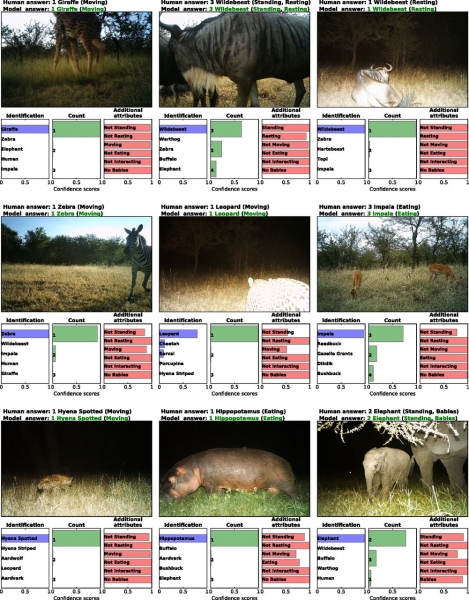
The DeepMind machine learning system is expected to not only track behavior and population distribution in detail but also provide data quickly enough for environmental defenders to respond promptly to short-term changes in animal behavior in the Serengeti.
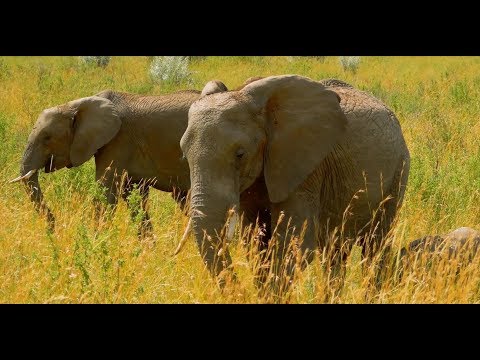
Microsoft is monitoring elephants
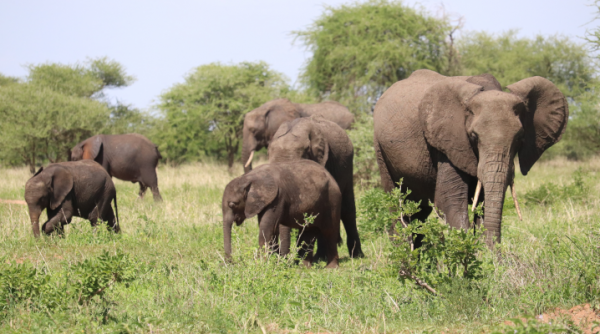
For fairness, it should be noted that DeepMind is not the only company concerned with saving fragile populations of wild animals. Microsoft has also made its mark in Santa Cruz with its startup , which uses AI to monitor African savanna elephants.
The startup within the Elephant Listening Project, in collaboration with Cornell University's laboratory, has developed a system capable of collecting and analyzing data from acoustic sensors dispersed throughout the Nouabale-Ndoki National Park and adjacent forested areas in the Republic of Congo. The artificial intelligence recognizes the voices of elephants on recordings — low-frequency rumbling sounds they use to communicate with each other — and gathers information about the herd's size and direction of movement. According to Conservation Metrics CEO Matthew McCown, the AI can accurately identify individual animals that are impossible to see from the air.
Interestingly, this project led to the development of a machine learning algorithm trained on Snapshot Serengeti, which can identify, describe, and count with an accuracy of 96.6%.
TrailGuard Resolve alerts against poachers
The smart camera based on Intel technology uses AI to protect endangered African wildlife from poachers. A key feature of this system is that it warns of illegal hunting attempts in advance.
The cameras located in the park utilize Intel's computer vision processor (Movidius Myriad 2), which can detect animals, people, and vehicles in real-time, allowing park rangers to intercept poachers before they cause harm.
The new technology invented by Resolve promises to be more effective compared to traditional detection sensors. Anti-poaching cameras send alerts whenever motion is detected, leading to numerous false alarms and limiting battery life to four weeks. The TrailGuard camera uses motion only to wake up the camera and sends alerts only when it sees people in the frame. This means that there will be significantly fewer false alarms.
Moreover, the Resolve camera virtually consumes no power in standby mode and can operate for up to a year and a half without recharging. In other words, park staff won't have to risk their safety as often as before. The camera itself is pencil-sized, reducing the likelihood of poachers spotting it.
What else is useful to read in the blog
→
→
→
→
→
Subscribe to our -channel so you won’t miss another article! We write no more than twice a week and only when necessary.
Source: habr.com
