

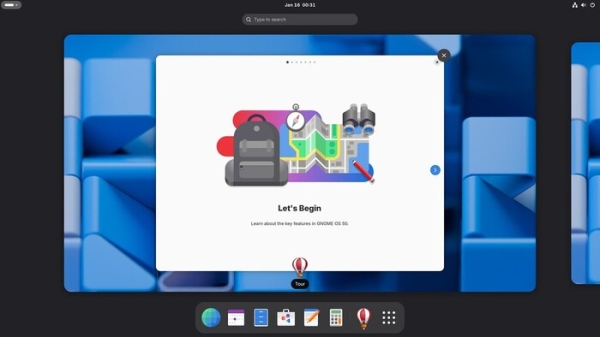
The first alpha release of the GNOME 50 desktop environment has been announced. The release is scheduled for March 18, 2026. An iso image (3 GB) based on the GNOME OS distribution has been created for testing the alpha version of GNOME 50.
A key change in the alpha version of GNOME 50 is the removal of code for supporting the X11 protocol from the GNOME Shell user interface and the Mutter compositor. server Support for X11 has been removed from the GDM display manager, and the ability to build GDM without Wayland has been discontinued, although the support for launching other desktop environments that use X11 has been retained. Support for X11-based sessions has been discontinued in gnome-session, and the '-Dx11' option has been removed from gnome-settings-daemon, along with the ability to configure X11 settings.
From now on, GNOME will only allow sessions based on Wayland, and support for operation under the X server has been completely discontinued. The ability to run X11 applications using XWayland is still available. The discontinuation of X11 support is expected to reduce maintenance costs and free up resources that can be redirected to improving the quality of the modern graphics stack.
In distributions, support for X11-based GNOME sessions was previously discontinued in Ubuntu 25.10, Fedora 43, and RHEL 10. In the GTK library, the backend for the X11 protocol has been marked as deprecated, and only Wayland support is planned for GTK5. The Wayland protocol session has been the default in GNOME since 2016.
Among other notable changes:
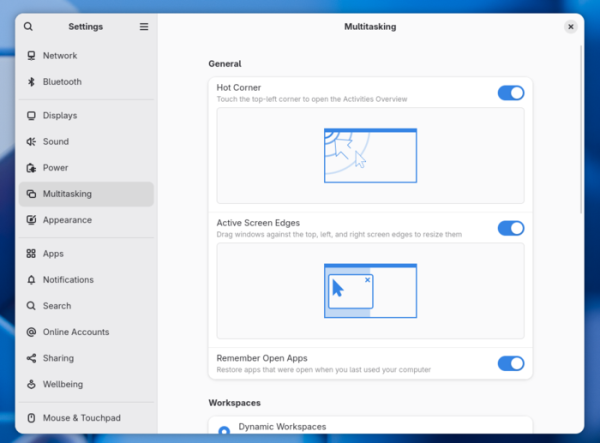
- A new session saving system has been implemented, based on the use of systemd, and a GsmSessionSave object has been added to ensure the preservation of the state of individual applications. In addition to saving window positions after restoration, GNOME applications now have the ability to restore their state, for example, GNOME Calculator can restore the selected calculation mode. A switch has been added to the configurator, allowing the disabling of the mode that saves the list of running applications during session termination and their window restoration in the subsequent session.

- Some custom components for launching the login screen have been replaced with the standard capabilities of systemd, which has increased GNOME's dependency on this system manager and requires creating new layers for delivering GNOME in distributions and operating systems that do not use systemd. The GDM employs the systemd-userdb infrastructure provided by systemd. The built-in service manager that operated at the level of starting desktop files has been removed.
- A service ‘gnome-headless-session@<username>.service’ has been added to the GDM display manager to simplify launching sessions without a screen (for example, when accessing the desktop remotely via RDP).
- The configurator (gnome-control-center) has been transitioned to use the Blueprint interface building language. The X11 configuration backend has been removed.
- The initial setup wizard (gnome-initial-setup) has been switched to use run0 by default for launching privileged actions instead of pkexec.
- The Nautilus file manager has improved thumbnail loading, revamped the bulk file renaming mechanism, reduced memory consumption, allowed the use of multiple file type filters during searches, and added a link to settings in the trash context menu.
- The login screen has implemented session list grouping based on the display name.
Source: opennet.ru
