

March 31 is celebrated worldwide as International Backup Day — and this year, we are conducting our fifth research study on backups. You can check the results. Interestingly, according to the research, 92.7% of consumers back up their data at least once a year — that’s a 24% increase from the previous year. Moreover, 65% of respondents admitted that they or their relatives lost data accidentally or due to hardware/software failures in the past year. This is almost 30% more than in 2018!

As we can see, even with computer memory, backups don’t help everyone. What can be said about the more complex and intricate memory of history? Due to its oversights, many outstanding minds do not receive the recognition they deserve, either in life or after death. Their names and contributions are completely forgotten, and their discoveries are attributed to others.
In this post, we will attempt to make a partial backup of historical memory and recall some almost forgotten scientists and inventors, whose work we benefit from today. And at the end — we will tell you about our new R&D division in Bulgaria, where we are actively hiring specialists.
Antonio Meucci – the forgotten inventor of the telephone
Most people believe that the inventor of telephone communication is the Scot Alexander Graham Bell. However, Bell had and has no right to be called the 'father of telephony'. The first to discover the method of transmitting sound via electricity and wires was Antonio Meucci. This Italian inadvertently invented the telephone. He was conducting experiments in medicine and developing a method for treating people with electricity. In one of his experiments, Antonio connected a generator, and his subject loudly uttered a phrase. To Meucci's surprise, the assistant's voice was reproduced by the equipment. The inventor began to investigate the reason, and after some time, he constructed the first prototype of a voice transmission system over wires.
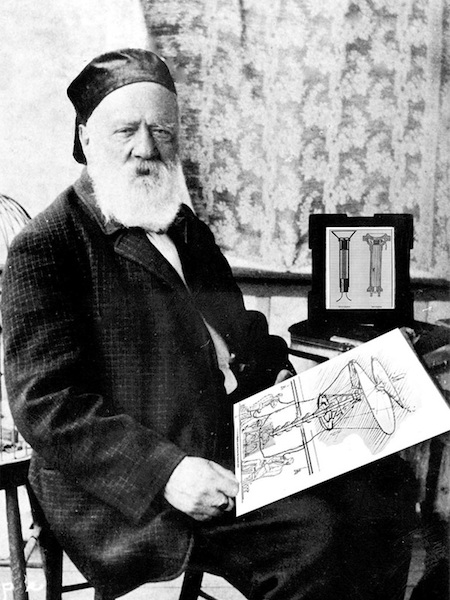
However, Antonio Meucci was not a successful businessman, and his invention was simply stolen. After the news of the Italian's invention appeared in the press, a representative from Western Union came to the scientist's home. He was generous with compliments and offered Antonio a decent reward for his invention. The trusting Italian immediately shared all the technical details of his prototype telephone. A short time later, Meucci was dealt a blow— the newspaper published news about Bell, who was demonstrating the operation of the telephone apparatus. Moreover, the sponsor of his 'show' was Western Union. Antonio simply could not prove his rights to the invention; he died bankrupt from legal expenses.
Only in 2002 did the U.S. Congress rehabilitate the inventor's name by publishing Resolution 269, in which Antonio Meucci is recognized as the true inventor of telephone communication.
Rosalind Franklin – the pioneer of DNA
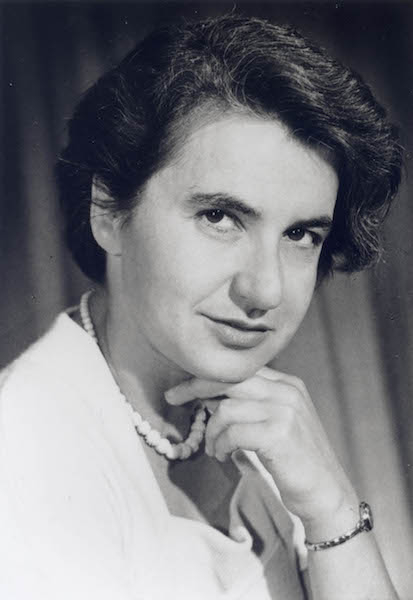
English biophysicist and X-ray crystallographer Rosalind Franklin is a striking example of discrimination against women scientists. In the mid-20th-century scientific community, this was a common occurrence. Rosalind studied the structure of DNA and was the first to determine that DNA consists of two strands and a phosphate backbone. She showed her discovery, confirmed by X-ray images, to her colleagues—Francis Crick and James Watson. As a result, they received the Nobel Prize for discovering the structure of DNA, while Rosalind Franklin was unjustly forgotten.
Boris Rosing – the true inventor of the television
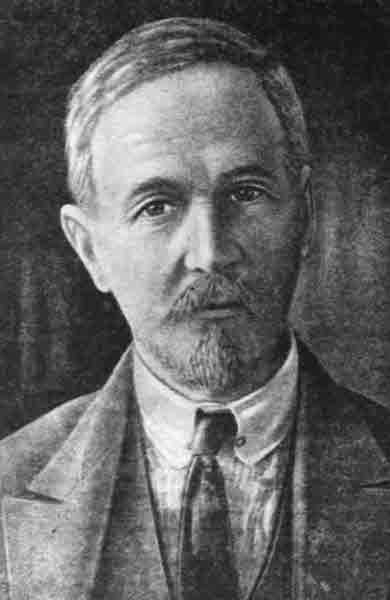
Boris Rosing, a Russian scientist of Dutch descent, can be considered the father of television technology, as he was the first to construct an electronic cathode ray tube. Although systems for transmitting images existed before Boris Rosing's invention, they all had a significant drawback—they were partially mechanical.
In the Rosin tube, the electronic beam was deflected using a magnetic field created by induction coils. The transmitting device utilized an inertia-free photoelement with an external photoelectric effect, while the receiving device comprised a control system for the cathode stream and an electron beam tube with a fluorescent screen. The Rosin system allowed for the abandonment of opto-mechanical devices for image transmission in favor of electronic ones.
During the Soviet era, Boris Rosin fell victim to repression—he was arrested for aiding counter-revolutionaries and exiled to the Arkhangelsk region without the right to work. Although, with the support of colleagues, he managed to transfer to Arkhangelsk a year later and joined the Department of Physics at the Arkhangelsk Forestry Technical Institute, his health was deteriorating—he passed away a year later. The Soviet power did not publicize this, and the title of 'inventor of the television' was awarded to Boris Rosin's student, Vladimir Zworykin. However, the latter never concealed that he developed all his inventions based on his teacher's ideas.
Lev Termen – a gem of Russian science
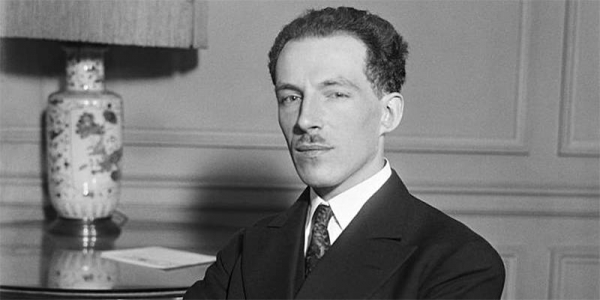
The name of this scientist is associated with numerous intriguing inventions that could fill an entire spy novel. Among them are the musical instrument thereminvox, the television transmission system 'Distant Vision', radio-controlled unmanned aerial vehicles (forerunners of modern cruise missiles), the listening system 'Buran', which read information from the vibrations of glass within a room. However, the most notorious invention of Termen is the transmitting device 'Zlatoust', which supplied secret information directly from the office of the U.S. ambassador to the USSR for seven years.
The design of 'Zlatoust' was unique. Like a detector receiver, it operated on the energy of radio waves, which made the device difficult for U.S. intelligence to detect for so long. Soviet intelligence targeted the U.S. embassy building with a powerful source at the resonator frequency, after which the device would 'turn on' and start transmitting sound from the ambassador's office.
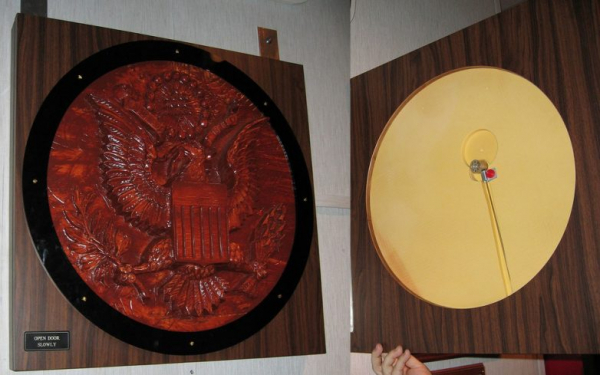
The "bug" was hidden in a decorative carved copy of the Great Seal of the United States, which was presented to the American ambassador by the pioneers of "Artek." The device was discovered completely by chance. However, even after that, American specialists struggled for a long time to understand how it worked. Western scientists took a year and a half to figure out this problem and create at least a rough working analogue of "Zlatoust."
Dieter Rams: The Inspiration Behind Apple Electronics Design
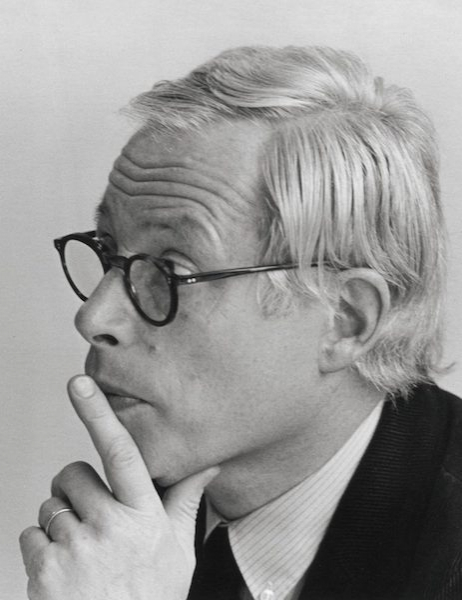
Dieter Rams is associated with the company Braun, where he worked as an industrial designer from 1962 to 1995. However, if you think that the design of the technology developed under his leadership is no longer relevant, you are mistaken.
Studying Rams' early works reveals where Apple designers drew their inspiration. For example, the Braun T3 pocket radio closely resembles the design of early iPod models. The Power Mac G5 system unit looks almost identical to the Braun T1000 radio receiver. Compare for yourself:
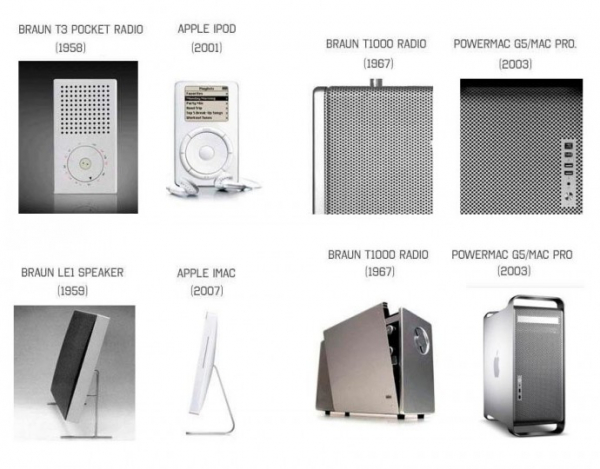
Dieter Rams precisely articulated the main principles of modern design—functionality, simplicity, reliability. These principles underlie almost all contemporary electronic devices that feature smooth shapes and minimal elements.
Moreover, Rams also established certain principles for the use of color in electronics. In particular, he conceived of marking the recording button in red and invented the color indicator for audio levels, which changes color as the amplitude increases.
William Moggridge and Alan Kay: The Founding Fathers of Modern Laptops
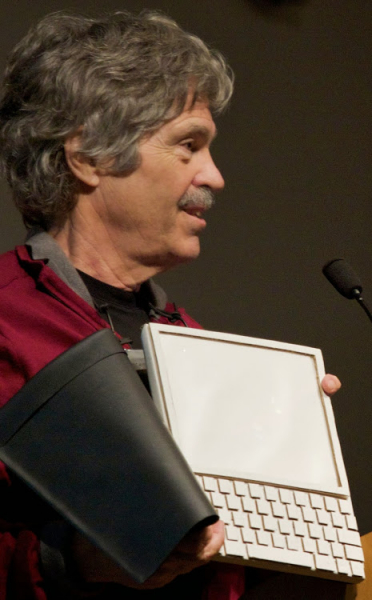
Alan Curtis Kay is another designer whose work defined the appearance of personal computers and the philosophy of modern technological interfaces. With the advent of microelectronics, it became clear that a computer is no longer a room filled with cabinets. Alan was the one who conceived the concept of the first portable computer. In the model of his Dynabook, created in 1968, the modern laptop and tablet can easily be recognized.
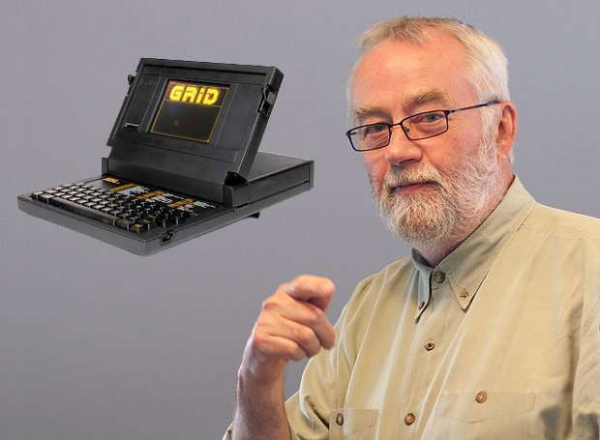
Another person who shaped the devices we are accustomed to is William Grant Morgidge. In 1979, he invented the hinge mechanism that allows laptops to fold. This same mechanism later became used in flip phones, gaming consoles, and more.
Fortunately, today talented inventors have many opportunities to talk about themselves and their work — thanks to the internet. We at Acronis are also working to ensure that important information is not lost. We would be grateful if you could help us with this.
Welcome to Acronis Bulgaria
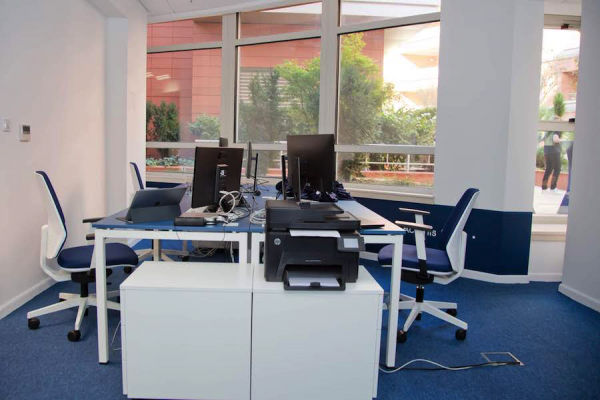
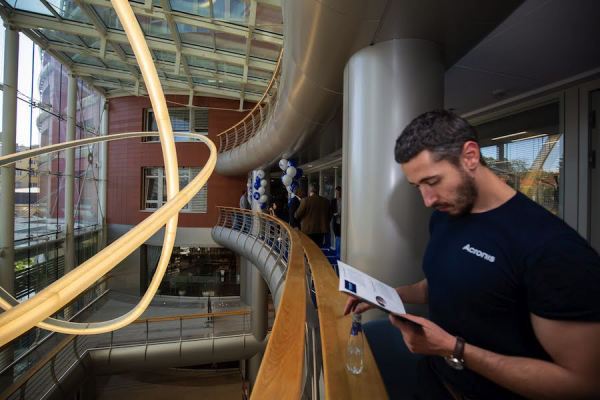
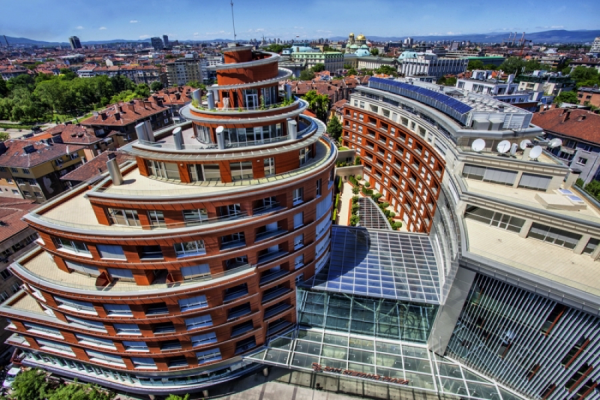
Currently, Acronis has 27 offices with over 1300 employees. Last year, Acronis acquired T-Soft, which led to the opening of a new R&D center, Acronis Bulgaria, in Sofia, which is set to become the company's largest development office in the future.

Over the next three years, we plan to invest $50 million in the new center and increase our staff to 300 people. We a variety of specialists who will develop cybersecurity technologies, support data center operations, and create relevant products and services — including developers in Python/Go/C++, support engineers, QA, and more.
During the relocation process, we assist new employees with documents, taxes, interactions with authorities, and provide advice on all matters. We cover one-way tickets for the employee's whole family, housing and childcare allowances, and also allocate funds for apartment setup and housing deposits. Finally, we organize introductions to the country and language training, help open bank accounts, find schools/gyms, and other facilities. And, of course, we provide contact information for emergencies.
The full list of vacancies is available , and on this page, you can also submit your resume. We look forward to your responses!
Source: vagabond.bg
Source: habr.com
