

The beta version of the Ubuntu 24.10 distribution, "Oracular Oriole," has been released. After its formation, a complete freeze of the package base was implemented, and developers have moved to final testing and bug fixing. The release, categorized as an interim release, for which updates are generated for 9 months, is scheduled for October 10. Ready test images have been created for Ubuntu, Ubuntu Server, Lubuntu, Kubuntu, Ubuntu Mate, Ubuntu Budgie, Ubuntu Studio, Xubuntu, Ubuntu Kylin (the edition for China), Ubuntu Unity, Edubuntu, and Ubuntu Cinnamon.
Key Changes:
- The desktop has been updated to GNOME 47, featuring a new style for dialog windows, improved performance on systems with low screen resolutions, hardware acceleration for video encoding when recording screencasts, and a complete redesign of the file opening and saving dialogs. Additional patches that have not yet been accepted into the main GNOME composition have been added to GNOME Shell and Mutter, addressing stability issues and improving performance optimizations. The panel has implemented visualization for software updates in snap packages and improved processing of PWA applications installed using the snap package with the Chromium browser.

- On systems with NVIDIA graphics cards, the GNOME session based on Wayland is enabled by default. To continue using the previously offered default session with the X server, the "Ubuntu on Xorg" mode should be selected in the login manager.
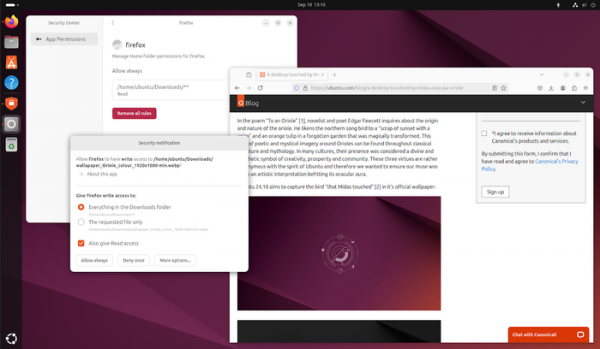
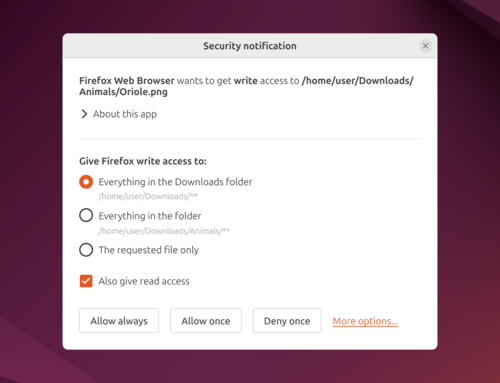
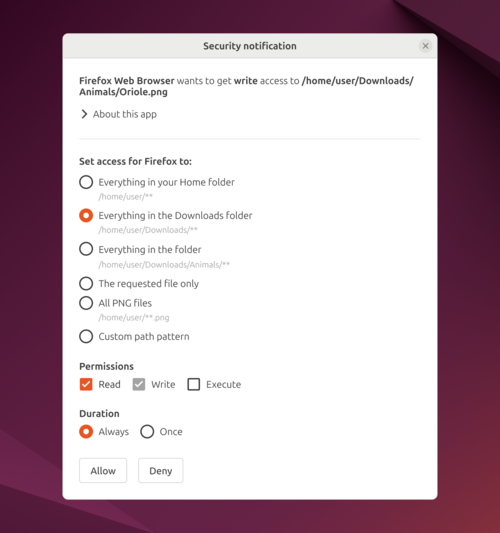
- Experimental support for outputting requests for privileges requiring user confirmation for access from snap packages to files in the home directory has been added. A new Security Center has been proposed for enabling and disabling these requests. Dynamic access provisioning is organized using the AppArmor mechanism. In the future, additional capabilities for managing access to disk encryption features and packet filtering are planned.


- The Linux kernel has been updated to version 6.11.
- The system manager has been updated to version systemd 256. Support for booting with cgroup v1 has been disabled by default. Support for System V init scripts is deprecated and will be removed in future releases. The sshd service now uses the systemd-ssh-generator, which employs socket activation for local AF_VSOCK and AF_UNIX sockets. By default, the tmp.mount unit is enabled, utilizing tmpfs to mount the /tmp directory in RAM.
- The versions of GCC 14.2, LLVM 19, glibc 2.40, Go 1.12, Rust 1.80, PHP 8.3.9, .NET 8, OpenSSL 3.3, Ruby 3.3, and PostgreSQL 16.4 have been updated. A fork of Valkey 7.2.5 has been included instead of the Redis DB.
- User applications have been updated: Firefox 130, LibreOffice 24.8, Thunderbird 128, GIMP 2.10.38, and OBS Studio 30.2.3.
- Subsystems have been updated: Mesa 24.2.2, CUPS 2.4.10, BlueZ 5.77, Netplan 1.1, Cairo 1.18.2, NetworkManager 1.48, Pipewire 1.2.3, Poppler 24.08, xdg-desktop-portal 1.18, and Snapd 2.65.3.
- Server packages have been updated: nginx 1.26.0, apache httpd 2.4.62, clamav 1.3.1, cloud-init 24.3.1, Containerd 1.7.19, Django 4.2.15, Docker 26.1.3, HAProxy 2.9.9, libvirt 10.6.0, OpenLDAP 2.6.8, OpenVmTools 12.4.5, Xtrabackup 8.0.35-31, QEMU 9.0.2, Samba 4.20.4, Squid 6.10, SSSD 2.9.5, Pacemaker 2.1.8, multipath-tools 0.9, Ceph 19.2.0, and Open vSwitch 3.3.0.
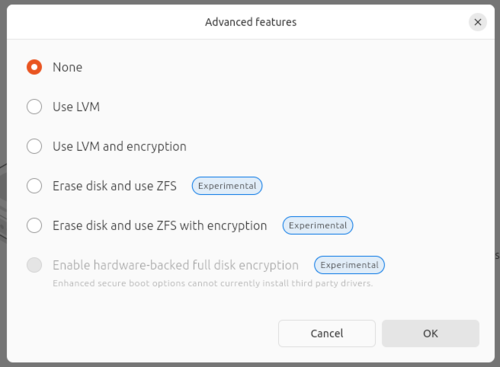
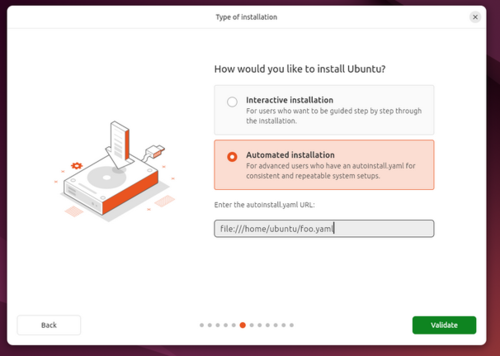
- A new release of the Subiquity installer has been proposed, with support for automatic installation mode for Ubuntu Desktop and seven official Ubuntu flavors (such as Kubuntu, Xubuntu, etc.), encryption support for ZFS has been added, a new error information screen has been introduced, and experimental support for installation using 'NVMe over TCP' has been implemented.

- The Ubuntu Desktop installer now supports the use of local file paths when importing the automatic installation script.

- The Power Profiles Manager has received improvements and optimizations for the new AMD CPUs and GPUs, allowing the use of multiple optimization drivers and automatic optimization level adjustment while running on battery.
- In fprintd and libfprint, the range of supported fingerprint reader devices has been expanded.
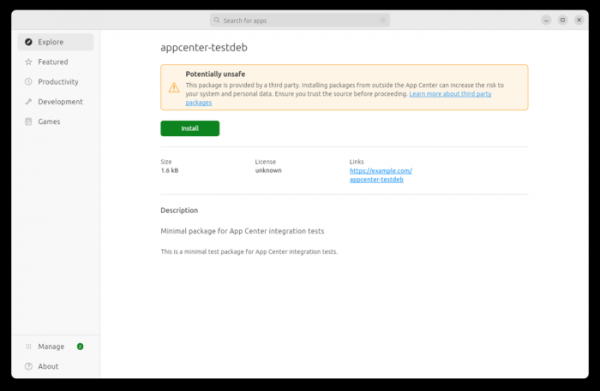
- The App Center now shows a progress indicator when installing packages, improves handling of self-update operations (fixing an issue where the 'update all' operation was blocked by running snap packages), displays information about running snap packages, supports direct uninstallation of applications, and supports the installation of third-party packages in deb format.

- Experimental builds have been provided, including packages compiled using GCC with the optimization mode "-O3" instead of "-O2".
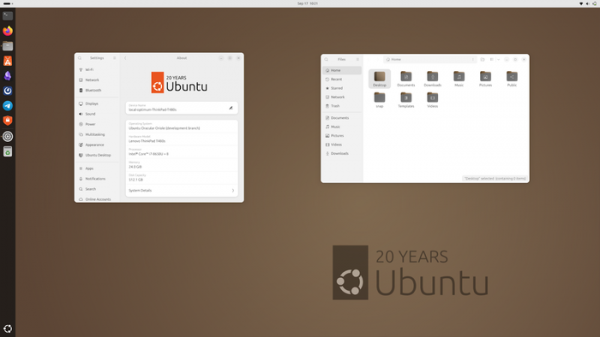
- As part of the celebration of the 20th anniversary of the first release of Ubuntu (4.10), the old boot sound splash has been temporarily returned (it can be disabled in sound settings) along with the brown accent color and a commemorative logo.

- The Sysprof utility, which simplifies identifying performance issues in applications, is included by default.
- In server OpenSSH has stopped reading the file ~/ .pam_environment when connecting to the system (for security reasons, the parameter user_readenv=1 in the pam_env.so module has been deprecated; for sending and receiving environment variables in ssh and sshd, it is recommended to use the AcceptEnv and SendEnv settings).
- The dmraid package has been removed as it has been excluded from the Debian unstable branch. Instead of dmraid, it is recommended to use the mdadm toolkit for supporting firmware-based software RAID (BIOS RAID, Firmware RAID, Fake RAID).
- For integration with cloud authentication systems, the authd service has been engaged instead of aad_auth, supporting multi-factor authentication and OpenID Connect in addition to Microsoft Azure Active Directory (Entra ID).
- The performance of the snap package with the Steam client has been significantly improved, as the provision of additional access rights through AppArmor has resolved major compatibility issues with games and NVIDIA drivers that were not observed when installing Steam from the deb package.
- Xubuntu provides components from the Xfce 4.19 branch, which is developing the future stable release Xfce 4.20. For example, the panel, desktop, file manager, configurator, and many applets have been updated.
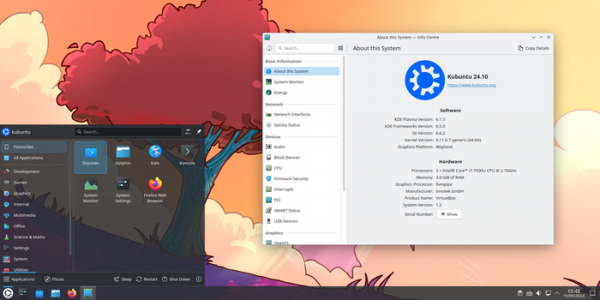
- The Ubuntu Studio edition has transitioned to using KDE Plasma 6.1 and the standard Linux kernel compiled for Ubuntu, instead of the "lowlatency" kernel. A minimal installation mode has been added. The Ubuntu Studio Audio Configuration utility for configuring PipeWire is included. Support for PulseAudio and JACK has been deprecated. Versions of OBS Studio 30.2, Ardour 8.6.0, Audacity 3.6.1, digiKam 8.4.0, Kdenlive 24.08.1, and Krita 5.2.3 have been updated. servers In Kubuntu, the transition to KDE 6 technologies has been made. Releases of KDE Plasma 6.1.5, KDE Gear 24.08, Qt 6.6, and KDE Frameworks 6.5.0 have been utilized. By default, a session based on Wayland is offered, with support for X11 moved to an optional status.
- Release Wine 9.18


Source: opennet.ru
