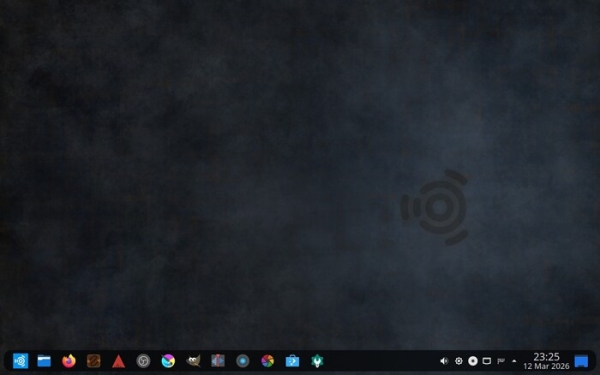
The beta release of the Ubuntu 26.04 'Resolute Raccoon' distribution has been presented, after which a complete freeze of the package base was performed, and developers have moved on to final testing and bug fixing. The release is scheduled for April 23. The 26.04 branch is categorized as a long-term support (LTS) release, with updates being provided for 15 years (5 years for the general public, plus an additional 10 years for users of the Ubuntu Pro service). Ready test images have been created for Ubuntu, Ubuntu Server, Lubuntu, Kubuntu, Ubuntu Mate, Ubuntu Budgie, Ubuntu Studio, Xubuntu, UbuntuKylin (the edition for China), Ubuntu Unity, Edubuntu, and Ubuntu Cinnamon.
Key Changes:
- The desktop has been updated to GNOME 50, which removes the code for X11 support, implements a new session-saving system, redesigns the parental control interface, improves support for fractional scaling and Variable Refresh Rate (VRR) mechanisms, and adds support for the Wayland protocol color-management-v2 for color management. By default, the Showtime video player (instead of Totem) and GNOME Resources (instead of the old resource monitoring application) are used.
- The 'Privacy & Security' section in the configurator has added a 'Telemetry' panel for configuring the collection and sending of Ubuntu Insights telemetry, through which metrics are periodically collected. The panel allows monitoring the status of telemetry submission and viewing the sent reports. The system is optional and can be activated at the user's discretion during the initial setup wizard (GNOME Initial Setup). Upon upgrading versions, a prompt for enabling telemetry appears.
- Stability and performance have been improved when using Wayland on systems with NVIDIA GPUs. Support for fingerprint sensors has been enhanced.
- Integration with the application desktop provided in snap format has been improved.
- Enhanced capabilities for using full disk encryption have been introduced, eliminating the need to enter a disk unlock password at boot, thanks to storing decryption key information in the TPM (Trusted Platform Module). Features for key recovery used in full disk encryption based on TPM have been implemented. Support has been added for the addition and removal of PIN codes or passwords after installation. An option for re-encrypting the disk has been added to the configurator.
- The design of dialogs presented by the authority request output system, which require user access confirmation, has been modified. Dynamic access provision is organized using the AppArmor mechanism.
- Efforts have been made to unify the installation and updating of packages. App Center is viewed as a single application for managing all types of applications, regardless of the format in which they are delivered.
- The authd package has been added to the repository for configuring centralized authentication through cloud identity providers such as MS Entra ID and Google Cloud Identity.
- The versions of packages have been updated, including the Linux kernel 7.0-rc, systemd 259.5, LLVM 21, glibc 2.42, OpenJDK 25, PHP 8.5.2, Rust 1.93.1, Samba 4.23, Exim 4.99.1, Postfix 3.10.6, unbound 1.24.2, Chrony 4.8, multipath-tools 0.12.2, OpenLDAP 2.6.10, strace 6.19, containerd 2.2.1, runc 1.4.0, Docker 29, libvirt 12.0.0, QEMU 10.2.1, EDK2 2025.11, Netplan 1.1.2, cloud-init 26.1, OpenStack 2026.1, HAProxy 3.2, Apache httpd 2.4.65, Nginx 1.28.2, OpenSSH 10.2, PostgreSQL 18, MariaDB 11.8.6, MySQL 8.4.8, Valkey 9.0.3, Firefox 148, LibreOffice 26.2.2.
- In the sudo-rs utility, supplied instead of sudo, password input indication (the appearance of asterisks as you type) is enabled by default. To revert to the old behavior, set the option "Defaults !pwfeedback" in /etc/sudoers.
- The cgroupfs in the kernel is now mounted by default with the options 'nsdelegate, memory_recursiveprot, memory_hugetlb_accounting'. Support for cgroup v1 has been removed in systemd, and System V service scripts have been classified as obsolete (a compatibility layer for similar scripts is still maintained).
- By default, external drives are now mounted in the /run/media directory instead of /media.
- The blkmapd and nfs-blkmap services used for NFS have been removed.
- Support for IBM Z z14 (LinuxONE II) systems and earlier generations has been discontinued.
- Packages with DocumentDB 0.108, an open-source database by Microsoft, have been added to the repository. Full support for the MariaDB database system is provided in the 'main' repository. The building of PostgreSQL packages for the i386 architecture has been discontinued.
- Kerberos now supports loading configuration files from the /etc/krb5.conf.d directory.
- Ubuntu MATE 26.04 and Ubuntu Unity 26.04 will not be assigned LTS status. For Ubuntu MATE 26.04, beta version builds have not yet been formed.
- Kubuntu features releases of KDE Plasma 6.6, KDE Gear 25.12.3, Qt 6.10, and KDE Frameworks 6.24.0. By default, a KDE session based on Wayland is used. The package 'plasma-session-x11' remains in the repository for creating X server-based sessions, but it is no longer supported by the Kubuntu team.
- In Edubuntu, the installer and the administrator menu have been completely rewritten, now featuring two backends (GTK4 and Qt6) that can be selected based on the type of desktop. It also includes the Cockpit module for the web interface. The distribution includes the Foliate eBook reader, Paperboy RSS reader, GNOME Showtime media player (instead of Totem), Arduino IDE, Raspberry Pi Imager, GChemPaint chemical structure editor, and GNOME Notes (instead of Gnote). GTK2-bound packages such as chemtool have been removed.
- Ubuntu Studio offers three switchable desktop layouts: classic with a top panel, macOS-style with a global menu, and Windows 10-style with a bottom menu. The installer and sound configuration system have been rewritten in Python with separate backends for GTK4 and Qt6. The sound configurator has added support for FFADO for FireWire devices and the ability to configure sampling rates and buffer sizes for PipeWire.
A new sound plugin Loopino (LV2/CLAP/VST2) has been added for loading, trimming, and looping audio files. An applet for adjusting PipeWire settings from the system tray has been included. The snd-hdspe driver for AIO, AIO Pro, RME HDSPe MADI, AES, and RayDAT sound cards has been added. The DistroAV package for transmitting audio and video in OBS Studio using NDI technology has been introduced. Versions of packages such as OBS Studio 32.1.0, FreeShow 1.5.9, QPrompt 2.0.1, RaySession 0.17.4, Patchance 1.3.2, Geonkick 3.7.0, BChoppr 1.12.8, harpwise 6.34.4, and blender 5.0.1 have been updated.

Source: opennet.ru