

I am 33 years old, a programmer from St. Petersburg, and I have never had a smartphone. It's not that I don't need one—I do, very much: I work in IT, all my family members have them (my child has the third one), I have even led mobile development projects, I have my own website (100% mobile-friendly), and I even emigrated to Europe for work. So, I am not some kind of hermit, but rather a modern person. I use a regular flip phone and have always only used such phones.
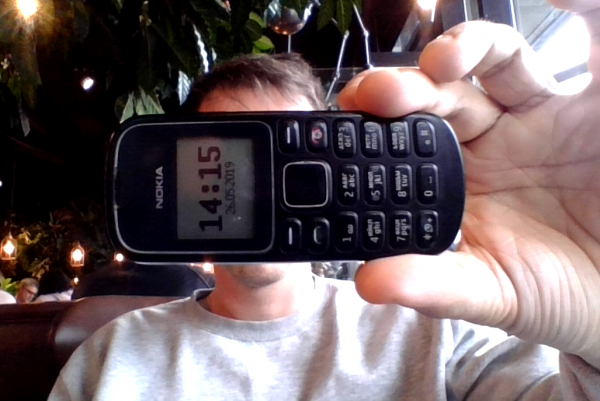
I occasionally come across articles like 'successful people do not use smartphones'—this is complete nonsense! Everyone uses smartphones: successful and not-so-successful, poor and rich. I have yet to see a modern person without a smartphone—it's like refusing to wear shoes or not using a car—sure, you can do it, but why would you?
It all started as a protest against mass smartphone adoption and has continued as a challenge for almost 10 years—I was curious to see how long I could resist modern trends, and whether it was even possible. To spoil the ending: it is possible, but it doesn't make sense.
I admit that many people consider giving up using a smartphone. I want to share my experience here so that those who intend to conduct such an experiment can assess the pros and cons based on someone else's experience.
In this story, there are certainly pros and cons, and they are quite obvious.
So, here are the pros that I can highlight in order of priority:
- I don't have to worry about charging. I charge my phone about once every two weeks. Last time, when I went on vacation, I didn't even take the charger with me because I was sure the phone wouldn't run out of power during that time—and it didn't;
- I am not distracted by constant notifications and checking updates at any free moment. This is especially true for work—less distraction means you are more focused on your job;
- I don't spend money on new phones, I don't keep up with updates, and I don't feel uncomfortable when someone else's phone is better than mine, or when my phone is better than my friends' phones;
- I don't annoy my friends by constantly staring at my phone (for example, when visiting or just when meeting). But that's more about upbringing and politeness.
- I don't need to buy mobile internet — it's a minor downside, considering the prices are quite low.
- I can surprise people by saying that I don't use a smartphone and never have — and the longer it goes on, the more they are surprised. I should say that I would be surprised if I met someone like that — so far, the only person I know in the same situation is my grandmother, who is 92 years old.
The main advantage is that I'm not dependent on the availability of nearby power outlets. It's sad to see how people first 'latch on' to outlets wherever they find themselves or seek out seats close to them. I really don't want to develop that kind of dependency, and it's one of the key points on my 'resistance list'. When my phone has one bar of charge left — it means I still have a couple of days before it dies.
Regarding attention scattering — that's also a quite important point. It really consumes a lot of energy. Perhaps it would be right to set aside a few time intervals each day to check all notifications and respond to messages. But, I suppose, it's easy for me to say as an outsider.
Now, the downsides, also in priority order:
- the lack of a camera at hand — that's painful. I've missed a thousand moments that should have been captured for memory or to share with loved ones. When I need to take a photo of a document or receive a photo — that's not a rare situation either.
- I can get lost even in my hometown. This is more about my memory, and it's easily solved by having a navigator. When I need to drive to a new place, I use a paper map or memorize the route at home on my laptop.
- there's no option to 'share' internet on my laptop — I constantly have to look for open Wi-Fi or ask acquaintances.
- I really miss having a translator in my pocket when I'm abroad, or Wikipedia when I urgently need to learn something new.
- I'm bored in queues, on the road, and in any other places where all normal people scroll through feeds, listen to music, play or watch videos.
- Some people look at me with pity or as if I'm unhealthy when they find out I don’t have a smartphone. I don’t want to explain my reasons to everyone—I’m already tired of it;
- It’s hard for me to maintain relationships with friends who communicate on WhatsApp, for example. I’m somewhat of an introvert, as one would expect from a programmer, and I don’t like to be called and don’t really like to call. Communicating via messages is a great way to keep in touch;
- Recently, services have started to emerge that are simply impossible to use without a smartphone—like two-factor authentication via push notifications, various car-sharing services, etc. In Russia, as I understand, they still try to support older methods, while in Europe they no longer bother.
The three main things I miss are: a camera, a navigator, and internet access (at least as a hotspot) nearby. Of course, it’s possible to live without all this, and I hardly feel inferior. In everyday life, there’s almost always someone nearby with a smartphone, and that saves me in most situations—I use other people’s phones in emergencies.
If you wanted to try it—go ahead, but I believe there’s no need to artificially limit yourself. It’s better to learn to filter or moderate useless information and activity.
I decided to write this note because I’m going to stop this challenge and will soon become a fully modern person with a smartphone, Instagram, and a constant need for charging.
Source: habr.com
