

Messages about the release of new IoT devices or smart home kits are frequently seen, but reviews about the actual operation of such systems are rare. I was presented with a task that is quite common across Russia and neighboring countries: securing a summer house and ensuring usability during the fall-winter period. Both security and the automation of heating were resolved literally in one day. All interested parties, please read on. For those who prefer to watch rather than read, I've made a video.
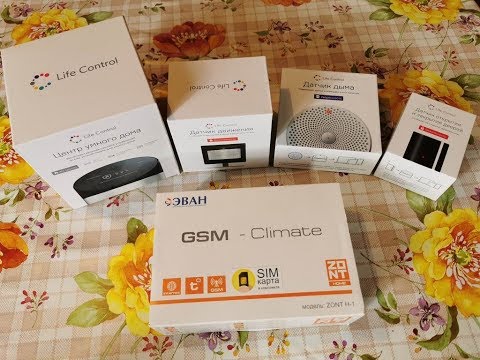
Let's start with the available resources: a wooden house with an electrical network connected (previously had 1 phase 5 kW), gas supply, and located in a quiet, almost isolated area. The house features a large and beautiful wood-burning stove, but recently we installed a gas boiler and extended radiators throughout the house.
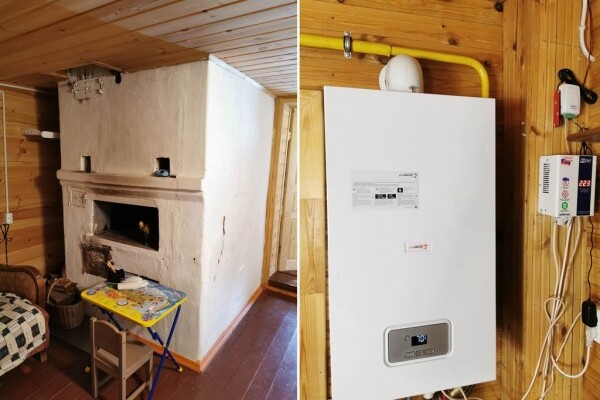
Now, about the tasks: despite having neighbors living nearby, I'd like to be aware of any potential break-ins. Additionally, it is necessary to maintain a minimum temperature in the house and warm it up before the owners arrive, meaning remote control of the boiler is required. Of course, there must also be alerts for potential fires or smoke in the premises. Therefore, the list of requirements for the system was as follows:
- Presence of a smoke detector
- Presence of a motion detector
- Presence of a controllable thermostat
- Presence of a main unit transmitting information to a smartphone or email
Equipment selection
After researching online, I realized that to meet the specifications, I could either opt for a monstrous and expensive system with excessive functionality or build something simple and separate myself. Thus, I came to the conclusion that safety is one thing, while boiler management is another. Once this decision was made, everything proceeded very simply and quickly. I mainly searched among Russian developers, ensuring service and support were accessible. In the end, the task was solved with two different sets:
- Zont H-1 thermostat for heating control
- LifeControl Smart Home Kit 'Dacha' for building a security system
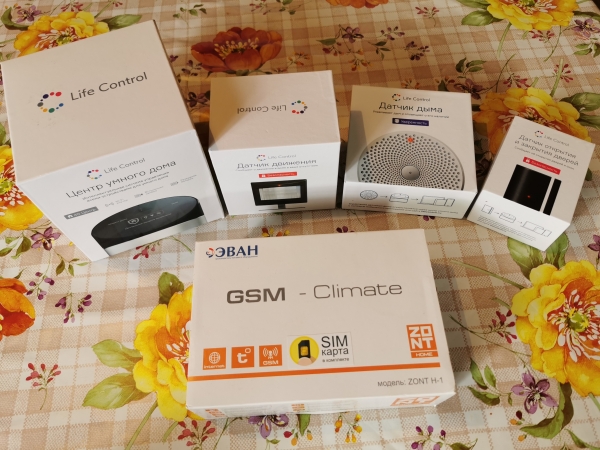
I'll explain my choice. I believe that systems should have independent communication lines so that the failure of one channel does not affect the operation of another system. I also obtained a couple of SIM cards from different providers: one works in the thermostat, the other in the smart home hub.
The thermostat's task is to maintain the temperature according to a schedule (start heating the house on Friday evening for the arrival of the owners, switch to economy mode on Sunday evening to maintain a temperature of about 10 degrees), and to report power outages or critical drops in temperature.
The smart home's task is to control the opening of the front door, monitor movement inside the premises, detect smoke at the beginning of a fire, notify the homeowners of various emergency events on their smartphones, and ensure internet availability in the house.
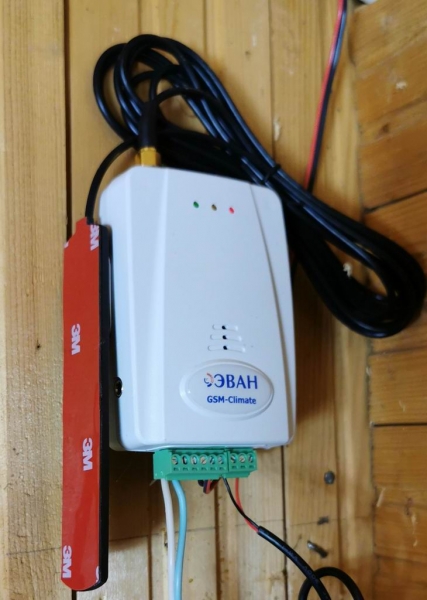
A Russian development with a range of sensors. My primary interest was reliability and autonomy. This thermostat comes with a built-in GSM modem, temperature sensor, and a built-in relay to control the boiler. The modem only supports GPRS data transmission technology, which is sufficient since the volume of data transmission is very small and speed is not critical. An external antenna is included to improve the signal in cases of poor connectivity. The relay operates on the principle of a dry contact and sends commands to the boiler to turn on and off upon reaching the specified temperature. There is a specific setting to prevent the boiler from experiencing issues with constant on and off cycles around the target temperature. The device can be equipped with a battery that allows for several hours of autonomous operation. The controller sends notifications when the external network is disconnected, as well as when external power is restored. There is control via a website, a smartphone app, and SMS.
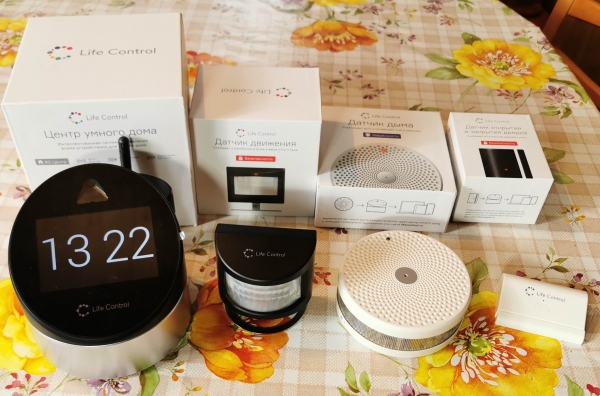
Another Russian development with a wide range of sensors, actuators, and good expansion potential. The key feature is that the smart home operates with support for the ZigBee protocol, meaning it will soon be possible to connect a multitude of third-party devices. Even now, there is a sufficient list to equip a home, with a whole range of devices expected in the future. I was attracted by the fact that the central unit or hub is equipped with its own 3G/4G modem, has a Wi-Fi module, and supports connections to wired providers. In other words, the device can be used as a router to distribute Wi-Fi, connect wirelessly to an existing router, or access the Internet via a mobile operator's network. In the latter case, the hub becomes a router and can distribute Internet via Wi-Fi! Additionally, the hub includes a built-in microphone and camera, and has a battery for standalone operation in case of external network failure. The 'country' package also includes a motion sensor, door opening sensor, and smoke detector. Communication between devices is wireless, and the sensors operate on their own power cells.
Setup and Launch
To be honest, I expected there would be issues setting up our products, but I was wrong. I anticipated some simple and bland interfaces, but I was again mistaken. I'll be consistent and start with the Zont H-1 thermostat.
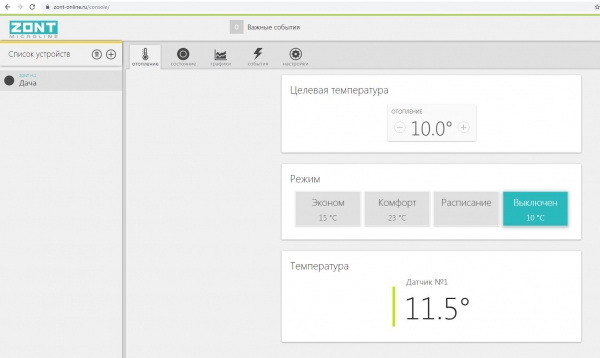
The device comes with a SIM card that has a pre-configured plan, and it is ready for operation. The installation and connection to the boiler, including running all the wires, took about half an hour. Each boiler has a couple of contacts for connecting the thermostat, which close when the boiler needs to be activated and open when the desired temperature is reached. The boiler itself must be pre-set to the required temperature of the heat transfer fluid. The boiler settings go beyond the scope of this article, but if you're interested in this topic, I can answer questions in the comments. After that, everything was straightforward: installing the application on a smartphone, linking the thermostat in the user account, and configuring the profiles (economy, comfort, and schedule). It is worth noting that if the temperature sensor is placed higher, the actual temperature in the room will not be very high, while placing the sensor near the floor will make the room quite hot. It is advisable to install the sensor at a height of 1-1.5 meters from the floor to create the most comfortable conditions. You can connect several temperature sensors, including wireless ones, but the boiler will respond only to one of them. You can manage the thermostat from both the website and the smartphone.
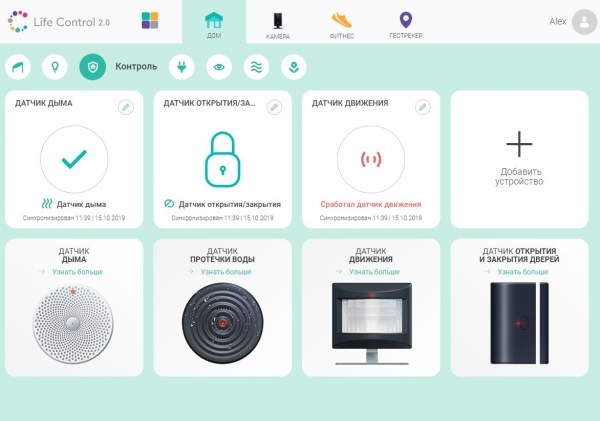
Now I will describe the features and interfaces of the Life Control 2.0 smart home system. I will start with the main unit or hub. I decided to use it as a mobile router. I took a SIM card with unlimited internet and inserted it into the router. By the way, the antenna on the back of the router serves to extend the Wi-Fi range, while there is an internal antenna for receiving signals from the cellular operator. I didn’t need to configure anything; I just connected my smartphone and laptop to the router and started using the internet. Next, I installed the app on my smartphone and added all the sensors through it. I also set up activation rules for sensor events: for example, if a door is opened, I receive a notification on my smartphone and email. A photo from the hub is also attached. The same happens if the motion sensor or smoke detector is triggered. The hub is positioned to remain unobtrusive in the room, while still allowing visibility of the entrance door and the area with the gas boiler. So, in case no one is home, if the smoke detector is activated, I can connect and see in real-time what is happening in the house.
An additional advantage is the presence of a battery. If the external power supply is interrupted, the hub continues to operate on the built-in battery for another 5 or 6 hours. You can even watch a movie from a laptop or smartphone while waiting for the power to be restored. The security system will also keep working if intruders attempt to cut off power in hopes of disabling the security system. I was particularly concerned about the range of the sensors and the battery life on a single battery. This is straightforward: the range is measured in tens of meters indoors, if the walls are not shielded, and the ZigBee protocol operates at a frequency of 868 MHz, providing low power consumption, so the sensor can work on a single battery for one to two years, depending on how often it is activated.
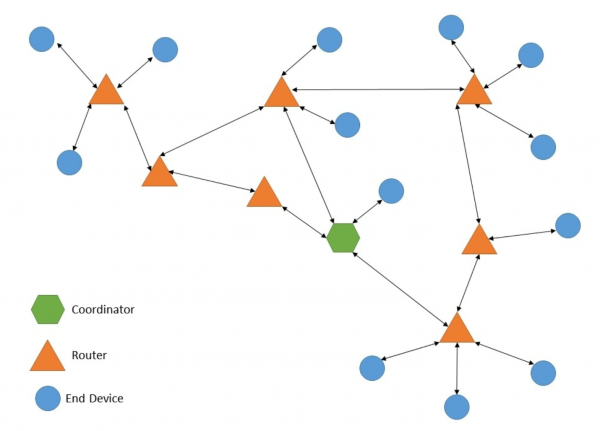
Interestingly, the ZigBee protocol operates on the principle of mesh systems, where an intermediate device acts as a link between the hub and the farthest sensor. In the LifeControl system, only devices that are constantly connected to the power grid serve as this link: currently, these are the smart plugs and light bulbs (if they are supplied with power continuously).
What about those who don’t have gas? If the house is heated with electric heaters, you can configure the smart plugs to turn on before your arrival, allowing the heaters to warm up the house by the time you get home. Additionally, the plugs can serve as a backup system to start the electric heaters if the boiler fails, ensuring the heat carrier in the pipes doesn’t freeze. I should also mention that if the house is well-insulated, you can set a schedule to turn on the electric heaters during the night tariff, warming the house overnight and turning off during the day — the savings from this heating mode can reach between 30 to 50 percent, depending on the difference in your electricity rates.
Testing
So, the devices are set up and running. The boiler is working, and the house is warm, even hot. The thermostat is diligently maintaining the temperature, clearly seen in the boiler's operation as it occasionally turns off and then back on. I specifically moved the temperature sensor from the boiler room to the living room at waist height. Regarding the smart home system, I placed the hub in the kitchen, which also serves as the boiler room, facing the entrance door. On the entrance door, I installed a door open sensor, and I placed a motion sensor in the distant room, which is not visible from the street, directing it toward the windows. This way, if intruders attempt to break in through the window at the back — I will also receive a notification. I hung a smoke detector in the middle of the kitchen and conducted a test. Even when I set a piece of paper on fire, it activated about a minute later, even though there wasn't much smoke. So, if you do a lot of frying and encounter smoke — install an extractor fan to avoid triggering the smoke detector unnecessarily. It signals not only remotely but also locally — with a loud beep throughout the house.
Both systems allow observation or management not only independently but also give access to other users. In the Zont system, this is implemented by providing a username and password for full access or creating a guest login, where a person can monitor the status but cannot impact the system's operation. The LifeControl smart home system also allows invitations to be sent to third-party users with only the ability to view the system's status. Everything operates through the cloud, so in both cases, there will be no issues with operation, regardless of the communication channel and connection specifics.
Summary
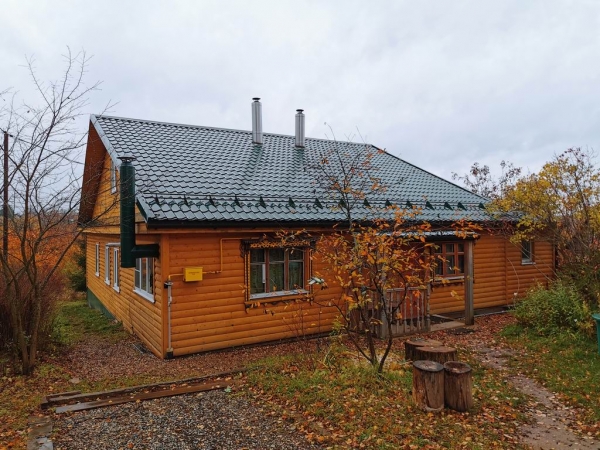
So, the summer house is ready for winter. The heating system will allow you to arrive at a pre-heated home and save on heating when no one is inside. The smart home system will also relieve worries about the safety of the residence against potential intruders and unforeseen situations. It’s worth adding that the house should be equipped with automatic fire extinguishing powder systems of the OSP or Buran series. Moreover, the LifeControl system is modular, and the number of sensors can be increased based on needs. I believe that this system will have several more motion sensors added to cover the entire perimeter of the house. I must say that the setup and operation of the systems raised no questions at all: while a manual was needed for the thermostat, the smart home system was entirely intuitive.
BONUS
After browsing the manufacturer's website, I stumbled upon page where you can order a summer house kit for a third less than if assembled separately. There is no direct link on the site, but I placed an order and waited. Ten minutes later, they called and confirmed the order. So as long as it works—I’m sharing. I'm ready to answer questions about the operation of both systems. Don’t forget—Winter is coming!
Source: habr.com
