

The U.S. Department of Defense's Defense Advanced Research Projects Agency (DARPA) will fund six organizations under the Next-Generation Nonsurgical Neurotechnology program (abbreviated as "N3"), first announced in March 2018. The program will include the Battelle Memorial Institute, Carnegie Mellon University, the Johns Hopkins University Applied Physics Laboratory, the Palo Alto Research Center (PARC), Rice University, and Teledyne Scientific, each having their own teams of scientists and researchers focused on developing bidirectional neuro-computer interfaces. DARPA expects these technologies to eventually enable qualified military personnel to directly manage active cyber defense systems and swarms of drones, as well as to facilitate collaboration with computer systems in executing complex multitasking missions.
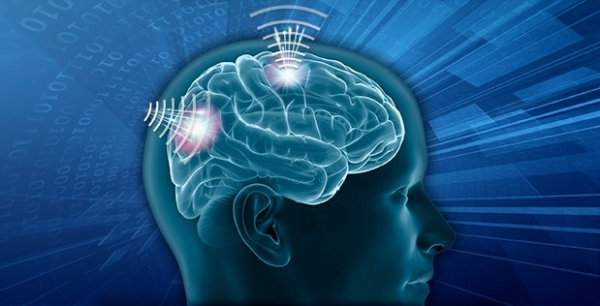
"DARPA is preparing for a future where the combination of unmanned systems, artificial intelligence, and cyber operations could lead to situations requiring decision-making speeds too rapid to effectively manage without the aid of modern technologies," said Dr. Al Emondi, N3 program manager. "By creating an accessible brain-machine interface that does not require surgery to use, DARPA will be able to provide the military with a tool that enables mission commanders to meaningfully engage in dynamic operations occurring at super-fast speeds."
Over the past 18 years, DARPA has consistently showcased increasingly sophisticated neurotechnologies that rely on surgically implanted electrodes to interact with the central or peripheral nervous system. For instance, the agency has demonstrated technologies such as mental control of prosthetic limbs and restoring the sense of touch for their users, a technology to alleviate hard-to-treat psychoneurological disorders like depression, as well as methods to enhance and restore memory. Due to the inherent risks associated with surgical intervention in the brain, these technologies have so far been used cautiously with volunteers who have a clinical need for them.
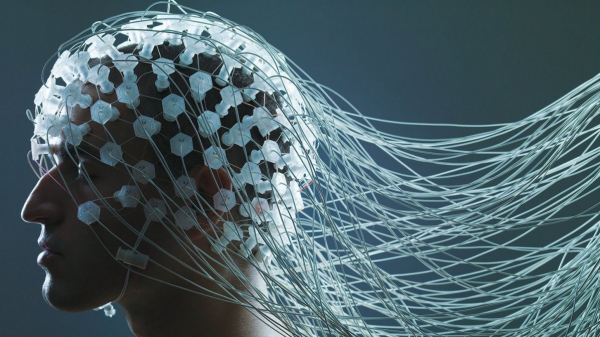
In order for the military to benefit from neurotechnologies, non-surgical application options are needed, as it is evident that mass surgical interventions among military commanders do not seem like a great idea at this time. Military technologies could also provide significant benefits to ordinary people. By eliminating the need for surgery, N3 projects broaden the range of potential patients who could access treatments like deep brain stimulation for neurological disorders.
Participants in the N3 program employ various approaches in their research to extract information from the brain and relay it back. Some projects utilize optics, while others use acoustics and electromagnetism. Some teams are developing fully non-invasive interfaces that exist entirely outside the human body, while other teams are exploring slightly invasive technologies using nano-transducers that can be temporarily non-surgically delivered to the brain to improve signal resolution and accuracy.
- The team from Battelle Institute, led by Dr. Gaurav Sharma, aims to develop a minimally invasive system that includes an external transceiver and electromagnetic nanotransducers that are non-surgically delivered to target neurons. The nanotransducers will convert electrical signals from neurons into magnetic signals that can be recorded and processed by the external transceiver, and vice versa, to provide bidirectional communication.
- Researchers from Carnegie Mellon University, led by Dr. Pulkit Grover, aim to develop a completely non-invasive device that uses an acousto-optic approach to extract signals from the brain and electric fields to send them back to specific neurons. The team will use ultrasound waves to direct light into the brain to detect neuronal activity. To convey information to the brain, the scientists plan to utilize the nonlinear response of neurons to electric fields to provide localized stimulation of target cells.
- The team at the Johns Hopkins University Applied Physics Laboratory, led by Dr. David Blodgett, is developing a non-invasive, coherent optical system to read information from the brain. The system will measure changes in the length of optical signals in nerve tissue, which directly correlate with neuronal activity.
- The PARC team, led by Dr. Krishnan Thyagarajan, is working to develop a non-invasive acoustic-magnetic device for transferring information into the brain. Their approach combines ultrasound waves with magnetic fields to generate localized electric currents for neuromodulation. The hybrid approach allows for modulation in deeper areas of the brain.
- The team from Rice University, led by Dr. Jacob Robinson, aims to develop a minimally invasive bidirectional neurointerface. Diffuse optical tomography will be utilized to gather information from the brain by measuring light scattering in neural tissue, while the team plans to employ a magneto-genetic approach to make neurons responsive to magnetic fields for signal transmission to the brain.
- The Teledyne team, headed by Dr. Patrick Connolly, is working to create a fully non-invasive integrated device that uses optically pumped magnetometers to detect small localized magnetic fields correlating with neural activity, and will utilize focused ultrasound to transmit information.
Throughout the program, researchers will rely on information provided by independent experts in legal and ethical issues who have agreed to participate in N3 and explore the potential applications of new technologies by both military and civilian populations. Additionally, federal regulatory agencies are collaborating with DARPA to help scientists better understand when and under what conditions their devices can be tested on humans.
"If the N3 program is successful, we will have wearable neural interface systems that can connect to the brain from just a few millimeters away, taking neurotechnology beyond the clinic and making it more accessible for practical use in national security purposes," explains Emondi. "Similar to how military personnel wear protective and tactical gear, in the future they will be able to don a neural interface headset and use the technology for their necessary objectives, only to set the device aside once their mission is complete."
Source: 3dnews.ru
