

The FreeBSD Foundation is developing a new graphical installer for FreeBSD, designed to make the installation and initial setup process more user-friendly for beginners. It is noted that the new installer will enhance the system's appeal to users accustomed to graphical installers, who view text interfaces as outdated. Additionally, the graphical installation mode will allow for a more cohesive environment in builds that use FreeBSD as the base for running user environments.
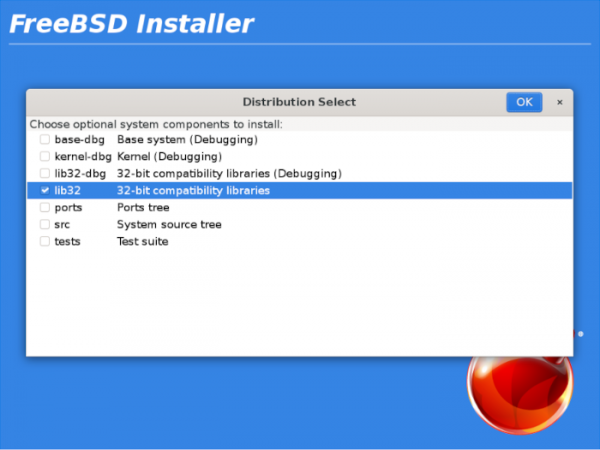
For installation-related processes, components from the existing bsdinstall installer are being utilized. The graphical interface is being implemented by replacing the existing console dialog toolkit, bsddialog, with the new toolkit, gbsddialog, which utilizes dialogues and widgets based on the GTK library.
This approach enables the implementation of graphical installation using the established infrastructure of the bsdinstall installer, while retaining the option for console mode installation. A similar replacement can be made for the bsdconfig configurator, which already supports the '-X' option to create a simple graphical interface through Xdialog (based on GTK2) instead of bsddialog. Using gbsddialog instead of Xdialog will provide a more modern interface design.
A working implementation of the new installer is already ready for testing, and the necessary patches for integration into the main codebase have been proposed for review. Translated interfaces for adding users, setting the administrator password, and selecting the time zone have been provided for inclusion in bsdinstall, along with components to select the implementation of the dialog utility based on the value of the environment variable $DIALOG, supporting the activation of graphical mode.
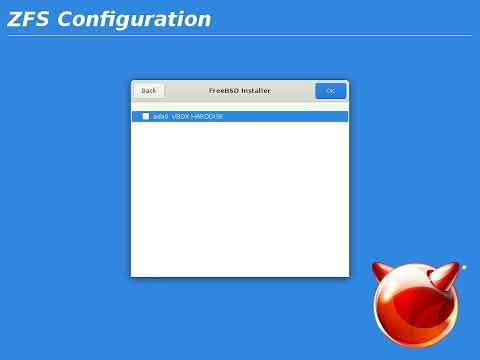
Notably, the GhostBSD project (a FreeBSD edition with a MATE desktop) already utilizes its own graphical installer, written in Python and PyGTK, but its porting to FreeBSD is not being considered, as it would require including Python as an additional dependency, resulting in a significant increase in the size of the installation media. A few years ago, with the support of the FreeBSD Foundation, a prototype of a graphical installer was also developed, written in Lua and implemented in the form of an http server, providing a web interface that opens in a single-window mode using a web browser.
Other events mentioned in the FreeBSD report for the first quarter of 2024 include:
- Work is ongoing to improve the audio stack. The ability to detach audio devices in asynchronous mode has been implemented, which is necessary, for example, for hot unplugging USB interface sound cards. Plans include implementing the OSS library, the audio utility, and utilities for managing Bluetooth devices, as well as expanding the capabilities of the mixer utility and library.
- For Bhyve, a background process called vmstated has been implemented to manage virtual machines and configure related network subsystems and storage. The vmstatedctl utility has been added to manage (start/stop/check status) virtual machines in a jail command style.
- An initiative is underway to separate the code for system call interactions into a standalone library, libsys.so, which was previously present in libc.so and libpthread.so. The creation of libsys.so will restrict direct access to system calls only to trusted code, abstract access to system calls for runtime programming languages, and improve support for system call logging and operation replay tools.
- For PackageKit, a backend for the pkg package manager is being developed, which will allow the management of packages in FreeBSD using the common application management interfaces that use PackageKit, such as KDE Discover and GNOME Software Center.
- The version of the GCC compiler set in the ports has been updated to GCC 13.
- A joint project with AMD has been launched to create an IOMMU driver for FreeBSD.
- The VPP (Vector Packet Processor) network stack is being ported to FreeBSD.
- The project for implementing customizable bandwidth limits (rate limiting) in OpenZFS has started, functioning similarly to disk quotas, but in the context of restricting the number of read/write operations and bandwidth during read/write processes.
- Work is ongoing to stabilize unionfs support in FreeBSD.
- Plan to discontinue support for 32-bit platforms.
- KDE 6 has been added to the ports.
Source: opennet.ru
