

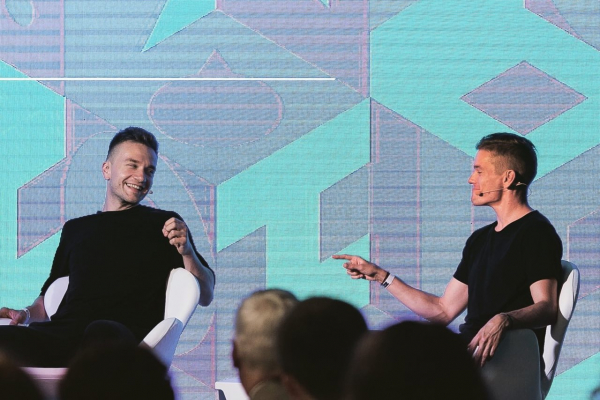
I spoke with Dmitry Dumik, CEO of the California chatbot startup Chatfuel and resident of YCombinator. This is the sixth in a series of interviews with masters of their craft about product approach, behavioral psychology, and technological entrepreneurship.
Let me tell you a story. I learned about you through a mutual friend in San Francisco as someone who has some decent remixes on Soundcloud. I listened to the mixes and thought at the time, "This guy is not bad." So, I’ve always wanted to ask, why do you mixes on Soundcloud?
It's the fastest way to understand if someone is your kind of person. For example, you meet a girl on Tinder. You send her a mix that resonates with the soul, that makes you discover new things, that digs deep into yourself… And she remains silent. You just keep swiping right.
Creating communities
We are currently speaking at your home, the "Good House" of Andrei Doronichev, a top manager at Google. Tell us, how did this commune house come about?
A couple of years ago, we gathered with Doronichev and his wife Tanya, and Andrei proposed this idea. We bounced it around, and decided to take a leap into the unknown, a leap of faith.
The main reason we invested in this: the key predictor of a happy life is having meaningful and deep social connections. In fact, we managed to create a family 2.0: a communal house of people united by common cultural values. This is the most important thing, everything else builds on top of this.
In this house, a magical sense of family was created, where you want to give and where people are happy to support you. You come home, knock on the neighbor's door, and share something, or invite them somewhere. Or maybe just complain about life.
This minimization of friction is very important in life; it cannot be compared to organized outings somewhere in the city or nature. Outings are some organized events. At home, you see everyone being genuine, you learn something new about yourself through others. And you leave with a sense of fulfillment.
I haven't interviewed any guests while they do yoga yet.
(Does a 'downward dog'.) Welcome. In family 2.0, this happens too.
Why is it important to gather your people around you?
This reflects one of my core values — absolute freedom. Spending time with the people you love is the highest expression of this value.
You have been living in communities in both San Francisco and Moscow for seven years now. How do you manage this?
Every year I spend half a year in San Francisco and a few months in Moscow. I'm lucky to have two homes. When I fly from Moscow to San Francisco, I feel like I will miss Moscow. And the same the other way around.
The world is now so distributed that the concept of home has changed. Home isn't a geographical point. It's a place where you are surrounded by loved ones.
What advice would you give to people who have just moved abroad regarding community?
It took me about two years to be able to call San Francisco my home. During that time, I built a circle of important people for me. In general, there are three ideas.
First, I would look for predictors that help identify my people based on their values. There are many public figures — you can read about someone on Facebook and then try to arrange a meeting with them.
Second, you can visit places where people gather — conferences, meetups. For that, there's Eventbrite in the US and Timepad in Russia. For example, I click well with conscious, self-reflective individuals. Yoga or a workshop on behavioral psychology is where I can meet such people. Usually, those people have gone through some journey and reached a certain point. In a new place, I often just go to yoga and then approach people I’m drawn to for some reason.
Third, in an entirely unfamiliar place, I look for social spots with a high probability of meeting like-minded, free-spirited people like me. Something akin to Burning Man. When I was in Rio, I went to various nightclubs, but in the end, I found myself at a 'burner' party. The people there were simple and open, and I really liked it. The same happened in Los Angeles: I made friends with some amazing people at a Burning Man party. For me, these are predictors that people will share my values.
What does Burning Man mean to you?
A utopia where you can live for a week each year. It is a place that radically declares a set of values in such a way that people follow them. Values about the freedom of self-expression, the freedom to be oneself, the freedom to learn, the freedom to be a child, to play, to be silly, to marvel.
Do you know that feeling when you are a child and you see an elephant for the first time? You’re like, "Wow, an elephant!" It's the same at Burning Man. A feeling of childlike wonder that can be embraced by adults. You soak it all in, return to the ordinary world, and think about what you can do to bring those values into reality.
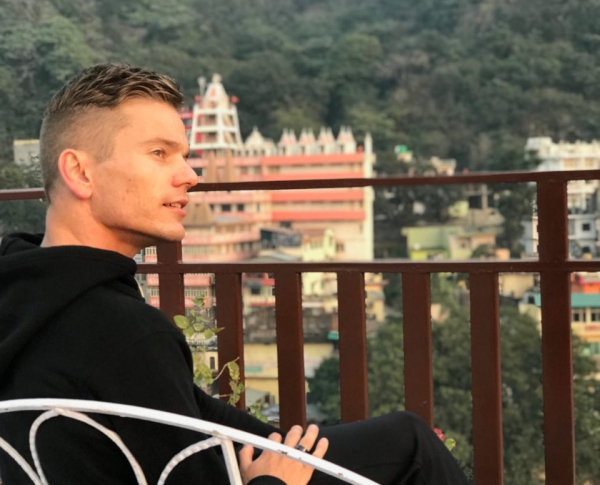
A Career in Technology
I remember a dozen times when you joked about your hometown of Taganrog, where you lived until you were 20. Do you miss it?
The main value is people. If I miss it, it’s due to certain associations with people. My family is in Taganrog. But it hurts to go there now. Everything is falling apart, the historical heritage is not being preserved, and it’s not getting better. The city feels smaller. It’s painful to watch.
By the age of 25, you had an impressive career at Procter & Gamble in Moscow, a lot of money, a car, all that. You even had the prospect of leading the European IT division in Geneva. But you gave it all up to become an entrepreneur. Why? Were you tired of dealing with laundry detergent?
I still don’t use laundry detergent!
Actually, there were two reasons. First: I couldn't find enough meaning in what I was doing. I didn't see how my actions were impacting the world. Second: to have the opportunity to surround myself with people I choose. To create my own community based on my values. Corporations are large structures; they have their own values that are hard to change.
Here’s the story. When I worked at P&G, we created a charitable startup — a platform where you could earn money through your actions and send it to orphanages. That’s when I first realized that there could be people in the team who aren’t focused on money, who are passionate about ideas; they don’t need to be pushed, meaning you don’t have to apply all the classic management tactics. It’s self-igniting motivation. People get energized, and you feed off that, instead of the other way around.
At one point, we visited orphanages and gave those gifts for the New Year. I still remember that feeling: my actions led to results, and what results they were! It was akin to awakening.
You took it upon yourself to move to the States, went through the selection for both 500 Startups and YCombinator. However, the successful project "Mятa" in Russia didn’t take off in the States. Can you tell us how you pivoted, and what was the outcome?
Мятa was built on the back of VKontakte, which offered many opportunities for developers through its API. In the States, the Facebook API was quite limited after the social gaming stories like Zynga. The product didn’t catch on, opportunities were scarce, and we struggled for a long time. We were pivoting, looking for alternatives, trying out various social networks — Reddit, Tumblr. We struggled for about six months.
And then one warm summer night, Pavel Durov announced chatbots on Telegram. I realized: here’s the new platform. When websites arrived, I was still little; when mobile applications appeared — I was naive. And now: here are chatbots, and here I am — young, attractive, and I can make it happen. We jumped into this with the team. We slept only four hours. First, we made a store, then a platform for creating bots, then an ad network. By the time we applied to Y Combinator, we had 11 million users in five months.
Who supported you the most during this turbulence?
The most support came from Andrey Doronichev, a director at Google and an angel investor. When my project Mятa started gaining traction in the Russian market, I wanted to move it here to San Francisco. But it was complicated. Then I met someone who listened to my pitch and immediately offered several tens of thousands of dollars in angel investment. Even though we had next to nothing here in the States.
This is a story of the kind, "Wow, if someone like him believes in you, he can’t be wrong." Fueled by that energy, I went to 500 Startups, and when we pivoted to chatbots, we also went to Y Combinator in 2015.
Do you recommend Y Combinator to startup founders?
Yes. However, looking back on my experience, I want to say that I overestimated the impact of accelerators on business success. Some suffer saying, "We weren’t accepted, what’s up with that?" But for a startup, it's such a long game that a three-month accelerator doesn’t depend much on success. So many startups pivot after YC!
It’s important to have a trait commonly referred to as grit, which means perseverance. You get knocked down, face-plant in the dirt, shake it off, and keep moving forward. The ability to sense the needs of the world, people, and the market, along with effective communication, are far more important qualities. YC won’t offer anything that you couldn't achieve without these traits. And most importantly: YC won’t impart those very traits.
As the saying goes, the toughest wins. Look at your company Chatfuel, a bot builder for Facebook, steadily growing year after year. Meanwhile, the chatbot industry is experiencing a well-deserved period of disillusionment after its hype peak. How do you navigate this phase?
You know, according to the latest data, we have already passed that phase. We’re now in the 'early majority' stage, witnessing explosive growth.
Surviving this phase is challenging. After Facebook opened its API for chatbots, we had 147 competitors. Nobody knew what would happen: volatility reigned, everyone was trying to listen to gurus, watching venture capitalists' every move. Constantly, people looked at each other, copying features. But these are all secondary signals. The primary signal comes from clients. We need to focus our attention there. We managed not to inflate our team, striving to do everything very carefully. Many competitors simply lacked the runway to reach their goals.
You needed funds for the project, and a top manager from Google invested in you. You raised Series A funding for Chatfuel—not with just anyone, but with Greylock Partners and Yandex. You organized a product management competition, featuring top experts on the jury. It feels like you’re always seeking the 'best'. Why?
It’s just more enjoyable that way. I have a friend who had me take a Hogan Assessment test… According to the profile, I’m a true hedonist.
But really, it’s all about the same value—people. I derive great pleasure from interacting, entertaining, and working with interesting individuals. I started this for that purpose. I’m interested in sharing my thoughts broadly so that those who resonate with them can add or respond. People who are on the same wavelength receive a signal, increasing the likelihood of meeting. And of course, I’ll be advertising on the channel—300 rubles per post won’t go amiss!
It seems like the asking price is at least 500 rubles now — be careful not to undervalue yourself. The question is: no one manages to win all the time in life. How can we develop our own philosophy of failures and victories?
It's a common misconception that such a philosophy is necessary. It's important to develop a philosophy of enjoyment. If you're having a great time along the way — no matter the outcome, it will be net positive. The modern educational system, with its metrics, kills the essence — the joy of the learning and working process.
Observing you, it feels like you're living your life as quickly as Barrichello drives his car. What helps you avoid burnout and stay grounded when you feel like you're going too fast?
I'm driven by desire and curiosity about what will happen next. I could never answer the question: 'Where do you see yourself in 5 years?' A year ago, I had no idea things would turn out this way. Now, looking at how I've organized everything — it's exhilarating. It's like designing a product called your life: mindfulness practices, social gatherings, boxing, etc. Everything seems perfect now. Just cosmic. But there's always a deeper layer. There's a constant interest and a feeling that you can discover how else things could be.
When it comes to not burning out… there are several levels, much like Maslow's pyramid. The foundation is my practices, my structure. Wherever I go or come from — I can activate this structure: surfing, kundalini yoga, regular yoga, meditation. Then comes the middle level — these are tactical actions and vertical coherence. Short-term actions must align with long-term goals. Sometimes you notice that tactically you're doing things that drain you. You keep a diary of activities, writing every evening: do I want to do this, why? The third level is the direction I'm moving in. It's like a lighthouse, like the North Star.
Entrepreneurship
Who is an entrepreneur? Describe the general psychological portrait.
I believe it's a person with a deviation in their psyche and a higher tolerance for pain. They can endure pain and do something about it.
Tech entrepreneurs are the modern rock stars…
Yay!
… But recently, articles have been increasingly appearing about how tough it really is to be an entrepreneur. Recently, scientists from UCSF... , that entrepreneurial traits such as openness to new ideas, creativity, and emotional engagement correlate with bipolar disorder, depression, and ADHD. What do you think about this?
Fits my definition. It makes sense. Here you are as an entrepreneur. At some point, you wake up and think: I need to save this planet. Therefore, it's necessary to urgently organize life on Mars. You believe you can do it. A normal person wouldn't even allow themselves to think about such things. But as an entrepreneur, you immediately spring into action, organize people, create a stir. Then you wake up at some point and realize: 'Damn, what have I done? What the heck is Mars?!' But it's too late, you have to go ahead.
The article you , – it's very truthful.

What were the top three lowest points in your entrepreneurial career? And what did you do to climb out of those pits?
When I came to work at P&G after university, there was a moment. I came to introduce myself to the line manager with decades of experience. I said: 'Hello, I'm Dima. We are going to implement an IT system to improve the productivity of your conveyor.' He looked at me and said: 'Kid, go $%# yourself.' It was an important moment to learn how to deal with objections.
Moving to the States. Everything was going wrong. An unfamiliar market, an unfamiliar country. It quickly became clear that compared to Americans, Russians really don’t know how to sell. Yet somehow, at 26, I thought I could come to the most competitive place on earth and be successful. At one point, things were going so badly that I had to borrow money from a friend just to pay employees' salaries.
A change in motivation. When the motivation of competition and the desire to prove something to someone disappeared. For example, to prove that a guy from Taganrog can compete with guys from Stanford... This motivation shifted to something internal, based on my own values.
You often repeat the phrase 'foolhardiness and bravery.' Are these qualities necessary for an entrepreneur?
These are my qualities that belong to me. They have led me to the most interesting moments in life. But it's hard for me to recommend them to anyone. Something inside me cannot fully endorse their development for all my followers. (Laughs).
Honestly, I would say this: any action is better than inaction. Because through action, you learn, while inaction allows things to follow the default script, leading to a sense of inner helplessness. You can't be in control of life, of course, but in that state, you're not even in control of your own decision-making. And that's very toxic; in the long run, it destroys you. I've seen many people suffering from analysis paralysis. This is when you analyze everything, find 200 reasons why something won't work—instead of doing it and getting feedback from the world.
What are the top 3 things to know in order to scale anything?
First, a fundamental understanding of how people make decisions. We are driven by emotions; rationality is merely the lawyer for our emotions. People are irrational by nature.
Secondly, choose the right cloud infrastructure.
Thirdly, a bit of luck.
If you were to choose between a management career in a large company and your own project, what would you advise someone to weigh?
I would advise reducing the feedback loop, meaning those systems in life that give feedback on your actions.
School and university are inadequate systems; they are 'amber organizations' not optimized for feedback. The information there is outdated by default.
Great feedback comes from trying to sell something, building a business, or doing something in a small startup. When you see your actions and their results, you'll gain life wisdom faster and understand yourself better.
The highest value is knowing yourself and not living by others' ideals. Either you know yourself and manage your life, or someone else is managing it for you. It’s very possible that this will lead a person to a corporation, but it will be a conscious choice without 'what ifs.'
Team and culture
You live in San Francisco while a large part of your team is in Moscow. What do you do to ensure the company operates cohesively?
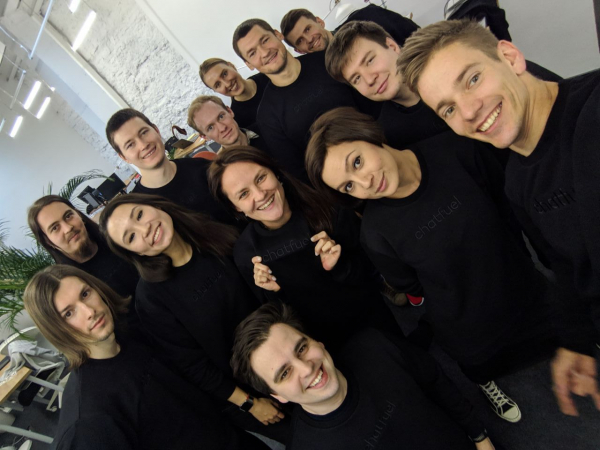
One of our values at Chatfuel is openness. We do not have a pronounced hierarchy. We implement a number of turquoise organization principles. Maximum transparency. Everyone in the company knows how much we earn every day. There is no strict division: technical people can do things that are usually handled by sales. This is fundamental. self-induced motivation. People do not just do what they are told is important; they take initiative and are responsible for themselves.
Do you give people black uniforms when they come to work?
We try to enjoy ourselves. We even made hoodies that would pass the face control of a fancy Moscow club. And this is our Plan B: if worse comes to worst, we’ll sell merch. (Laughs).
What do you need to know to hire top-notch employees?
What are their relationships with their parents? (Laughs).
What are the most important things for building culture in a company?
Understand yourself. Because you cannot fake culture. Culture is not what is proclaimed on a poster, but what you actually do.
Be honest with yourself. Understand the things that are within you and those that are not. There are no miracles here—you need to start with yourself. Because if you talk about openness, and no one can come to you and tell you off, then that is no longer part of the culture. People sense dishonesty. You will not achieve a culture and will compromise yourself.
Which three product businesses in the Valley are the coolest right now?
I refuse to answer that question! Having lived through a hype cycle, I understand that my conscious choice is not to follow hype trends. The most successful business is one where the direction and mission resonate with you, making you enjoy what you do.
Behavioral change and product approach
As is known, changing habits is difficult. However, some manage to do it. You have worked a lot in this field, gone on vipassana several times, experimented with diets, sports, and spiritual practices. What does an adult need to know to change?
The Bhagavad Gita. A children’s version with pictures will do. (Laughs).
Read about behavioral psychology to understand how we make decisions. That 90% of decisions are made automatically. Daniel Kahneman wrote excellently about this in his book 'Thinking, Fast and Slow.'
Learn about behavior change models. With a specific structure, plan. For example, there is the BJ Fogg model from Stanford, which explains how triggers, ability, and motivation are interconnected.
Start from positive motivation. Find meaning, depth, enjoy the activity. Focus on the positive feeling, give yourself that positive feedback. So the brain gradually rewires itself.
What are the top 3 skills you wish for your children?
Take responsibility for your life.
Do what you love.
Enjoy life.
Is biohacking good or not?
I have a good friend who formulated the 'five principles of Matskevich'. Guess what his name is.
It's a very difficult question. Go on.
Five principles:
Having deep emotional connections;
Sleep;
Healthy food,
Sex with a loved one,
Physical activity.
If you expand on it, the psyche and body have been shaped over tens of thousands of years. Changing something with a pill is like poking at a microchip with a screwdriver. But these five principles have been proven over thousands of years of evolution, I believe in them.

Mindfulness
Your room looks like we're in Bali. Coincidence?
We are aware of only a small percentage of the information read by all our senses. Therefore, it's important for me to arrange the space in such a way that it conveys how I want to feel. Here at home, I want to relax and recharge my energy.
Recently, two opposing opinions about meditation and mindfulness practices have been heard often. One is that it leads to calmness and liberation from worries, the other is that it leads to neuroses and won't do any good. What do you think about that?
It seems to me that everything related to mindfulness leads to the same place: to understanding oneself, realizing one’s place in the universe. In this place, it's good, calm, and harmonious. But to get there, one has to go through many different states, to deal with things and look into corners of oneself that are frightening, painful, and not very desirable.
But it's like in the matrix — you take the pill and there's no turning back. Yes, the ride will be bumpy, but that's part of the journey. It's sold as a package deal. And in the end, it's always interesting to see what lies ahead.
Source: habr.com
