

A new release of the decentralized communication platform Jami, codenamed "Maloya," is available. The project aims to create a communication system that operates in P2P mode, allowing for both large group chats and individual calls while providing a high level of privacy and security. Jami, previously known as Ring and SFLphone, is part of the GNU projects and is distributed under the GPLv3 license. Binary builds are prepared for GNU/Linux (Debian, Ubuntu, Fedora, SUSE, RHEL, etc.), Windows, macOS, iOS, Android, and Android TV.
Unlike traditional communication clients, Jami can send messages without relying on external servers by establishing direct connections between users using end-to-end encryption (the keys are only present on the client side) and X.509 certificate-based authentication. In addition to secure messaging, the program allows for voice and video calls, creating teleconferences, file sharing, and organizing shared access to files and screen content.
Initially, the project developed as a software phone based on the SIP protocol, but it has long since evolved into a P2P model while retaining compatibility with SIP and the ability to make calls using this protocol. The application supports various codecs (G711u, G711a, GSM, Speex, Opus, G.722) and protocols (ICE, SIP, TLS), ensuring reliable encryption for video, voice, and messages. Among its features are call forwarding, call holding, call recording, call history with search functionality, automatic volume control, and integration with GNOME and KDE address books.
Jami employs a decentralized global authentication mechanism for user identification, based on the implementation of a contact list in the form of a blockchain (utilizing developments from the Ethereum project). One user identifier (RingID) can be used simultaneously on multiple devices, allowing users to connect regardless of which device is active, without the need to maintain different identifiers on a smartphone and PC. The address book responsible for translating names into RingID is stored on a group of nodes supported by various participants, and it is also possible to run your own node to maintain a local copy of the global address book (Jami also implements a separate internal address book maintained by the client).
Jami addresses users using the OpenDHT protocol (distributed hash table), which does not require centralized registries with user information. The core of Jami is the background process jami-daemon, which handles connections, communication organization, and works with video and audio. Interaction with jami-daemon is organized via the LibRingClient library, which serves as the foundation for building client software and provides all standard functionalities not tied to user interfaces and platforms. Client applications are built on top of LibRingClient, making it relatively easy to create and maintain various interfaces.
In the new release:
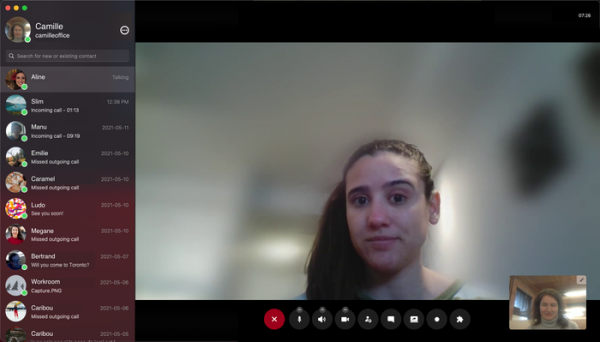
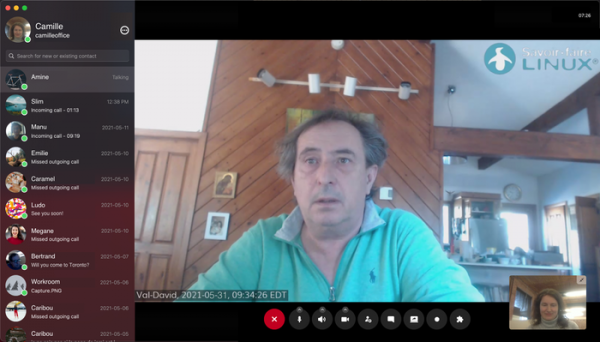
- A unified client application for GNU/Linux and Windows platforms (and soon for macOS) provides a new enhanced interface based on Qt, redesigned to simplify making individual calls and conducting conferences. Added the ability to change the microphone and output device without interrupting the call. Improved tools for screen sharing.

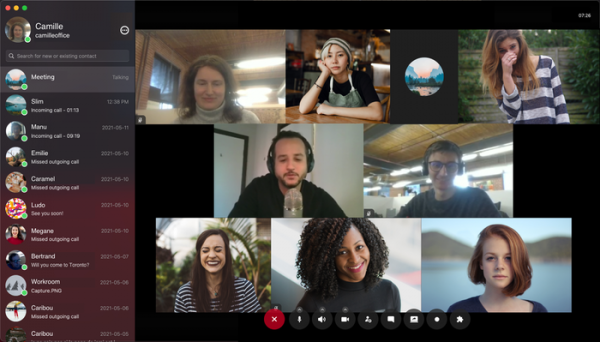
- Stability has been increased and features related to conducting conferences and meetings have been expanded. Support for appointing conference moderators has been implemented, allowing them to determine the video layout of participants on the screen, grant speaking rights to presenters, and interrupt participants if necessary. According to tests conducted, Jami can comfortably handle conferences with up to 20 participants (this figure is expected to rise to 50 soon).
- The development of the client for GNU/Linux with a GTK-based interface (jami-gnome) will soon cease. For some time, jami-gnome will still be supported, but ultimately work on it will be halted in favor of a Qt-based client. If enthusiasts arise who are willing to take over the GTK client, the project is ready to provide that opportunity.
- Plugin support has been implemented in the macOS client.
- The "GreenScreen" plugin, which uses machine learning methods to hide or replace backgrounds during video calls, has been enhanced. The new version includes the ability to blur the background so that others cannot see what is happening around the participant.

- A new "Watermark" plugin has been added, allowing users to display their logo or any image over the video, as well as embed the date and time.
- The "AudioFilter" plugin has been added to apply reverb effects to the sound.
- The iOS client has been redesigned, featuring a completely new interface and efforts to reduce power consumption. The stability of the macOS client has been improved.
- The binary format for RSA public keys has been improved server JAMS (Jami Account Management Server) for managing accounts, allows centralized control of the accounts of a local community or organization while maintaining the decentralized nature of the network. JAMS can be used for integration with LDAP and Active Directory, maintaining an address book, and applying specific settings for user groups.
- Full support for the SIP protocol has been restored, enabling connections to GSM networks and any SIP service providers.


Source: opennet.ru
