

After nearly two years since the formation of the last significant branch, a stable release of the OpenMediaVault 8.0 distribution has been published, allowing for the quick deployment of a network storage (NAS, Network-Attached Storage). The OpenMediaVault project was founded in 2009 following a split among the developers of the FreeNAS distribution, which resulted in the creation of a branch alongside the classic FreeNAS based on FreeBSD. The developers aimed to transition the distribution to the Linux kernel and Debian package base. Installation images for OpenMediaVault have been prepared for the x86_64 architecture (1.4 GB).
The OpenMediaVault distribution prioritizes the expansion of support for embedded devices and the creation of a flexible system for installing plugins. Compared to FreeNAS, the mechanism for installing plugins has been significantly redesigned; instead of switching the entire firmware for updates, OpenMediaVault uses standard tools for updating individual packages along with a full installer, allowing users to select necessary components during installation.
The OpenMediaVault web-based management interface is written in PHP and features data loading on demand using Ajax technology without page reloads (the FreeNAS web interface is written in Python using the Django framework). The interface includes features for data sharing and privilege separation (including ACL support). Monitoring can utilize SNMP (v1/2c/3), and there is also a built-in notification system for issues via email (including disk status tracking through S.M.A.R.T and UPS system monitoring).
Among the basic services related to storage organization are: SSH/SFTP, FTP, SMB/CIFS, DAAP client, RSync, BitTorrent client, NFS, and TFTP. The file systems that can be used include EXT3, EXT4, XFS, and JFS. Since OpenMediaVault is primarily focused on extending functionality through plugins, separate plugins are developed for AFP (Apple Filing Protocol) support, server BitTorrent, iTunes/DAAP server, LDAP, iSCSI target, UPS, LVM, and antivirus (ClamAV) support is provided. Software RAID (JBOD/0/1/5/6) can be created using mdadm.
Key innovations:
- The package base has been updated to Debian 13.
- The cpufrequtils toolkit for managing CPU frequency and power consumption modes has been replaced with linux-cpupower.
- The RPC calls UserMgmt::enumerateSystemUsers, UserMgmt::enumerateUsers, UserMgmt::enumerateAllUsers, and UserMgmt::getUserList have been modified. They now return only basic information about users and groups by default, requiring the 'detail' parameter to obtain extended information. This change has significantly improved the performance of these calls.
- The configuration change notification now includes a list of updated modules.
- Information about older versions of updated packages has been added to the system update page.
- In the chrony settings, the 'pool' directive is now used by default instead of 'server'.
- Support for WPA3 (SAE) authentication has been established for wireless connections.
- When installed on existing Debian systems, support is retained only for AMD64 and ARM64 architectures.
center>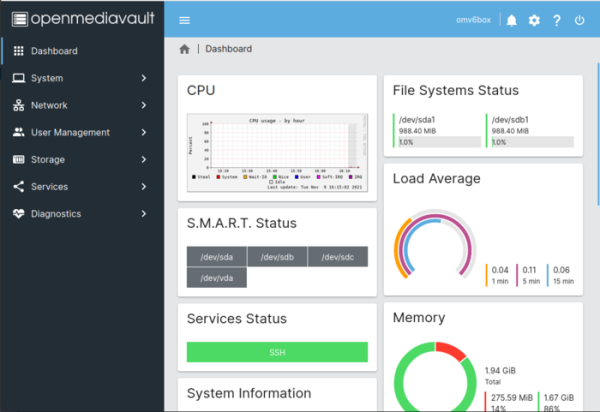
Source: opennet.ru
