

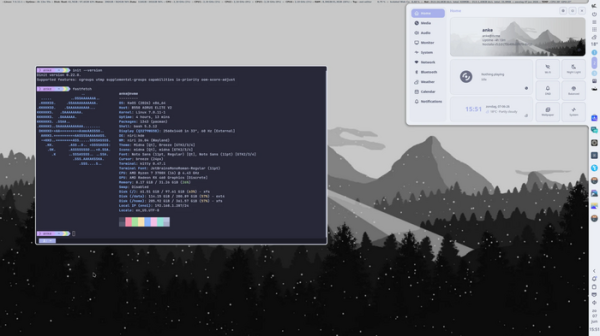
The release of KaOS 2026.06 has been published, a distribution with a continuous update model aimed at providing a desktop with Qt-based applications. One specific design feature is the placement of a vertical panel on the right side of the screen. The distribution develops with a nod to Arch Linux but supports its own independent repository with over 1500 packages, as well as offers a range of its own graphical utilities. XFS is used as the default filesystem. Dinit is utilized for service initialization and management. Builds are published for x86_64 systems (4.7 GB).
In the new version:
- The transition from systemd to Dinit for service initialization and management has been made. Reasons for migration include the discontinuation of AUFS filesystem support in systemd and the separate directory hierarchy / and /usr used in KaOS (without redirecting the /bin subdirectory to /usr/bin and /lib to /usr/lib with symbolic links). There is also a stated desire to develop the distribution with its own unique solutions rather than following the rules dictated by systemd.
- For session management and organizing access to shared input and output devices, turnstile and seatd are used instead of systemd-logind.
- To organize the system login screen, greetd with the tuigreet extension has been adopted instead of the sddm display manager.
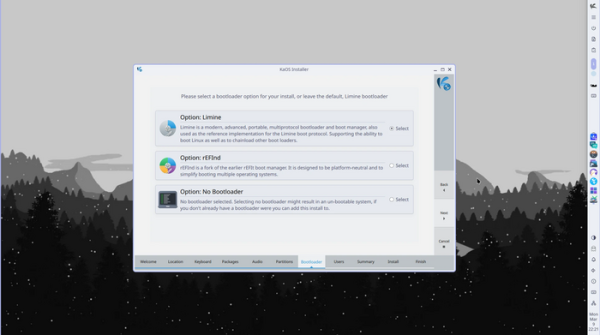
- The Limine bootloader has replaced systemd-boot.
- udev and systemd-tmpfiles components continue to be utilized for device and temporary file management.
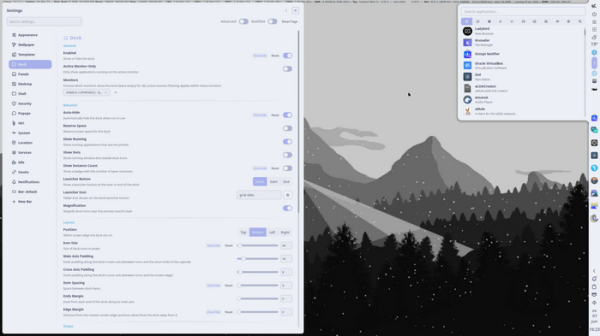
- The KDE Plasma desktop in the base build has been replaced with the Niri compositing manager along with the minimalist Noctalia shell and auxiliary utilities like cliphist, brightnessctl, ddcutil, pavucontrol-qt, qt6ct, and xwayland-satellite.
Packages for KDE Plasma 6.7 remain available in the repository, but the project plans to discontinue support for KDE after the release of KDE Plasma 6.8.

- The Calamares installer has been fully adapted to work in Wayland-based environments.

- A stylish command line prompt is now created using starship instead of powerline.

- Package versions have been updated, including Linux kernel 7.0.13, Glib2 2.88.1, Libgcrypt 1.12.2, Nano 9.1, Curl 8.21, OpenCV 4.13.0, Poppler 26.06.0, GStreamer 1.28, Pipewire 1.6.7, Dinit 022.0, ZFS 2.4.3, CMake 4.3, OpenSSH 10.3, Bash 5.3, Elogind 257.16, Qt 6.11.1, and Mesa 26.1.3.

Previously available features of KaOS:
- In the Phonon sound library, which is used for working with sound devices in KDE, the phonon-mpv backend is used by default, supporting Qt 6 (the old backend based on VLC has not yet been ported to Qt6).
- In the installer (Calamares), in automatic partitioning mode, there is an option to select the file system (XFS, EXT4, BTRFS, and ZFS) without switching to manual partitioning mode.
- The Croeso login welcome screen offers essential settings that may need to be changed after installation, and it also allows users to install applications and view information about the distribution and system.
- XFS is the default file system, with integrity checking (CRC) enabled and a separate btree index for free inodes (finobt).
- There is an option available to verify downloaded ISO files using digital signatures.
Source: opennet.ru
