

An experimental version of the Capyloon operating system has been introduced, built on web technologies and continuing the development of the Firefox OS platform and the B2G (Boot to Gecko) project. The project is led by Fabrice Desré, the former leader of the Firefox OS team at Mozilla and the chief architect at KaiOS Technologies, which develops KaiOS, a fork of Firefox OS. Among the main tasks for Capyloon is ensuring privacy and providing users with tools to control their system and information. Capyloon utilizes the gecko-b2g engine, branched from the KaiOS repository. The project's source texts are distributed under the AGPLv3 license.
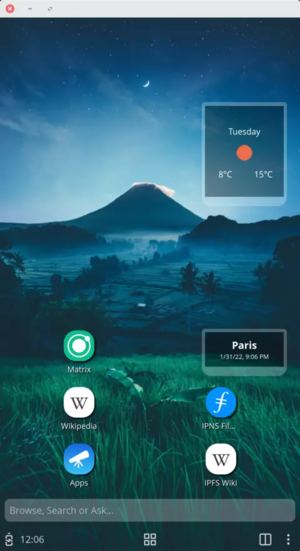
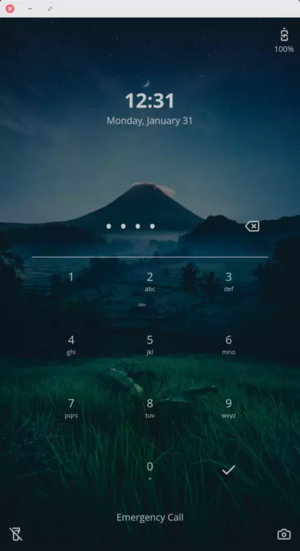
The first release is ready for use on smartphones such as PinePhone Pro, Librem 5, and Google Pixel 3a. Potentially, the platform could also be used on the first model of PinePhone, but the performance of this device may be insufficient for comfortable operation. Builds are available in packages for Debian, the Mobian environment (a variant of Debian for mobile devices), and as a basic system image based on Android. To install on Mobian and Debian, it is sufficient to install the provided deb package and launch the b2gos shell.
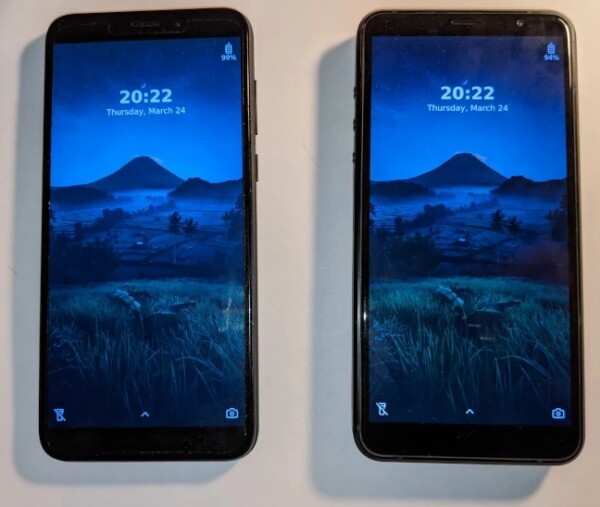
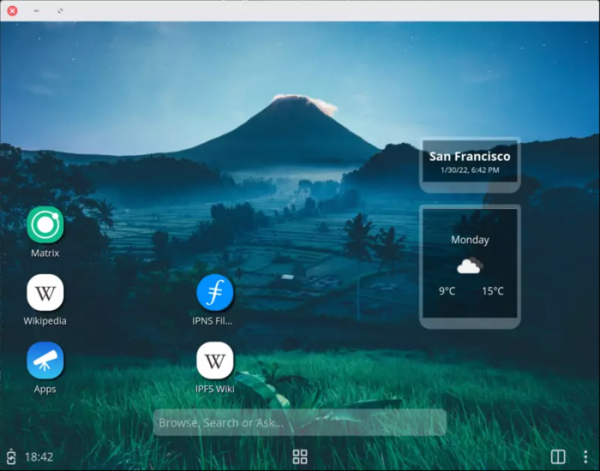
The environment can also be compiled for installation on mobile devices supported by the KaiOS platform, for launching in an emulator, for installation on top of firmware based on the Android platform, and for use on desktop computers and laptops equipped with Linux or macOS.
The environment is positioned as experimental; for example, some important smartphone features are not yet fully supported, such as telephony access for making calls, sending SMS, and exchanging data via mobile operators. There is no ability to manage audio channels, and Bluetooth and GPS do not work. Partial support for Wi-Fi has been implemented.
Applications for Capyloon are formed using the HTML5 stack and an extended Web API interface, which allows web applications to access hardware, telephony, the address book, and other system functions. Instead of providing access to the real file system, programs are restricted within a virtual file system built using the IndexedDB API and isolated from the main system.
The user interface of the platform is also built on web technologies and runs using the Gecko browser engine. There are custom configurators for setting language, time, privacy, search engines, and screen options. Specific features of Capyloon include the use of the IPFS protocol for confidential data storage, support for the anonymous Tor network, and the ability to connect plugins compiled in Web Assembly format.
Included are programs such as a web browser, a client for the Matrix instant messaging system, a terminal emulator, an address book, an interface for making phone calls, a virtual keyboard, a file manager, and an application for working with a webcam. Widget creation and desktop shortcut placement are supported.
Source: opennet.ru
