

The UBports project, which has taken over the development of the mobile platform Ubuntu Touch after Canonical stepped away from it, has released the OTA-22 firmware update (over-the-air). The project is also developing an experimental port of the Unity 8 desktop, which has been renamed to Lomiri.
The Ubuntu Touch OTA-22 update has been compiled for smartphones including BQ E4.5/E5/M10/U Plus, Cosmo Communicator, F(x)tec Pro1, Fairphone 2/3, Google Pixel 2XL/3a, Huawei Nexus 6P, LG Nexus 4/5, Meizu MX4/Pro 5, Nexus 7 2013, OnePlus 2/3/5/6/One, Samsung Galaxy Note 4/S3 Neo+, Sony Xperia X/XZ/Z4, Vollaphone, Xiaomi Mi A2/A3, Xiaomi Poco F1, Xiaomi Redmi 3s/3x/3sp/4X/7, and Xiaomi Redmi Note 7/7 Pro. Separately, updates will be prepared for Pine64 PinePhone and PineTab devices without the “OTA-21” label. Compared to the previous version, support has been added for Asus Zenfone Max Pro M1, Xiaomi Poco M2 Pro, Google Pixel 2, and Google Pixel 3a XL smartphones.
Ubuntu Touch OTA-22 is still based on Ubuntu 16.04, but in recent times, developers' efforts have focused on preparing for the transition to Ubuntu 20.04. Notable changes in OTA-22 include:
- In the Morph browser, support for the camera has been implemented, enabling video calls.
- WebGL support has been enabled for most devices.
- For devices with FM receivers, a background process manager has been added, and an application for listening to the radio has been made available in the catalog.
- In applications based on QQC2 (Qt Quick Controls 2), styles from the system theme are now used. For example, when selecting a dark theme, a dark interface will automatically be applied.
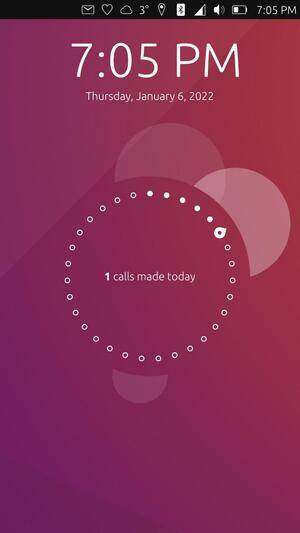
- Support for screen rotation during unlock has been implemented, and the design of the bottom panel with emergency call buttons has been modified.
- The call interface now features autocomplete for phone number input and displays entries from the address book that match the entered part of the number.
- Builds for the Volla Phone X smartphone have transitioned to using the Halium 10 layer, providing a low-level layer to simplify hardware support based on components from Android 10. The transition to Halium 10 has enabled support for the fingerprint sensor and resolved several issues.
- In the firmware for Pixel 3a/3a XL, a booster mode has been implemented to limit the number of CPU cores in use, reducing power consumption when the screen is turned off, and improving sound quality and volume control.
- The port for Oneplus 5/5T devices has been brought closer to a fully functional state.
Source: opennet.ru
