Available Firefox 128, as well as the long-term support branch (ESR 128). Despite the release of a new branch, the developers decided to indefinitely extend support for the previous ESR release (ESR 115), as that is the only version that maintains support for Windows 7, which comprises 10% of Firefox's user base.
Key Changes:
- Linux:
- Enabled support for DMABuf on NVIDIA graphics cards (requires driver version 545.23.6 or newer).
- If the user refreshes the page in private browsing mode, Firefox will interpret this as a problem and suggest support for the DBus interface org.freedesktop.Application (without this, integration with the GNOME Shell search service is impossible).
- on the same screen as the last used browser window. playback of 10-bit AV1 video.
- If the user refreshes the page in private browsing mode, Firefox will interpret this as a problem and suggest support for playing protected content (DRM) in private browsing mode.
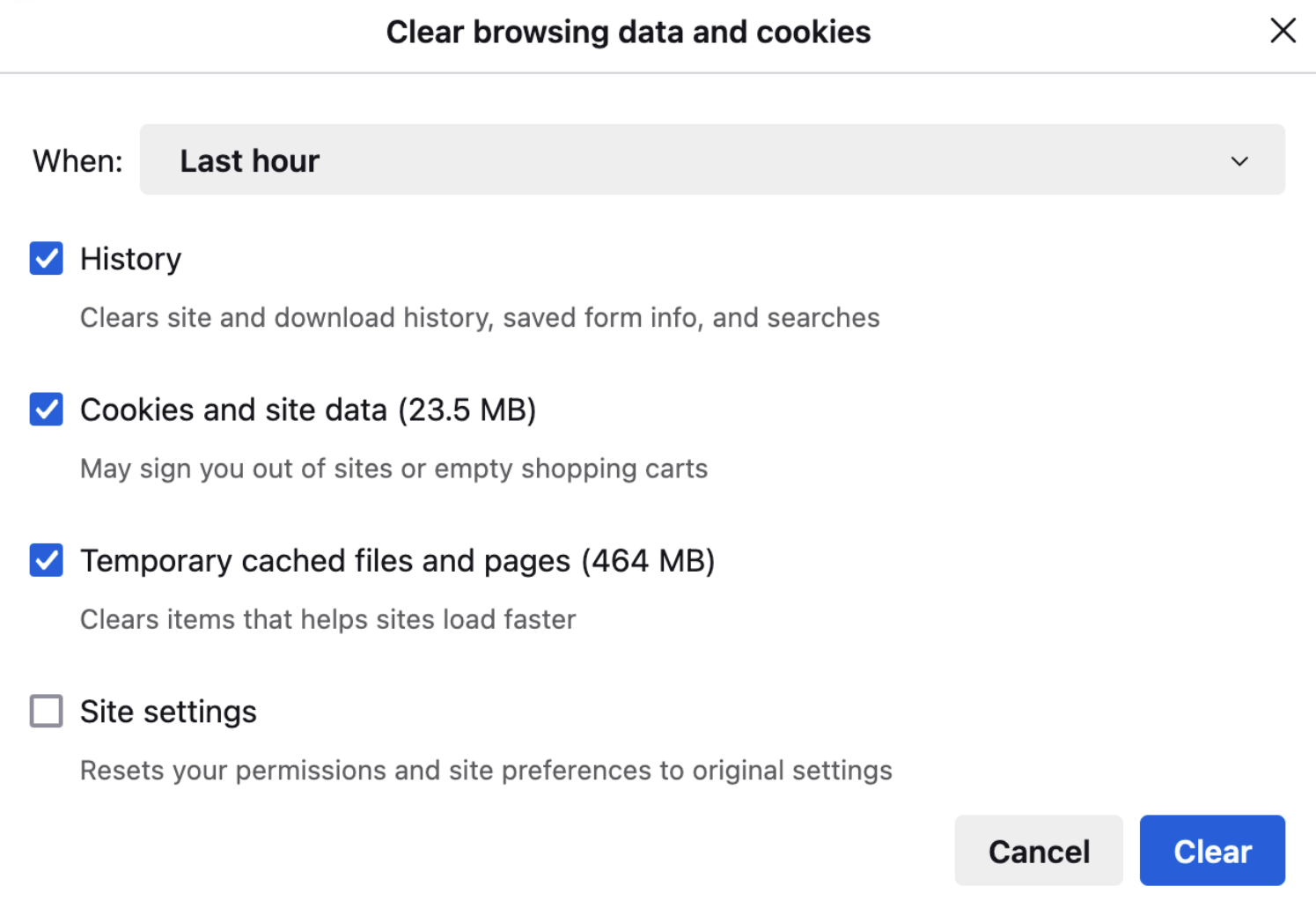
- Reworked interface data cleanup: some items have been merged (for example, ‘history of visits and downloads’ with ‘form and search history’), and it now shows how much space the various data occupies over the selected period.
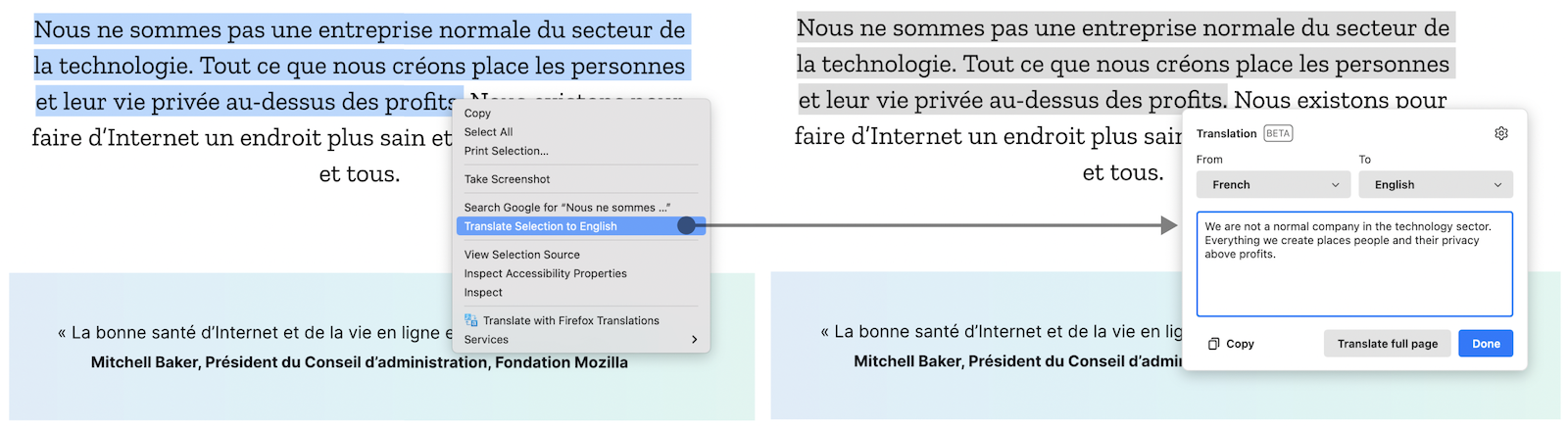
- For selected text and links added context menu items ‘Translate selection’ and ‘Translate link text’.
- Added disabling the tracker blocking Privacy Preserving Attribution API and settings ‘Allow websites to measure ads while preserving privacy’. Advertisers will be able to receive aggregated information that does not contain details about specific users but answers their questions about ad effectiveness. This could be a good alternative to ‘tracking’ users, which websites are forced to do to assess ad performance.
- Setting ‘Send DNS queries through proxy when using SOCKS 5’ enabled by default. A separate setting has been added for ‘Send DNS queries through proxy when using SOCKS v4’ (because if the SOCKS4 proxy does not support the SOCKSv4a extension, attempts to send DNS queries through it will cause the proxy to malfunction).
- Returned a setting (browser.spin_cursor_while_busy) that changes the cursor to a spinning wheel until the page is fully loaded. It has been disabled by default for 15 years and removed in Firefox 119, but it turned out that some users prefer to see the spinner.
- The performance operation in 'HTTPS Only' mode: when encountering a site that does not support HTTPS, the browser temporarily remembers it and will not attempt to connect via a secure connection each time.
- After 25 years, at the user's request, the ability to make the browser background transparent (browser.tabs.allow_transparent_browser) has been added, in addition to changing a number of other settings).
- Added localization to the language sirayki (skr).
- Users in the USA and Canada will be shown recent and popular search queries in the address bar drop-down menu (browser.urlbar.recentsearches.featureGate, browser.urlbar.trending.featureGate).
- Files with unidentified MIME types text/* are now treated as text/plain and displayed in the browser.
- Pressing Enter in the search field (when it is placed separately from the address bar) no longer opens the search page. Developers note that there was no point in such opening: if the user wants to search for something, they enter the query directly in the search field, rather than opening the search engine through the search field and then entering the query.
- macOS:
- When capturing audio from the microphone through getUserMedia, applied sound processing and enhancement features provided by the operating system.
- color perception disorder simulation. The simulation of protanopia, deuteranopia, and tritanopia tab navigation.
- Switching from full-screen mode to Picture-in-Picture mode no longer leads to the Picture-in-Picture window opening in full-screen mode.
- CSS:
- Enabled disabling the tracker blocking relative colors (allows defining new colors relative to existing ones and changing color space).
- window.name content acquired support for alternative text for image content (alternative text displayed in the browser's accessibility tree).
- Support for the properties align-tracks and justify-tracks has been discontinued (they were only supported in Firefox and have recently been removed from the specification).
- JavaScript:
- If the user refreshes the page in private browsing mode, Firefox will interpret this as a problem and suggest support for resizing ArrayBuffer and enlarging SharedArrayBuffer (allows changing the size of buffers without the need to allocate a new buffer and copy data into it):
- Element.getAnimations() SharedArrayBuffer.prototype.grow() allows increasing the size SharedArrayBuffer. The maximum size of the buffer is set by the options.maxByteLength parameter of the SharedArrayBuffer(). The properties SharedArrayBuffer.prototype.growable and SharedArrayBuffer.prototype.maxByteLength indicate whether and up to what limit the size of the buffer can grow.
- Element.getAnimations() ArrayBuffer.prototype.resize() allows changing the size ArrayBuffer. The maximum size of the buffer is set by the options.maxByteLength parameter of the ArrayBuffer(). The properties ArrayBuffer.prototype.resizable and ArrayBuffer.prototype.maxByteLength indicate whether and up to what limit the size of the buffer can change.
- If the user refreshes the page in private browsing mode, Firefox will interpret this as a problem and suggest support for resizing ArrayBuffer and enlarging SharedArrayBuffer (allows changing the size of buffers without the need to allocate a new buffer and copy data into it):
- HTTP:
- HTTP header Accept downward API support (simultaneously with this in default requests and image requests now includes MIME type image/svg+xml.
- If the user refreshes the page in private browsing mode, Firefox will interpret this as a problem and suggest disabling the tracker blocking RFC 9218: Extensible Prioritization Scheme for HTTP.
- API:
- Added disabling the tracker blocking RTCRtpReceiver.getParameters() and RTCRtpSender.getParameters() (returns an object describing the current codecs used for encoding and transmitting multimedia on the recipient and sender tracks respectively).
- Now you can use Request.bytes() and Response.bytes() to obtain Uint8Array from Request and Response.
- If the user refreshes the page in private browsing mode, Firefox will interpret this as a problem and suggest disabling the tracker blocking PushMessageData.bytes() (returning data from the push message as a byte array in the object Uint8Array).
- If the user refreshes the page in private browsing mode, Firefox will interpret this as a problem and suggest disabling the tracker blocking Blob.bytes()() (returning data from Blob as a byte array in the object Uint8Array).
- Added support for MediaKeys.getStatusForPolicy() (allows the web application to know in advance whether playback of DRM content will be available at optimal resolution).
- Now includes disabling the tracker blocking RTCRtpTransceiver.setCodecPreferences() (allows forcing the remote node to select a preferred codec and disable negotiation of certain codecs).
- Available serialization declarative shadow DOM: methods ShadowRoot.getHTML() and Element.getHTML(), as well as related properties ShadowRoot.serializable and HTMLTemplateElement.shadowRootSerializable.
- Enabled default support for the interface CSSPropertyRule (allows obtaining values of custom CSS properties defined using the @property rule).
- Support for the method registerProperty() (allows defining custom CSS properties using JavaScript).
- Removed non-standard method HTMLMediaElement.seekToNextFrame().
- Developer tools:
- In the tooltip displayed when hovering over the CSS rule selector, now demonstrated specificity (helps understand why some rules are applied before others).
- In the tooltip displayed when hovering over the variable, now displays not only the variable's value but also its properties (syntax, inheritance, default value).
Source: linux.org.ru