

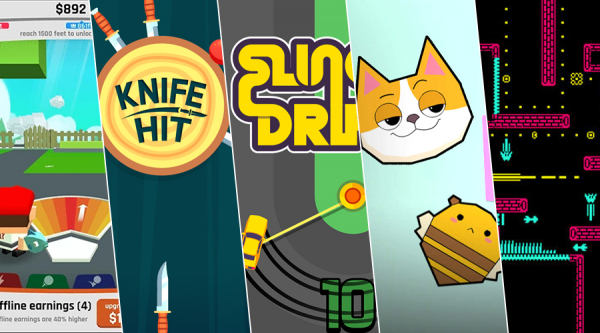
The hyper-casual genre has taken over mobile stores. Some believe it will soon die, but there's no sign of that happening anytime soon. From October 2018 to March 2019 alone, hyper-casual games were downloaded over time.
What makes the genre so successful, and can anything be borrowed from it? Below is a translation of an analysis of the design features that make the genre engaging and popular.
Hyper what?
Hyper-casual is the simplest game with engaging gameplay and minimalist art that typically is played just by tapping the screen. They have simple and clear goals — score more points, clear levels, and so on. Consider it a project developed during a game jam, but with better production quality and aim.
If you (like me) keep an eye on the weekly updates in the App Store, then you know that hyper-casual games are dominating the store. Due to their minimalism and simplicity, developers can spend several months, if not weeks, on their development. This is part of the strategy that makes hyper-casual games successful. Major publishers of hyper-casual games (Ketchapp, Voodoo, Appsolute Games) release at least one game a week. And people love them — hyper-casual games were downloaded over 100 million times in 2018.
Let me play this thing already!
For simplicity, I will use some popular games as examples when exploring different areas of the genre.
Let's start with the opening.
Bored, I was scrolling through my Instagram feed and discovered Ball Blast — a short 30-second video showcasing the main features made me download the game. The video showed how easy it is to play and win. I started almost instantly — the small size of the game is very important for hyper-casuals.
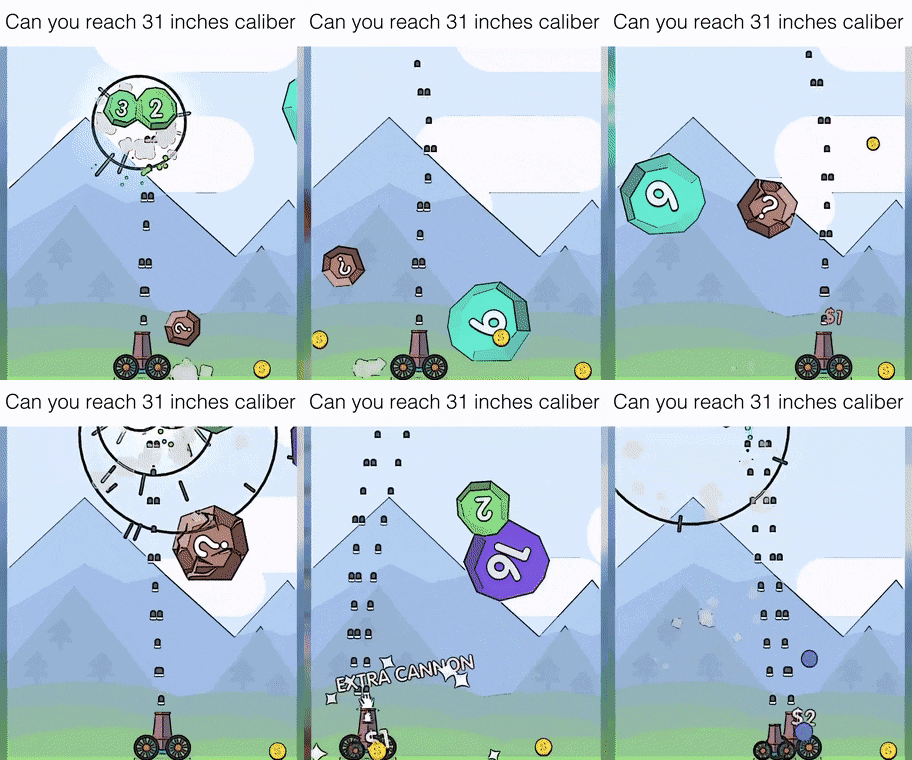
An example of an advertisement from social media
Now, about how most users discover these games. Hyper-casual games heavily rely on user acquisition campaigns on social media. If someone is scrolling through social networks, they are likely just bored. The user is looking for ways to entertain themselves, and that's where these hyper-casual games step in as the 'knight in shining armor.'
The idea is to quickly convey to a potential player that the game is fun and can be started instantly. There’s also a good chance they’re using a smartphone, and no one likes to download gigabytes (even over good Wi-Fi). Hence, a small file size is necessary.
Okay, the player has downloaded the game and is ready to start. What’s next? This brings us to the next topic — onboarding.
A player needs about 7 seconds to decide how fun the game is and whether to keep it. Such a short timeframe means lengthy tutorials and multi-screen UIs are unnecessary.
Ball Blast follows these rules. As soon as you launch the game, a screen showing 'swipe to shoot' opens up — and that’s the only tutorial you’ll see. Touch the screen, and the cannon starts shooting.
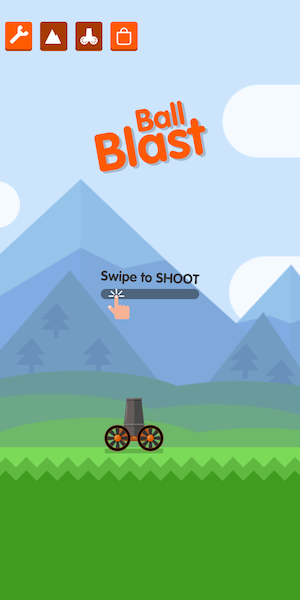
You start shooting and realize that the cannon can be moved horizontally. Once your brain gets used to the 'shoot and move' mechanics, a few numbered balls will appear on the screen. You explode them, they give you coins, and the large balls break into smaller ones. Simple, right?
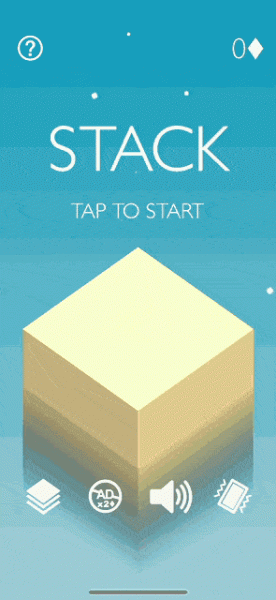
The same applies to the game Stack by Ketchapp, which starts right on the game screen — you just need to touch it. You'll immediately see how the square moves, and when you tap it, it falls onto the stack of squares below, trimming any protruding parts. Due to the simple mechanics, tutorials aren’t needed — players learn from failures and improve their scores. The gameplay is easy to master — you just need to watch.
Log in and out
You know how easy and quick it is to start playing a hyper-casual game. You pull out your smartphone, unlock it, tap on the game icon, and within a couple of seconds, you’re already playing.
This is what the brain craves when it's deathly bored. I play a session, fail a couple of times, set a record, and collect rewards. This is a short feedback loop. Successful or unsuccessful actions are communicated instantly. Combined with upgrades (which we'll talk about later), you get positive feedback — engaging yet brief.
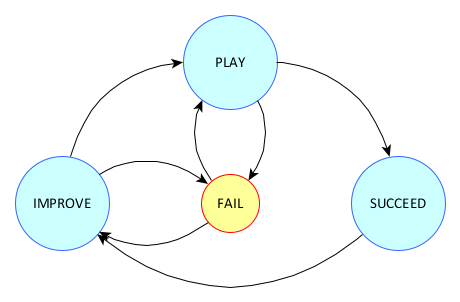
A short feedback loop — a player improves skills if they lose.
If you've created a game with engaging gameplay and players enjoy it, know that this is probably the only thing that matters to them. Ball Blast gets me into the game immediately as soon as I start it because it understands my needs — instant gratification. There are no user interface transitions, cutscenes, or texts. Even if I come back to the game a week later, I know how to interact with it thanks to the simple mechanics. Entering and exiting a game session is another important aspect that helps achieve success. During breaks, I play hyper-casual games — they don't require much time or deep engagement.
Give me all the power
Core gameplay is what keeps players engaged. It's simple, addictive, and creates a desire to return to the game. What's fun about repeatedly shooting balls in Ball Blast? When I first saw the ad, I thought, 'Okay, this is amusing, but will it still be fun in a couple of days?'. The answer is: 'Yes, it will be, and it's still fun to this day.' We're approaching another key point — upgrades.
In Ball Blast, you get gems and coins from the destroyed balls — a kind of 'soft currency'. The former are needed for cosmetic purchases and don't greatly impact gameplay, while the latter are used for upgrading the cannon. There are four types of upgrades:
- Fire Speed: increases firing speed.
- Fire Power: increases damage.
- Coins Drop: increases the value and quantity of falling coins.
- Offline Earnings: increases the number of coins earned in the background.
All of them work in synergy to enhance your power in the game. For example, upgrading Coins Drop allows you to collect more coins in a single session, making it easier to upgrade the cannon — upgrading the weapon is what makes you feel powerful. This is what makes the feedback special — the player feels strong after every gaming session. And since players always want more, they play more often, farm coins, and buy upgrades.

Levels are well-balanced to maintain this cycle: there are those where you can fully showcase your power, and others where your current strength is insufficient, requiring upgrades.
Another game made on the same principle is Mr. Gun by Ketchapp. You destroy enemies, earn coins, and use them to buy new, more powerful weapons. You'll quickly receive a premium-class pistol — this is how the game introduces upgrades in the form of new weapons and their benefits.
I'll take this opportunity to compare this type of hyper-casual game to dungeon crawlers. If you've played Diablo or any other dungeon game, you'll understand. You start with basic gear and face weak level-one enemies that fall after a few hits. As you progress, the loot becomes better, and enemies die from a single hit — you feel powerful. But then you enter a new area and encounter level-two opponents, immediately realizing that your powerful gear isn’t that powerful after all. You want to dominate again — and the cycle repeats.
Ball Blast operates on the same scheme, but instead of new gear, weapons are upgraded. The balance and pace of levels constantly maintain the need for improvements.
What if there are no upgrades?
Upgrades are great, but what about games that don't have them? That's a good question.
You know about games where you need to set records among friends — these games rely on a special kind of upgrades. Let’s take Stack as an example, mentioned earlier. Players have nothing to upgrade, but the more they play, the better they get — they refine their skills. This motivates continued play. And if you make them compete with friends, it becomes more personal and competitive — another reason to come back to the game.
These implicit upgrades allow the player to feel smart or strong and provide a sense of progress. The same applies to hyper-casual puzzles, where the player feels intelligent solving more and more puzzles that become harder over time.

Currently, there are many hyper-casual games focusing on individual levels rather than endless gameplay. Each level has something unique with new challenges for the player that spark curiosity and a desire to continue. This is also a great way to convey progression.
Secret ingredient
So far, we have discussed how hyper-casual games attract players through social media advertising, retain them, and captivate them with simple yet engaging mechanics. Is that all? No.
The magical and invisible element that is not visible to the naked eye is gratification.
To better understand the term from a game design perspective, it can be defined as a form of visual/audio/emotional feedback that a player receives after performing any action in the game. And this feedback makes the actions joyful and meaningful.
Here are some examples:
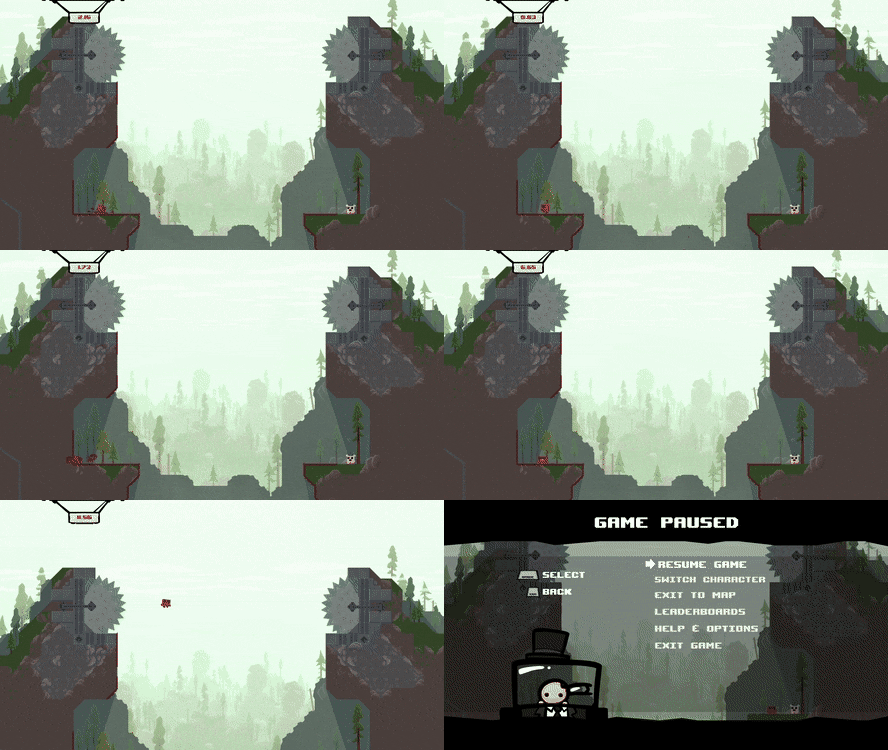
Have you noticed how responsively the character in Super Meat Boy moves? When you press the jump button, the character smoothly arcs, taking inertia into account (if there is any), accompanied by perfectly synchronized animation. Making that perfect jump over an obstacle or gap gives you a sense of satisfaction. Since the game demands quick and precise movements from the player, the entire game system was designed to delight the user.
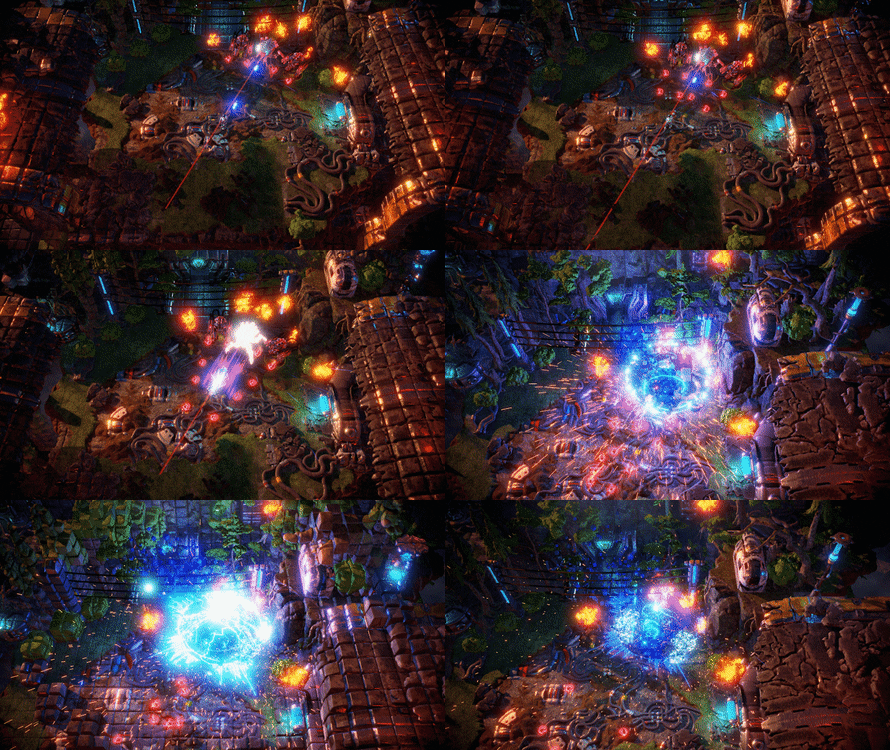
Nex Machina by Housemarque — when a bullet hits an enemy, you receive confirmation of a successful hit through a subtle white flash above the enemy, who dies in a large explosion of cubes accompanied by fitting sound effects. Killing a single enemy already provides a sense of satisfaction and euphoria, now imagine destroying a boss. Various weapons, enemies, and levels delight the player at every moment in the game.
Do you remember Ball Blast? The movement of the cannon, which closely follows your finger, the feedback on shooting the balls, their breaking into smaller ones, the effects of temporary bonuses and upgrades — all of these elements work together to provide pleasant feedback throughout the game.
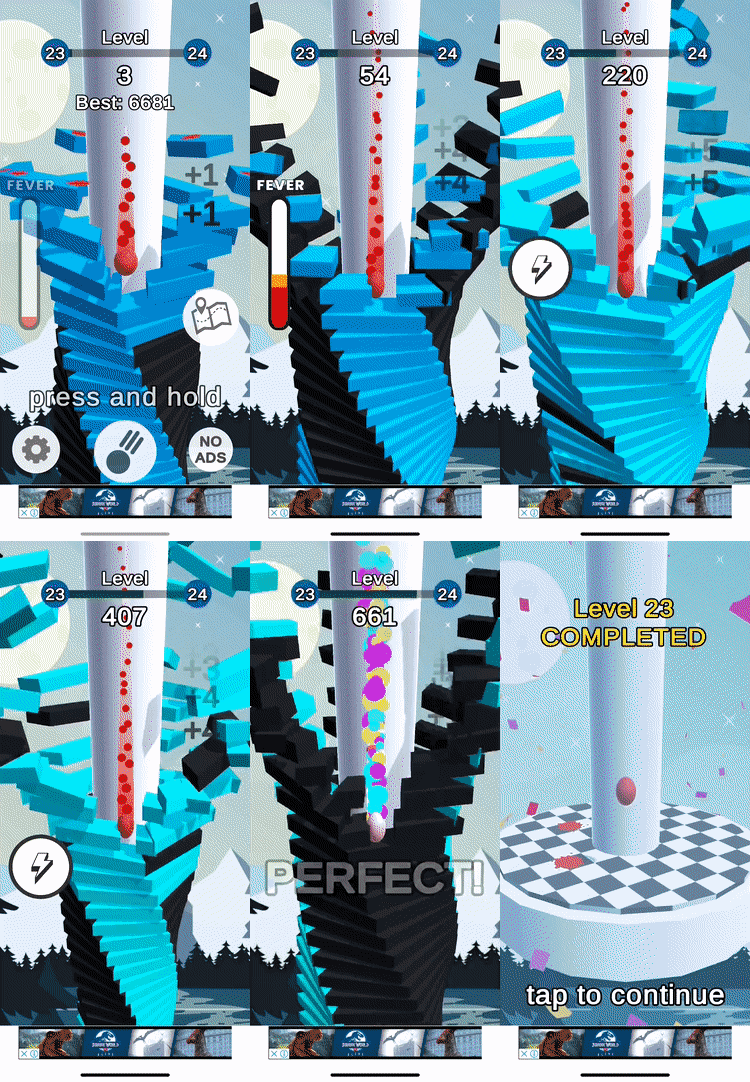
Another great example is Stack Fall (by Voodoo). You control a bouncing ball: it falls and breaks blocks in its path when you touch and hold your finger on the screen. Paint splashes, tactile feedback, block destruction — these are some of the elements that bring joy and enhance the experience.
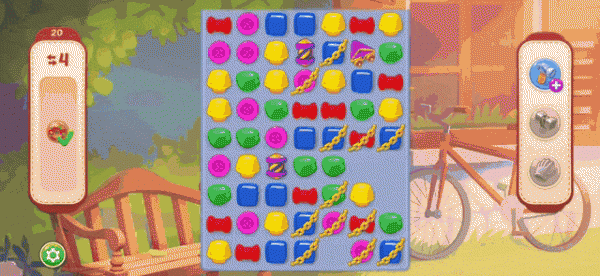
Regardless of actions, the player should feel satisfied. Imagine a platformer where the character has no landing animation after a jump to convey a change in state or dust effects on the ground—it would feel strange and boring. And this isn't limited just to gameplay actions; you can delight users through UI by using contextual effects and animations. One example is Homescapes. After completing a level, there are numerous effects to highlight the victory. It's even more gratifying when the level is tough, and you finally manage to get through it.
An engaging gameplay loop combined with elements that enhance enjoyment constitutes most factors needed to create a fun hyper-casual game.
Conclusion
There was a time when I disapproved of hyper-casual games for various reasons: nonexistent art, weak originality, aggressive use of advertising, and so on. I thought that innovative games were getting hidden behind a massive stream of hyper-casuals every week in the App Store. I'm the type of person who believes that games are a form of art, a new experience crafted with polish and care. Perhaps that's why it takes me years to finish my own games.
As game designers, we take pride in developing complex and deep games, but we often overlook the simplest things. Through hyper-casuals, I have become more aware of the finer details and opened new perspectives in game development. To summarize the key aspects of the genre:
- A mechanic that doesn't need a tutorial.
- The pleasure the player derives from their actions.
- Short feedback loops.
- Ease of entry and exit.
- A sense of power/logic in the form of progression.
- Simple meta to support core gameplay.
Who knows what the future holds for us. I don't know if hyper-casual games will remain, but there are already several takeaways that can be useful in developing games of other genres.
Source: habr.com
