

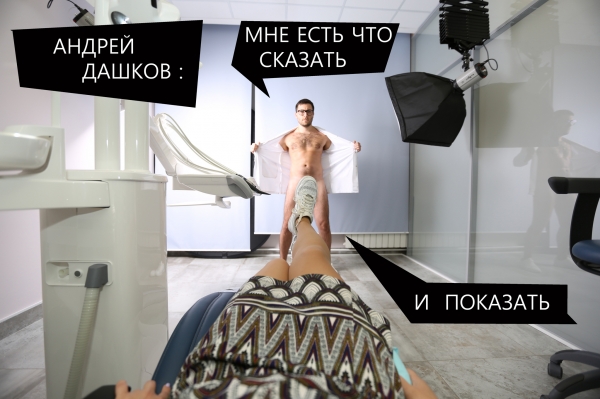
Dear friends, I am glad to see you again. Personally, I’ve missed our conversations a lot. My long absence from this platform has been due to an overwhelming influx of patients, many of whom, I’m pleased to say, were readers of my previous articles. And even, I dare say, commentators!
The reason I picked up the pen once again is that I recently encountered an astonishing amount of shoddy work, which, mind you, wasn't free—it came at quite a hefty price, where some have truly overcharged and swindled.
That’s why today I will open my heart to you. I will tell the truth. Only the truth. THE NAKED TRUTH! To put it in simple, comprehensible language.
Unfortunately, society has developed quite an unflattering opinion of dentists. We are both clumsy and greedy, fueling our luxury cars with 120-octane gasoline at 666 rubles per liter. Yes, it really is that way. I too am outraged and blame sturgeon for the high price of its caviar. Just kidding, of course. I simply ask you to take my advice and analogies in this article seriously. And sometimes with a smile.
Please try not to read between the lines. An insult to colleagues? Yes, perhaps. The authors of some of the 'works' presented below certainly deserve a good reprimanding. This I state honestly. Forget about this corrupt corporate ethics.
Would you like to receive such a 'work'?
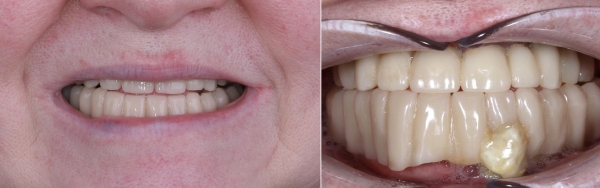
Or this one?
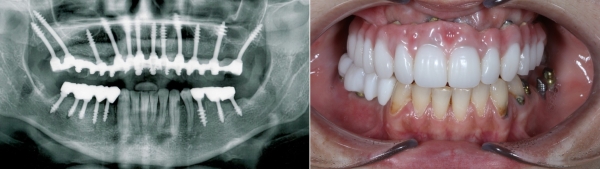
Let me tell you more about this 'work':
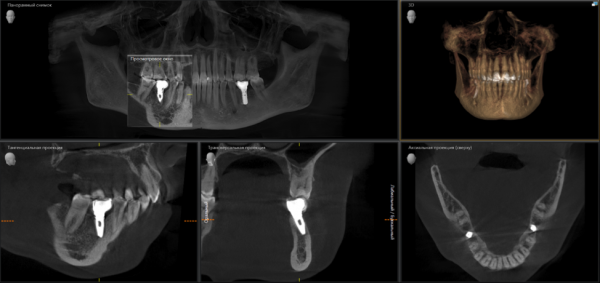
This is an example of how not to do it.
The implant is positioned at a severe angle; its axis does not align with the axes of the 'natural' teeth. The load is distributed incorrectly based on leverage principles, and the crown also has an incorrect anatomical shape—with overhanging edges that trap food and dental plaque.
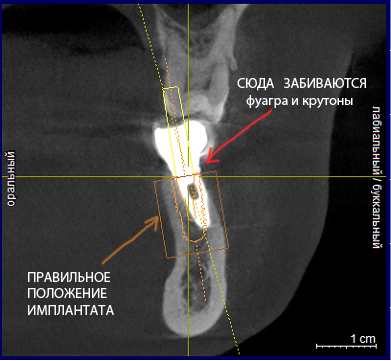
This leads to inflammation and, consequently, a loss of bone tissue and gum around the implant. Few would want to pay for a job that ultimately goes down the drain. Even custom abutments won't help here.
What do you think unites these three questionable qualities of the work?
You will find the answer to this question by reading my article...
It often pains me to realize that people, in their attempts to save money, often end up paying twice as much, repeatedly losing their nerves, precious time, and health in the process. Any surgical intervention, regardless of where it takes place—even in a so-called SuperMegaHyperNanoBombastic clinic (with its geishas, administrators of various backgrounds, naked assistants, or elephants)—remains a surgical procedure, and a clinic is a medical institution where, let's agree, any normal person would prefer to go as seldom as possible. There are far more interesting things in life to spend time on. And money.
So why can the cost of the same procedure vary across different dental clinics? What factors influence pricing, and why is it so crucial to look beyond just the numbers?
Tools and materials
I’ll share a real case from my practice – my school friend reached out to me after learning that I have been working as an implant surgeon for a long time, asking for help. His father has been undergoing dental implant procedures at a somewhat decent private clinic, and they keep getting implants installed with a survival rate of 50%. Two are placed – one falls out. They place four more – two drop out. But it’s inexpensive. Unfortunately, it’s not very cheerful either. Certainly, correcting these mishaps was done within the warranty period — but the patient was a bit weary of it. A decision was made to continue treatment with us. After thoroughly conducting all necessary examinations, I concluded that there was a high likelihood that the failures were due to severely worn implant drills, which were used to prepare the sites for the implants, leading to overheating of the cortical bone – resulting in necrosis. Consequently, the bone tissue lost nutrition, and osteointegration — the joining of the bone tissue with the rough surface of the implant — did not occur. Oh my gosh – I promised… More precisely, due to the worn-out drills that were used to bore holes into which, in turn, titanium screws were screwed in, as if into a wall. Just without a dowel. This whole mess happened solely because some unscrupulous person decided to save a bit of money and “forgot” to buy brand new shiny drills.
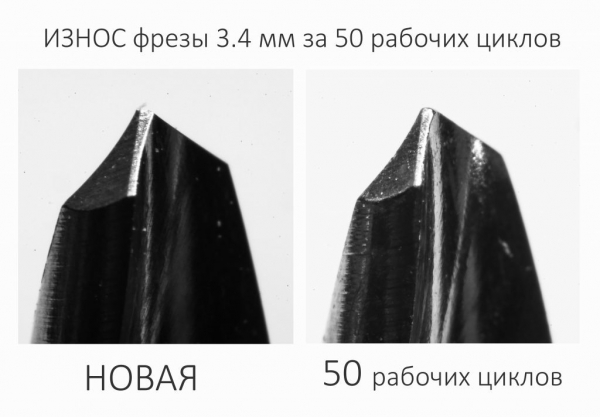
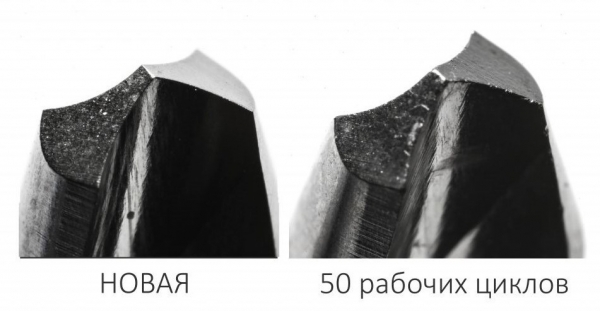
I think the situation with the drills and all the revolving-cutting tools at that company is no better.
This leads to the problem where, for example, when attempting to remove a wisdom tooth, which usually needs to be fragmented () the same problem arises. The drills are dull, blackened from overheating, they get stuck, break during work. Instead of taking 15 minutes to remove it, we end up taking all 40 plus an additional injection of anesthetic and a broken piece of the overheated drill stuck in the cheek, (in the best case) as a bonus.
The same story in therapy – we all remember the smell of burnt teeth in the dental office when dust is everywhere, and it's impossible to breathe. I won't even mention the precision of processing carious cavities — when a dull drill is put into a rattling handpiece, instead of a neat little hole, we end up with a gaping hole. Like an ex.
Total, damn it, savings. But the prices are lower, and people come in more willingly...
Hardware
An important aspect of the final cost of services is the availability or lack of a full-fledged X-ray room, which includes a CBCT (cone beam computed tomography) machine for accurate diagnosis and proper treatment planning. No respectable dentist would proceed with either implantation or root canal treatment without this scan. If this incredibly useful device is not available at the clinic, be prepared to travel from clinic to clinic (or to specialized diagnostic centers) where this machine is present. As we all understand, that’s not ideal. For a moment – such a device costs from 5 million rubles and higher. But it can be skipped to save costs.
Many of you might say: — "Pfft, are you kidding? Are you spoiled? It’s not hard for me to go get a scan at a specialized center." I agree, but going for a scan at a specialized center as a planned appointment is one thing.
It’s entirely different when there is:
- Acute pain, and at the entrance, they tell you: — "please get a scan elsewhere and then come back!" At the very least, that "other place" might not be next door. Who would appreciate such treatment? A visit to the dentist is always stressful, especially when you’ve endured pain all night and finally (!!!) made it to the clinic, where you think you'll finally get help, and then they say – "the machine is unavailable, but hang in there, have a good day and stay positive!"
- When control of root canal treatment or monitoring of surgery and the position of an implant is necessary, for example.
Would you go with "needles" in your mouth and a rubber dam (a material isolating the tooth from the entire oral cavity) to a neighboring center? But this control can be skipped. Then feel free to say goodbye to your tooth – "see you, tooth!"
But the prices are lower, and people come in more willingly...
Sterilization
I want to pay special attention to the CSO (Central Sterilization Department). It is, of course, found everywhere. But what kind?
An ancient used autoclave, bought from a second-hand store. Not damaged, not painted. One owner, an old German grandmother who used it on weekends to sterilize jars for canning Bavarian sausages. It no longer maintains the needed temperature or pressure.
Therefore, we cannot talk about any sterility. Moreover, a normal dental clinic should have a lot of specialized equipment and solutions intended to ensure that even if all the inhabitants of three stations and their ladies of low social responsibility were treated before you, you would not get infected by anything after them.
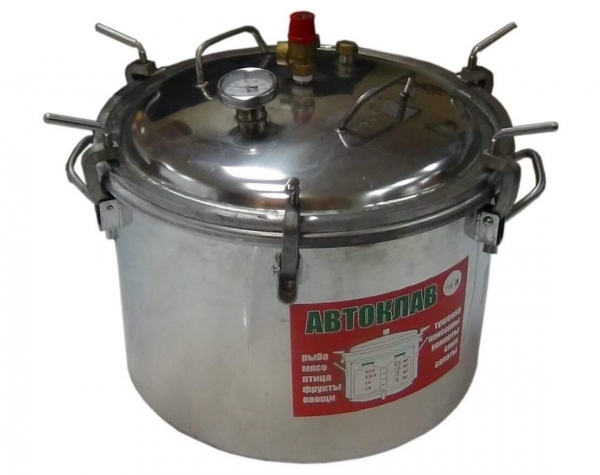
But the prices are lower, and people come in more willingly...
A philosophical digression
Recently, I went to the cultural capital, to the Griboedov Canal, to feed the male ducks and their females with a bun. While admiring the beauty of the Church of the Savior on Spilled Blood, I didn't notice that there was no more delicious bun.
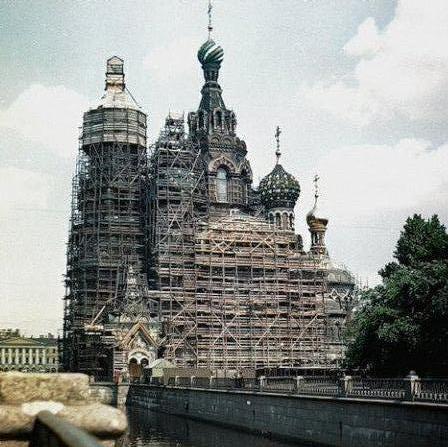
Sorry, male ducks and their females. Next time I will definitely feed you. But that's not a guarantee. After a snack, I visited an old classmate who works as a surgeon at a well-known clinic. What can I say, comrades? It’s going to be a wild ride.
I step over the curb, enter the building...
— Hey! Put on the shoe covers! I hear someone's voice. Either the reception desk is too high, or the girl forgot to stand up, but I really got scared by the angry shout. Only after awkwardly putting on the shoe covers and retreating to the waiting room did I realize that the aroma that had been troubling me since my arrival was not caused by my fear, but by the drains from the leaky basement sewer pipe in St. Petersburg. I want coffee! My body craved a cup of hot, strong, aromatic coffee. But there was a letdown here too.
3-in-1 coffee and Lipton tea bags that are suggested to be filled with hot water from the cooler completely kill any desire.
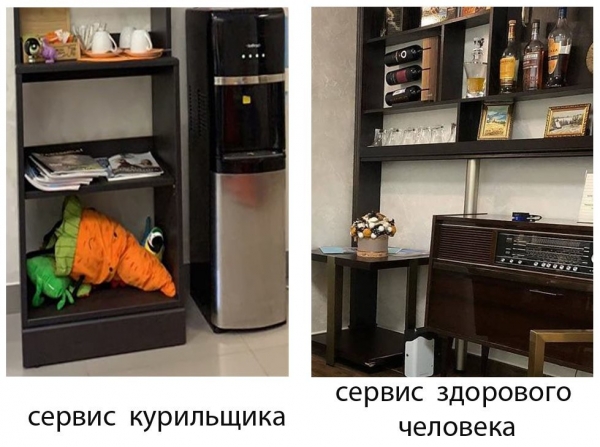
Unfortunately, I did not get to see the guardian of sexual purity that time. However, I did see a bucket full of used shoe covers.
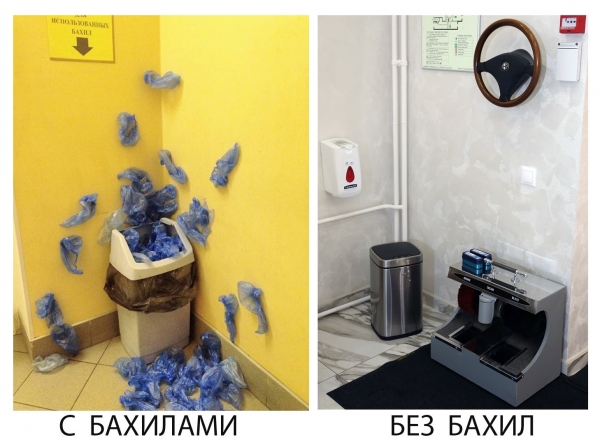
But it could be different. Without shoe covers, because there are special people who get paid for cleaning. With good coffee that any capital café would envy. A multi-stage air purification and deodorization system. Well-trained administrators. And just a pleasant, inviting atmosphere where you forget that you are in a dental clinic. Whether it costs money or not is for you to decide.
Rent and utilities
Contrary to popular belief that renting in the center of Moscow can increase the final price significantly, I can responsibly say this is a provocation. The difference in the cost of renting 500 sq.m. in central Moscow and its outskirts is only enough to increase the price of one treatment by a maximum of 100 rubles. The 'super-rent' pays off within a few hours of the clinic's operation, believe me.
What global increase in treatment costs are we even talking about? You might ask — how do I know this? In the cover photo, my private area is obscured by the foot of the clinic's founder's wife. Just don't tell him about this.
Now forget everything I wrote above. Essentially, it doesn't matter what type of chair you sit in — whether it's comfortable and ergonomic or an old one that had its lifting mechanism broken over 10 years ago, with a seat shaped by the outlines of hussar's buttocks and marked by their spurs. And the success rate of free coffee doesn't depend on the percentage of successful dental procedures either.
But I couldn't write an article consisting of just one paragraph.
So why do different clinics and different doctors have varying prices for the same procedure? The truth is, it's not complicated at all, but very simple.
Let's imagine that all existing clinics use the same materials and operate under the same conditions — it's not uncommon for very expensive and very cheap clinics to be located just ten meters apart, sometimes even in the same building. One could assume they incur the same rental and operational costs.
If we assume they adhere to identical pricing rules and profitability calculations — where does the difference come from? Here's where:

For example, we have a recent graduate ready to work for food, and his assistant, who survives on the leftovers from the graduate's meals, along with an administrator on a strict low-calorie diet, simply put, living on water. The labor cost of such staff is minimal. Nowadays, there are many offerings from novice specialists (interns) who can create a 'masterpiece' for free or for a negligible fee. But it's one thing when it comes to hair or nails with eyelashes that can grow back, and another entirely when it comes to teeth...
In another corner of the ring are specialists gathered and lured from the best dental clinics. In-demand doctors, assistants, and administrators whose services are sought after. Personnel whose quality of work is exemplary, and in whose hands thousands of patients place their trust. Unfortunately, such specialists are unlikely to work for peanuts. They were enticed away from other clinics with better working conditions, including salary. And now, this salary needs to be paid.
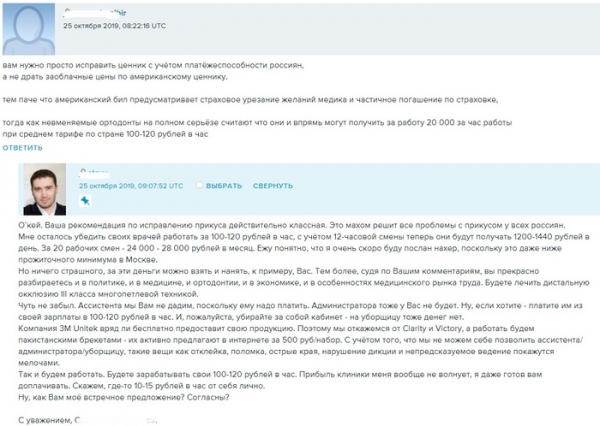
While I was drafting the article, my boss turned out to be engaged in a heated discussion on his LiveJournal with a rather esteemed gentleman on the same topic. I can’t help but share the screenshot. Enjoy.
P.S.
Everyone, including myself, started in 'the slums.' It's neither good nor bad – it's a fact! I have spent several years working in a setup where there was neither 'water' (cooling), nor 'light,' nor 'aspiration.' I had to illuminate the operating field with my phone's flashlight, cool down overheating elements using a syringe with saline, and ask someone to spit into a bowl (which was just a cafeteria plate) every few seconds of work.
I'm not saying that it's impossible to encounter a poor practitioner in 'expensive' dentistry, but the likelihood of meeting a jerk in a basement on the outskirts of the city versus a clinic in the city center is far from equal. If you leave a consultation feeling like you have no understanding of what's going on, and moreover — you have even more questions than before, alongside a fleeting impression that the doctor is a jerk, then most likely, that's indeed the case. Go to another clinic and hear opinions from other specialists. This will be the right decision even if you liked the doctor. You'll have something to compare against. Therefore, in decent clinics, consultations are free so that you can weigh all pros and cons and consciously make your choice.
I emphasize — of course, it’s important how good the coffee is that you are pampered with at the dental clinic, and whether robots from 'Boston Dynamics' pour you elite drinks, while in the lobby, Aмаяк Акопян constantly shows off his antics.
But, still, what's more important STAFF.
Sincerely, your insider in the world of dentistry,
Andrey Dashkov
What else to read?
About dental implantation:
About wisdom teeth and their removal:
Source: habr.com
