

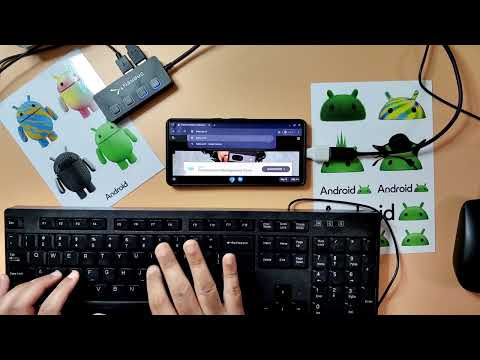
Google showcased the FerroChrome project to partners at a closed event, where a special build of the Chromium OS operating system was prepared for running in a virtual machine on Android devices. During the demonstration, the Chromium OS interface was displayed on a large screen connected to a Pixel 8 smartphone. It is expected that the ability to run Chromium OS could be used to create a fully functional working environment that can be utilized when connecting a smartphone to a monitor, keyboard, and mouse.
Starting with Android 13, the Android Virtualization Framework (AVF) has been added to the platform, implemented on the KVM hypervisor and the crosvm tooling, allowing for the running of virtual machines along with other operating systems. Until now, Google has used AVF to execute 'microdroid' builds applied for isolating third-party system components. At the end of April, the capability to run operating systems with graphical user interfaces was documented in the AVF, and support for creating guest systems with Chromium OS was announced.
The FerroChrome build is not yet publicly available, but Google has published instructions for building a guest system with Chromium OS and launching it in a virtual machine using AVF. Enthusiasts managed to replicate the launch of Chromium OS on a Pixel 7 Pro smartphone with a connected keyboard and mouse by following these instructions.
Source: opennet.ru
