

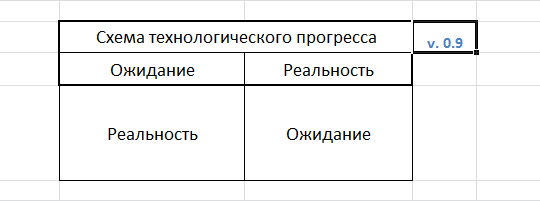
How often do we see "news from the future" in the media, proudly announcing planned scientific successes for the benefit of the national economy? Often, in the comments on such reports, skepticism and calls to write only about events that have actually occurred can be found. We believe little in bright and inspiring plans.
Well, such publications are not unique to our information space. It's not hard to stumble upon announcements from "them" in New-Vasyuki.
I propose to track the fate of a technology project that has gained attention not only in the West but has also reached Russian-language media. If you are playing bullshit bingo, here's a hint before the call — graphene.
When and what was promised
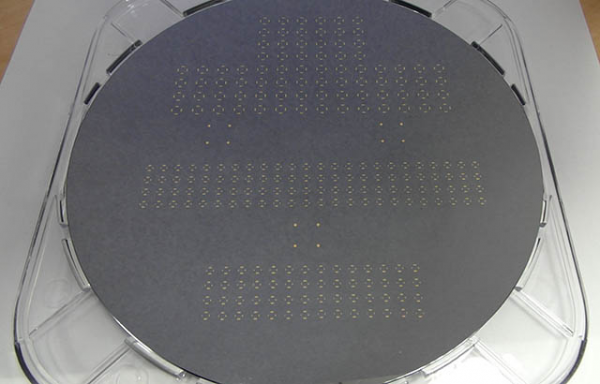
In March 2019, a loud statement from the company Paragraf spread through English-language media, mainly British. founded in 2015 Building on years of research and time spent perfecting the technology process, Simon promised to start industrial production of devices using graphene within the next two months.
What preceded the promise
Of course, such unconventional technologies cannot arise out of thin air. After all, giants like IBM, Intel, and Samsung, along with many other groups, are working on the problem of industrial graphene production. It was unlikely and unwise to overtake them in stealth mode. Therefore, we can find traces of their previous activities.
In 2017, the company
received funding of £3 million, including public money. This funding was intended for developing prototypes and improving the technology (let me remind you, the company was founded in 2015, and the research that made the commercialization stage relevant was conducted even earlier). In May 2018, the company
received another tranche financing. This time, the amount reached £2.9 million, and among the investors were not only venture companies but also the Cambridge fund (Cambridge enterprise). Now, the discussion had shifted from refining technologies. The target of the investments is to open a manufacturing facility to start producing devices based on their graphene. They planned to start with ultra-sensitive magnetic field sensors and other sensors intended for the mass market.
Almost a year later, in March 2019, a statement came out that everything was ready and set up. Literally, in just a couple of months, devices based on graphene would start mass production, hit the market, and a new era would begin. This loud news, with specified (albeit vague) deadlines, was received positively and made its way to our domestic readers.
What really happened and what didn’t happen after the hype
The perceptive reader might guess what happened after such noise and media attention. For the rest, I will give a hint. Paragraf from the same investment funds, having secured £12.8 million. However, this took place in July 2019, four months after the hype. In the same month, the startup (as much as one can call a four-year-old company a startup) was of £0.5 million for advanced developments.
What has not happened over the past time is the promised revolution and the start of mass production. It has been eight and a half months since the promise to begin mass production within two to three months, yet the announced sensors and devices (with sensitivity 30 times higher than the ones currently used) have not hit the market.
The first five pages of Google search and the ‘News’ tab yield only the initial loud announcements about the readiness to start commercial production of devices based on graphene in ‘the coming months’ from March 2019, as well as July news about receiving investments of £12.8 million.
No information about the actual launch of any production or supply of components for third-party manufacturers can be found. Moreover, the company's website has ceased to function, although it was referenced by the media as recently as September.
Current status
The company has received funding since 2017 of at least £19.2 million (1.6 billion rubles at the current exchange rate). In September 2019, the company had 25 researchers (there were 16 in March), and according to the founder, they are still conducting research and preparing to establish production of the miraculous magnetic field sensors and other sensors. The latest news about them ends in September. is no longer functioning (upd. available via VPN).
Advertising
Well, while somewhere they are gathering additional investments for revolutionary batteries, conductors, sensors, and , we offer you a discount on something that is already delivering benefits. I needed several hours for source analysis and material preparation, plus a bit of luck when I stumbled upon news that I saved and recalled at the right moment. But all of this can be done by machines in the background, which a large number of organizations and analytical groups are already utilizing. Join us!

The book "»
Deep within popular social networks—Twitter, Facebook, LinkedIn, and Instagram—lie rich deposits of information. In this book, researchers, analysts, and developers will learn how to extract these unique data using Python code, Jupyter Notebook, or Docker containers. First, you will familiarize yourself with the functionality of the most popular social networks (Twitter, Facebook, LinkedIn, Instagram), web pages, blogs and feeds, emails, and GitHub. Then you will start data analysis using Twitter as an example.
More details about the book can be found
»
»
For Habr users, a 25% discount with the coupon — Data Mining.

The book "»
Natural Language Processing (NLP) is an extremely important task in the field of artificial intelligence. Successful implementation makes products like Amazon's Alexa and Google Translate possible. This book will help you learn PyTorch—a deep learning library for Python—one of the leading tools for data scientists and software developers working on NLP. Delip Rao and Brian McMahan will introduce you to NLP and deep learning algorithms. They will show how PyTorch enables the implementation of applications that use text analysis.
More details about the book can be found
»
»
For Habr users, a 25% discount with the coupon — PyTorch.
Upon payment for the print version of the book, an electronic version will be sent to your email.
Source: habr.com
