

Even before the release of Pokemon Sword and Shield, players discovered numerous references to British culture within the project. One of these recently emerged and is particularly intriguing. The reference relates to ugly Pokémon and a real story from British history.
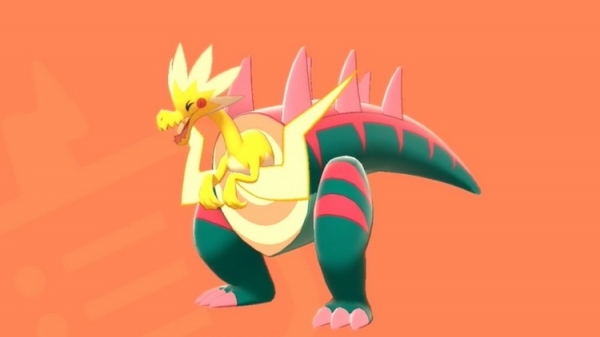
In most Pokemon games, there is a feature that allows you to resurrect Pokémon from fossils found throughout the region. Even in Pokemon Red and Blue, you can revive Omanyte or Aerodactyl. However, in Pokemon Sword and Shield, the revival process incorporates a touch of British history — a 'paleontologist' named Cara Liss.
As you travel through the Galar region, you may stumble upon four fossils. These skeletons are vaguely labeled 'Drake', 'Bird', 'Fish', and 'Dino'. When Cara Liss combines them together using her scientific machine, you receive one of four prehistoric monsters, each with a structure that clearly has some issues. Even the entries in the Pokedex suggest that every moment they are alive constitutes a virtual torment. One cannot eat because its mouth is on top of its head, another cannot breathe unless underwater, and a third can barely breathe at all.

Clearly, Cara Liss simply mixed the fossils together. The ancient Pokémon Dracovish has a fish head and a lizard-like body with thick legs that should theoretically allow it to run at 40 kilometers per hour — except it can't really breathe air. All entries for these chimeras in the Pokedex imply: 'Wow, what an inefficient body. No wonder these Pokémon went extinct, right?'
Cara Liss and her crazy science draw a parallel to the 19th-century paleontological frenzy that swept through Britain, Europe, and America. Major strides were made in discovering dinosaurs, but fierce competition and a general misunderstanding of the anatomy of these beings led to false conclusions. For instance, skulls and bodies turned out to be from different species: the Brontosaurus, likely .

In 1822, a doctor named Gideon Mantell discovered one of the earliest fossils while visiting a patient in Sussex (some sources claim it was found by Mantell's wife, Mary Ann). This was a dinosaur tooth that would later be named .
Afterward, other iguanodon fossils were found, but the creature's body was mistakenly reconstructed. In early depictions of the dinosaur, whose statues can still be found in London's Crystal Palace park, the reptile is shown awkwardly moving on four legs of equal size. In reality, the iguanodon was bipedal with short front limbs, as it was later discovered. The statue features the famous thumb spike of the iguanodon on its face; Mantell and other early paleontologists initially thought the claw resembled a rhinoceros horn. Such confusion occurred in the past. Developers of Pokemon Sword and Shield, Game Freak, incorporated it into the new Galar region.

Pokemon Sword and Shield were exclusively released for Nintendo Switch.
Source: 3dnews.ru
