

Recently, I read an interesting book “Questions Are the Answers.” Besides its main content about how to ask the right questions to get the answers you need, the book includes an introduction in which Alan shares his journey to success. He started selling rubber sponges at the age of ten and by eighteen became the top sales agent at a company selling bed linens and kitchenware. It’s no surprise that with such rich experience, he learned to communicate with people and understand when they are interested in his products and when they want him to leave them alone.
By studying clients' gestures and postures, Alan Pease wrote the book “Body Language,” which has sold hundreds of millions of copies and been translated into 36 languages. The book discusses various gestures, postures, personal space, the differences in gestures across cultures, and how to effectively use this knowledge.
When Alan was eleven, he sold sponges to raise money for building a clubhouse for the scouts. The scoutmaster, a wise old man, shared a secret with Alan, which Alan called the “law of distribution of probabilities.” This rule states:
Luck is a game; the longer you play, the more you win. And the more you win, the more successfully you play.
Then Alan shares several rules that apply to a 'working network'—network marketing, but they are relevant in any field.
Rule 1. Communicate more with people
This is the most important rule. Talk and engage with all potential employees, clients, colleagues, and simply people. “From the very first stage of building your business, you must speak with everyone because you need practice.” There are no problems [in your business] that can’t be solved by increasing your activity.
Rule 2. Communicate even more with people
You can make the best presentation, but if there’s no one to show it to—it’s pointless. The most important thing is to talk to people. The more people you engage, the greater the chance that someone will agree to become your client.
Rule 3. And communicate even more with people
Many aspiring entrepreneurs, businesspeople, or marketing participants think that the reason for their failure is simply a lack of luck or customer unreasonableness. In reality, this is not the case (well, except sometimes) — it happens due to insufficient communication with potential clients or candidates.
Rule 4. Use the law of probability distribution
Any activity in life adheres to the law of normal probability distribution. This means that if you keep doing the same thing over and over again in the same manner, under the influence of the same environment, the results will remain unchanged.
In the insurance business, I found that the probability is 1 in 56. This means that if I go outside and ask a negative question: 'Would you like to buy life insurance?', only one person out of 56 will respond, 'Yes!' This indicates that if I ask this question 168 times, I will be able to sell 3 contracts in a day and rank among the top 5% of insurance agents!
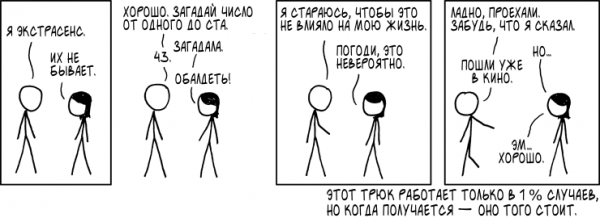
If you stand on a street corner and ask every passerby, 'Would you like to join my business network?', the law of probability will yield a result: 1 in 100 will respond 'Yes'. The Law of Probability always applies.
When Alan was a child, he sold sponges for 20 cents each. His probability distribution looked like this:
10/7/4/2.
Out of every 10 doors he knocked on between 4 and 6 PM, only 7 people opened the door for him. Only 4 of them could listen to him, and ultimately, only two purchased the product. If he knocked on 60 doors in two hours, he sold 12 sponges = $2.40, big money at that time, especially for an 11-year-old boy. Knowing the law of probability distribution, Alan did not get upset about the three who did not open their doors, nor about those who could not listen to him, or even those who did not buy his product. He knew that if he knocked on 10 doors, he would earn 40 cents. This meant that if he touched a door, he was already making 4 cents, regardless of what happened next!
This was a strong motivation for me — all I had to do was knock on any 10 doors and earn my 40 cents! My success depended solely on how quickly I could knock on those doors.
Record your results and calculate the average number.
Another story from the bookMy personal $9 poker slot machine
When I was a teenager, I took on side jobs selling
household items: pots, pans, bed linens, and blankets, mostly working on referrals. My success rate
was:
Out of every 5 phone calls from clients referred to me, 3 would set up an appointment. However, I knew that I only had a chance to show my goods to two, as the third client usually either didn't show up for one reason or another or would call back to cancel the appointment. Out of the remaining 2 potential clients who agreed to listen to me and see the product, only one ultimately made a purchase. By selling my product to one buyer, I earned $45. Thus, by calling 5 people in an evening, I achieved a total of $45, which means that each phone call I made earned me a profit of $9.
5:3:2:1
This also means that each positive phone response equates to $15 of my earnings, regardless of whether they all made a purchase from me or not, whether they all showed up for the meeting or not, and regardless of what they said to me on the
phone! Wow! This was just amazing!
On a large sheet of paper, I wrote a large number $9 and hung it on the wall by my phone. From every person answering my phone call, I made a profit of $9. From every positive response to my offer and an arranged meeting, I earned $15. This meant I had completely taken control of my destiny! Most people who were engaged in this business with me, regardless of age, fell into despair at every negative response to their proposals. Soon, I became the best salesperson in the company in the country.
My final ratio of 5:3:2:1 broke down as follows:
Phone Calls $9.00
Scheduled Meetings $15.00
Product Presentation $22.00
Product Sale $45.00
$45.00
I have never sought out people wanting to buy my product. My main goal was to call my potential customers.
This is the key point. Do not focus on attracting new distributors — pay attention to potential candidates, those who will listen to your presentation.
The Law of Probability will take care of the rest.
The book contains several more examples, including in the area that made him wealthy, relying only on the law of probability distribution. Indeed, this law works not only in sales; if slightly modified, we can arrive at the phrase 'intensity is more important than thoroughness.' We need to care less about each client trying to buy something from us, spending too much effort and time on it. Instead, we should increase the number of clients surveyed, and thus we will achieve results.
Let's apply this law in entirely different fields, such as studying English. Many people take English courses, where classes happen, for example, three times a week. But that’s not intense enough; a person gets out of practice and finds it hard to recall information they heard two days ago.
It is much more effective to study English every day, even if only for 20 minutes. You need to constantly be in an environment where 'you increase the chance that one day, you will start to understand better.' Record an audiobook on your player (I recommend ) or watch videos with translations (), but make sure to do this every day. I dedicate time every day to watch Disney cartoons in English. Cartoons are easier to understand, and all the dialogues are clear.
All of this is far more important than one deep session, such as 'spending a whole day' studying English. Group classes are thorough and involve large lessons; they are beneficial but do not allow for immersion in an environment where the mind gets used to thinking in English.
When I applied this law in different fields, it worked everywhere (stretching is important to do every day, not just one day, even if thoroughly, or it's preferable to exercise every other day rather than having large gaps), but in programming, I had doubts: reading articles like and , I was a bit confused.
Programmers work in long chunks of time, which can be better described as meticulousness rather than intensity. However, by observing how I write code, I concluded that programmers often ‘artificially distract themselves’ during a long session; they might shift to another task, grab a coffee, or contemplate refactoring. All this is to approach the task once more, each time increasing the chance that, say, an error will be found. Moreover, programmers work daily, and when they're not working, they write code for pleasure, which can also be termed intensity.
Never despair if something isn't working out for you — try to do it as often as possible. Tackle difficult tasks many times, and in one of those attempts, you'll surely succeed. What people call a lack of inspiration or a creative crisis, I equate to a deficiency of attempts to get something done. If you frequently engage in your work, the ‘likelihood’ is high that at some point a brilliant idea will come.
Report any errors via personal messages, and I will promptly fix them!
Source: habr.com
