

Last time , how attempts to automate the learning process led to the development of the very advanced PLATO system in the 1960s. A number of educational courses were created for it across various subjects. However, PLATO had a drawback — access to the educational materials was only available to university students with special terminals.
The situation changed with the advent of personal computers. Educational software thus reached all universities, schools, and homes. We continue the story below.
Photo: / CC BY
The Computer Revolution
The device that led to the personal computer revolution was the based on the Intel 8080 microprocessor. The bus designed for this computer became the de facto standard for subsequent computers. Altair was developed by engineer Henry Edward Roberts in 1975 for MITS. Despite several drawbacks — the machine lacked a keyboard and a display — the company sold several thousand units in the first month. The success of the Altair 8800 paved the way for other PCs.
In 1977, Commodore entered the market with its Commodore PET 2001. This 11-kilogram metal-cased computer already featured a monitor with a resolution of 40x25 characters and an input device. That same year, Apple Computer introduced its Apple II. It came with a color display, a built-in BASIC interpreter, and could produce sound. The Apple II became a PC for average users, which meant that not only technically savvy professionals in universities used it, but also teachers in schools. This spurred the development of accessible educational software.
At one point, a teacher from the U.S., Ann McCormick, became concerned that some adolescents were reading extremely hesitantly and slowly. Therefore, she decided to work on a new methodology for teaching children. In 1979, McCormick won a grant and received an Apple II from the Apple Education Foundation. Joining forces with Stanford psychologist Teri Perl and Atari programmer Joseph Warren, she founded the company . Together, they began developing educational software for schoolchildren.
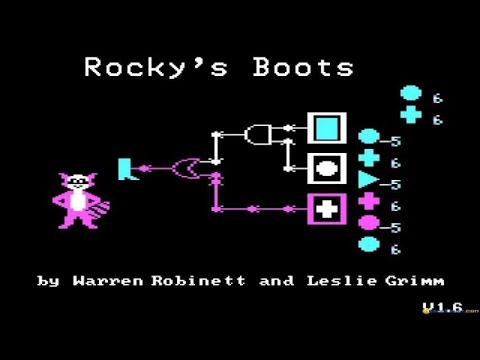
By 1984, The Learning Company had published fifteen educational games for children. For example, Rocky’s Boots, in which students solved a variety of logic puzzles. It ranked first in the list of the Software Publishers Association. There was also Reader Rabbit, which taught reading and writing. Over the course of ten years, it sold 14 million copies.
By 1995, the company's revenue reached $53.2 million. Warren Buckleitner, editor of Children’s Technology Review, The Learning Company the 'Holy Grail of education.' According to him, it was the work of Ann McCormick's team that helped teachers understand how powerful computers could be as educational tools.
Who else was involved
In the first half of the 1980s, The Learning Company was not the only developer of educational software. Developmental games Optimum Resource, Daystar Learning Corporation, Sierra On-Line, and other small companies. However, only Brøderbund managed to replicate The Learning Company’s success — it was founded by brothers Doug and Gary Carlston.
For a time, the company developed games, perhaps their most famous project being Prince of Persia. But soon, the brothers shifted their focus to educational products. Their portfolio included James Discovers Math and Math Workshop for teaching math basics, Amazing Writing Machine for teaching reading and grammar, as well as Mieko: A Story of Japanese Culture — a course on Japanese history told through engaging stories for children.
Teachers were involved in the development of applications, creating lesson plans using this software. The company regularly held seminars in schools to promote computer-based education, published printed user guides, and offered discounts on programs for educational institutions. For example, while the regular price for Mieko: A Story of Japanese Culture was $179.95, the school version cost nearly half as much — $89.95.
By 1991, Brøderbund had captured a quarter of the American educational software market. The company’s successes drew the attention of The Learning Company, which acquired its competitor for $420 million.
Software for students
Higher education was not left out of the computer revolution. In 1982, MIT purchased several dozen PCs for classrooms for engineering students. A year later, with support from IBM, they launched The corporation provided the university with computing machines worth several million dollars and its programmers to develop educational software. Students from all majors gained access to new technologies, and a computer network was established on campus.
In the late 1980s, an educational infrastructure based on UNIX emerged at MIT, with university specialists developing programs for other universities. One of the most successful was recognized as a comprehensive system for teaching natural sciences — the university staff not only wrote a computer course of lectures but also launched a system for assessing students' knowledge.
"Athena" became the first large-scale use of computers and software in a university and a model for similar projects in other educational institutions.
Development of the educational ecosystem
Interest in educational software began to emerge among entrepreneurs in the early 1980s. After leaving Microsoft in 1983 due to disagreements with Bill Gates, Paul Allen founded Asymetrix Learning Systems. There, he developed a learning content environment called ToolBook. The system allowed the creation of various multimedia products: courses, testing applications, presentations, and reference materials. In 2001, ToolBook was recognized as one of the best interactive tools for e-learning.
The ecosystem of distance education also began to develop. The pioneer was the FirstClass program, created by alumni of Bell Northern Research — Steve Asbury, Jon Asbury, and Scott Welch. The package included tools for email, file sharing, chats, and conferences for teachers, students, and parents. The system is still in use and is updated (it is part of OpenTex's portfolio) — three thousand educational institutions and nine million users worldwide are connected to it.
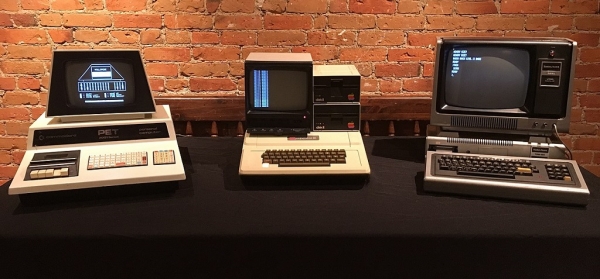
Photo: / CC BY-SA
The spread of the internet in the 1990s led to the next revolution in education. The development of educational software continued and evolved: in 1997, the concept of the "interactive learning environment" (Interactive Learning Network) was born.
We will talk about this next time.
On our Habra:
Source: habr.com
