

When I became the smallest editor at the newspaper, my then-editor-in-chief — a lady who became a seasoned journalism veteran back in Soviet times — told me, 'Remember, now that you've started to grow — leading any media project is like running through a minefield. Not because it's dangerous, but because it's unpredictable. We deal with information, and you can't calculate or control it. That's why all editors run, but none of us knows when and on what exactly we will blow up.'
At that time, I didn't understand her, but later, when I, like that Buratino — grew up, learned, and bought a thousand new jackets… In general, having learned a bit about the history of domestic journalism, I realized that the thesis is absolutely true. How many times media managers — even great media managers! — ended their careers due to completely unimaginable circumstances, the prediction of which was absolutely impossible.
I won't tell you now how the editor of 'Funny Pictures' and the great illustrator Ivan Semyonov nearly got burned by bugs — in the most literal sense. That's a more suitable Friday story. But I will share the story of the great and terrible Vasily Zakharchenko, especially since it aligns well with the profile of Habr.
In the Soviet magazine 'Technology for Youth', science and fiction were greatly cherished. Therefore, they often combined the two, publishing science fiction in the magazine.
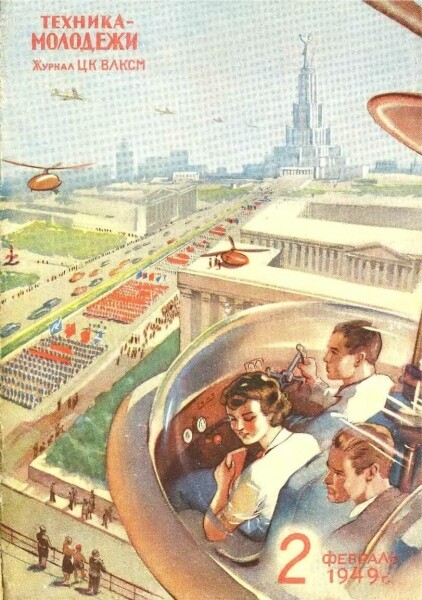
For many years, from 1949 to 1984, the legendary editor Vasily Dmitrievich Zakharchenko led the magazine, who, in fact, turned it into the 'Technology for Youth' that resonated throughout the country, became a legend of Soviet journalism, and was well-connected. Thanks to the latter circumstance, 'Technology for Youth' occasionally succeeded in doing what few could — publishing contemporary Anglo-American science fiction authors.
No, contemporary Anglo-American science fiction authors were translated and published in the USSR. But in periodicals — fairly rarely.
Why? Because this is an enormous audience. These are incredible print runs even by Soviet standards. 'Technology for Youth', for example, had a circulation of 1.7 million copies.
However, as I mentioned, there were times when it was possible. For much of 1980, enthusiastic science fiction lovers read Arthur Clarke's novel "Rendezvous with Rama" in the magazine.
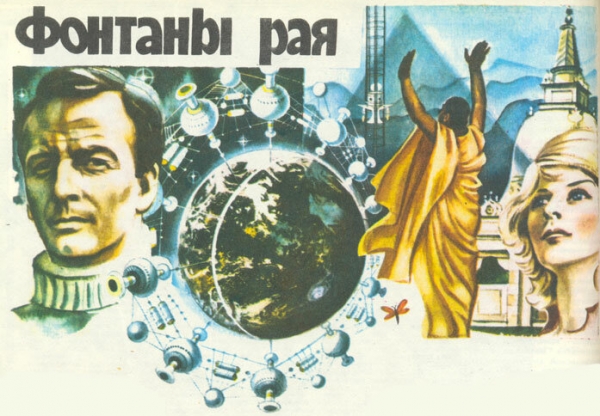
Arthur Clarke was considered a friend of the Soviet Union, having visited us, toured the Star City, and corresponded with cosmonaut Alexei Leonov. As for the novel "Rendezvous with Rama," Clarke never hid the fact that he used the idea of a "space elevator" in the book, first proposed by the engineer from Leningrad, Yuri Artsutanov.
After the publication of "Rendezvous with Rama," Arthur Clarke visited the USSR in 1982, where he met not only Leonov but also Zakharchenko and Artsutanov.
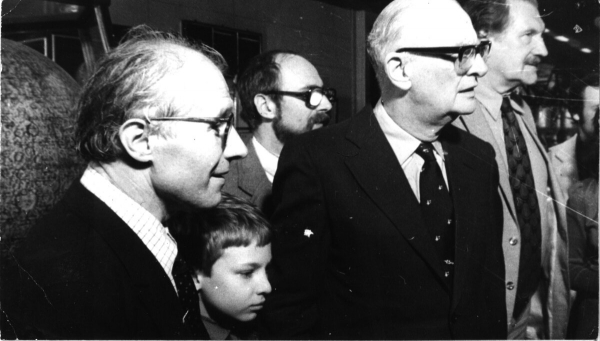
Yuri Artsutanov and Arthur Clarke visit the Museum of Cosmonautics and Rocket Technology in Leningrad.
As a result of this visit, in 1984, Zakharchenko managed to push for the publication in "Technique for Youth" of another novel by the world-renowned author titled "2010: Odyssey Two." This was a sequel to his famous book "2001: A Space Odyssey," which was based on the script of Stanley Kubrick's iconic film.
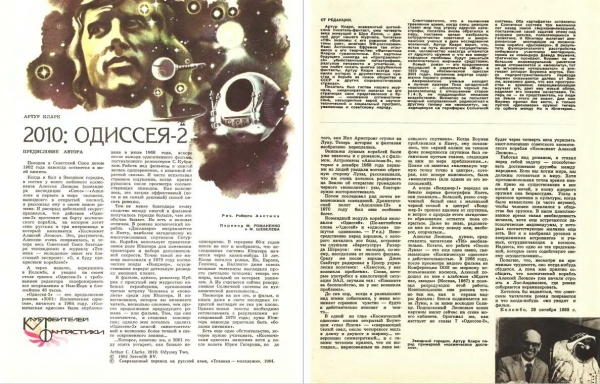
A significant factor in this was that the second book included a great deal of Soviet content. The plot was centered around the spacecraft "Alexei Leonov," which had a Soviet-American crew on board as it traveled to Jupiter to unravel the mystery of the ship "Discovery," left in orbit around Jupiter in the first book.
However, Clarke had a dedication on the first page:
To two great Russians: General A. A. Leonov — cosmonaut, Hero of the Soviet Union, artist, and academic A. D. Sakharov — scientist, Nobel laureate, and humanist.
But, as you can understand, the dedication was omitted in the magazine. Even without a lengthy struggle.
The first issue was published successfully, followed by the second, and readers were already looking forward to a long, unhurried reading experience — just like in 1980.
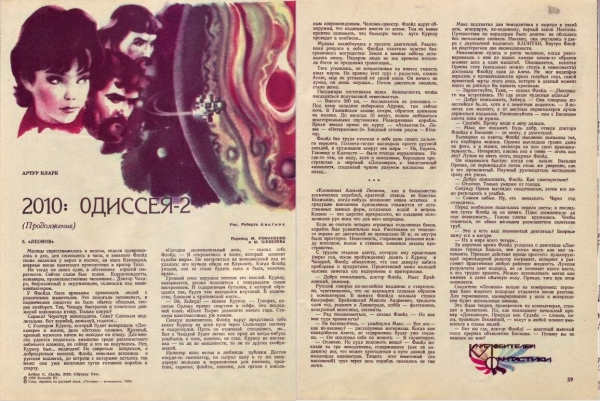
But in the third issue, there was no continuation. The public was unsettled but decided to wait — after all, they thought, maybe in the fourth issue everything would be fine.
But in the fourth issue, something incredible happened — a pathetic, condensed summary of the further content of the novel was presented in three paragraphs.
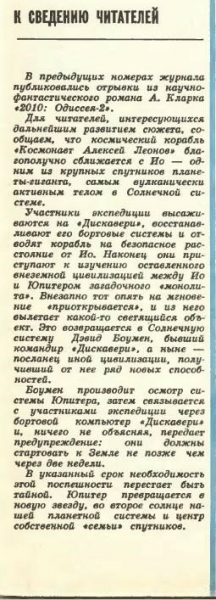
"Doctor, what was that?! Is that what they call the ending?!" — the readers of "Technique for Youth" exclaimed in shock. But the answer only became clear after perestroika.
It turns out that shortly after the publication began in "Technique - Youth," an article titled "COSMONAUTS - DISSIDENTS" appeared in the "International Herald Tribune" thanks to censors making a flight on the pages of a Soviet magazine.
S. Sobolev in his provides the full text of this note. It states, in particular:
Soviet dissidents, who rarely get to laugh in this solemn-formal country, can today have a chuckle at a joke played on government censors by the famous English science fiction writer Arthur Clarke. This seemingly humorous incident—a "small but elegant Trojan horse," as one of the dissidents dubbed it—lies within A. Clarke's novel "2010: Odyssey Two."
The surnames of all the fictional cosmonauts in the novel actually correspond to the names of well-known dissidents. There are no political disagreements between the characters—Russians. However, the cosmonauts share the same last names:
— Viktor Brailovsky — a computer specialist and one of the leading Jewish activists, who is set to be released this month after three years in exile in Central Asia;
— Ivan Kovalev — an engineer and founder of the now-dissolved "Helsinki Group" for monitoring human rights. He is serving a seven-year sentence in a labor camp;
— Anatoly Marchenko — a forty-six-year-old worker who spent 18 years in camps for political activism and is currently serving a sentence that ends in 1996;
— Yuri Orlov — a Jewish activist and one of the founders of the "Helsinki Group." The well-known physicist Orlov completed a seven-year term in a labor camp last month and is serving an additional five-year term in Siberian exile,
— Leonid Ternovsky — a physicist who founded the "Helsinki Group" in Moscow in 1976. He served a three-year sentence in a camp;
— Mykola Rudenko — one of the founders of the "Helsinki Group" in Ukraine, who, after a seven-year sentence in a camp, is set to be released this month and sent into exile.
— Gleb Yakunin — a priest of the Russian Orthodox Church, sentenced in 1980 to five years of hard labor and another five years of settlement for anti-Soviet propaganda and agitation.
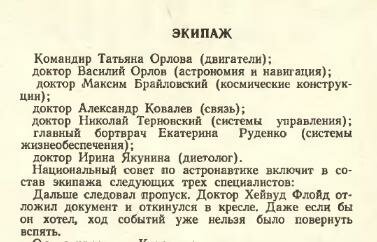
I don’t quite understand why Clark so compromised Zakharchenko, with whom he had been on good terms for many years if not friends. Fans of the writer even came up with a witty explanation that Clark was not at fault; the same principle that gave rise to the generals Gogol and Pushkin in 'Bondiana' was at work. Supposedly, the fantasist used Russian surnames that were well-known in the Western press without any ulterior motives — we Americans were best acquainted with Angela Davis and Leonard Peltier. It’s hard to believe, though — the selection seems too homogeneous.
Well, in 'Technique — Youth', you can imagine what began. As recalled by the then assistant editor, later the chief editor of the magazine, Alexander Perevozchikov:
Before this incident, our editor Vasily Dmitrievich Zakharchenko had access to the highest offices. But after Clark, the attitude towards him changed dramatically. He, who had just received another award from the Leninist Komsomol, was literally torn apart, smeared against the wall. And our magazine was on the brink of destruction. Nevertheless, this was not our mistake, but that of Glavlit. They should have noticed and advised us. As a result, we could publish only two chapters out of fifteen. The other thirteen chapters were summarized. On the printed page, I retold what would happen with Clark later. But the enraged Glavlit forced me to shorten the retelling by three times. We published the 'Odyssey' much later.
Indeed, Zakharchenko wrote an explanatory note to the Central Committee of the Komsomol, where he 'disarmed himself before the party'. According to the editor-in-chief, "two-faced" Clark "in a vile manner" gave the crew of the Soviet cosmonauts "the names of a group of anti-Soviet elements who were prosecuted for hostile actions". The editor-in-chief admitted that he had lost vigilance and promised to rectify the mistake.
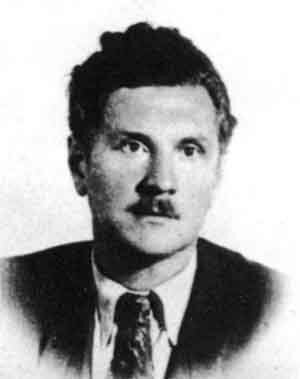
Vasily Zakharchenko
It didn't help. The magazine was not shut down, but they thoroughly 'shook it up.' Two weeks after the sensational Western article, Zakharchenko was fired, and several responsible employees of the magazine received disciplinary measures of varying severity. Additionally, Zakharchenko became a 'pariah' — his exit visa was revoked, he was excluded from the editorial boards of 'Children's Literature' and 'Young Guard', and invitations to appear on radio and television stopped — even for the program he created about car enthusiasts, 'You Can Do It.'
In the preface to 'Odyssey-3', Arthur Clarke apologized to Leonov and Zakharchenko, although the latter seems somewhat mocking:
"Finally, I hope that cosmonaut Alexei Leonov has already forgiven me for placing him next to Dr. Andrei Sakharov (who at the time of dedication was still in exile in the city of Gorky). And I extend my heartfelt regrets to my good-natured Moscow host and editor Vasily Zharchenko (as it appears in the text) for dragging him into great trouble by using the surnames of various dissidents — most of whom, I'm glad to note, are no longer in confinement. One day, I hope, the subscribers of 'Youth Technology' will be able to read those chapters of the novel that so mysteriously disappeared."
There will be no comments; I merely note that after this, it seems strange to talk about coincidence.
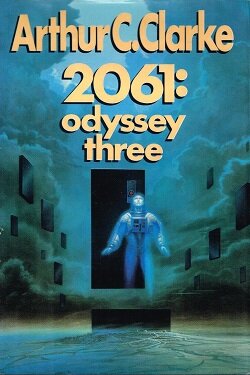
The cover of the novel 2061: Odyssey Three, where the apologies appeared
So that's the whole story. I would like to draw your attention to the fact that all of this took place during the Chernenko era, and there were only a few months left until perestroika, acceleration, and glasnost. Moreover, Clarke's novel was still published in 'Youth Technology', in fact during the Soviet era — in 1989-1990.
I must admit honestly — this story leaves me with a dual, even triple impression.
It is now astonishing how much ideological confrontation meant back then, if human destinies were broken over such trivial matters.
But at the same time — how significant our country was on the planet at that time. Today, it's hard for me to imagine a situation where a top-tier Western fantasist would dedicate a book to two Russians.
And, most importantly, how significant knowledge was in our country during that time. Even in a revealing note from the "International Herald Tribune," it was casually noted that "Russians are among the most devoted fans of science fiction in the world.", and the one-and-a-half million copies of the popular science magazine serve as the best proof of that.
Now, of course, everything has changed. In some ways for the better, in others — for the worse.
It has changed so much that there is practically nothing left of the world where this story happened. In this wonderful new world, no one is interested anymore in either the dissidents who did their part, the magazine "Techniques for Youth" which currently is published in tiny quantities on state subsidy, or — most regrettably — the space elevator.
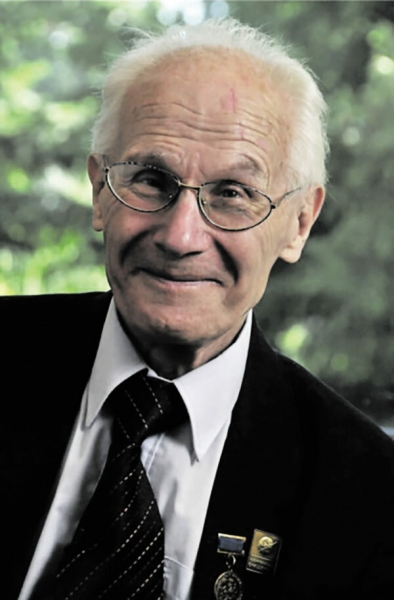
Yuri Artsutanov passed away quite recently, on January 1, 2019, but no one noticed. The only obituary appeared in the newspaper "Troitsky Variant" a month later.
Source: habr.com
