

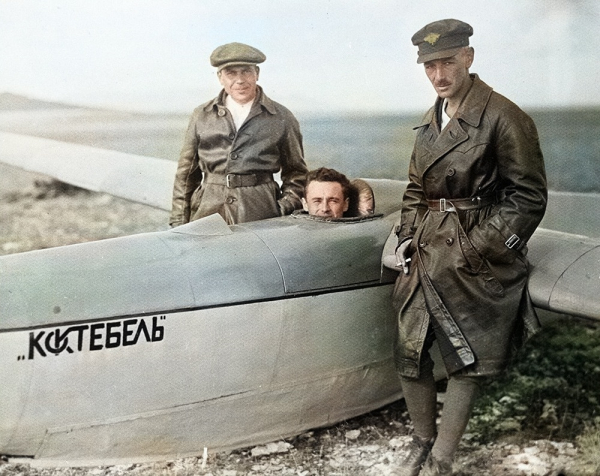
The future 'father' of Soviet cosmonautics, Sergey Korolev — in the center. His passion for aviation began in his youth when he joined a gliding club. He will face heavy trials ahead, but his youthful enthusiasm will remain with him for life. Note: the photo was colored using from Mail.ru. Their neural network performed much better than, for instance, this .
"You can do it quickly but poorly, or you can do it slowly but well. After some time, everyone will forget that it was done quickly, but they will remember that it was done poorly. And vice versa."
Sergey Korolev, designer
There may be nothing more to add to these words. However, after reading this quote, questions may remain, and we’re not here, after all, to compile a ‘quotes of successful people’ collection, so I will dare to continue. After all, who among us has not faced the dilemma between delivering immediate results and ensuring high-quality work? Sergey Korolev, one of the key figures in the history of human space exploration, could tell you a lot.
The fate of Korolev is extraordinary. Even in his youth, he was fascinated by aviation technology, and this is one of those cases where the standard biographers' phrase 'his fate was destined from a young age' seems justified. Like any epic story about a fearless hero, he faced incredible challenges — he was sent to the GULAG camps, to gold mines where he nearly lost his life, but thanks to the intervention of another legend of domestic aviation, Tupolev, he 'only' lost 13 teeth and his overall health for his relatively short life; yet, like any true hero of a grand epic, the trials did not break him or even make him more bitter, and perhaps it was these very experiences that helped him realize that life is too short to be afraid to dream. It was Korolev who became the person under whose leadership the technology was developed that took the first human into space. Korolev can confidently be called the 'father' of practical astronautics. In just 6 years, he and his team made the leap from developing intercontinental ballistic missiles to creating the manned spacecraft Vostok-1! As we will see later, this man knew how to manage time and discipline.
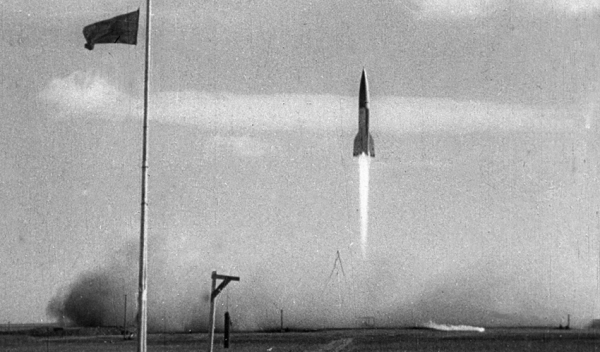
Launch of the first ballistic missile R-1. 1948. TASS photo.
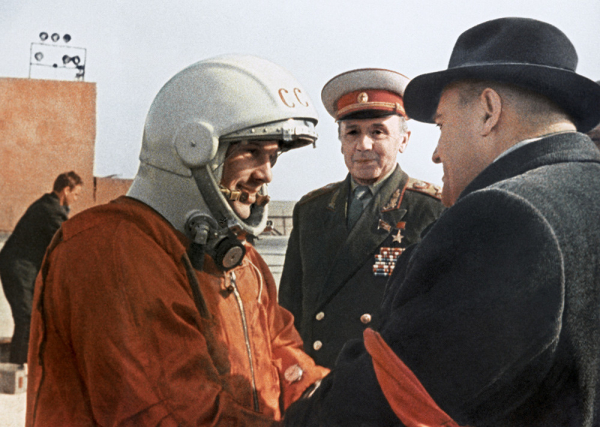
Just 13 years later, Korolev, in his signature headgear, welcomes a man who has traveled to space.
Why did I choose Korolev as my reference when writing this column? Because his working method closely resembles the spirit and partly the implementation of software engineering principles and best practices in the software development process. A book titled "Toyota DNA" was written about the Japanese automaker Toyota, revealing the philosophy behind the company's operations to Western readers; among other things, this book describes the so-called "scientific method" of work: before making a change, formulate a hypothesis, define metrics and how to obtain them, measure everything, and after making changes, test your assumption. If the metrics improve, then the change can be scaled. Surprisingly, this same method was implemented long before the textbooks on management principles for Toyota were published, thousands of kilometers away from Japan, in the steppes of Kazakhstan and design bureaus in Moscow, by a team led by Sergey Korolev. Could he have thought that what he was doing purely intuitively would be documented in Japanese textbooks 20–30 years later? For example, the practice of a manager not operating from a "high castle" but gathering all data on a specific area and going to the location is called "gemba" (現場) in Japan— for Korolev, this was an unwritten norm.
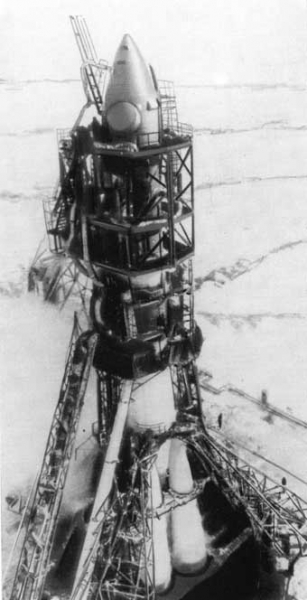
Pre-launch Preparation of the Vostok Rocket
He divided the entire development process into three parts: "design — manufacturing — debugging," with the last step receiving his most serious attention. The team led by Korolev consisted of hundreds of work groups, each focused on its particular area of work. Each operation in the design bureau was controlled by two people—partly a precursor to today’s "pair programming." Interestingly, Korolev realistically and skeptically regarded human nature and advocated for the creation of a system that would help detect faults in time. Here’s a conversation recalled by one of his subordinates: ""The tester has no right to make mistakes," he never tired of reminding me. "But a person is not a machine," I disagreed with him. "That's absolutely true, but in order to prevent the mistakes of an individual, an organizational system must be created that excludes this error, a system that allows it to be detected and corrected in a timely manner. And this system must be created by you as testers, and it must protect us from mistakes.""Doesn't it remind you of the CI/CD pipeline?"
"Quick fix" as a choice and philosophy of work
But let's come down to earth for a moment, from the celestial beings exploring space, to us, the office workers standing on the shoulders of giants. There are a few things that almost certainly unite all modern office workers. And I bet that no later than a few days ago, you found yourself engaged at work in what is referred to as "firefighting" or "patching holes" (those in the professions of firefighters and tailors are asked to take these expressions metaphorically). Very often, in this process, solutions are developed that are aimed at urgent results: immediate repairs, small adjustments, quick implementations of additional features. The cause of a "fire" can be a breakdown, a found bug, or, for example, the eternal "the client asked for it." In English, such solutions are called "quick fixes," in Russian — "костыль". I think many of you occasionally feel the need to create these "quick fixes"; in certain cases, this need becomes a chronic aspect of the job.
Add to this the rhythm of adult life, with work, evening classes, side jobs, cooking, retraining courses; family, going shopping, visiting relatives; to look like Pozner at 85, engaging in sports while there's still time; meeting friends, reading the news, staying informed, self-development, trying out business, taking dance classes; while the number of unwritten songs seems to be screaming out, and the old two-room apartment is feeling cramped — which means, looking for a new place, ordering furniture, moving. Of course, amidst all this madness, one cannot forget about sleep and vacation. This list could go on almost indefinitely. Previous generations had equally large to-do lists, but that was before the internet era. Now, we've transformed from just busy people to Pavlov's dogs, receiving dozens of push notifications throughout the workday, before and after, on at least two devices. As Steve Glaveski notes in his , «notifications from the Facebook app are very reminiscent of the calls that the famous physiologist used to induce conditioned reflexes in dogs.The same author cites an excerpt from a study conducted by staff at the University of California, Irvine: "after a notification has forced us to switch tasks, it can take us up to 23 minutes to return to the previous task". This likely happens because these fleeting distractions pull us out of a state that psychologist Mihaly Csikszentmihalyi referred to as the "flow state." It's called flow because, when in this state, the task engrosses you so much that you are mentally fully immersed in it, and no side thoughts interfere with your creativity — in such a state, the sea seems to be "knee-deep," and work brings joy — Csikszentmihalyi calls this psychological experience "optimal experience." If one does not resist the temptation to immediately respond to an email, they are pulled out of the flow state, and returning to it may take nearly half an hour! Well, no need to be dishonest — do you recognize yourself?
Attempts to juggle multiple tasks and the increasing number of roles that modern individuals take on lead to our minds being overloaded with information. Daniel Kahneman explained in his well-known book “Thinking, Fast and Slow» («Thinking... Fast and Slow”) that anything occupying space in our 'working memory' reduces our ability to think. This could be one reason why we make such poor decisions and consequently work ineffectively and lead subpar lives.
Another effect that follows from this: the pace of our lives feels too fast. More precisely, we perceive it as too fast, and thus we seek quick results. A colleague in our field points to the current state of the book and text market, where people are increasingly less concerned about crafting interesting, fresh, and high-quality text. He also uses the term 'flow', but in an opposite context: in online media, including social networks, information has long turned into an endless stream, and the lifecycle of an article has drastically shortened because of this: today the text may make the top, but tomorrow, at most in three days, no one will remember it. The existence of this endless flow, on one hand, scatters readers' attention and, on the other, deprives authors of the motivation to write thoughtfully (I persist and still spend weeks writing texts like this!).
It results in a situation where we do not leave ourselves enough time to work diligently, on one hand, because we have lost the ability to concentrate, and on the other, because we want immediate results. Hence, the psychology of 'patching holes' may find its roots.
I seriously contemplated all of this—specifically, everything we do not only in our work but also in life—when one day I accidentally deleted some data from the database, and that evening, in a hurry, I amused my wife by drilling holes in the wall in the wrong places twice. I started thinking and began to look around. It turned out that both I and those around me constantly do poor work, mostly because we violate the golden rule: "measure seven times—cut once!" As a newly minted driver, one of the first examples that comes to mind is how many drivers behave on the roads. Haven't you ever experienced that once you got your driver's license, you suddenly began to despise people as a species much more? And suddenly realized how dangerously so many drivers behave? It's not about me crawling along or something like that. It just feels like the drivers of all those cars that cut you off on a dark street, racing down a narrow road with a 5 km/h speed limit, or tailgating on the highway, are just playing with probability theory—after all, sooner or later something will go wrong, and the "what if" won't work out. This very "what if"—in other words, the laziness to think ahead and take precautions—serves as a third reason for the poor quality of what we do at work and in life.
Call him "The Chief"
I won't let go of the driving topic—sorry, it's been on my mind. When I was learning to drive, I had to learn from scratch in three weeks well enough to pass a 40-minute exam on the first try. During those three weeks, I practically started every morning in the driver's seat of a training car. On the third day, my instructor, seeing the stress that driving put me under, exclaimed in frustration: "People used to be more psychologically stable" I don't know if it's fair to generalize like this, but I suspect it might be true. At least, when you read about older generations (up to the post-war period), it sometimes gives the impression that they were indeed more whole individuals than we are. We are not heroes, in general. The same impression arose while studying the personality of Sergey Korolev.
While preparing this material, I "digested" excerpts from numerous accounts of people who worked with Korolev, and I found it remarkable how unanimous they were in their respectful and enthusiastic descriptions of their encounters with the Chief, or "S.P." (from "Sergey Pavlovich" — I gathered it was forbidden to mention Korolev’s name in documentation). He was indeed strict, demanding, and nervous; he could flare up as quickly as he calmed down, and after cooling off, he would patronizingly pat you on the shoulder with "comforting" words like:"Well, you sure got it from me yesterday!"Yet the dignity of this short, stocky man with a determined face, a somewhat deaf and somewhat sharp voice, a piercing gaze, and an energetic manner of moving and walking clearly overshadowed his weaknesses in the eyes of his contemporaries. Studying his life can provide several valuable lessons for us.
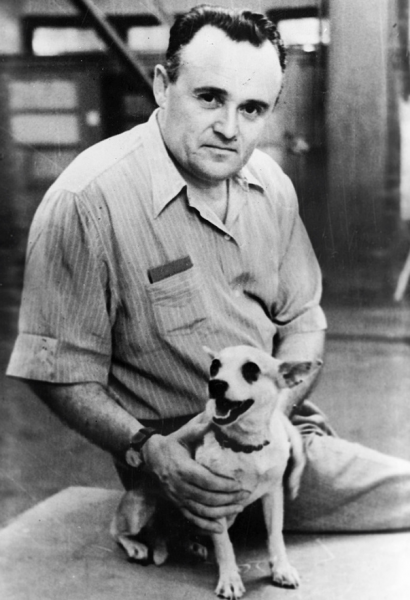
Could you really be upset with this person?
Sergey Korolev was truly leader — that is, one who saw a grand purpose, was self-assured, took responsibility for his words and actions, and understood the principles that guided him and what he expected from his employees. In various stories told by his subordinates, you can see Korolev as someone who is not afraid to tackle complex issues, gives his subordinates ample creative freedom. («I noticed that he increasingly trusted his closest assistants and gave them the freedom to act. Clearly, he understood that petty oversight stifles employee initiative and hinders them from becoming true experts and leaders in their fields.«), appreciates steadfast individuals («He valued resilient people who could express and defend their opinions and their correctness.«), is not afraid to admit his own mistakes (cosmonaut Alexei Leonov recounts how, while in orbit, he made a decision against Korolev's instruction, and upon telling the Chief and explaining his reasoning, heard in the presence of others: "But Alёsha is right...«), does not seek to demonstrate his superiority («Even when his interlocutor was wrong, Sergey Pavlovich never highlighted it or reprimanded them. He never found it disgraceful to make mistakes.") intentionally ignites discussions and confronts people with opposing views, to give birth to truth in debate; does not forget to express gratitude («Between us stood an intercontinental missile mounted on technological carts. After ensuring everything was finished, Sergei Pavlovich, despite his solid demeanor, bent down, almost touching the floor with his hands, and crawled under the missile to us, shook our hands, and thanked us for our work.«), is not afraid to criticize his own work («But in the following half hour, I had to hear several other critical remarks. "This flight was unsuccessful, we were poorly prepared for it," - about a flight that everyone considered successful. "The design is not great," - about a structure that had flown successfully into space several times. All of this was pronounced naturally and casually.), and shares his innermost thoughts with loved ones («Sergei Pavlovich was not a closed person; he always shared his ideas, dreams, and feelings. He loved to ponder and dream aloud about space.«).
Attitude towards time
The head of the glider club once asked young Korolev, "When will you finish your first glider?" And heard in response: "I don’t want it to be the first. I want it to be the best!»
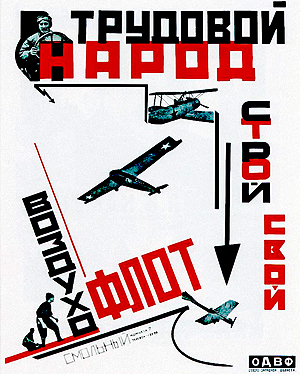
Gliding clubs in the 1920s became a widespread obsession among Soviet youth after Lev Trotsky called on the people, "Let’s give wings!" — meaning, "The Soviet country needs its own airplanes!" Similar to today's fascination with artificial intelligence technologies, if you will. .
Moreover, he was a person with a special attitude towards time. The tasks that Korolev set for his employees required a very rapid pace of development. To give a sense of the speed at which his diverse team, assembled from dozens of groups from several institutes, worked, one can recall that, for example, the device for photographing the far side of the Moon ("Luna-3") was designed, manufactured, tested, and launched within 6 months — and it's no wonder, since only such speeds could achieve the ambitious goals of the designer. Korolev's subordinates, like himself, worked from morning till night, often without weekends or holidays. He could not tolerate delays and hated postponing decisions or rocket launches.
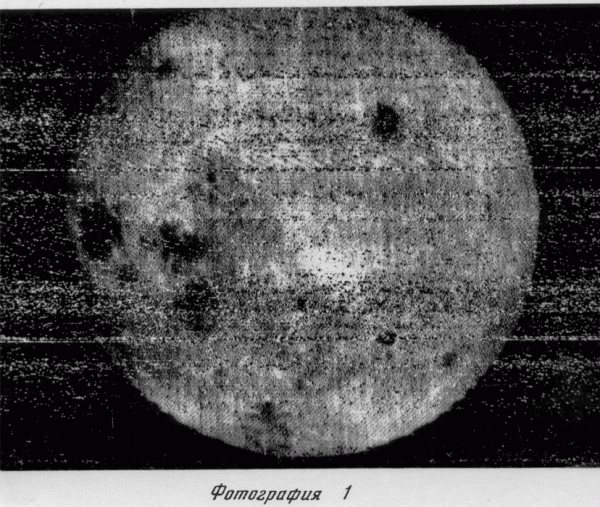
A photo taken by the "Luna-3" spacecraft
Nevertheless, under certain circumstances, Korolev was the first to demand an extension of deadlines. There were two things that caused this strong-willed, energetic, and incredibly hardworking man to fall behind schedule — ensuring people's safety and the quality of work. At one of the meetings, he stated outright: "Which protective measures to apply — you will decide better than I can and without me. But I ask you to firmly remember the deadlines, reliability, and absolute safety of people." It was he who introduced extensive control tests for spacecraft instead of the spot checks (as is customary in mass production). Korolev paid the most attention to testing and tried to instill the same spirit in his employees; one of them writes: "But something happened, something is wrong... The tester must immediately stop work, thoroughly investigate the reasons for the incident, and take measures to eliminate the identified malfunctions. In this case, saving time takes a back seat." Another employee recalls how Korolev reacted to the discovery of serious malfunctions in the landing system, which threw the entire team off schedule to such an extent that the expected delay turned out to be much less than the actual one: "And not once did the Chief Designer lose his temper or reproach us, the testers. Later, after the flight, when the astronauts landed safely, he said, "This is exactly how you should act. If there is even the slightest doubt, stop, figure it out, and eliminate the cause." This advice stayed with us always.»
At the same time, Korolev set an example for his employees. He spent a lot of time reviewing flight footage. He carefully considered all important decisions, listening to others' opinions, recording them, and ending the meeting with the words: "You all understand, but I need to think.". And this was all despite the fact that he was not one of those leaders who only take credit for successes: he was the first to inform the "management" about delays and failures, taking the heat for himself.
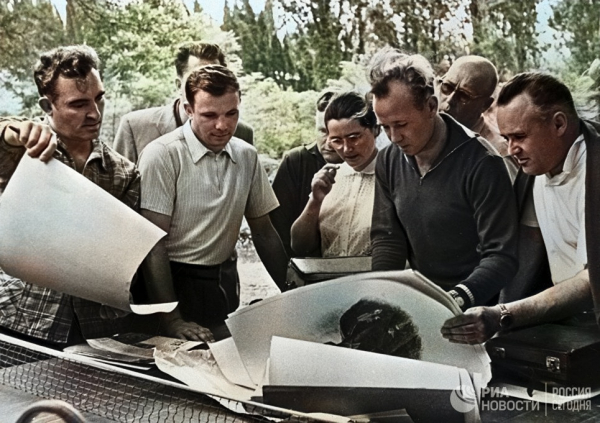
Sergei Korolev, Alexei Leonov, Yuri Gagarin's wife Valentina, Yuri Gagarin, and Grigori Postnikov.
What can we learn from all this?
"Now we can no longer demand that people work faster and better. All we can do is stand before them and, bowing low, ask them for this."
Sergei Korolev.
If we look closely at Korolev's statements and actions, his work principles can be summed up in several fundamental tenets.
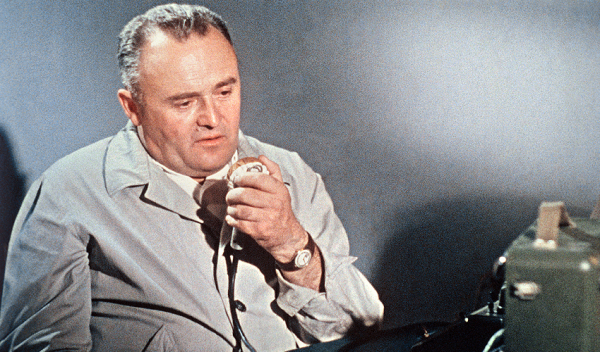
Says Sergei Korolev.
"Don’t rush."
If you think about it, many erroneous decisions are made because they are made in a state of rush. We see something is going wrong — and we hastily try to fix it. Familiar? I bet everyone has a story about how they made things worse in a hurry.
"Plan enough time."
Despite his tirelessness and ultra-ambitious goals of a science fiction nature, Korolev was not one of those people who first promise to do something in a snap, only to find that it takes five times longer to accomplish such tasks. Once, while visiting Germany, aimed at inspecting the V-2 rockets, his superiors asked him how long it would take to copy these rockets. One of the engineers replied: "20 electricians and a month of work." Korolev assessed the timeline differently: "A separate research institute and a new industry.And how many of you have responded in a similar way? I think your bosses have often heard something like "3 hours", only to wait for results for 3 days.
"Do the job well, don't rely on 'just in case'"
One of the main sins of modern people: doing everything quickly just to check a box and get rid of a nagging task. Remember: if something can go wrong, it definitely will (this principle is called Murphy's Law and is strangely described on Wikipedia as a 'humorous philosophical principle'. I don't find anything funny about it. By the way, this 'law' was conceived by aircraft builders). Never leave too many random variables. If you see a weak point — ensure checks and backups.
"Don't rush into reasoning, but when you have enough information, make decisions quickly"
For many of us, the main measure of work quality is speed of execution. This paradigm needs to be reconsidered so that the focus is on high speed of execution of the plan, not on the preparation of solutions. But when it comes to solving critical issues (which vary by industry), speed should ideally not be a guiding factor. Quality should determine the solution — meaning assurance that the solution has been thoroughly tested to work smoothly most of the time, and perfectly in critical moments.
Of course, it cannot be said that speed as a metric can or should be completely disregarded. There are, after all, different tasks, and as is often the case, there is no universal remedy for all pains. For example, in the prototyping stage, speed is what matters. But even in the production stage, it plays a crucial role for the business. You cannot delve too deeply into details all the time; otherwise, this leads to stagnation, and by the time you make a decision, everything around you will have changed a thousand times — it's like trying to see an elephant by looking into its trunk. You just need to achieve high speed in learning, response, and decision-making through the right methods. Korolev himself was able to grasp information on the fly: he could understand nuances with just a glance at the general plans (this was possible for him due to his extensive expertise and vast experience, as well as clear processes within the company and an intuitive understanding of the decision-making process).
But this is not an article about solving all problems at once, nor about specific instructions, but about a general principle: let's build for centuries! Build not faster, but better. Just think: the ISS is still serviced by the ‘Soyuz’ spacecraft, developed by Korolev's team! The best things are not created at the snap of a finger; they require time. If you spend a lot of time refining a solution, you are not wasting it; you are doing what you should. Returning to the topic of literature: Leo Tolstoy wrote and rewrote 'War and Peace' for 6 years. There are even reports that he manually rewrote the text of the novel 8 times. It is a laborious task, but the main thing is that it is not Sisyphean. And it is an excellent example of the right attitude toward one’s work.
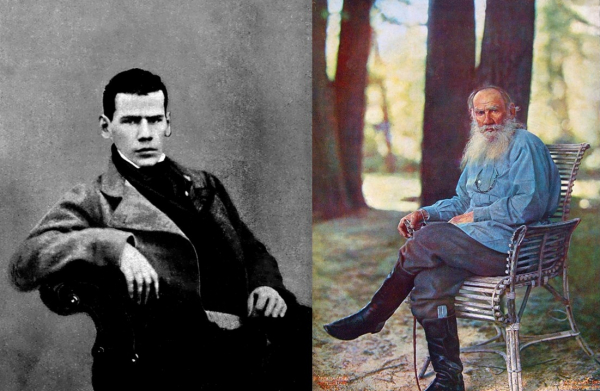
Leo Tolstoy at the beginning (left) and end of writing 'War and Peace'
I understand that there are several things one could argue against everything said. For example, that CI/CD, agile, and lean exist precisely to catch errors in time. But if there's chaos in your mind, even with all these tools, there’s room for sloppiness. Someone might say that in real work, you often just don’t have a choice — just do it and don’t ask questions. I agree, and I can recall similar stories from my own experience. At one of my previous jobs, we analyzed client data and prepared analytical reports for them. Frequently, changes had to be made to already completed reports, adding or reshaping content to satisfy the client's immediate whims. It got to the point where I was told to analyze a new batch of data and send the report within a couple of hours. I then directly told my boss, "I can do this well, but the deadline will have to be extended; I can do it quickly, but then I can’t guarantee the quality of the data. It's your call." I was told to do it quickly. I straightened up and got it done fast — after all, this wasn't about launching rockets, meaning that if mistakes occurred, people wouldn't be in danger, my manager would have to answer to the client, and my conscience would remain clear.
So that's not what I’m saying. I know very well how it can be in real life. But looking at myself and many people around, I want to shift my thinking towards a common focus on the sustainability of what we do and to realize that if there's little time to solve a problem, you're essentially faced with a choice: either well or quickly. One must be prepared for the fact that throughout life, someone will always demand bad but quick work from us. Do it quickly, put out this fire quickly. But in most cases, there's only one person who continuously pushes you, makes you rush, make bad decisions, and slack off. That's you yourself.
file — continuous reading of events from one or more local files;
In writing this article, I used information from the memories of authors including:
Kryukov S. S., Voltsifin A. N., Glazunov M. G., Novozhilov P. V., Maximov G. Yu., Syromyatnikov V. G., Shabanov E. V., Shapovalov V. I., Shumakov B. G., Chernov V. V., Prudnikov I. S., Rublev B. V., Aparceva B. E.
All the mentioned memories have been compiled in the book "S.P. Korolev. Scientist. Engineer. Human. A Creative Portrait Based on the Memories of Contemporaries" ("Nauka", 1986), the materials of which have been made publicly available by the project (for which I express my sincere gratitude). I also drew some information from various interviews with cosmonaut Leonov A.A. and from the memoirs of cosmonaut Grechko G.M., the text of which is available at .
Source: habr.com
