

Part 1. "Obvious" Tips
Most recommendations for those looking to learn better seem quite trivial: in addition to attending lectures and doing homework, it’s important to eat right, maintain a healthy lifestyle, get enough sleep, and stick to a daily routine.
All of this is certainly good, but how can these basic truths specifically help a student? How can one organize their daily routine to achieve more and better retain material? Is there a real connection between feeling thirsty and cognitive abilities? Is it true that sports help with studying (and not just earn extra points for the state exam for the physical culture badge)? )?
Timing: How to Manage Time Effectively
Throughout the day
In his new book
When: The Scientific Secrets of Perfect Timing Daniel Pinkcircadian rhythms .
which connect Of course, students don’t have to wake up early every day, at the same time, but understanding one’s
chronotype Before a deadline
Before the deadline
Of course, the lack of time is most keenly felt before exams. By the way, "procrastinating until the last minute" is not just a habit of careless students; in fact, this behavior is characteristic of most of us. One example cited by Pink in his book is a study by researchers at the University of California, Los Angeles, who found that most groups of subjects during experiments do nothing (or almost nothing) for at least the first half of the time before the deadline, and only then start working.
To avoid the "burning train" effect, scientists advise setting intermediate goals and using the "chain movement" technique: every day that you spend preparing for the exam (doing lab work, writing papers), mark it with some symbol. A chain of such symbols in the calendar will serve as an additional motivator to not abandon what you've started and to reach the deadline without "gaps" or last-minute work. Of course, a calendar won't sit you down with your notes and won't disconnect your social networks, but it will serve as a "stimulant" and reminder — sometimes that can be quite timely.
We need more water
Another fairly common piece of advice is not to overindulge in caffeine, but at the same time, drink enough water. This recommendation has quite solid scientific backing — studies in this area have been conducted for a long time. For example, during one of the experiments (the research resulting from it was published as early as 1988), it was shown that even slight dehydration (by 1-2%) can cause a decline in cognitive abilities. The study noted a deterioration in short-term memory and the ability to solve arithmetic problems.
The authors of a later study published in the European Journal of Clinical Nutrition state that "dehydration is a prerequisite for impaired cognitive abilities." Therefore, in order not to lose focus during your studies, pay attention to your well-being and don't ignore your thirst — especially if you are actively exercising alongside your studies.
ITMO University
Learning in your sleep
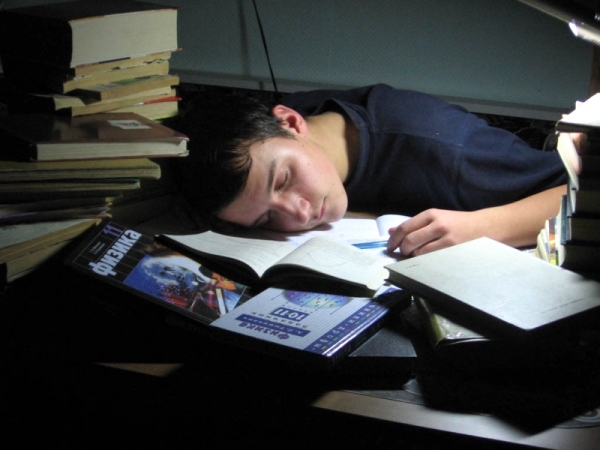
Another obvious piece of advice is that healthy, prolonged sleep positively affects our cognitive abilities — this is known to everyone. American researchers went further and discovered another important aspect related to how the brain operates during sleep.
They , found that participants better remembered pairs of unrelated words when they studied them before sleep rather than in the morning. In this context, the scientists conclude that sleep stabilizes our memories and allows for their consolidation — yet another argument against a sleepless night before an exam.
Brain exercises
At first glance, the connection between sports and academic success is not obvious — in modern culture, the "typical straight-A student" and physical activity are rather antonyms (think about ). In reality, physical exercises are one of the factors that enhance cognitive abilities, which is also supported by numerous scientific studies.
For instance, one of , dedicated to this issue, confirms the relationship between physical exercises and improved memory. Researchers analyzed the performance of 120 individuals and noted a connection between regular aerobic training and an increase in the size of the , which consequently led to an improvement in the spatial memory of the participants.
Another beneficial property of exercises is their assistance in combating stress. In the American Psychological Association, for example, , one of the benefits of regular exercise is the enhancement of connections between physiological systems (muscular, cardiovascular, nervous systems) that are activated in emergency situations. During training, the body 'practices' the standard response to stress, resulting in being better able to control oneself in 'combat conditions,' as during training the body has 'learned' to cope with such states.
In 2012, a materials dedicated to the connection between physical exercise and brain function. The results, however, were not particularly impressive — following the analysis of 79 scientific articles, researchers noted that the link between the two phenomena (physical activity and cognitive enhancement) does exist, but is relatively weak. However, the scientists do not deny that a more significant effect is possible and depends on what specific cognitive outcomes the researcher records during the experiment.
Weightlifting or CrossFit may not be the best options to start your introduction to the world of sports: if your goal is to improve health and enhance brain function, even moderate physical activity will suffice. For instance, the World Health Organization dedicating about 150 minutes per week to moderate-intensity physical exercise — this is quite enough to support your brain, start improving health, and not neglect your studies.
TL;DR
- Plan intensive mental tasks for the first half of the day (regardless of when that "half" begins for you). During the first two to three hours after waking up, you will be at your most focused and motivated for solving complex tasks.
- Keep in mind that about seven hours after waking up, your motivation and concentration will reach their lowest point — it's best to take a break from studying and go for a walk or run to give your brain a bit of a "reset." Once you recover your energy in this way, it will be easier to continue studying.
- In general, do not neglect sports. While exercise alone will not improve your grades, it can make studying more effective — it will become easier for you to cope with stress during exams and retain information during lectures. It is not necessary to spend long hours in the gym or enroll in a kung fu class — even 150 minutes of aerobic activity per week will be a good complement to your studies and improve your overall well-being.
- Remember that even slight dehydration can impair cognitive abilities, so pay attention to how you feel — don't ignore your thirst. This is especially important if you're exercising during the day.
- While it's best to schedule intense mental tasks for the early hours after waking, memorizing information can be postponed until the evening. If that's problematic — for example, if you need to memorize a lot of exam tickets — use the time before bed to review what you've learned. This will make it much easier for you to recall information the next day.
- If you tend to procrastinate studying until the last minute, remember that you're not alone. To 'trick your brain,' try setting up intermediate mini-deadlines (for example, 'find articles on the topic of the paper,' 'write a literature review,' 'think through the research structure'). Starting from now, mark each day leading up to the deadline during which you made progress toward the task. A chain of 'checkmarks' or 'dots' will provide additional motivation to accomplish at least something each day that moves you closer to your goal.
In the next part of our review, we will discuss how muscle memory affects grades and why 'knowing about knowledge' is an area that can significantly improve your academic performance.
Source: habr.com
